The shape of the road
The Milky Way is a surrealist pilgrimage film that uses the Camino de Santiago as a framework to stage encounters with historical Christian heresies, doctrinal disputes, and theological absurdities. It does not dramatise belief but dissects dogma — not through argument, but through juxtaposition, anachronism, and deadpan absurdity. Buñuel and Carrière treat theology as a series of contested propositions, each given equal weight and equal theatricality: a Jansenist nun nailed to a cross shares screen time with a restaurant manager lecturing staff on the Nicene Creed. The film’s stated ambition — declared in its closing title card — is documentary rigour about heresy, yet it fulfils that aim by staging doctrine as performance, not proof. Its method is structural rather than expository: time collapses, costumes shift across centuries, and characters recur without explanation. This is not allegory dressed as realism; it is realism stripped of causality, where the only continuity is the road and the persistence of disagreement. The film tries to make orthodoxy look contingent, heresy look habitual, and faith look like a series of repeated, unresolvable choices.
The look of it
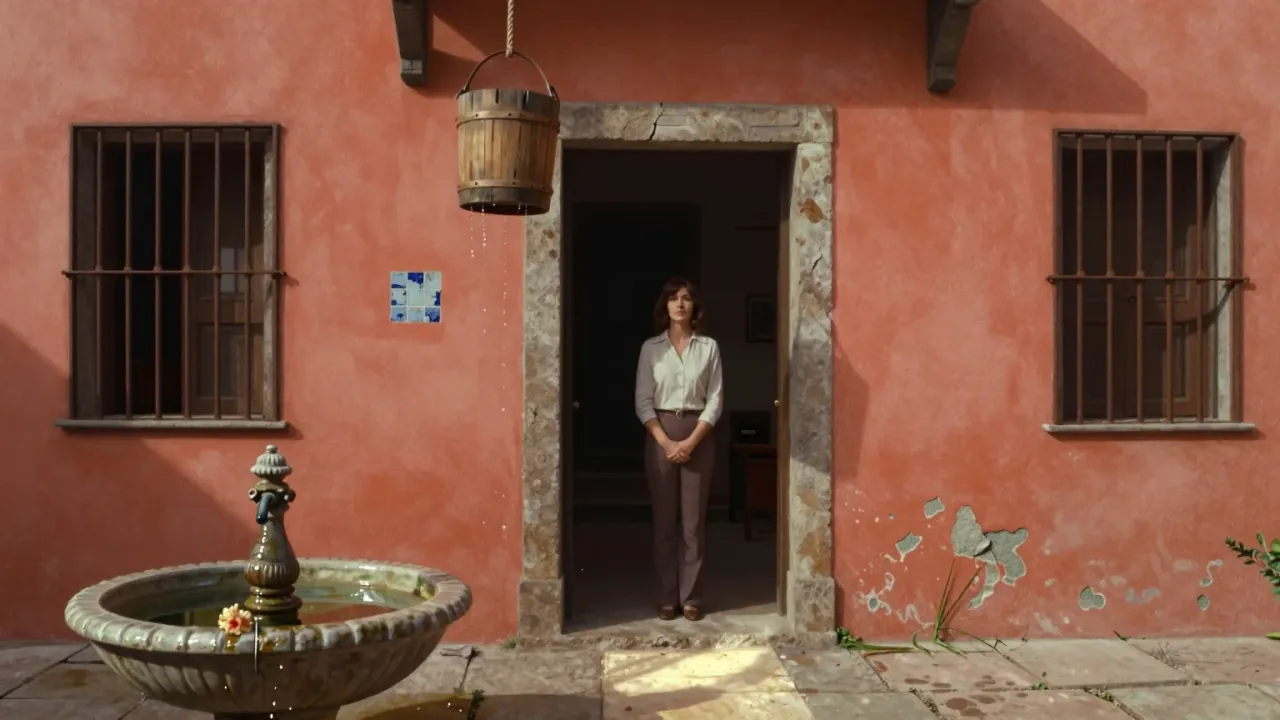
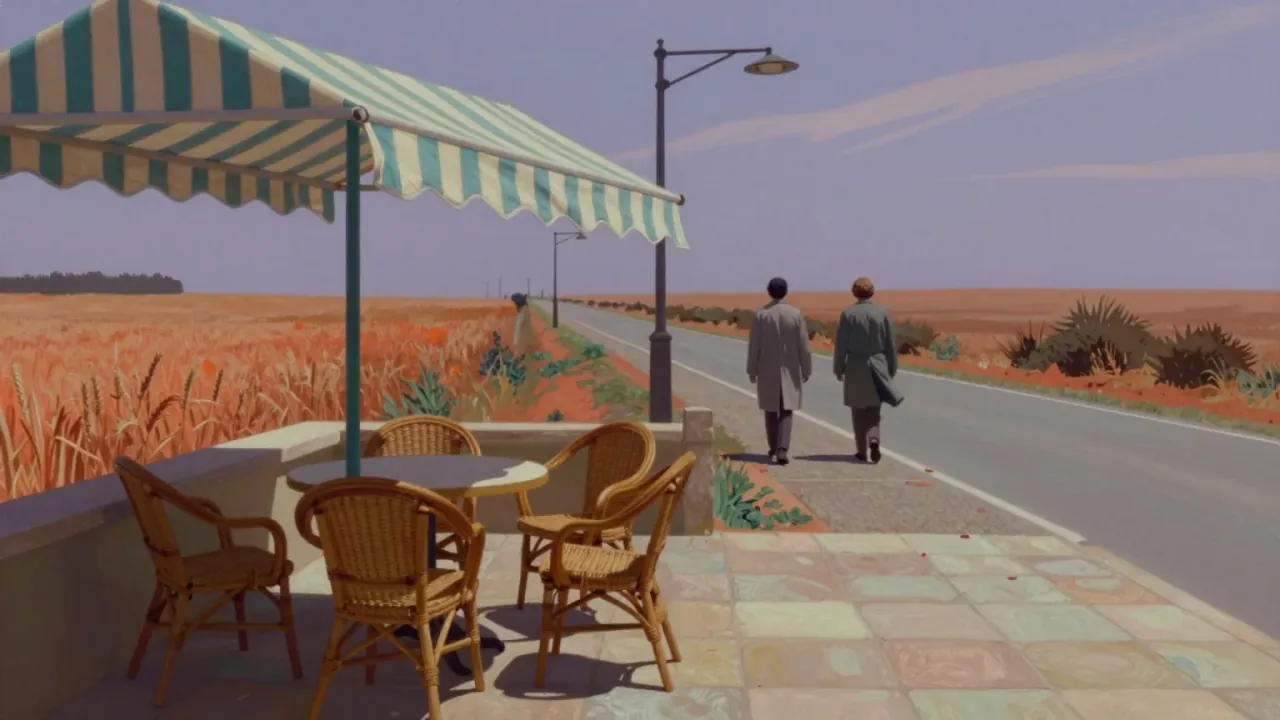
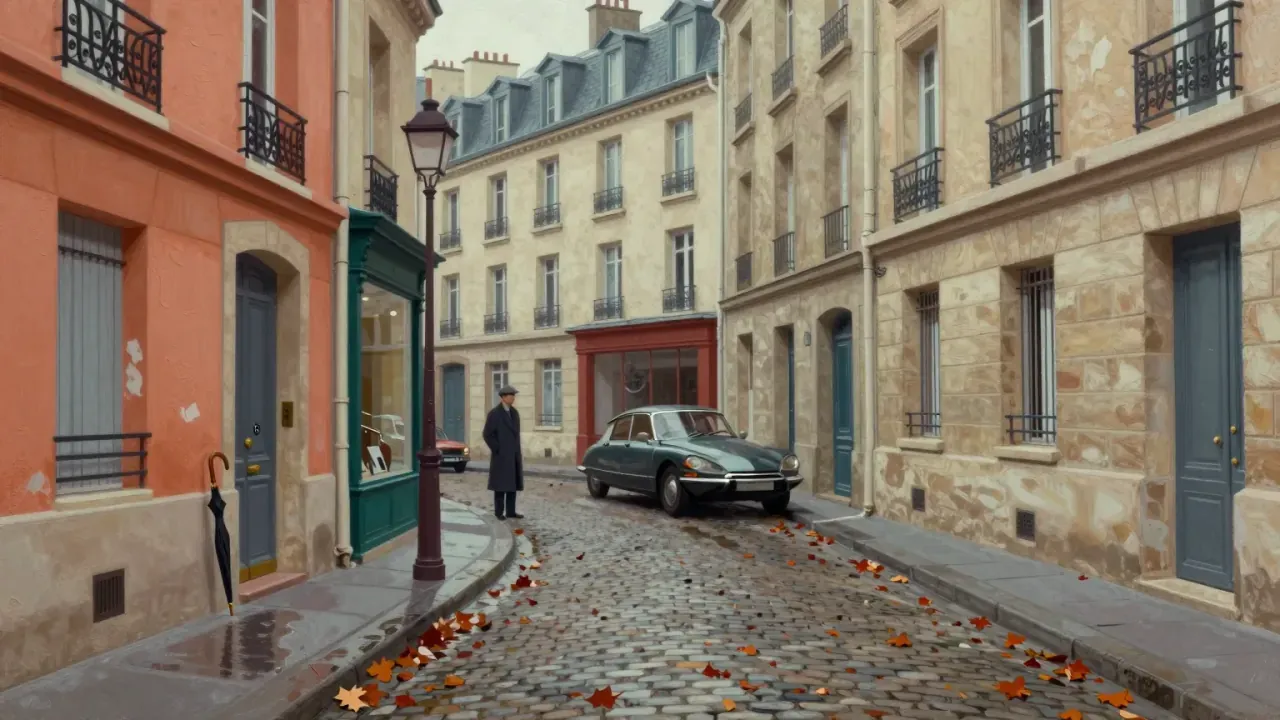
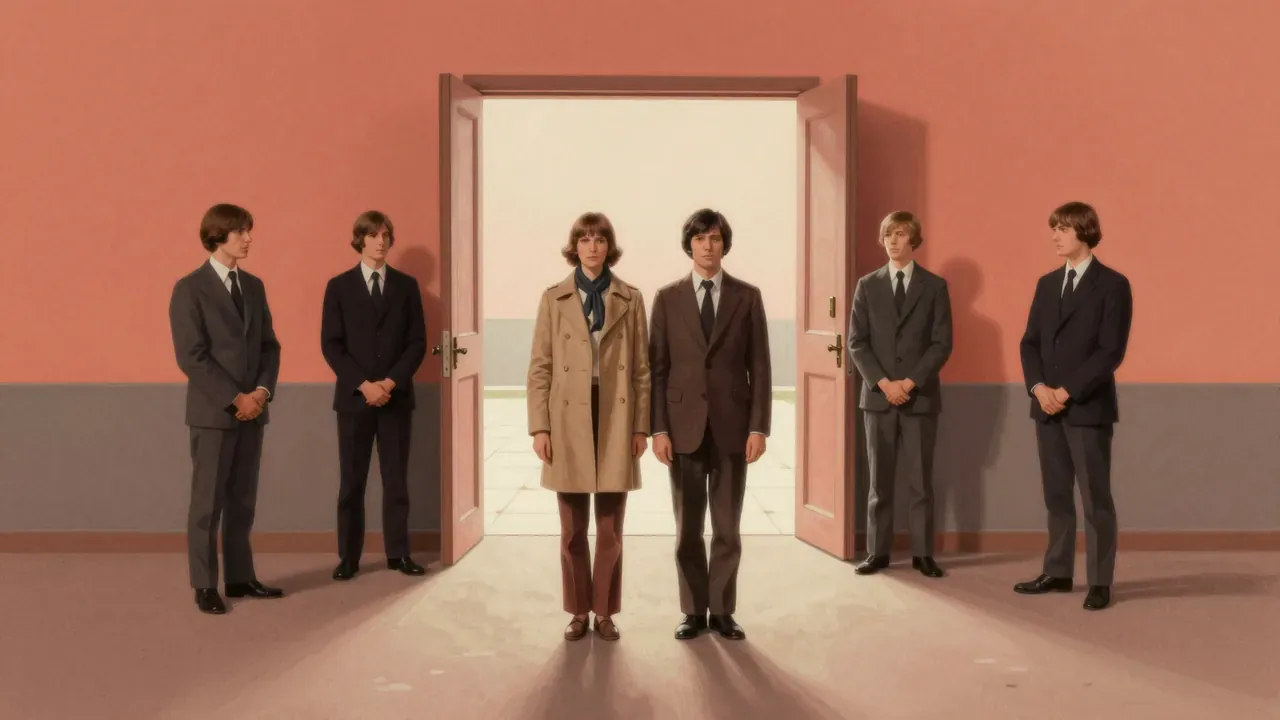
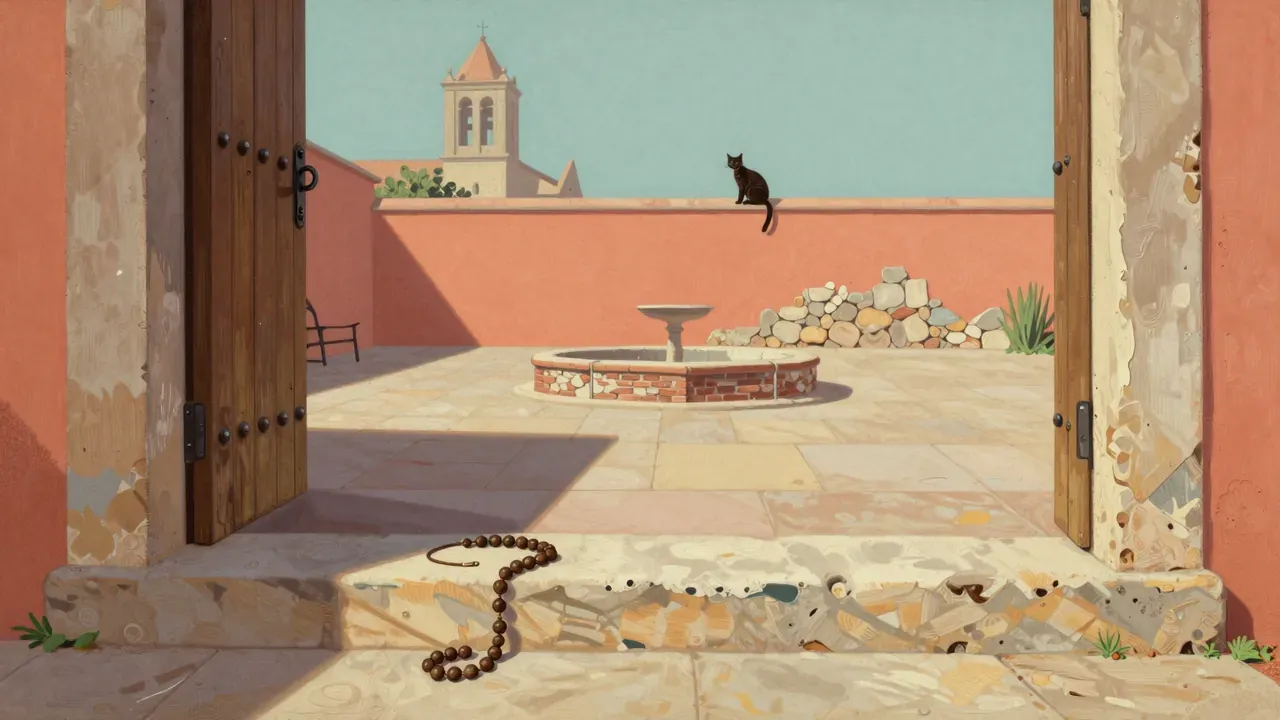
The story follows two unnamed French vagrants — Pierre and Jean — walking from Paris to Santiago, but narrative progression is subordinate to doctrinal vignette. Their performances are deliberately flat: Paul Frankeur and Laurent Terzieff move with the slack-jawed patience of men who have stopped expecting sense. Christian Matras’s cinematography is unshowy — steady, medium-distance, often shot in natural light, with colour used neutrally, never symbolically. Louisette Hautecoeur’s editing avoids rhythm or emphasis; scenes cut when their doctrinal point is made, not when emotion peaks. Buñuel’s own music is sparse, functional, rarely underscoring — sometimes absent for minutes at a time. Supporting actors — Piccoli as a distracted Christ, Seyrig as a matter-of-fact Virgin, Clémenti as a Priscillianist — play their roles without irony or reverence, which deepens the dissonance. There are no close-ups to cue feeling, no score swells to signal importance. The craft insists on surface: what is said matters more than how it is felt. Even the surreal elements — the blind men healed but still leaning on sticks, the rosary returned by a vision — are presented with the same uninflected attention as a roadside café.
What stays with you
What lands is the cumulative effect of doctrinal repetition. Each encounter — over transubstantiation, predestination, the Trinity, the Immaculate Conception — lands not because it is clever, but because it is stubbornly literal. The film refuses to resolve or even clarify; it simply places contradictory claims side by side, in the same visual register as a police sergeant arguing with a priest in a roadside inn. The humour arises from tonal consistency: a man being nailed to a cross is filmed with the same calm detachment as a schoolgirl reciting ‘anathema’ in assembly. The historical accuracy claimed in the final title lends weight, not because it convinces, but because it forces the viewer to sit with the real stakes of these disputes — not as abstract theology, but as lived, violent, institutional realities. The film’s patience pays off in its refusal to offer relief: there is no punchline, only pattern. By the end, the road itself feels less like a path to salvation than a corridor through the architecture of doubt.
Where it slips
What does not land is the attempt to anchor the film in character psychology. The two pilgrims remain opaque, not by design of depth, but by absence of motive or interiority — and the film offers no compensating warmth, curiosity, or irony to make their blankness compelling. Their journey lacks emotional or physical consequence: they are never hungry enough, tired enough, or afraid enough to ground the abstraction. Some sequences — the anarchist fantasy of papal execution, the donkey-handover — feel structurally necessary but emotionally inert, relying on the viewer’s prior knowledge of heresy rather than building it from the image. The film’s refusal to distinguish between satire and sincerity also blunts its critical edge: when a Jesuit duels a Jansenist over grace while both wear period-accurate swords, the absurdity risks flattening into mere spectacle. Without a consistent tonal compass beyond deadpan, some passages drift — not provocatively, but dully — especially in the Spanish stretch, where the pacing slackens without gaining density.
What it’s really about
The themes that matter are the instability of dogma, the persistence of heresy as institutional reflex, and the exhaustion of spiritual questing as a form of evasion. The film treats orthodoxy not as truth but as consensus enforced — repeatedly, violently, and often arbitrarily. Heresy appears not as rebellion but as recurrence: Priscillianism resurfaces in a modern prostitute’s claim about Santiago’s bones; Jansenism reappears in nuns convulsing and crucifying. Time is not linear but palimpsest: the First Council of Nicaea is debated in a restaurant kitchen, Jesus runs down a hill like a startled man, and the Virgin Mary folds laundry in a vision. The pilgrimage is not redemptive but recursive — the two men begin with a prophecy and end by fulfilling it, not with revelation but with sex in the woods. The film’s deepest concern is not belief but repetition: how doctrines harden, soften, fracture, and return, always under new names, always with the same certainty. Meaning is not found on the road; it is deferred, displaced, and ultimately indistinguishable from the act of walking itself.
Who walks with it
This film is for viewers who value precision of idea over emotional payoff, who can sit with unresolved paradox without needing resolution, and who find intellectual rigour more sustaining than narrative momentum. It rewards attention to textual detail, familiarity with ecclesiastical history, and tolerance for longueurs that serve structural logic rather than dramatic tension. It is not for those who require psychological coherence in protagonists, who expect satire to sharpen its point with tone or timing, or who need cinematic language to signal intent — Buñuel gives no cues, no winks, no editorialising. A viewer who expects the surreal to thrill, rather than to unsettle through repetition, will leave bored. Someone who reads the closing title card as a provocation rather than a disclaimer will engage more deeply. The film assumes its audience knows what transubstantiation is — or is willing to look it up — and that this knowledge is part of the viewing contract.
Why it holds your evening
Yes, it is worth your evening — provided you approach it as a sustained conceptual exercise, not as storytelling. Its ninety-seven minutes unfold with the quiet insistence of a lecture delivered in plain clothes: no flourishes, no concessions, no summary. It repays attention not with catharsis but with recalibration — after watching, doctrinal certainty feels less like conviction and more like habit. Those who dislike it tend to cite its emotional austerity or its refusal to guide interpretation; they would prefer Buñuel to underline the joke, or to let the pilgrims weep, or to cut away before the nuns finish hammering the nails. But the film’s power lies in its refusal to do any of that. Its value is cumulative, architectural: each scene adds another brick to a structure whose purpose is not shelter but exposure. To watch it is to walk the road alongside the pilgrims — not toward revelation, but into the persistent, unanswerable question of what any of it means, and why we keep asking.