The structure of it
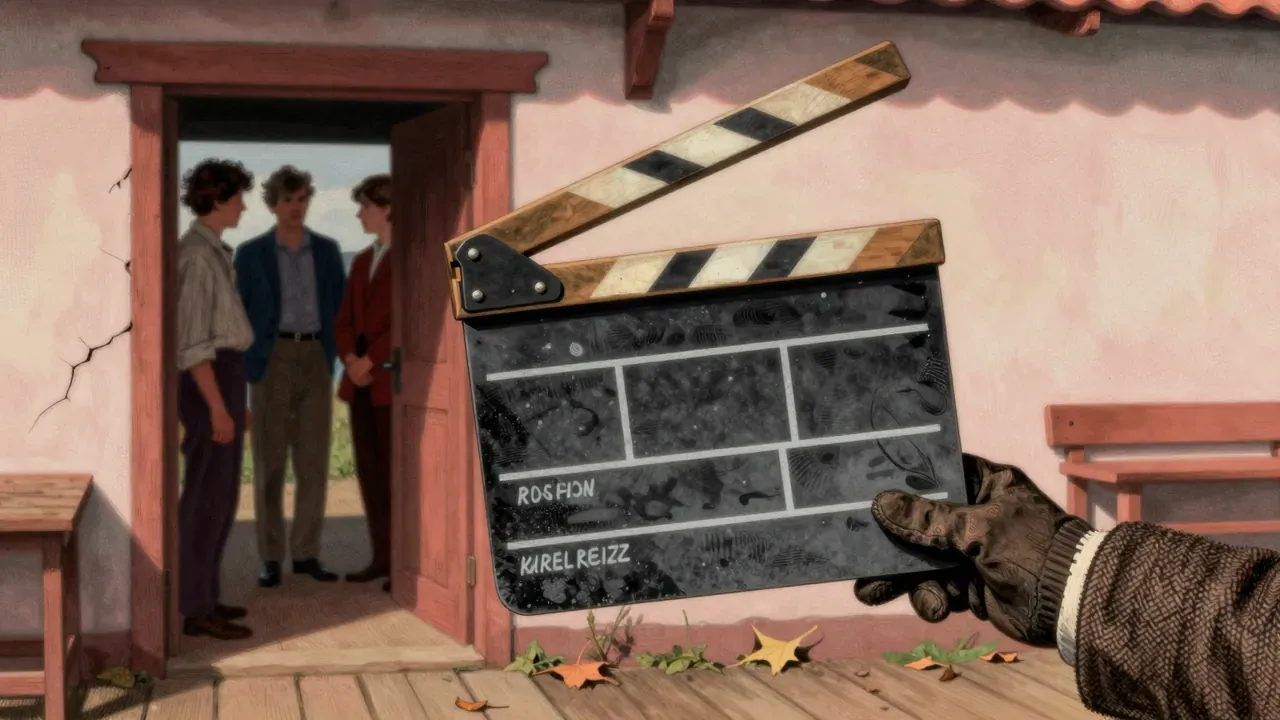
The French Dispatch is an anthology film structured as the final issue of a fictional American newspaper’s Paris bureau, published from the invented city of Ennui-sur-Blasé. It attempts three discrete journalistic features — a profile of a jailed painter, a student protest chronicle, and a police commissioner’s son’s kidnapping — each framed by editorial voiceover and punctuated by animated interludes and typographic flourishes. Wes Anderson conceived it as a ‘love letter to journalists’, not a polemic on press freedom but a stylised homage to the eccentricity, rigour and quiet obstinacy of long-form reportage. The film treats journalism as craft: sentences are read aloud like incantations, bylines linger on screen, and deadlines function as narrative spines. Its ambition lies in formal fidelity — to mid-century magazine aesthetics, French New Wave syntax, and the physical texture of print — rather than psychological realism or plot propulsion. It does not seek to explain Ennui-sur-Blasé as a place so much as to evoke the feeling of reading a particular kind of magazine: dense, digressive, self-aware, and stubbornly analogue. The structure is architectural, not chronological; its logic is associative, not causal.
The look of it
It works through rigorous control: Robert Yeoman shoots almost entirely in 1.37:1 on 35 mm, alternating colour and black-and-white stocks with deliberate tonal shifts; Adam Stockhausen’s production design builds over 125 sets in Angoulême, many constructed around real buildings to enforce symmetry and depth; Alexandre Desplat’s score mirrors the cadence of typewriters and newsroom bustle without melodrama. Performances are flattened into archetypes — Jeffrey Wright’s Roebuck Wright reads his own prose with the gravity of scripture, Benicio del Toro’s Moses Rosenthaler moves between catatonia and ecstatic gesture, Bill Murray’s Arthur Howitzer Jr. enforces journalistic ethics like monastic vows. Voiceover by Anjelica Huston binds the segments, not as narrator but as conduit — her delivery precise, uninflected, anchoring the absurdity in procedural solemnity. Editing by Andrew Weisblum cuts on rhythm, not reaction; transitions are typographic (page turns, column breaks) or spatial (a pan across a wall of filing cabinets). The animation sequences, drawn by local Angoulême illustrators, are stylistically distinct yet integrated — not interludes but extensions of the magazine’s visual language. Every frame obeys a grammar of placement, proportion and pause.
The weight of it
What lands is the film’s tactile devotion to form: the weight of paper, the grain of film, the clack of a manual typewriter, the way light falls across a café table at 4 p.m. in late autumn. The black-and-white courtroom sequence in ‘The Concrete Masterpiece’ holds its breath in long takes, letting Adrien Brody’s Julien Cadazio speak in unhurried, lawyerly cadences while Léa Seydoux’s art dealer watches from the gallery — a composition that conveys hierarchy, complicity and aesthetic reverence all at once. Frances McDormand’s Lucinda Krementz anchors ‘Revisions to a Manifesto’ not through emotional arc but through incremental shifts in posture and diction, her character’s growing entanglement with Timothée Chalamet’s Zeffirelli made visible in how she adjusts her glasses or repositions her notebook. The food-writing segment, though brief, lands because Jeffrey Wright’s delivery treats a meal as both sacrament and forensic exhibit — every bite described with the same care as a crime scene. These moments succeed because they treat journalism not as exposition but as embodied practice: writing as labour, editing as moral choice, publication as ritual.
The distance of it
What does not land is the film’s resistance to emotional accrual. The anthology format prevents sustained investment in any single character’s interior life; Moses Rosenthaler remains a cipher defined by brushstrokes and outbursts, not psychology. The student protest segment, despite Lyna Khoudri’s sharp presence, flattens political urgency into aesthetic set-pieces — barricades arranged like stage flats, slogans rendered as graphic-design motifs. The kidnapping plot hinges on a conceit — a child who speaks only in rhyming couplets — that feels less like satire than evasion, substituting linguistic play for moral stakes. Saoirse Ronan’s Juliette appears in two scenes, each under a minute, her role as translator never deepened beyond functional utility. The film’s refusal to linger on consequence — no aftermath of the painter’s release, no reckoning after the protest, no resolution to the ransom — leaves emotional registers untested. It assumes reverence for the form will substitute for engagement with the content, and for some viewers, it does not. Those expecting narrative momentum or character evolution will find the film withholding, not restrained.
The voice of it
The themes that matter are authorship as constraint and liberation, the ethics of representation, and the quiet heroism of editorial consistency. Arthur Howitzer Jr.’s repeated instruction — ‘Just try to make it sound like you’ — recurs not as encouragement but as discipline: voice must be earned, not assumed. The film interrogates who gets to narrate whom — Roebuck Wright writes about Black American cuisine while being a Black man himself, yet the segment pointedly avoids biographical exposition, treating his expertise as given, not exceptionalised. The painter’s work is judged first by critics, then by prison guards, then by the state — each layer a different kind of gatekeeping. Even the animated sequences, drawn by local artists unfamiliar with Anderson’s prior work, become a quiet argument about collaborative authorship: credit is shared, style is negotiated, ownership distributed. The film’s preoccupation with archives — filing cabinets, microfiche, bound volumes — suggests memory is not passive storage but active curation. What endures is not truth but the persistence of the record, however idiosyncratic, however incomplete.
The audience for it
It is for viewers who value precision of craft over narrative propulsion, who find pleasure in typographic rhythm and compositional balance, and who recognise journalism as a set of formal habits before it is a profession. It rewards attention to texture — the weave of a tweed jacket, the gloss of a magazine cover, the dust motes in a sunlit archive room. It is not for those who require psychological continuity, cause-and-effect plotting, or characters whose motivations unfold gradually. Viewers expecting the warmth of The Grand Budapest Hotel or the narrative cohesion of Moonrise Kingdom may find its detachment alienating. Those who dislike stylisation as a primary mode — who see symmetry as artifice rather than argument — will resist its terms. A viewer who values documentary realism, or who reads journalism for its social function rather than its literary form, will likely remain outside its orbit. Change the framing device from a magazine to a broadcast newsroom, or replace the 1.37:1 ratio with widescreen immediacy, and the film’s central proposition collapses.
The finish of it
Yes, it is worth your evening — provided you arrive prepared to receive it as a printed object made moving, not as a story told. Its 108 minutes pass with the unhurried certainty of a well-set typeface: no scene overstays, no transition feels arbitrary, no performance mistakes its register. The budget of $25 million manifests not in spectacle but in patience — in the time taken to build a café set twice, once for day, once for night, with porcelain cups sourced from Limoges and furniture from Angoulême estate sales. That care is legible, not just felt. It is not for everyone, but for its intended audience — readers, editors, designers, illustrators, anyone who has ever held a physical magazine and traced its margins with a finger — it offers rare satisfaction. To call it ‘cold’ mistakes control for indifference; to call it ‘empty’ confuses minimalism with absence. It is full — of reference, of restraint, of quiet insistence on the dignity of the made thing. You leave not with a story resolved, but with a sentence perfectly placed.