The Two Cases
First Case, Second Case is a structural experiment in moral pedagogy disguised as a classroom drama. Abbas Kiarostami made it in early 1979, during the collapse of the Pahlavi state and the emergence of the Islamic Republic — a moment when authority, legitimacy and collective judgment were being violently renegotiated. The film does not tell a story so much as stage two parallel ethical propositions: one in which seven boys refuse to identify a classmate who disrupts a lesson by tapping a pen; another in which one boy names the culprit and is readmitted. Kiarostami filmed real educators and political figures reacting to each scenario, then edited their responses into the fabric of the film itself. It is neither fiction nor documentary but a dramatised dialectic — a test of how institutions, ideologies and individuals resolve ambiguity when power is unstable and consensus has not yet hardened. Its aim is not to persuade but to expose the assumptions embedded in every verdict.
The Look of It
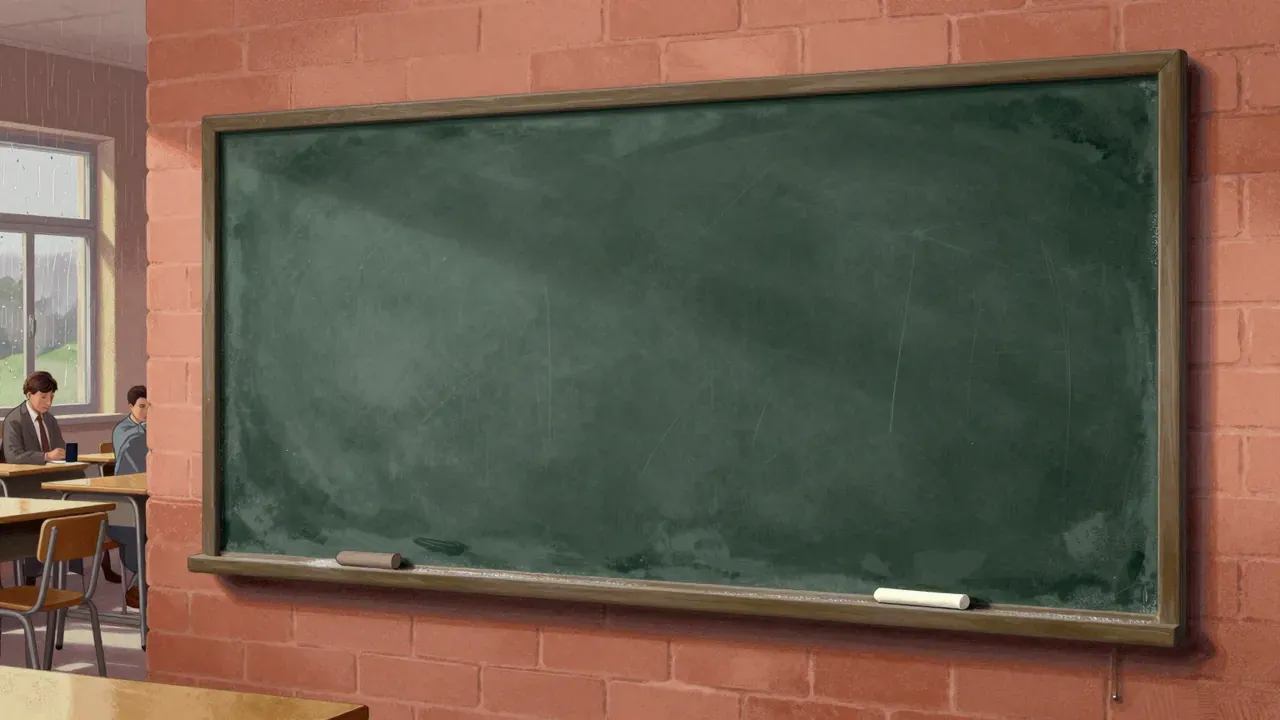
The film works through strict formal economy: static shots, fixed framing, minimal movement, no score, no close-ups, no editing within scenes. The classroom sequence — teacher at chalkboard, rhythmic pen-tap, repeated turning, final expulsion — is shot in a single take, repeated twice with only subtle variations in timing and emphasis. Performances are non-professional, uninflected, deliberately flat; the boys sit impassive, their silence neither defiant nor submissive but procedural. Kiarostami’s direction suppresses psychology in favour of geometry and duration: where the eye lands, how long it stays, what enters frame and what remains off-screen. Sound design isolates the pen-tap as both acoustic motif and moral metronome — sharp, regular, unexplained. The later commentary segments are filmed head-on, without cutaways or reaction shots, forcing the viewer to hold multiple conflicting interpretations simultaneously. There is no narrator, no voiceover, no editorial punctuation — only juxtaposition, repetition and silence as structural devices.
The Weight of Not Speaking
What lands is the unbearable weight of the unspoken. The pen-tap is never explained, never contextualised, never resolved — and that refusal to name the cause or motive makes the teacher’s ultimatum feel less like discipline than ritual expulsion. The boys’ silence reads not as solidarity or fear but as a withholding of consent from the very logic of accusation. When political observers dissect the two cases, their language betrays ideology before argument: one calls the naming boy ‘responsible’, another ‘collaborative’, another ‘compromised’. These distinctions land because Kiarostami gives them no visual counterpoint — just faces, pauses, hesitations, repetitions. The film’s rigour makes its moral indeterminacy palpable. You do not leave with answers but with a heightened awareness of how quickly judgment hardens into dogma when the frame is narrow and the stakes are declared rather than earned. That discomfort is sustained, precise, and entirely intentional.
The Observers
What does not land is any sense of lived adolescence. The boys are not characters but variables — placeholders for a principle. Their ages, backgrounds, relationships, even their individuality, are erased by the framing and the script’s austerity. This is not a failure of craft but of scope: Kiarostami is not interested in childhood psychology, only in the architecture of accountability. As a result, moments meant to provoke empathy — the boy returning to his desk after naming the culprit, the teacher’s exhaustion — register instead as diagrammatic nodes. The political commentators, though historically significant, speak in abstractions that date more than they deepen: terms like ‘National Democratic Front’ or ‘Freedom Movement’ carry no explanatory weight for viewers unfamiliar with Iran’s 1979 coalition politics. Without that context, their interventions flatten into interchangeable pronouncements on order and obedience. The film assumes a shared urgency about institutional legitimacy that no longer circulates with the same force outside its original moment.
The Architecture of Judgment
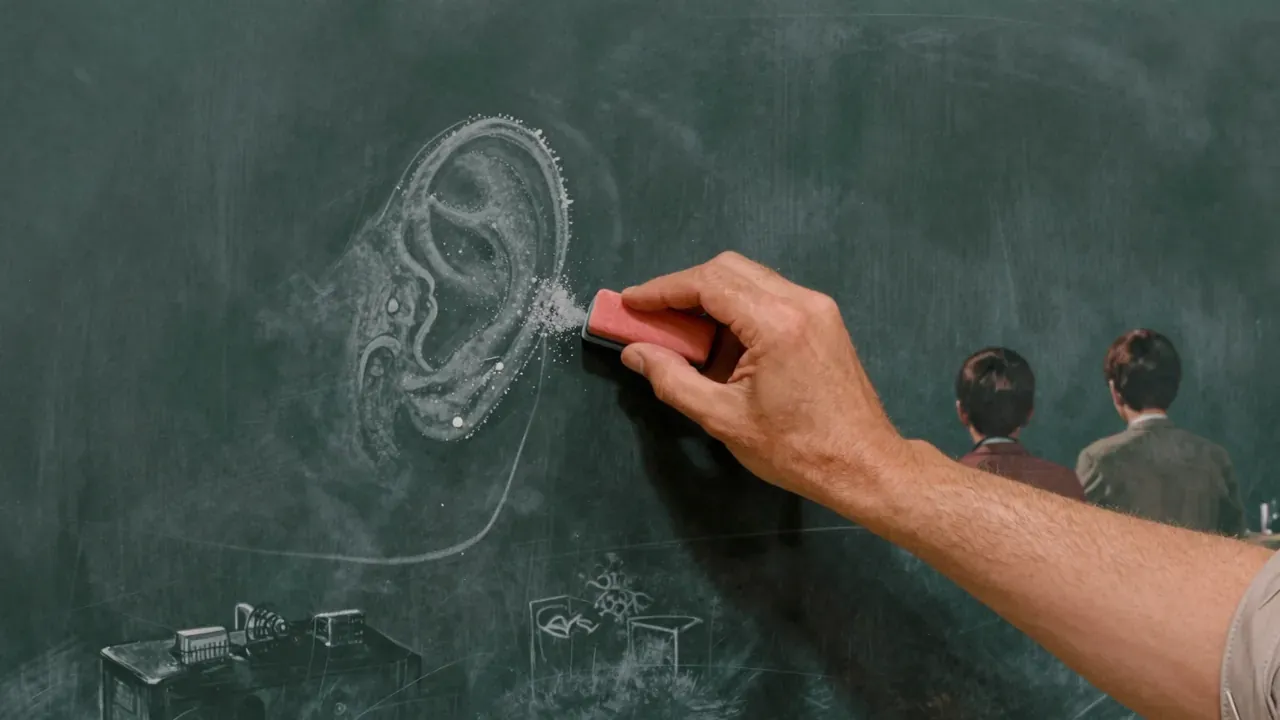
The themes that matter are authority without legitimacy, judgment without evidence, and the violence of consensus. First Case, Second Case treats education not as transmission but as rehearsal — a daily enactment of who gets to decide, who must comply, and what counts as proof. The ear diagram on the board is literal and symbolic: an organ of perception rendered inert, drawn but not heard. The pen-tap is noise without source, disruption without motive — a blank onto which all parties project meaning. Kiarostami exposes how systems of power rely on the appearance of procedure, not its substance: the teacher follows protocol, the boys follow silence, the commentators follow ideology. The film’s central tension is between collective responsibility and individual testimony — not whether the boy tapped the pen, but whether naming him restores order or merely confirms hierarchy. It asks, quietly and repeatedly: what happens when the rulebook survives the regime that wrote it?
The Diagram on the Board
This film is for viewers who treat cinema as a site of conceptual inquiry — those accustomed to Chantal Akerman’s durational rigor, Jean-Marie Straub’s textual fidelity, or Harun Farocki’s analytical clarity. It rewards patience, attention to repetition, and tolerance for unresolved tension. It is not for viewers seeking narrative propulsion, emotional catharsis or psychological realism. Those who expect character arcs, exposition or moral resolution will find it arid, opaque, even punitive. A viewer who values cinematic storytelling as empathetic immersion — say, someone drawn to Asghar Farhadi’s layered domestic dramas — may reject First Case, Second Case as deliberately withholding. That rejection would be valid: the film refuses the very contract it appears to offer. Its value lies not in identification but in estrangement — and if your evening demands connection rather than calibration, this is not the film you need.
The Ban
Yes, it is worth your evening — provided you approach it as a philosophical object, not a story. Ninety minutes spent with First Case, Second Case recalibrates how you listen to authority, how you weigh silence, how you parse the difference between compliance and consent. It does not entertain, console or distract; it trains attention on the mechanics of judgment. Someone who finds this unrewarding is not wrong — they are simply operating under different terms of engagement. A viewer who needs narrative closure or emotional payoff would fairly call it austere, even alienating. But if you accept its terms — that cinema can be a laboratory for ethical syntax — then its precision, its historical specificity and its quiet radicalism make it indispensable. It is not a film to love, but one to return to when other films feel too certain, too quick, too sure of their own answers.