The shape of memory
The Mirror is a non-linear, autobiographical meditation on memory, time, and inheritance, structured not as narrative but as associative reverie. It attempts to render the inner life of a dying poet — unseen on screen — through fragments: childhood recollections, wartime newsreel, maternal presence, poetic voiceover, and dream logic. Tarkovsky and Misharin’s script avoids exposition or psychological causality; instead, it treats memory as physical terrain, where colour shifts (sepia, monochrome, saturated colour) mark temporal registers, and mirrors — literal and metaphorical — fracture and double perception. The film does not seek to explain its protagonist but to inhabit the texture of his consciousness: hesitation, recurrence, unresolved grief, unspoken love. Its ambition lies in formal mimesis — making cinema behave like memory itself — rather than storytelling. It refuses the conventions of dramatic arc or character development, opting instead for rhythmic juxtaposition, silence, and duration as structural principles. This is not a film about remembering, but one that remembers in real time, with all the opacity, slippage, and emotional gravity that entails.
The look of it
It works through restraint and repetition: Georgy Rerberg’s cinematography moves between grainy 16mm newsreel, soft-focus colour interiors, and high-contrast black-and-white exteriors, never signalling transitions but allowing them to bleed. Margarita Terekhova plays both mother and wife — a doubling made possible by Tarkovsky’s decision, mid-shoot, to recast her — and her performances rely on stillness, breath, and unguarded fatigue rather than line readings. Oleg Yankovsky appears only in voiceover and reflection; Anatoly Solonitsyn and Alla Demidova anchor brief, emotionally dense vignettes without exposition. Eduard Artemyev’s score blends sparse piano, wind textures, and processed natural sounds, avoiding melody in favour of atmospheric pressure. Editing is radical: around 200 shots across 108 minutes means long takes dominate, and cuts often occur on movement or light shift, not dialogue. Tarkovsky rejected montage as construction, trusting rhythm to emerge from accumulation — a method that demands attention but offers no hand-holding. The craft is unified in its refusal of emphasis: nothing is highlighted, everything is held in equipoise.
What holds the air
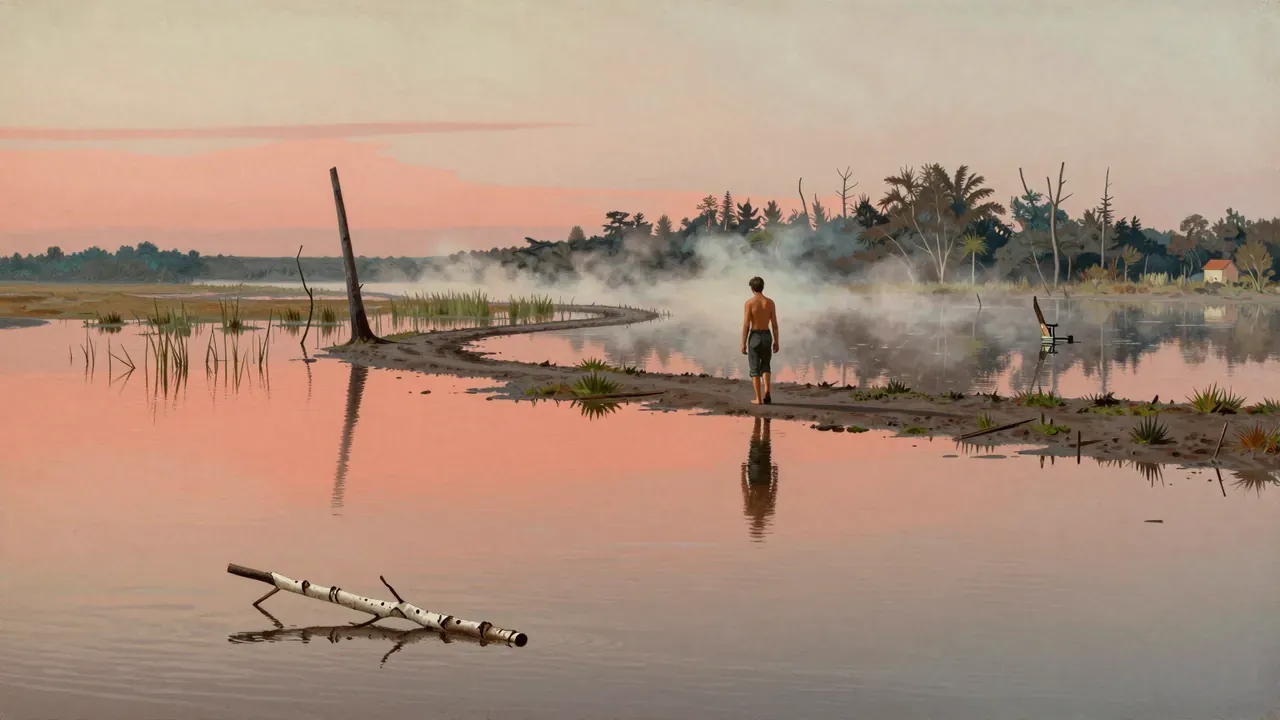
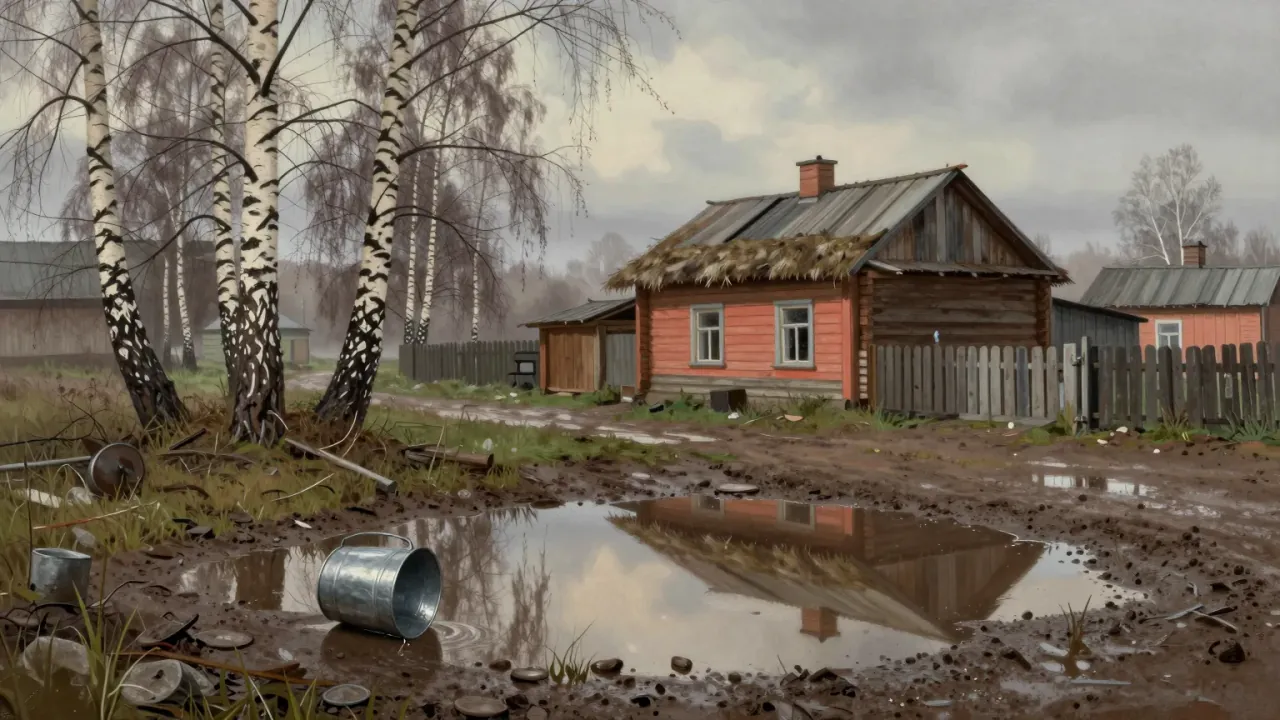
What lands is the visceral weight of absence — of fathers, of certainty, of fixed time. The image of a boy running barefoot across wet grass, then cutting to the same man — unseen — lying ill in a sunlit room, carries more emotional force than any flashback could. The recurring motif of wind moving through birch trees, or rain streaking a windowpane, functions not as decoration but as embodied memory: sensory anchors that bypass language. Arseny Tarkovsky’s poetry, spoken off-screen, lands because its cadence matches the film’s pacing — not because it explains, but because it resonates. The mother’s face, filmed without makeup in natural light, conveys decades of quiet endurance without a single explanatory line. Even the Soviet newsreel inserts — grainy, distant, slightly out of sync — land not as history lessons but as intrusions of collective time into private reverie. These moments succeed because they do not argue for meaning; they present sensation, and trust the viewer to feel their charge before parsing their significance. The film’s power resides in this fidelity to feeling over explanation.
What stays silent
What does not land is the expectation of coherence — not as a failure, but as an intentional void. Viewers seeking causal links between scenes, or clarity about who is speaking when, will find only frustration. The film offers no key to its chronology: a woman may be mother or wife; a boy may be child or adult self; a letter may arrive before or after the war. Some sequences — particularly the extended rural school interlude — resist integration into the central thread, functioning more as tonal counterpoint than narrative contribution. The voiceover, though poetic, occasionally drifts into abstraction that feels detached from the imagery rather than deepening it. And while the refusal of conventional structure is central to the film’s purpose, it also creates distance: the emotional stakes remain muted for anyone unwilling to sit with ambiguity for long stretches. This is not obscurity for its own sake, but a consequence of prioritising subjective rhythm over shared signposting — a choice that excludes as deliberately as it includes.
What runs beneath
The themes that matter are inheritance, not as legacy but as residue: the way parental silence shapes speech, how wartime absence becomes domestic atmosphere, how a mother’s posture in a doorway echoes decades later in a daughter’s stance. Memory here is neither reliable nor redemptive — it is persistent, physical, and often involuntary. Time is not linear but tidal: past surges into present without warning, carrying with it the smell of damp earth or the sound of a radio broadcast. The film treats language as secondary to sensation: words arrive late, often as poetry read after the image has already settled. History appears not as event but as texture — grain, static, the flicker of celluloid — suggesting that national experience enters the psyche through the body before the mind. And the mirror itself is less about self-reflection than about fracture: identity splintered across generations, genders, and media. These are not ideas argued but conditions enacted — the film’s form insists that to remember is to be perpetually out of step with time.
Who walks with it
It is for viewers who accept that attention is a form of participation, not passive reception — those willing to watch wind move through trees for forty seconds without prompting, to sit with silence that lasts longer than most films’ dialogue scenes. It rewards patience, familiarity with poetic syntax, and tolerance for unresolved emotion. It is not for those who require narrative propulsion, clear character motivation, or thematic resolution — including many critics who dismissed it on first release as self-indulgent or inaccessible. A viewer who finds Andrei Rublev or Solaris opaque will likely find Mirror impenetrable. But someone who responds to the weight of a glance in Bresson, or the durational precision of early Akerman, may find it profoundly direct. Its difficulty is not arbitrary: it asks for the same kind of attention memory itself demands — associative, embodied, unedited.
What the clock forgets
Yes, it is worth your evening — if you treat it as a condition to be entered, not a puzzle to be solved. Its 108 minutes unfold at the pace of recollection: slow, digressive, returning. To watch it distractedly, or with the expectation of payoff, is to miss its architecture entirely. It repays close viewing not with revelation but with recalibration — a subtle shift in how one perceives duration, silence, and the emotional density of ordinary gestures. Those who expect entertainment will leave unsatisfied; those open to being held in a sustained, contemplative state may find it among the few films that alter perception of time itself. Its value lies not in what it says, but in how it makes duration feel — heavy, luminous, irreversible. That effect does not depend on understanding every image, but on allowing the film’s rhythm to displace habitual ways of watching. For that reason, it remains urgent — not as a relic, but as a discipline.