A fiction built from fact
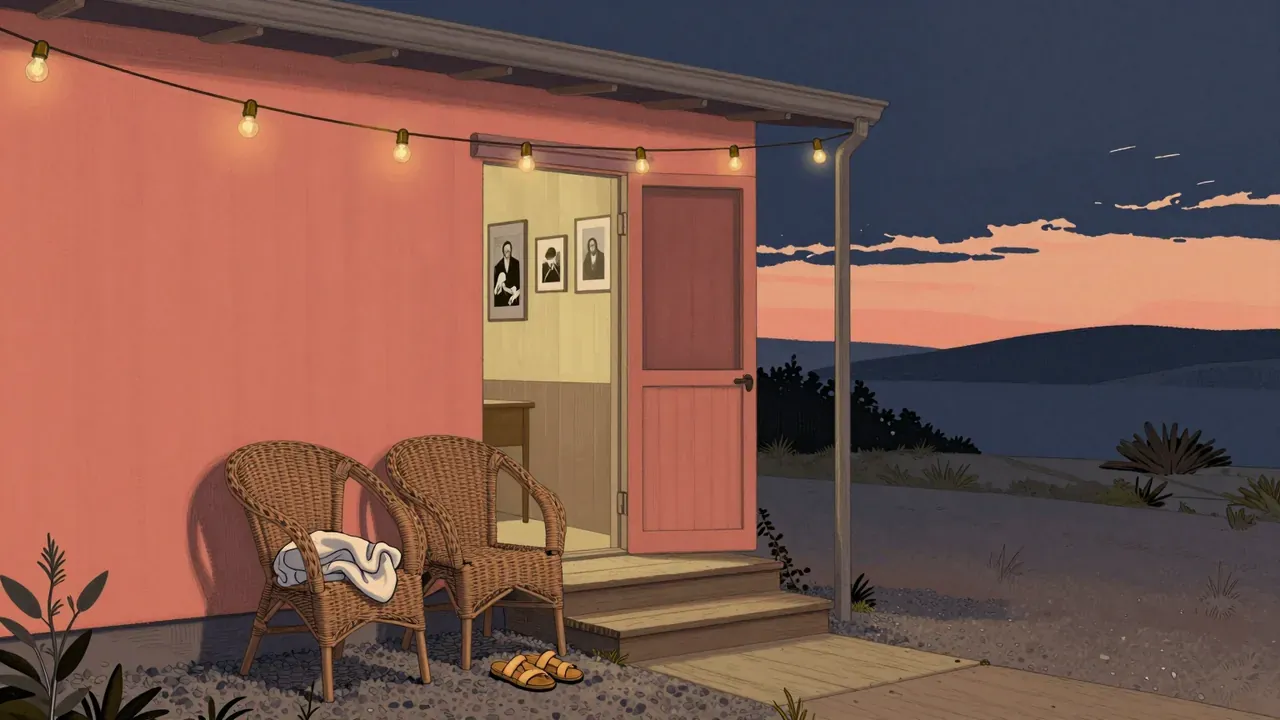
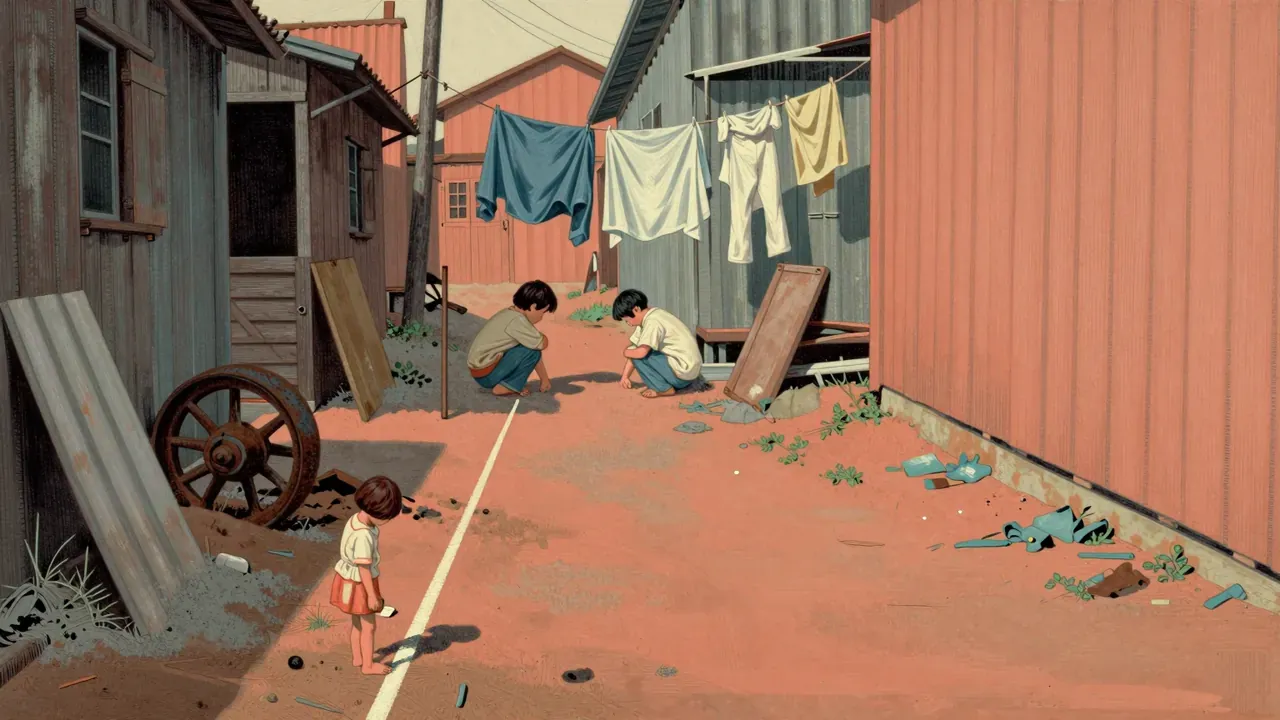
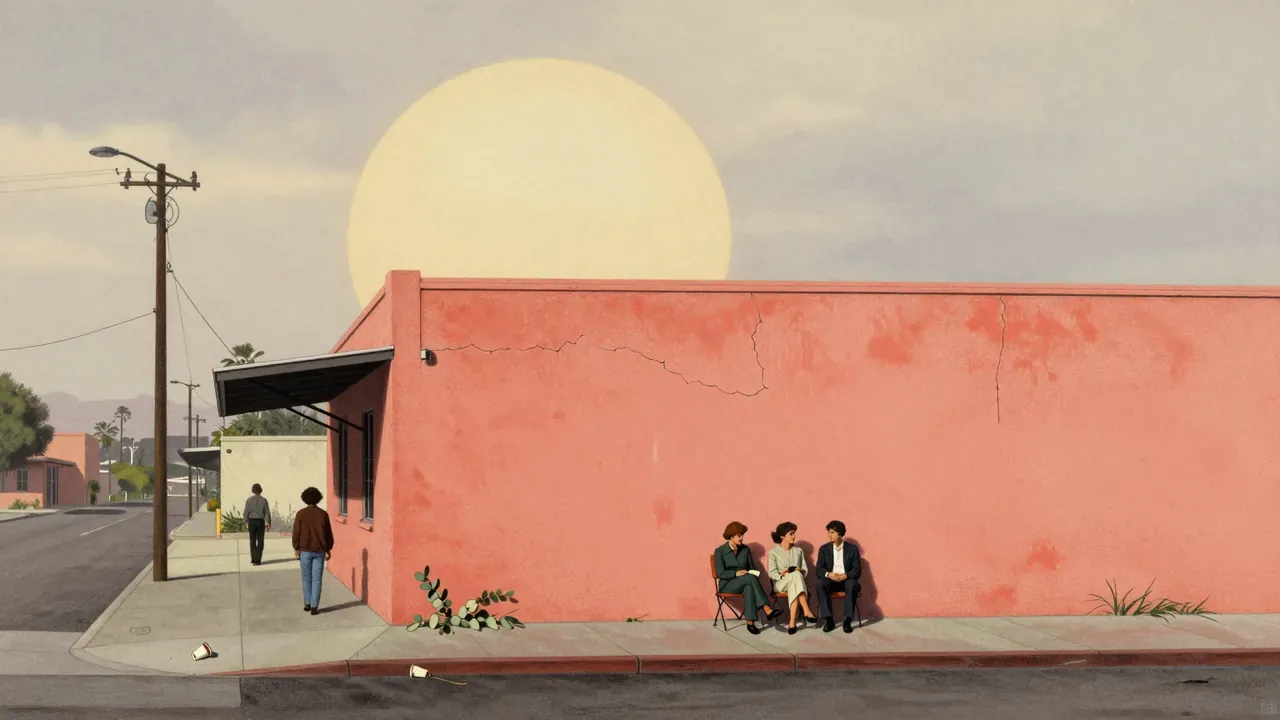
Documenteur is a slender, self-contained fiction film made by Agnès Varda during her time in Los Angeles in the late 1970s and early 1980s. It is not a documentary despite its title and its close relationship to Mur Murs — a non-fiction companion piece about L.A. murals — nor is it a straightforward narrative drama. Instead, it uses fictional scaffolding — a Frenchwoman’s solitary adjustment to life after separation — as a vessel for quiet observation: of light on stucco walls, of murals as civic memory, of the rhythms of typing, waiting, and listening. Varda does not aim to resolve Emilie’s emotional state but to hold it at a slight remove, letting mood and texture accumulate without exposition or psychological explanation. The film’s ambition lies in its restraint: to register displacement not as crisis but as daily recalibration, and to treat the city not as backdrop but as co-protagonist, its surfaces bearing witness. It is a film built from pauses, repetitions, and off-centre compositions — less about what happens than how it feels to be present while something small and unremarkable unfolds.
The rhythm of small things
The story follows Emilie, a Frenchwoman living with her young son Martin in a modest L.A. apartment, working as a typist, slowly reassembling routine. There is no plot pivot, no confrontation, no revelation — only incremental shifts: a new job transcribing narration, a brief encounter with a film crew, a conversation over coffee. Sabine Mamou performs with minimal inflection and steady gaze; her stillness is not emptiness but containment. Mathieu Demy, as Martin, moves with the unselfconscious physicality of childhood, grounding the film in tactile reality. Gordon Willis did not shoot this film — Georges Delerue’s score is spare, mostly piano and strings, used sparingly, never underlining emotion. Varda’s own camerawork favours medium distances and shallow focus; interiors are lit with natural light filtered through blinds or curtains, giving rooms a muted, lived-in weight. Editing avoids continuity logic: scenes drift into one another, sometimes repeating shots or reframing the same mural across cuts. The murals themselves — many filmed for Mur Murs — appear not as decoration but as recurring motifs, their painted figures watching Emilie as she walks past, listens, types, waits.
What it leaves unsaid
What lands is the film’s fidelity to a specific kind of solitude — not despairing, not heroic, but ordinary and persistent. The repeated image of Emilie at her typewriter, fingers moving without urgency, conveys agency without fanfare. The murals function precisely as intended: they are neither metaphors nor set dressing but evidence of collective expression that persists alongside private grief. Varda’s decision to use English — the language of Emilie’s new environment — rather than French, deepens the sense of linguistic and cultural recalibration; the script avoids idioms, favouring plain, functional sentences that feel translated not just linguistically but emotionally. The film’s pacing, which some might call slack, sustains a low hum of attention — enough to notice the way light shifts on a wall over ten seconds, or how Tina the waitress’s posture changes slightly when she leans in to ask a question. These are not flourishes but structural choices: the film rewards patience not with payoff but with accumulation — a slow accrual of detail that makes the world feel real, not rendered.
The weight of ordinary presence
What does not land is any sustained dramatic tension or interpersonal friction. Emilie’s employer, Tom Cooper, remains a cipher; his request that she narrate the documentary feels unearned, arriving without prior rapport or narrative preparation. The film’s resistance to motivation — why this woman, why this city, why this particular break-up — can read as evasion rather than economy, especially for viewers expecting causal clarity. Some performances, particularly Lisa Blok’s friend, hover at the edge of affectation, their lines delivered with a theatrical flatness that jars against Mamou’s understatement. The soundtrack, though tasteful, occasionally misjudges tone: a single cello phrase swells just as Emilie finishes typing, imposing a gravity the scene has not built toward. And while the mirroring between Documenteur and Mur Murs is conceptually neat, it risks making the fiction feel like an annex — a dramatised footnote — rather than a work with its own internal logic. For those who need narrative propulsion or psychological exposition, the film offers little purchase.
Walls that watch back
The themes that matter are displacement as habit, not trauma; the city as archive and accomplice; and care as practice rather than declaration. Emilie’s motherhood is shown in small acts — folding laundry, adjusting a chair, reading aloud — not in speeches or crises. The murals speak to public memory and unofficial history, contrasting with Emilie’s private, unrecorded transition. Varda treats language itself as terrain: Emilie speaks English haltingly, yet confidently; her son switches between languages without code-switching anxiety; the murals’ slogans and images operate outside syntax altogether. Time is another theme — not chronological but atmospheric: days blur, seasons barely shift, yet change is palpable in the way Emilie holds her shoulders or chooses a different route home. There is no nostalgia for France, no critique of America — only the neutral, persistent fact of being somewhere else, learning its grammar, its light, its silences. The film refuses allegory; its politics are embedded in its refusal to explain, to name, to judge.
Attention as the only demand
This film is for viewers who value atmosphere over argument, who find resonance in repetition and silence, and who trust a filmmaker’s eye more than her exposition. It suits those familiar with Varda’s broader work — particularly her California period — or with the traditions of French poetic realism and American minimalist cinema. It is not for viewers who require clear cause-and-effect, character arcs, or thematic resolution. Those who rely on performance cues — raised voices, tears, confrontations — will likely find the cast withholding, even inert. A viewer expecting a ‘break-up movie’ may leave frustrated; so may anyone seeking social commentary with sharper edges or historical framing. The film’s value depends on tolerance for ambiguity: if you need to know why Emilie left France, or whether she will stay in L.A., Documenteur offers no answer — not because it is evasive, but because it treats such questions as irrelevant to the texture of being here, now, typing, listening, walking past a wall where someone once painted a sun.
How it lets go
Yes, it is worth your evening — provided you approach it as a study in duration and detail, not as a story to be followed. Its sixty-five minutes pass without hurry, but not without weight: each shot has been considered, each pause calibrated. It repays attention not with revelation but with recognition — of how light falls on plaster, how a child’s voice carries across a room, how a city breathes in layers. Those who dislike films that resist interpretation may find it inert; those who expect Varda to deliver polemic or autobiography may feel short-changed. But for viewers open to a quieter mode of address — one that trusts the viewer to sit with uncertainty, to notice what is held in reserve — Documenteur offers a rare consistency of tone and vision. It does not argue, persuade, or conclude. It simply persists — and in doing so, makes space for something tender and precise to settle in.