Fifteen Specific Facts
Masculin Féminin is a 1966 French New Wave film that sets out to map the nervous system of post-war Parisian youth—not as characters in a story, but as data points in a living survey. Jean-Luc Godard abandons narrative continuity in favour of a loose sequence of encounters, interviews, and interruptions, framing young people as subjects caught between political urgency and pop-cultural saturation. The film’s stated ambition is documentary-like: to register how ideology, desire, and commerce cohabit in the same breath, same café, same bedroom. It does not dramatise revolution so much as observe its rehearsal—through slogans painted on cars, petitions signed without reading, love declared mid-film reel. Its structure mimics the IFOP opinion polls Paul conducts: questions asked, answers given, meaning deferred. There is no resolution because the film treats its moment—the run-up to de Gaulle’s 1965 re-election—as an open-ended condition, not a plot point. Godard’s method is less adaptation than annotation: he borrows Maupassant’s character name and a title phrase, then discards the source material entirely, treating fiction as raw material for sociological collage.
The look of it
The film works through accumulation rather than causality. Jean-Pierre Léaud’s Paul moves through scenes like a student taking notes—listening, interrupting, misreading, repeating. Marlène Jobert and Catherine-Isabelle Duport play Madeleine’s roommates with uninflected naturalism; Chantal Goya, a real-life yé-yé singer with no prior acting experience, performs her role with the guarded charm of someone aware she is being filmed, not directed. Willy Kurant’s black-and-white cinematography uses available light and shallow focus, keeping faces half-lit and backgrounds soft, as if the camera itself is hesitant to fix meaning. Agnès Guillemot and Marguerite Renoir’s editing favours abrupt cuts and intertitles that announce ‘Fait précis’ (‘Specific fact’), turning each scene into a numbered exhibit. Jean-Jacques Debout’s score is sparse, often absent—replaced by diegetic radio snippets, street noise, or silence. The film’s rhythm comes from repetition: arguments over love, repeated questions about politics, recurring motifs of guns, records, and falling bodies. There are no establishing shots; locations feel discovered, not chosen.
What sticks
What lands is the film’s forensic attention to generational syntax—the way young people speak politics through slang, romance through pop lyrics, dissent through gesture. The vérité-style interviews with passers-by, particularly Elsa Leroy’s monologue on birth control and love, land with quiet force because they refuse dramatisation: she speaks plainly, looking off-camera, and the film lets her. The ménage à quatre arrangement feels less like erotic fantasy than logistical realism—three women sharing space, Paul moving in as auxiliary presence, not patriarch. The intertitle ‘This film could be called The Children of Marx and Coca-Cola’ lands not as irony but as taxonomy: it names the dual inheritance without judging either term. Even the film’s digressions—like the Dutchman paraphrase or the self-immolation scene—function as calibrated ruptures, forcing the viewer to recalibrate what counts as relevant. Godard’s refusal to smooth transitions means the film’s texture stays abrasive, urgent, unresolved—precisely what makes it feel alive forty years later.
Where it slips
What does not land is the film’s occasional drift into didactic abstraction. Some of the intertitles read like lecture notes transcribed without context—‘Fact 7: On the nature of the interview’—and their authority feels borrowed rather than earned. The subplot involving Robert Packard’s journalism lacks grounding: his editor, his publication, even his motives remain vague, making his polemics sound rhetorical rather than lived. Brigitte Bardot and Françoise Hardy appear uncredited in walk-on roles that add celebrity texture but no thematic weight; their presence feels like a concession to marketability, not structural necessity. The film’s treatment of Madeleine’s pregnancy remains frustratingly opaque—neither medical nor emotional stakes are developed, and her final ambiguity reads less as realism than evasion. Some viewers will find the pacing deliberately slack where it should be taut; others may read the lack of closure as principle, not flaw. But the film’s resistance to catharsis does not always distinguish itself from indifference.
What it’s really about
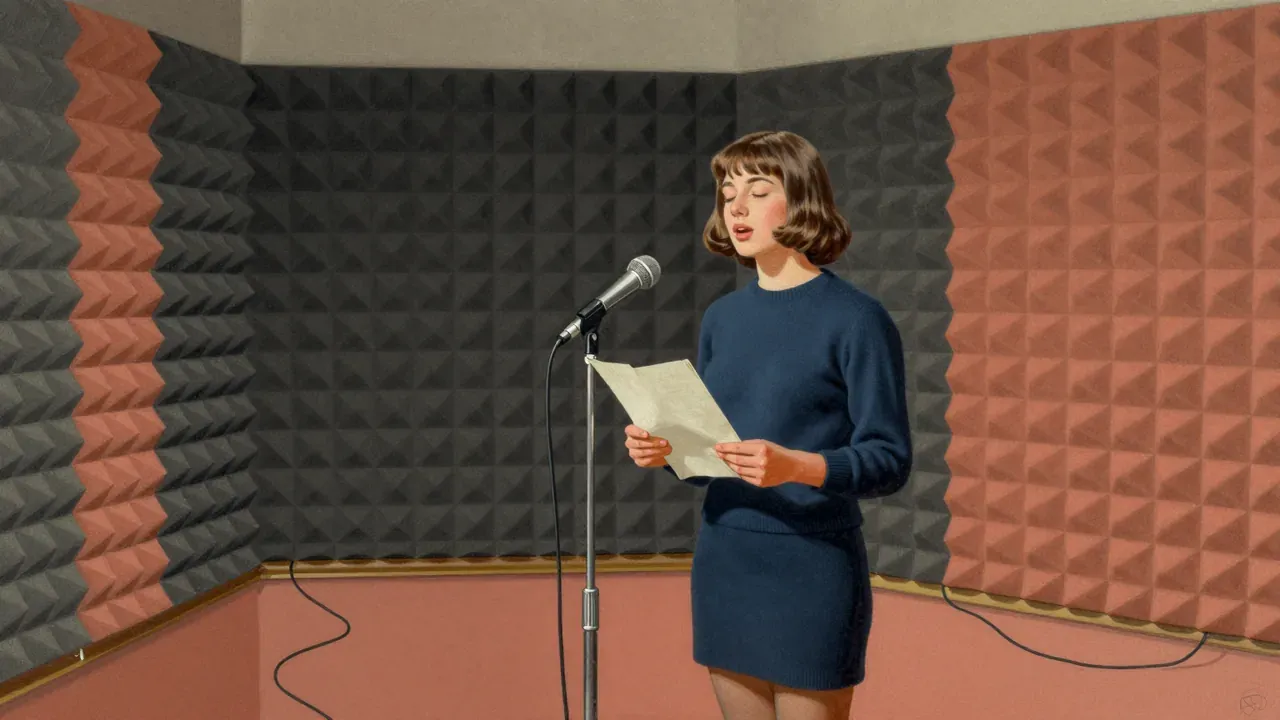
The themes that matter are not abstracted but embedded: the collision of personal agency and mass media, the gendered labour of emotional labour, the banality of political performance. Masculin Féminin treats love and voting as parallel acts of consent—both subject to polling, scripting, and revision. It examines how ideology circulates: not through manifestos but through record labels, magazine assignments, cinema queues. The film’s sustained interest in work—Paul’s shift from journalist to pollster to apartment buyer—charts a quiet disillusionment with vocation as vehicle for change. Gender is not debated but demonstrated: men talk about revolution while women manage logistics, negotiate boundaries, and absorb consequences. The recurring motif of recording—coin-operated booths, studio sessions, tape recorders—frames memory and identity as technologies under construction. Even the title’s binary is destabilised: ‘masculin’ and ‘féminin’ are not identities but grammatical categories, mutable, interchangeable, grammatically arbitrary—just as the film treats politics, love, and pop as grammatical units in the same sentence.
Who it’s for
It is for viewers who treat cinema as a site of inquiry rather than escape—those comfortable with ellipsis, willing to sit with unanswered questions, and attuned to the politics of form. It rewards patience with texture, not payoff. It is not for those who require narrative propulsion, psychological coherence, or emotional resolution. Viewers expecting a romance or a protest film will find neither: the love story resists sentiment, the activism resists heroism. Those put off by Godard’s reputation for difficulty may miss how accessible the surface is—conversational dialogue, recognisable Paris streets, pop music—but the film’s rigour lies beneath that surface, in its refusal to explain itself. A viewer who values clarity over provocation, or who expects films to resolve what life leaves open, will leave frustrated. Nothing in the film changes that verdict—not its acclaim, not its historical standing, not its formal innovation. It asks for attention, not allegiance.
Why it lasts
Yes, it is worth your evening—if you approach it as a document of its time and a provocation for ours. Its 104 minutes unfold with the unhurried precision of a sociologist taking field notes: nothing is wasted, nothing is decorative. You do not watch it for plot but for pattern—for how a cigarette smoke curl mirrors a question mark, how a spray-painted slogan echoes a record label’s logo, how a woman’s laugh cuts across a political argument. It repays close viewing not because it hides meaning but because it distributes it: in glances, pauses, off-screen sounds. Those who prefer immersive storytelling may find it alienating; those who value intellectual friction will find it bracing. Its endurance lies not in nostalgia but in its diagnosis: the entanglement of private desire and public discourse remains our condition. No amount of streaming convenience or algorithmic curation alters that. It is worth your evening because it refuses to be background noise—and because few films since have held a mirror this steady to the contradictions we still live inside.