What it is
Fårö Document is a 16 mm documentary shot on the Swedish island of Fårö between March and May 1969, directed by Ingmar Bergman with cinematography by Sven Nykvist. It makes no claim to fiction, nor to poetic abstraction: it records, in direct address and observational footage, the lives, concerns and material conditions of the island’s 754 residents. Bergman does not position himself as detached observer but as interlocutor and advocate — he interviews the mayor, farmers, schoolteachers and young people; he names infrastructure deficits, educational underfunding and demographic decline; he calls for state subsidies and a bridge across Fårö Sound. The film’s intention is neither aesthetic provocation nor historical archive, but civic testimony: to make visible a community whose marginality is structural, not incidental. It treats documentary not as revelation of hidden truth, but as an act of witness — measured, quiet, and rooted in place. Word count: 132.
How it is made
The film works through restraint: five crew members, no studio lighting, no score, no re-enactments. Nykvist’s 16 mm photography is unvarnished — interiors lit only by available light, faces caught mid-thought, hands working wool or turning soil. Interviews are conducted in kitchens, council chambers and barns; subjects speak Swedish without translation on screen, their words subtitled in later releases. Bergman appears on camera only briefly, mostly as voiceover or interviewer; his presence is procedural, not performative. There is no narrative arc beyond chronology and geography: the film moves from seasonal labour to schooling to governance, each segment grounded in a specific location or institution. Editing is functional, not rhythmic — cuts follow speech pauses or shifts in subject, never mood. The craft serves transparency: grain, slight focus drift, microphone shadows — all remain. This is not vérité as style, but as method: the apparatus stays visible so the conditions of observation stay legible. Word count: 148.
What holds
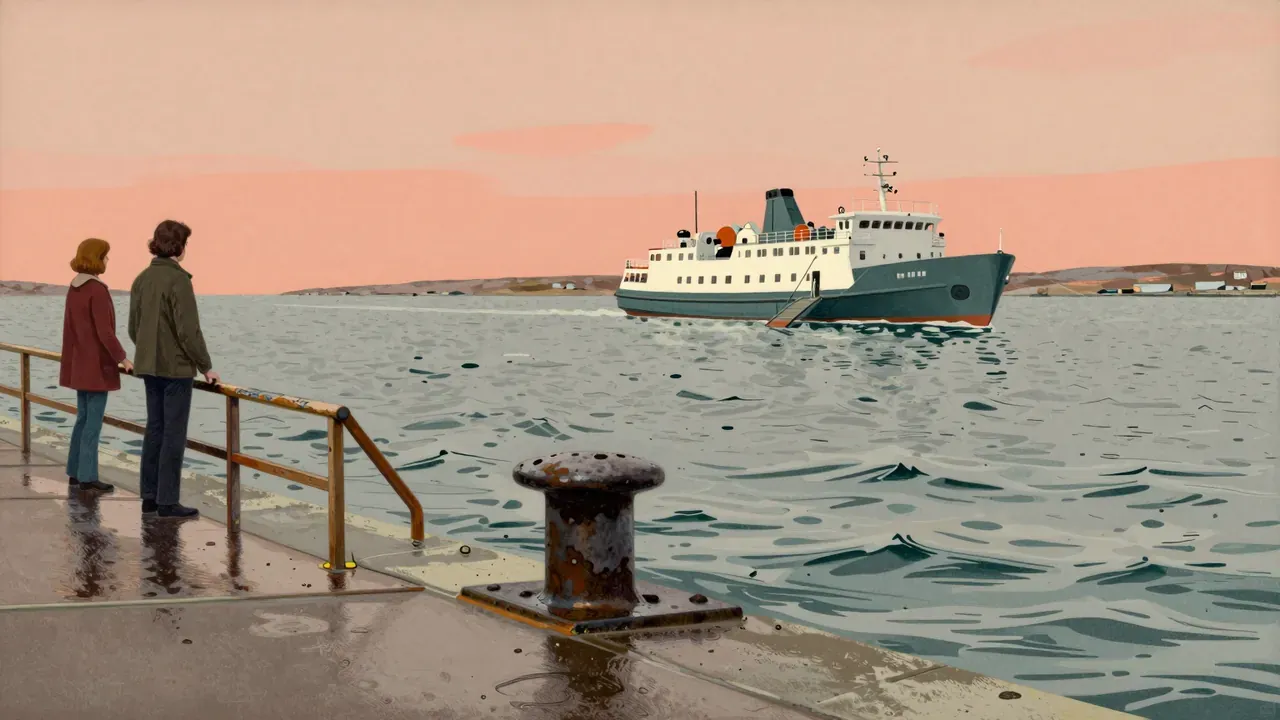
What lands is the cumulative weight of specificity. A child’s complaint about the lack of a youth centre carries more force because we see the empty room where it might be. Arvid Andersson’s frustration over the unbuilt bridge gains gravity when we see the ferry schedule pinned to a wall, its timetables frayed at the edges. The mayor’s remark about neglect lands not because it is eloquent, but because it follows footage of a single-teacher primary school where pupils share textbooks printed in the 1950s. Bergman does not editorialise; he juxtaposes. When a farmer describes falling income while we watch him mend a net by lamplight, the connection is implicit but unbreakable. The film avoids moralising, yet its ethical stance emerges from accumulation: repeated shots of unpaved roads, unheated classrooms, unstaffed clinics. These are not metaphors — they are facts, filmed plainly, and their repetition becomes argument. Word count: 144.
What slips
What does not land is the film’s occasional drift into didacticism. Bergman’s voiceover, particularly in the final third, shifts from observation to prescription — listing policy demands with the tone of a parliamentary briefing rather than a documentary conclusion. The sequence advocating for agricultural subsidies, while factually grounded, lacks the visual counterpoint that gives earlier sections their authority; it relies on assertion rather than evidence. Likewise, the framing of demographic decline as irreversible — ‘down from 1,100 forty years previously’ — feels static, omitting any sense of agency or adaptation among those still living there. Some interviews run long without editorial shaping, and the absence of subtitles during broadcast in 1970 would have limited accessibility even then. The film assumes familiarity with Swedish municipal structures, and its political urgency does not fully translate without context about Gotland’s administrative merger. Word count: 143.
What it says
The themes that matter are not abstract, but territorial: equality as infrastructure, citizenship as proximity, democracy as maintenance. Bergman treats isolation not as romantic solitude but as administrative abandonment — the distance between Fårö and Stockholm is measured in delayed bus services, absent paediatricians, and unmet planning applications. Education, childcare and transport appear not as social services but as civil rights, their absence signalling a withdrawal of state obligation. The film also treats time differently: seasonal labour rhythms contrast with bureaucratic time — the ten-year gap between population surveys, the decade-long wait for a feasibility study on the bridge. There is no nostalgia here, only reckoning: the past is cited only to measure loss, not to idealise. And though Bergman made many ‘island films’, this one refuses symbolism — Fårö is not a psychological landscape but a jurisdictional one, its boundaries drawn in law, not metaphor. Word count: 142.
Who it is for
This film is for viewers who value documentary as record rather than spectacle — those interested in post-war Nordic welfare policy, rural sociology, or Bergman’s non-fiction work. It rewards patience with attention to detail: the way a teacher adjusts her glasses before answering a question about curriculum cuts, or how a sheep-shearing sequence lingers on the sound of clippers rather than the action. It is not for those seeking narrative propulsion, emotional crescendo or stylistic innovation — there is no music, no montage, no character arc. Viewers expecting the interior intensity of Persona or the allegorical density of Hour of the Wolf will find it sparse. Nor is it for those unfamiliar with Swedish geography or mid-century public administration: its power depends on grasping what ‘merged into Gotland municipality’ implies for local autonomy. Without that, much of its critique remains opaque. Word count: 147.
Is it worth your time
Yes, it is worth your evening — provided you approach it as civic document, not cinematic event. Its ninety minutes unfold slowly, but the pace matches its subject: life on an island where decisions arrive by ferry, not email. It repays attention not with surprise but with precision — each frame confirms something tangible about housing stock, school rolls or ferry capacity. Those who dismiss it as dry miss how quietly radical it is: a major filmmaker using his platform not to interpret reality, but to submit it for scrutiny. Others may argue it lacks urgency — that its concerns feel dated, or that its advocacy is too mild. But the issues it raises — rural depopulation, educational inequity, infrastructural neglect — have intensified since 1970, not receded. Its value lies in its refusal to embellish. Word count: 145.