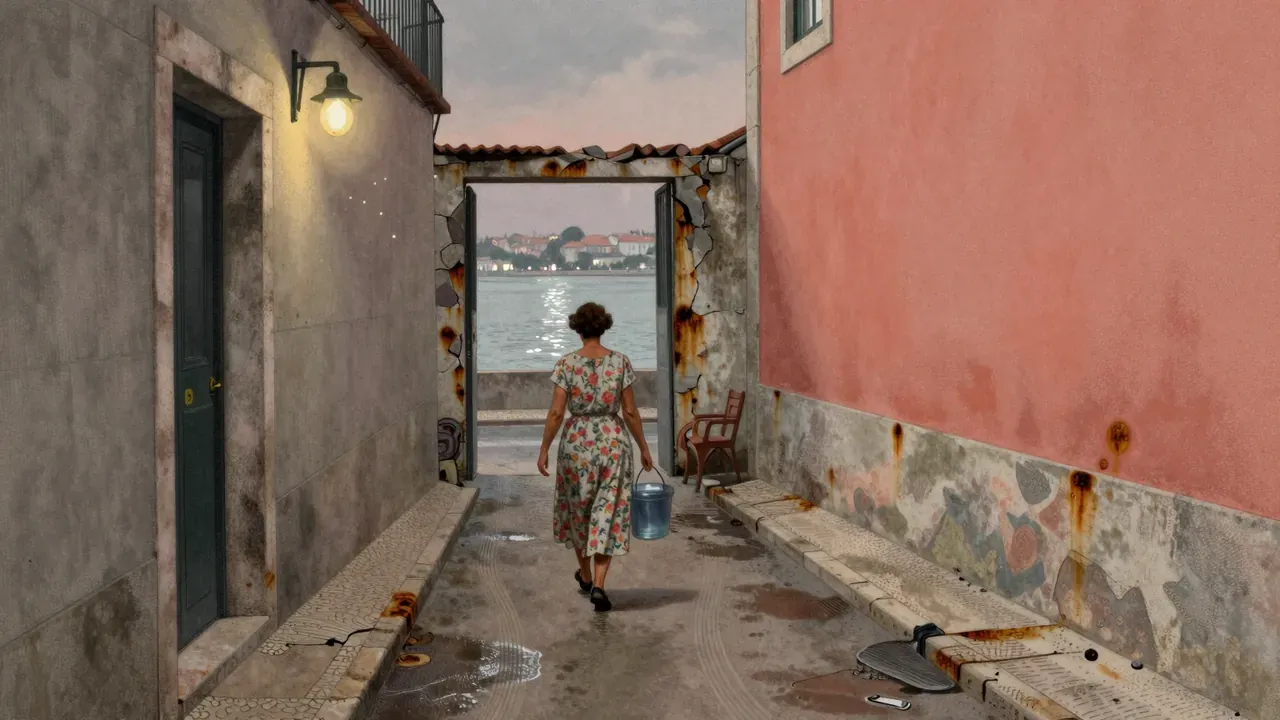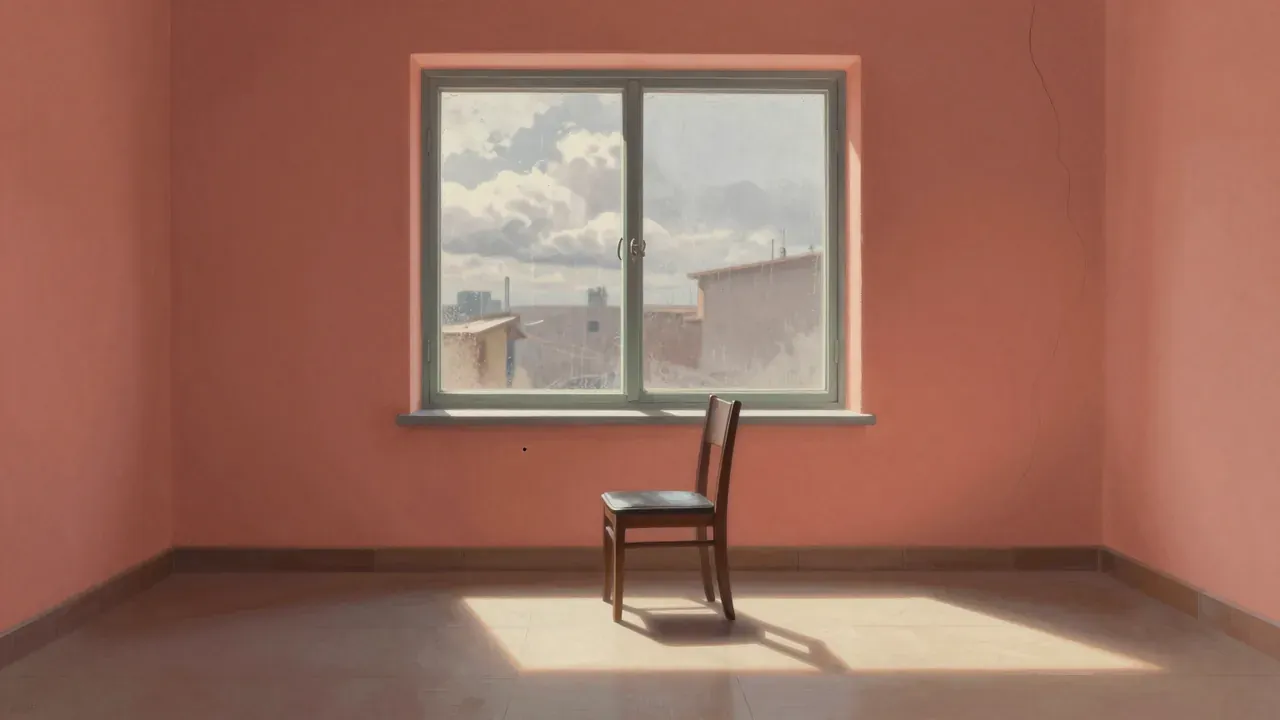
The look of it
Colossal Youth is a film about endurance, not progression; about presence, not plot. Pedro Costa does not reconstruct Fontainhas — the Lisbon neighbourhood slated for demolition — so much as hold it in sustained, unblinking attention. It is neither documentary nor fiction but a third thing: a slow accumulation of real people in real rooms, speaking words written by Costa yet sounding like memory or incantation. The film’s aim is not to explain the lives of Cape Verdean immigrants in post-Carnation Revolution Portugal, but to let those lives occupy time and space without concession to exposition or narrative cause. Ventura, seventy-five and newly rehoused in a sterile government flat, moves among others who call him Papa — some blood kin, some not, all bound by shared displacement and quiet mutual care. Costa’s method is one of repetition, restraint and refusal: no establishing shots, no voiceover, no score, no editing that clarifies sequence. What emerges is not a story told, but a condition held — one of waiting, remembering, surviving.
How it holds time
The film works through stillness, not motion. Pedro Costa and Leonardo Simões shoot on DV, keeping frames static, often tight on faces or doorways, with interiors lit to flatten depth and heighten texture — peeling plaster, cracked tiles, bare bulbs casting long, hard shadows. Ventura and the others are non-professionals playing versions of themselves; their line deliveries are unhurried, sometimes halting, often trailing into silence. Editing by Pedro Marques avoids continuity logic: scenes bleed into one another without temporal markers, and dialogue may begin mid-sentence or end unresolved. Sound design by Olivier Blanc, Vasco Pedroso and Jean-Pierre Laforce treats ambient noise — distant traffic, dripping taps, footsteps on concrete — as structural elements, not background. The recurring recitation of a love letter by Ventura functions less as plot device than as rhythmic anchor, its phrasing growing more resonant with each repetition. There are no performances in the theatrical sense; instead, there is bearing witness — to posture, to pause, to the weight of a glance held too long.
What stays with you
What lands is the cumulative weight of attention. Ventura’s face, filmed in close-up over minutes, becomes a landscape of time — not just age, but the sediment of migration, labour, loss. The contrast between his bright, empty new apartment and the dim, cluttered tenements he visits is never stated but felt in every cut, every shift in light and texture. The film’s repetitions — the letter, the doorway, the repeated address ‘Papa’ — do not bore; they deepen, turning ritual into resonance. Even the silence between lines carries history: pauses are not voids but vessels. The high-contrast DV image renders decay beautiful without romanticising it; grime and glare coexist without hierarchy. When Vanda Duarte speaks of Cape Verde, her voice does not evoke nostalgia but a kind of geological memory — place as stratum, not postcard. The film’s emotional force arrives not through drama but through duration: the longer you stay with it, the more its stillness begins to vibrate. Its power is not immediate, but adhesive — it sticks to the mind like dust on skin.
Where it refuses you
What does not land is narrative legibility — and this is by design, not failure. Viewers expecting causal chains, character arcs or psychological exposition will find none. Relationships remain ambiguous: it is never confirmed whether the woman with the knife is addressing Ventura, or whether the furniture thrown from the window belongs to him. Time collapses and expands without warning; a conversation may span days or minutes, and the film gives no cue. The lack of diegetic music, conventional pacing or even consistent spatial logic can read as evasion rather than economy. Some will find the long takes inert rather than immersive; others may mistake restraint for absence. The film refuses translation — not just of Portuguese, but of gesture, silence, pause. It assumes the viewer will sit with uncertainty, and those unwilling or unable to do so will leave frustrated. That resistance is part of its structure, but it is also where the film draws its sharpest line: it does not meet halfway.
What it remembers
The themes that matter are ageing, inheritance, and the afterlife of revolution. Ventura is not a relic but a living archive — his body, voice and habits carry traces of Cape Verde, colonialism, the 1974 uprising, and decades of marginalisation in Lisbon. ‘Youth on the March’ is bitterly ironic: the title evokes revolutionary fervour, but the film shows youth dispersed, deferred, or already worn thin. The government flats represent official progress, yet they isolate rather than uplift; the old tenements, though squalid, hold community, memory, shared language. Language itself is a theme: Portuguese spoken with Cape Verdean cadence becomes a site of identity, not deficiency. The letter Ventura recites is not about romance alone but about fidelity — to person, to promise, to past. This is a film about what persists when institutions fail: not ideology, but tenderness; not policy, but proximity; not history as event, but as residue in the throat, the hands, the way someone sits in a chair.
Who it meets
This film is for viewers who treat time as material, not currency — those who can sit with silence, who find meaning in repetition, who trust that a face held in frame for two minutes may say more than a monologue. It rewards patience, not expertise. It is not for those who need narrative signposts, emotional payoff within scenes, or clear distinctions between fact and fiction. People who rely on conventional dramaturgy — motivation, escalation, resolution — will likely disengage. Those who associate ‘arthouse’ with stylistic flourish rather than ethical commitment may misread its austerity as emptiness. A change in verdict would follow a shift in viewing habit: if the film were shortened, scored, or given explanatory subtitles, it would cease to be itself. Its value lies precisely in its refusal to accommodate — which means its audience must meet it on its own terms, not the other way around.
What remains
Yes, it is worth your evening — but only if you give it your full, undivided, unmediated attention. Not as background, not while checking messages, not with the expectation of being ‘entertained’. Its 115 minutes ask for surrender to rhythm, not reward for endurance. You will not leave with answers, but you may leave with a recalibrated sense of how time feels on screen — slower, heavier, more porous. Those who walk out at Cannes or scroll away mid-viewing are not wrong; they are simply outside the film’s contract. Its worth is not objective but relational: it depends on what you bring — stillness, curiosity, tolerance for ambiguity. If you arrive expecting cinema as delivery system for story or sensation, it will disappoint. If you arrive willing to let the film’s pace become your own, it may linger long after the credits — not as memory of plot, but as memory of light on a wall, of a voice pausing, of a man called Papa walking down a corridor that seems to go nowhere and everywhere at once.