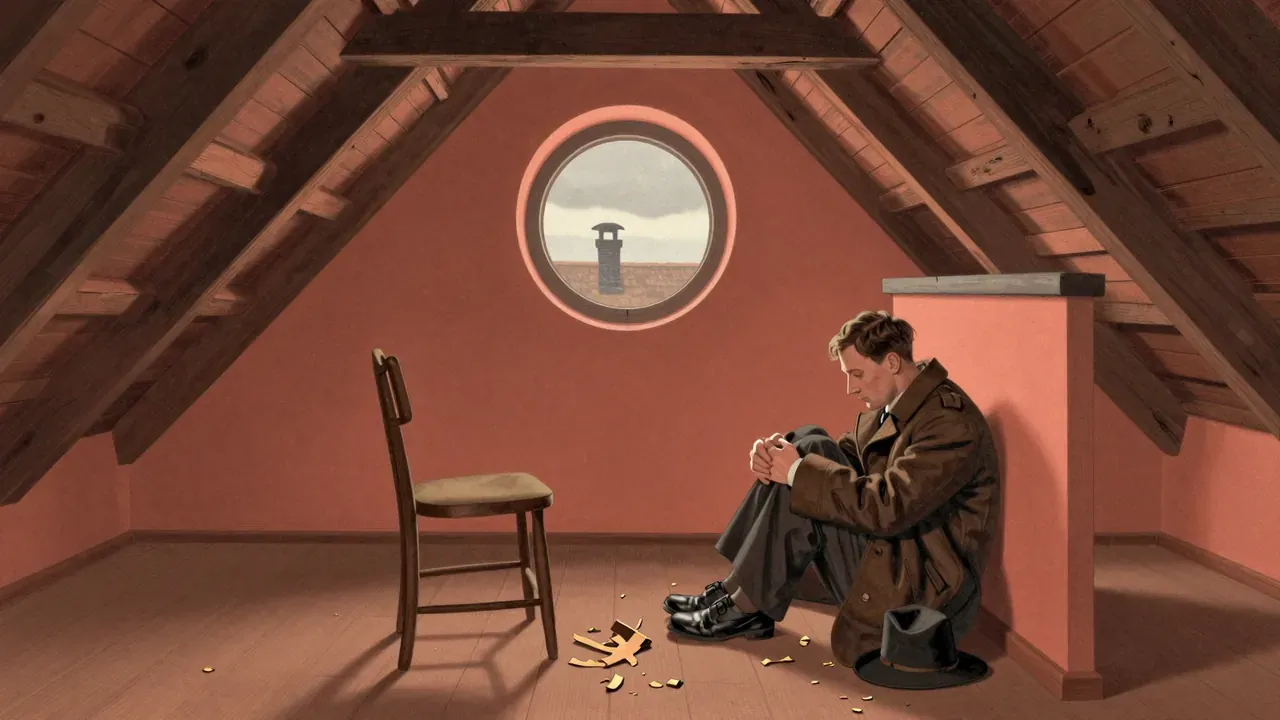
The first frame is Kansas
Lynch/Oz is a documentary that sets out to trace the throughline between The Wizard of Oz (1939) and David Lynch’s entire body of work — from The Alphabet (1969) to Twin Peaks: The Return (2017). It treats Lynch’s remark — ‘There is not a day that goes by that I don’t think about The Wizard of Oz’ — not as anecdote but as a structural hypothesis. The film does not seek to prove direct influence, nor does it claim Lynch consciously quoted or adapted the MGM film. Instead, it proposes a deeper, more permeable relationship: one of shared grammar, recurring motifs, tonal echoes, and psychological architecture. Its method is associative rather than evidential, building patterns across decades of Lynch’s output using visual parallels, rhythmic repetitions, and symbolic returns — notably the threshold between domestic reality and uncanny elsewhere, the use of red shoes and ruby slippers as objects of power and peril, and the figure of the small, vulnerable girl navigating layered worlds. It frames Oz not as source material but as unconscious substrate.
How it lines up
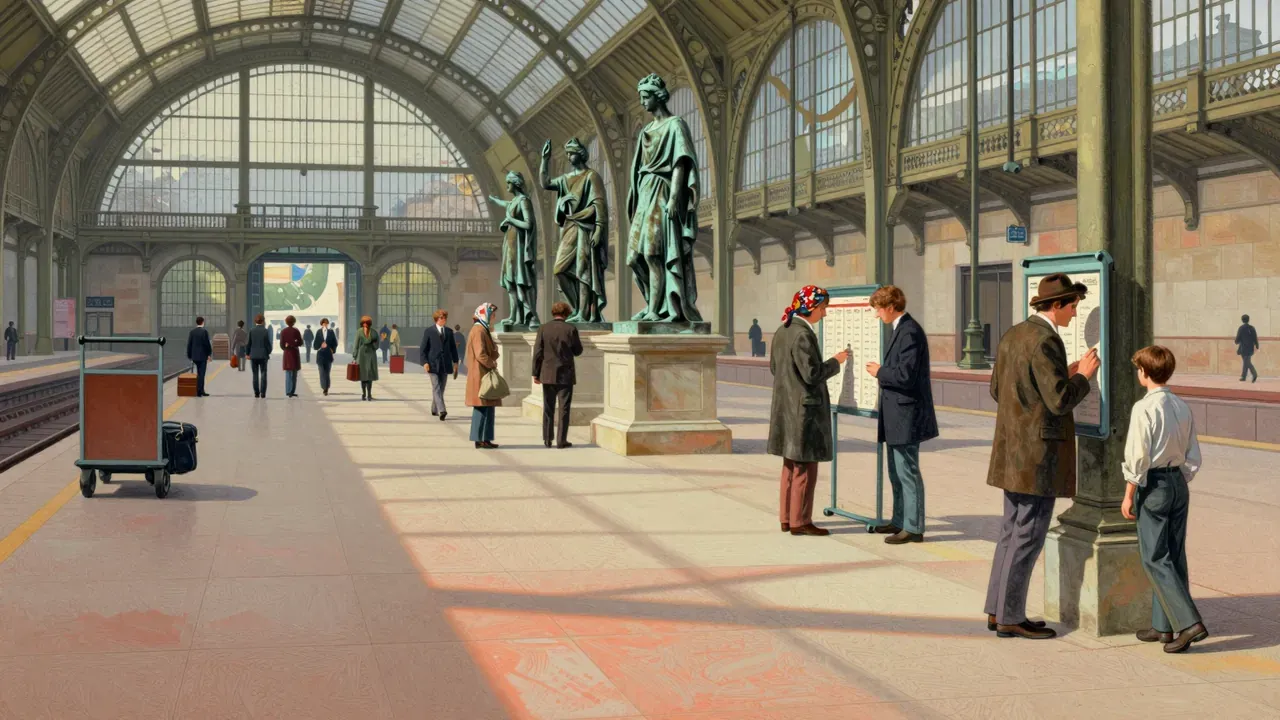
The film unfolds in six chapters, each narrated by a different filmmaker or critic — Amy Nicholson, Rodney Ascher, John Waters, Karyn Kusama, Justin Benson and Aaron Moorhead — whose voices alternate without hierarchy or debate. Their narration is tightly interwoven with hundreds of film clips, drawn almost exclusively from Lynch’s films and television, alongside extended passages from The Wizard of Oz. Editing is rapid but precise, favouring side-by-side comparisons: Dorothy’s descent into Oz mirrored against Laura Palmer’s slow fall in Twin Peaks; the Wicked Witch’s green skin echoed in the pallor of the Red Room’s inhabitants; the Kansas tornado’s vortex matched to the spiralling static of Eraserhead. Cinematographer Robert Muratore shot the bookending sequence on drone inside the Central City Opera House, lending a hushed, architectural gravity to the frame. There are no interviews, no archival footage of Lynch speaking beyond the 2001 New York Film Festival clip cited in the synopsis, and no score beyond existing diegetic music lifted from the source films.
Where the eye agrees
What lands most firmly is the sheer density of visual correspondence. The film makes palpable how often Lynch returns to Oz’s core spatial logic — the shift from monochrome to colour, the doorway as rupture, the domestic interior as unstable ground. The chapter on sound design, voiced by Amy Nicholson, quietly demonstrates how both films treat silence as pressure and music as intrusion — not background but agency. Rodney Ascher’s segment on doubling and mirroring gains force when paired with split-screen edits showing Dorothy’s reflection in the witch’s crystal ball beside Cooper’s doppelgänger in the Lodge. John Waters’ dry delivery anchors the film’s more playful speculations — particularly around camp, artifice and the erotic charge of costume — without tipping into irony. The structure itself works: each narrator brings a distinct lens, and none overstay. The cumulative effect is less argument than atmosphere — a sustained mood of recognition, where pattern feels inevitable rather than imposed.
What it leaves out
What does not land is any sustained interrogation of contradiction or resistance. The film assumes Oz’s influence as given, then maps it relentlessly — but never asks why this particular film, among all American cultural touchstones, should hold such persistent sway over Lynch’s imagination. There is no counter-voice questioning whether the connections are projections, nor space for the possibility that Lynch’s own statements about Oz may be myth-making rather than confession. The editing’s speed occasionally obscures its own point: a flurry of cuts between red shoes, ruby slippers and bloodstains risks flattening meaning into motif. The absence of context — no discussion of Lynch’s childhood, his reading, his engagement with other artists or traditions — leaves the thesis unmoored from biography or history. And while the drone-shot opera house sequence is visually arresting, its function remains ambiguous: it evokes grandeur and decay, but does not clarify what it signifies within the film’s central proposition.
Thresholds, not origins
The themes that matter are thresholds, memory as repetition, and the domestic as porous. Lynch/Oz treats the Kansas-to-Oz transition not as plot device but as psychological template — a model for how consciousness folds, fractures and reassembles under stress. It foregrounds the idea that trauma and wonder occupy the same neural real estate: the tornado is both terror and liberation; the Wicked Witch is threat and fascination; Dorothy’s desire to return home is indistinguishable from her need to leave it. The film also insists on the materiality of illusion — how Technicolor, matte painting, forced perspective and rear projection create worlds that feel emotionally true even when visibly constructed. This aligns closely with Lynch’s own methods: his films do not hide their artifice, but lean into it as part of their emotional grammar. What emerges is less a study of influence than a meditation on how certain images become psychic infrastructure — repeated not because they are understood, but because they cannot be discarded.
Who it speaks to
This film is for viewers already familiar with Lynch’s major works and comfortable watching long sequences of edited clips without exposition or summary. It rewards attention to texture, rhythm and recurrence — not narrative explanation. It is not for those seeking biographical insight, historical context, or critical distance from Lynch’s mythology. Nor is it for viewers who require clear argumentative scaffolding: the film offers propositions, not proofs, and expects the audience to sit with ambiguity rather than resolve it. Those who find associative thinking frustrating — who prefer cause-and-effect over resonance — will likely feel adrift. A viewer who has not seen Mulholland Drive, Blue Velvet or Twin Peaks: The Return will miss most of the film’s connective tissue. But someone who has watched Lynch’s films repeatedly, who notices how often a hallway stretches too far or a light flickers before revelation, will find much here that feels like confirmation — not of fact, but of intuition.
Is it enough?
It is worth your evening if you approach it as an extended visual essay rather than a conventional documentary — that is, if you accept its premise as invitation, not assertion. Its 108 minutes pass without drag, sustained by the precision of its editing and the quiet authority of its narrators. It does not change how you understand Lynch’s work, but it may change how you watch it: afterwards, the click of a door, the glint of a shoe, the hum before a cut, all carry faint, familiar echoes. Those who expect analysis to yield conclusions may leave unsatisfied; the film refuses resolution, preferring reverberation. Anyone who values rigour over revelation, or evidence over evocation, will find it thin. But for those who believe cinema lives in the space between frames — where association takes root — Lynch/Oz holds its ground. It is neither definitive nor exhaustive, but it is attentive, intelligent and unusually coherent in its narrow scope.