The look of it
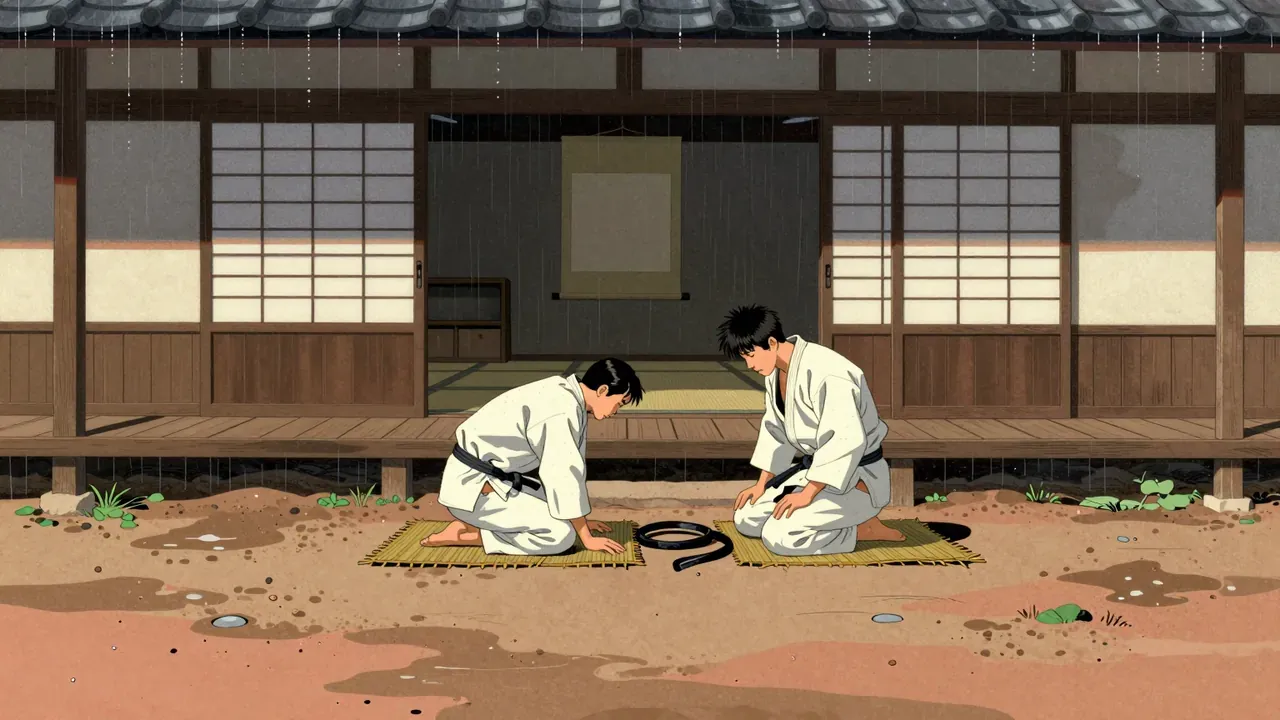
Sans Soleil is a 100-minute French essay-film that positions itself as a documentary while refusing the conventions of exposition, authority or linear argument. It attempts no survey of Japan or Guinea-Bissau — the two locations it returns to most insistently — nor does it seek to explain them. Instead, it treats memory as unstable material: images are held, repeated, mislabelled, colourised, layered, and left unresolved. The film’s stated subject is not place or politics but the gap between what is seen and what can be recalled or narrated about it. Its method is epistolary fiction: a female voice reads letters from Sandor Krasna, a non-existent cameraman whose name appears nowhere outside the film. This device allows Marker to detach authorship from presence, to speak through absence, and to treat observation as inherently partial and retrospective. The film was assembled over several years in the 1970s, largely by Marker alone — writing, shooting, editing, scoring — and its form reflects that solitude: patient, associative, unpressured by narrative obligation or audience expectation. It is less an account than a rehearsal of doubt.
The sound of it
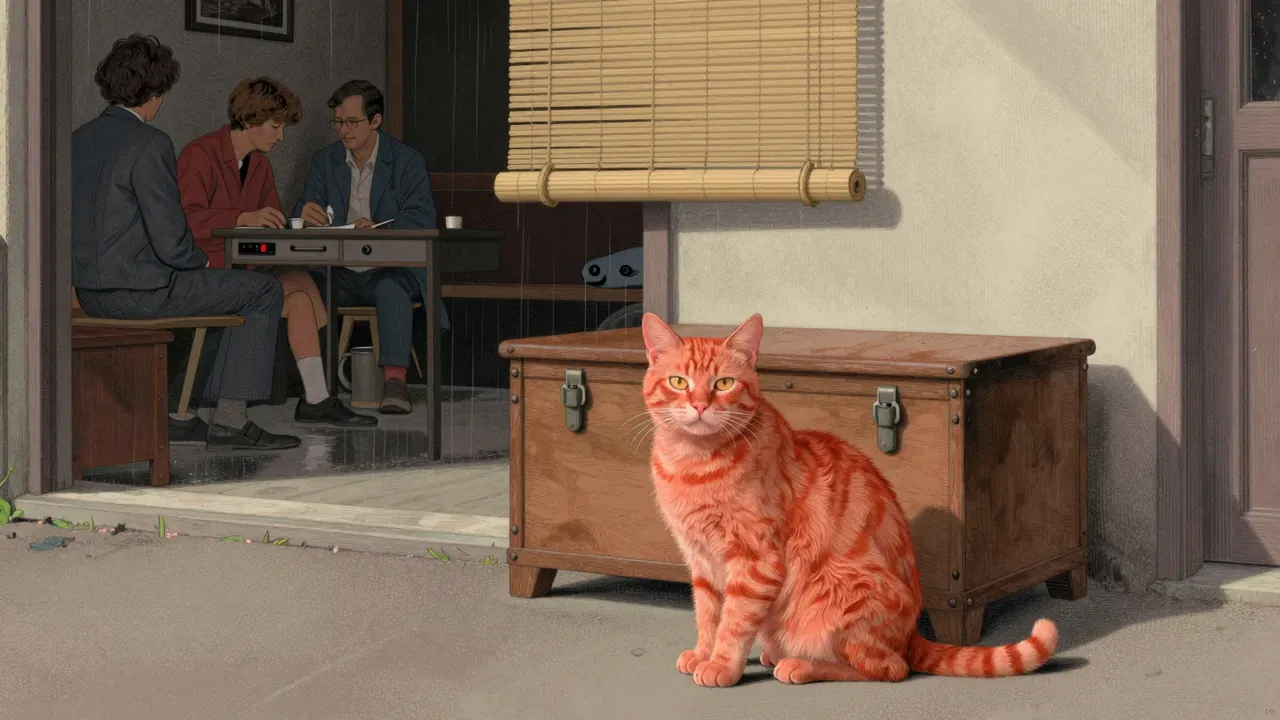
The film works through juxtaposition rather than progression. There is no story in the conventional sense, no character arc, no dramatic resolution. Florence Delay delivers the narration with quiet, uninflected precision; Arielle Dombasle, Riyoko Ikeda, Kim Novak and Alexandra Stewart appear only in found footage or stills — their presence is archival, not performative. Marker shot original material on silent 16mm Beaulieu, then synced it later to non-synchronous sound recordings, creating a deliberate disjunction between image and voice. He edits with long holds, abrupt cuts, and recurring motifs — a cat, a statue, a subway platform — that accrue weight through repetition rather than explanation. The EMS Spectre video synthesizer colourises some stock shots, giving them a faintly artificial, spectral glow. Music is composed by Marker using Moog synthesisers, sparse and tonally ambiguous, underscoring rather than guiding emotion. No dialogue is recorded on location; all speech comes from the narrator reading Krasna’s letters or from clips lifted from Japanese television, newsreels, or films like Vertigo and La Jetée. The craft is one of restraint: every decision serves distance, not immersion.
The places in it
What lands is the film’s sustained atmosphere of reflective unease — the sense that memory is not a storehouse but a series of faulty transmissions. The sequences in Tokyo feel simultaneously hyper-real and dreamlike: crowds moving in slow motion, commuters staring blankly at screens, shrines filmed with clinical attention. The contrast with footage from Guinea-Bissau — shot in the early 1970s, just after independence — carries quiet political weight without commentary: children playing near abandoned tanks, elders speaking directly to camera, grainy images of daily life that resist romanticism or pity. The Icelandic volcano sequence, credited in voiceover to Haroun Tazieff, functions as a geological counterpoint: raw, indifferent, unmediated force. These moments do not argue but accumulate — their power lies in their refusal to cohere into a thesis. The film’s pacing, often glacial, becomes its strength: it insists on duration, on waiting for meaning to emerge, or not. Viewers who accept its terms find themselves attending more closely to gesture, light, silence — to what is withheld as much as what is shown.
The voice in it
What does not land is any attempt to read the film as a coherent meditation on global politics or cross-cultural understanding. Its references to colonialism, revolution or nuclear anxiety remain elliptical, gestural, never anchored in context or consequence. The fictional Krasna’s letters sometimes lapse into vague aphorism — ‘the future is not what it used to be’ — without sufficient grounding in image or event to earn their weight. Some viewers will find the Moog score dated, its synthetic timbres now redolent of a specific 1970s avant-garde aesthetic rather than timeless texture. The colourised stock footage, while technically inventive, can look arbitrary, even kitsch, when divorced from its original register. The film’s resistance to explanation may read as evasion to those expecting documentary rigour or historical clarity. Peter Bradshaw’s description of parts as ‘redundant’ is defensible: certain repetitions — of the cat, of train platforms — risk mannerism when viewed outside the film’s own logic of recurrence. And Vincent Canby’s objection — that the film closes out all but the most devoted Marker students — holds where the film substitutes allusiveness for accessibility without compensating with emotional or intellectual payoff.
The memory in it
The themes that matter are memory’s unreliability, time’s non-linearity, and the ethics of looking. Marker treats the camera not as a tool of truth but as a flawed witness: footage is misattributed, sources uncredited until the end, contexts erased. The film asks what remains when you strip away synchronicity, authorial voice, and narrative causality — and finds that what remains is not emptiness but density: of association, of mood, of unresolved tension. Its treatment of Japan is neither ethnographic nor touristic but phenomenological: it attends to how light falls on skin, how crowds move in rhythm, how screens reflect faces back at themselves. In Guinea-Bissau, it registers the physical residue of war and liberation without interpreting it. The title’s reference to Mussorgsky’s Sunless — a song cycle about death and absence — is not decorative: it frames the entire work as an elegy for coherence, for certainty, for the sunlit clarity of fixed meaning. The film’s central proposition is that understanding is always provisional, always mediated, always haunted by what has been forgotten, misremembered or deliberately omitted.
The time in it
It is for viewers who tolerate ambiguity, who value slowness over exposition, and who find intellectual reward in pattern, texture and silence. It suits those already familiar with essay-films, structuralist cinema or the work of Godard, Farocki or Akerman — not as prerequisite, but as orientation. It is not for viewers who require narrative propulsion, clear argument, or emotional signposting. Those seeking historical context on Guinea-Bissau’s independence struggle or Japan’s postwar cultural shifts will leave unsatisfied: the film offers no bibliography, no interviews, no voice-of-God commentary. It is also unlikely to engage audiences accustomed to synchronous sound, character-driven arcs or digital immediacy. A viewer who finds the opening minutes — a static shot of a cat, followed by a slow pan across a museum frieze — inert rather than inviting will not warm to the film’s methods. Its value depends on willingness to meet it on its own terms: as a set of questions posed in image and rhythm, not answers delivered in speech.
The ending of it
Yes, it is worth your evening — provided you watch it whole, undistracted, and without expectation of resolution. Its 100 minutes unfold with a gravity that rewards attention, not passive consumption. It repays re-viewing: details shift in significance, connections deepen, silences grow louder. Those who dismiss it as pretentious or obscure often do so because they expect documentary to instruct, not to unsettle; to clarify, not to complicate. Change the terms — demand clarity, chronology or moral framing — and the film fails. But judged on its own grounds — as a sustained, self-aware experiment in cinematic memory — it remains singular. Its influence is visible in later essay-films by Trinh T. Minh-ha, Sergei Loznitsa and Jem Cohen, yet none replicate its precise balance of detachment and intimacy. It is not entertainment, but it is deeply human: a portrait of thought in motion, faltering, circling, returning — never arriving, always searching.