The look of it
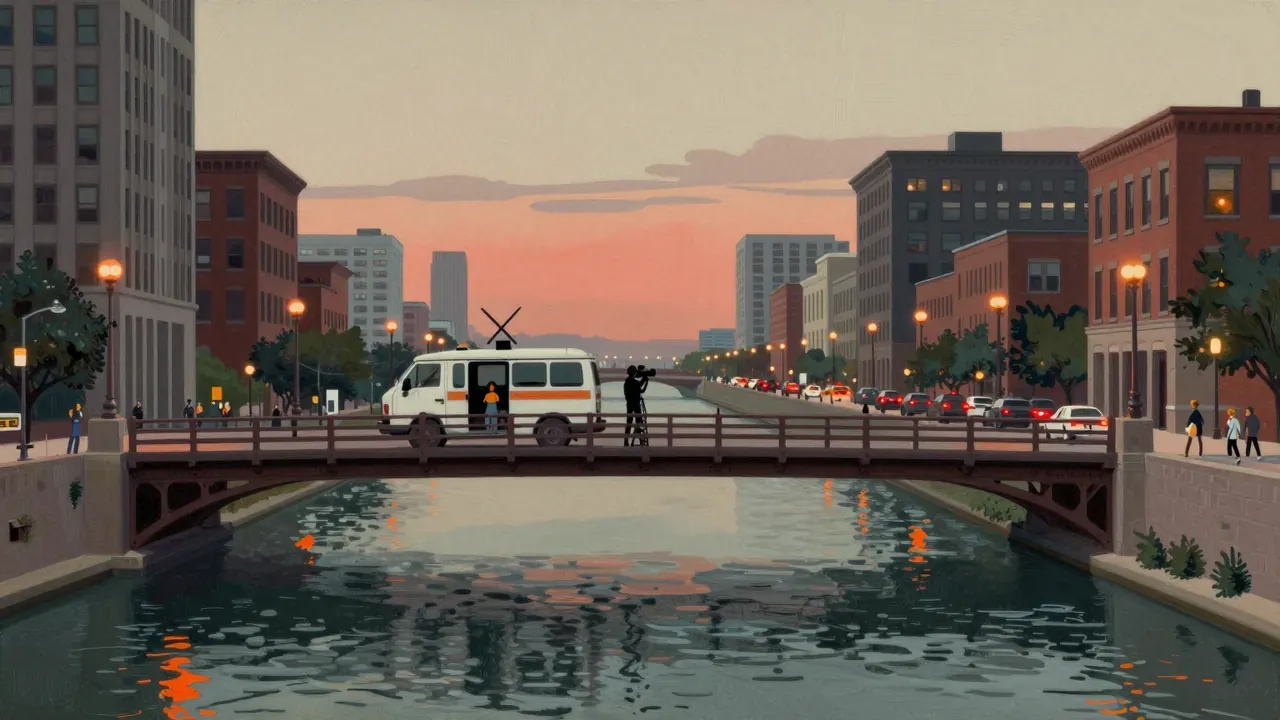
Tout Va Bien is a political film that sets out to dismantle the illusion of narrative immersion in order to make visible the structures of class, capital and representation. It does not tell a story so much as stage a demonstration: of how power operates inside a factory, inside a marriage, inside a news report, inside a film. Godard and Gorin reject psychological realism not as an aesthetic choice but as a political necessity — the characters are named but rarely individuated; their speech is declarative, often choral or didactic; their movements follow schematic logic rather than emotional impulse. The film’s title — ‘everything is going well’ — is deployed with sustained irony, framing each scene as a contradiction between official language and material reality. It is less a drama about a strike than a diagram of the strike’s conditions: who owns the means of production, who controls the image, who speaks for whom, and what happens when those functions collide. Its ambition is pedagogical, not cathartic; it wants the viewer to stop watching and start calculating.
The way people move and speak
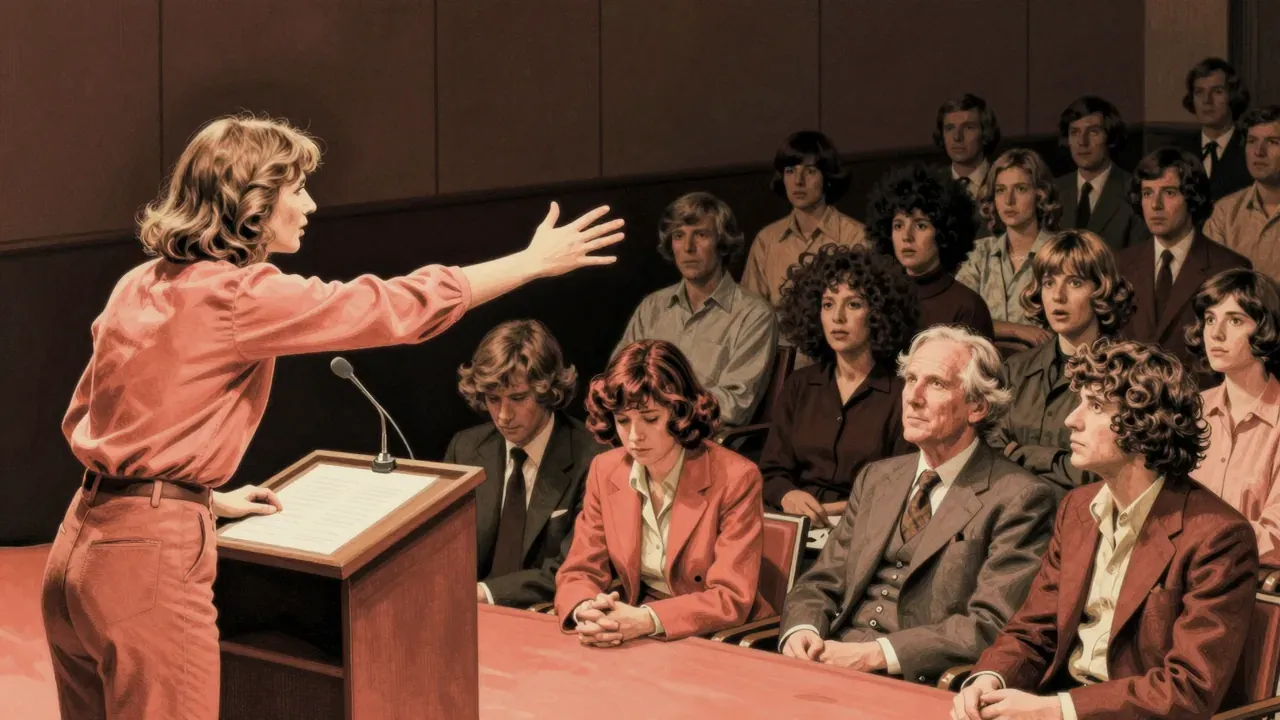
The film works through deliberate, repeated ruptures: the cross-sectioned factory set allows the camera to track laterally across walls as if they were transparent, exposing spatial hierarchy and surveillance logic at once. Claudine Merlin’s editing avoids continuity, favouring long takes punctuated by abrupt cuts to black or to static text. Performances are flat, affectless — Jane Fonda and Yves Montand do not inhabit roles so much as occupy positions: reporter and ad-man, American and French, observer and participant, complicit and detached. Vittorio Caprioli’s manager speaks in managerial jargon; Anne Wiazemsky’s worker delivers Marxist analysis without inflection; Éric Charden’s union rep recites bargaining points like inventory. There is no score, only diegetic sound and silence — footsteps on concrete, distant shouts, the hum of machinery. Dialogue is often delivered directly to camera, breaking character mid-scene. These are not flourishes but functional devices: every technique serves the same end — to prevent identification, to sustain distance, to insist on the film as constructed argument rather than lived experience.
What holds together
What lands is the rigour of its refusal. The factory set remains legible decades later as both architectural model and ideological map: the vertical stratification of management offices above the production floor, the lateral flow of information (or its blockage) between departments, the way the camera’s movement enacts control even as it exposes it. The film’s central sequence — the occupation of the factory — gains force from its restraint: no shouting matches, no heroic speeches, just workers moving furniture, blocking doors, reading statements into microphones while the camera holds steady. Fonda’s presence anchors the film’s transatlantic critique without softening it; her American-ness is neither exoticised nor excused, but treated as another variable in the system. The Brechtian distancing does not alienate so much as recalibrate attention — you watch not for what happens next but for how the next shot reconfigures the terms of what has just been shown. Even the silences feel charged, not empty: they are pauses for thought, not for breath.
Where it pulls away
What does not land is the film’s assumption that its audience shares its frame of reference. The references to May ’68, to the French Communist Party’s internal fractures, to the specific labour laws under negotiation in 1971–72, are not explained — they are presumed. Without that context, some sequences read as abstract exercises rather than urgent interventions. The flatness of performance, while ideologically consistent, can flatten engagement: there is little variation in tone or rhythm across ninety minutes, and the absence of irony or ambiguity leaves no foothold for scepticism or surprise. The film’s rejection of emotional leverage becomes, at times, a rejection of human scale — the workers are never seen eating, resting, arguing over tactics, or doubting. Their politics are presented as fully formed, not forged. This is not carelessness but commitment — yet it narrows the film’s address. Those unfamiliar with Godard’s post-1968 work may mistake its austerity for emptiness, its precision for coldness, its clarity for dogma.
What it keeps returning to
The themes that matter are not abstract but materially embedded: the division between intellectual and manual labour, made visible in the contrast between Montand’s ad-man scripting slogans and Wiazemsky’s worker quoting Marx; the commodification of language, shown when Fonda’s voiceover attempts to narrate the strike in broadcast-ready clichés before being interrupted by actual worker testimony; the architecture of control, literalised in the factory’s open-plan layout where visibility functions as discipline. Capitalism here is not a backdrop but a grammar — governing syntax (who speaks first), punctuation (where cuts fall), even tense (the film favours present participles and imperatives). The film treats advertising not as a sector but as a mode: the same logic that sells sausages sells news, sells politics, sells the idea that ‘everything is going well’. Its most persistent theme is mediation itself — how images are produced, owned, edited, distributed — and how that process determines what counts as real, what counts as grievance, what counts as change.
Who it meets, and how
It is for viewers who approach film as a site of conceptual labour — those comfortable with texts that require annotation, who value argument over empathy, who see cinema as one node in a network of political practice rather than a vessel for personal release. It is not for those who seek narrative propulsion, psychological depth or tonal variation — nor for those who expect historical context to be woven in, not assumed. A student of film theory will find its methods legible; a casual viewer may find its pace glacial and its premises opaque. Those who disagree with its verdict on representation — that distance is ethically necessary, that identification is politically dangerous — will still recognise its consistency, but may reject its conclusion. Nothing in the film would change its nature, but a companion text outlining its immediate political context would widen its accessibility without diluting its rigour.
Whether it stays with you
It is worth your evening if you are prepared to meet it on its own terms: as a tool, not a treatise; as a provocation, not a portrait. Its ninety minutes do not pass quickly, but they accumulate density — each shot adds another coordinate to its map of power. To watch it passively is to miss its point; to watch it actively — pausing, rewinding, comparing shots, noting repetitions — is to engage with one of the clearest articulations of militant cinema’s formal logic. It does not ask for agreement, only attention — and rewards that attention with structural clarity few films achieve. Those who find its methods exhausting may prefer Godard’s later, more reflective work; those who want urgency without abstraction might turn to Costa-Gavras or Pontecorvo. But for anyone interested in how form and ideology cohere, Tout Va Bien remains indispensable — not because it is easy, but because it refuses to be anything else.