A second look
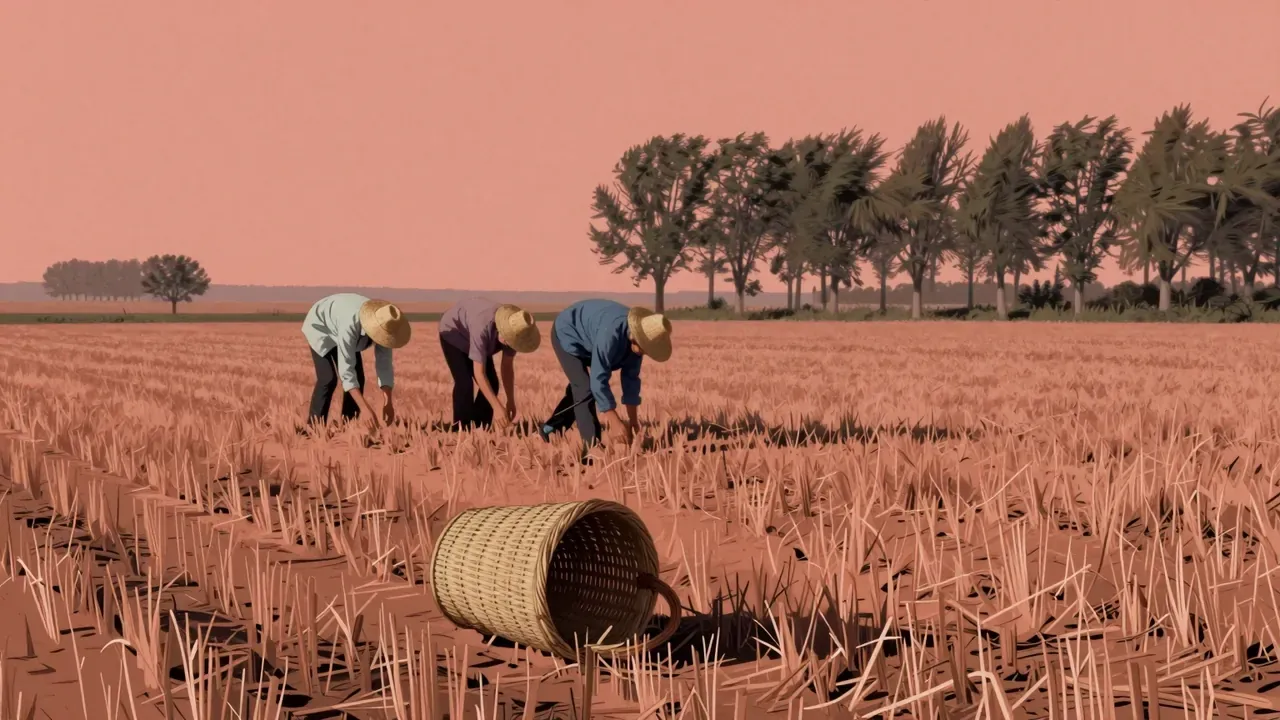
Les glaneurs et la glaneuse… deux ans après is a follow-up documentary by Agnès Varda, made two years after her 2000 film Les glaneurs et la glaneuse. It revisits people and places from the earlier work, checking in on gleaners — those who collect leftover crops, discarded food, or overlooked objects — and reflects on time’s passage, memory, and the filmmaker’s own ageing. The film does not aim to complete or correct its predecessor but to extend its inquiry: how do habits, ethics, and material conditions shift over two years? It treats continuity as a form of attention — not archival rigour, but personal fidelity. Varda films herself with the same curiosity she brings to others, turning the camera back on her hands, her home, her editing suite. There is no thesis announced; instead, the film accumulates small returns — a re-encounter with a vineyard worker, a visit to a Parisian dumpster diver now running a community kitchen, footage of a potato sprouting in her fridge. Its ambition is modest, deliberate, and rooted in duration rather than revelation. (158 words)
The look of it
The film works through repetition with variation: same locations, same subjects, often the same framing, but altered by time — a greyer beard, a new scar, a different season’s light. Varda’s narration remains conversational and unscripted, delivered directly to camera or over handheld footage. Her editing, credited to her alone, favours long takes and gentle cuts, avoiding montage or rhetorical juxtaposition. Cinematography is functional rather than stylised: natural light, available lenses, minimal re-lighting. Sound is untreated — ambient noise lingers, dialogue overlaps, silences are left unbroken. There are no interviews in the formal sense; exchanges unfold as they might in real life, sometimes halting, sometimes digressive. Varda appears on screen throughout, not as authority but as participant — adjusting her glasses, holding up a broken clock, testing a scanner. The craft is unobtrusive but precise: every shot has weight because it was chosen, not because it was composed. The film’s rhythm emerges from accumulation, not argument — a sequence of returns that builds coherence without insisting on it. (159 words)
What stays the same
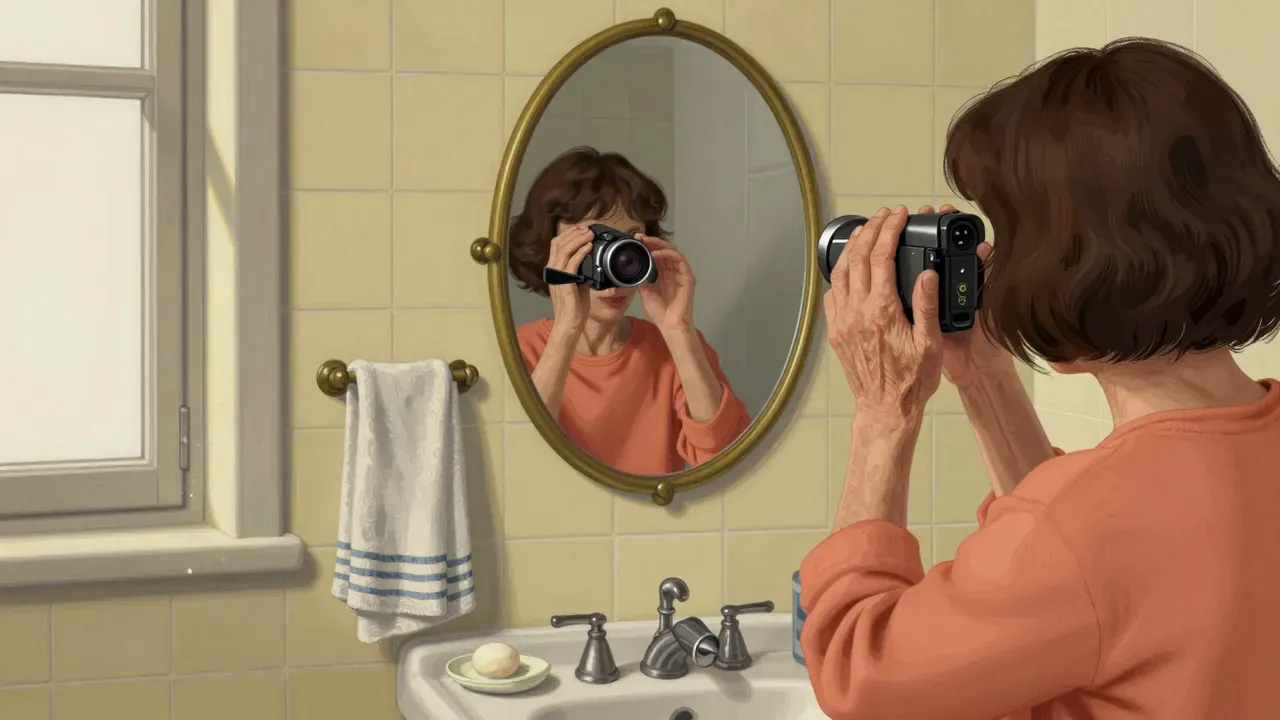
What lands is the quiet insistence on presence — both Varda’s and her subjects’. Her return to the same gleaner in rural France carries emotional weight not because his circumstances have changed dramatically, but because he remembers her questions from two years prior and answers them again, slightly differently. A scene where she films her own ageing hands, then compares them to a sculpture of hands in a museum, lands not as vanity but as tactile philosophy — time made visible through skin, tendon, and gesture. The film’s refusal to explain or interpret lets moments settle: a man sorting discarded electronics in a garage, a woman arranging wilted supermarket flowers into a vase, Varda herself filming her cat walking across a keyboard. These are not metaphors imposed but observations allowed to hold their shape. The viewer feels the texture of ordinary persistence — not heroism, not despair, but continued attention. That consistency of gaze, sustained across two films and two years, becomes its own kind of moral stance. It lands because it refuses to rush, and because it trusts the viewer to notice what matters without being told. (157 words)
What repeats
What does not land is the assumption that all viewers will share Varda’s affection for minor returns — the repeated shots of her kitchen wall, the extended footage of a printer jamming, the lingering on a single discarded glove found on a pavement. These moments rely on a specific tolerance for slowness and a willingness to find resonance in recurrence rather than development. Some sequences feel less like reflection and more like habit — a continuation not because it deepens meaning, but because it is what Varda does. The film’s structure offers no pivot, no escalation, no resolution; it simply stops. That is coherent with its ethos, but it can read as under-determined to viewers expecting documentary to clarify or persuade. A viewer looking for analysis of food waste policy, or for comparative study of informal economies across Europe, will find little. Nor does it engage critically with its own position: Varda films gleaners while living in a Paris apartment with access to archives, funding, and distribution — a tension noted but not examined. The film assumes goodwill where some may want scrutiny. (159 words)
What is kept
The themes that matter are time as accumulation, not progression; care as practice rather than sentiment; and the dignity of salvage — whether of food, objects, memory, or self-image. Ageing is treated not as decline but as layering: Varda films her wrinkles alongside close-ups of weathered tree bark, not to equate but to align. Gleaning becomes a metaphor not for poverty but for attention — the act of choosing what to keep, what to discard, what to reinterpret. The film insists that value is assigned, not inherent: a bruised apple, an out-of-date magazine, a forgotten sculpture in a provincial museum, a reel of unused film stock — all are held up for reconsideration. There is also a quiet theme of authorship: Varda films herself editing the first film, then editing this one, making visible the labour of selection that shapes both reality and recollection. These are not abstract ideas but embodied ones — shown in the way a hand picks up a fallen pear, the way a scanner whirs before capturing an image, the way a pause lasts just long enough to register as thought, not silence. (158 words)
Who watches
This film is for viewers who value duration over exposition, who find interest in the subtle shifts between two points in time, and who accept documentary not as evidence but as correspondence — a letter sent across years to the same people and ideas. It suits those already familiar with the first film, though it stands alone; newcomers may miss the weight of certain returns but will still grasp the film’s temper. It is not for viewers who require narrative propulsion, clear stakes, or thematic resolution — those who expect documentaries to build arguments or deliver conclusions will find it meandering. Nor is it for those impatient with self-reflexivity: Varda’s presence is constant, her subjectivity foregrounded, her technical limitations acknowledged. A critic who values structural rigour over associative logic, or who sees autobiography in documentary as indulgence rather than method, would reject its premises. What would change the verdict? A tighter edit — cutting ten minutes — might sharpen its focus, but that would contradict its commitment to the unedited passage of time. (159 words)
What it asks
Yes, it is worth your evening — provided you arrive without urgency and leave space for slowness. It asks ninety minutes for what many documentaries deliver in thirty, but repays that time with a rare kind of attentiveness: not to spectacle or crisis, but to the grain of daily persistence. Its value lies in its resistance to utility — it does not instruct, persuade, or summarise. Instead, it models a way of looking: patient, unflinching, tender without sentimentality. Those who watch it closely will notice how light falls on a pile of discarded fruit, how a voice changes over two years, how a gesture repeats across decades. It is worth your evening if you believe that seeing well is itself a political and ethical act — and if you accept that some truths are held in duration, not declared. Those who need clarity, speed, or closure will not find it here, and that is part of its honesty. It does not ask to be loved, only witnessed. (159 words)