The shape of the self
At Land is a fifteen-minute silent experimental film made in the United States in 1944, written and directed by Maya Deren, who also performs its sole continuous protagonist. It does not seek narrative coherence in the conventional sense, nor does it aim for psychological realism or social commentary. Instead, it constructs a sequence of discontinuous, symbolically charged tableaux — beach, dining room, forest, road, covered furniture, rock, dunes — linked by the woman’s physical traversal and recurring doubling. Deren described the work as concerning the struggle to maintain personal identity, and the film enacts that struggle through repetition, mirroring, substitution and spatial disorientation rather than exposition or character development. It belongs to the post-surrealist American avant-garde, working within the material constraints of 16mm black-and-white film, no sync sound, and a modest budget shot on Long Island. Its ambition is structural and phenomenological: to make perception itself unstable, to unsettle the viewer’s assumptions about continuity, agency and selfhood through rhythm, editing and embodied movement.
How it moves
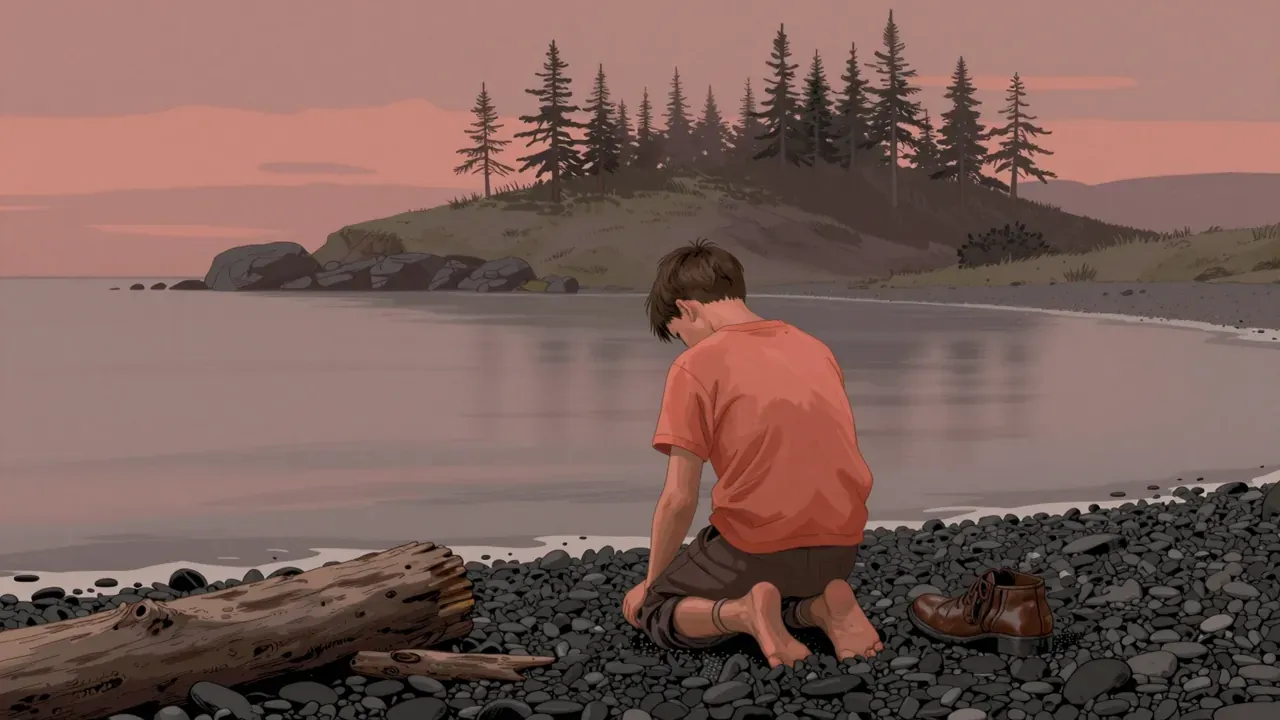
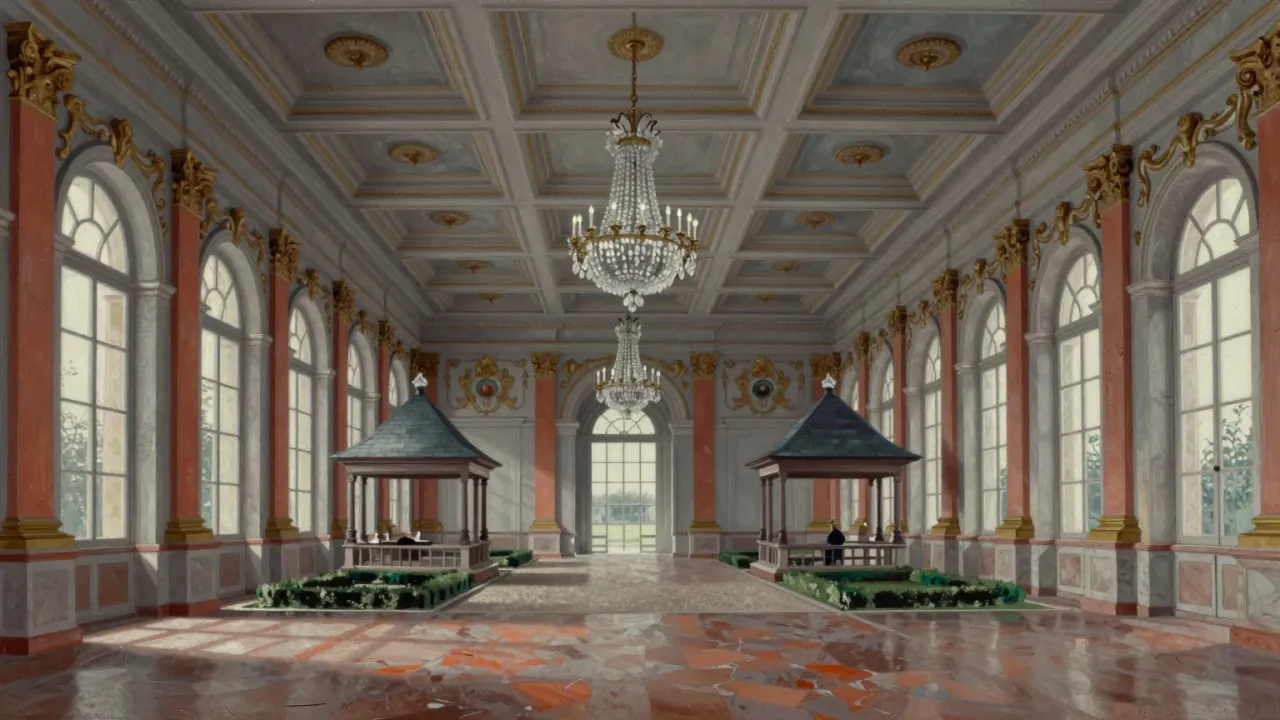
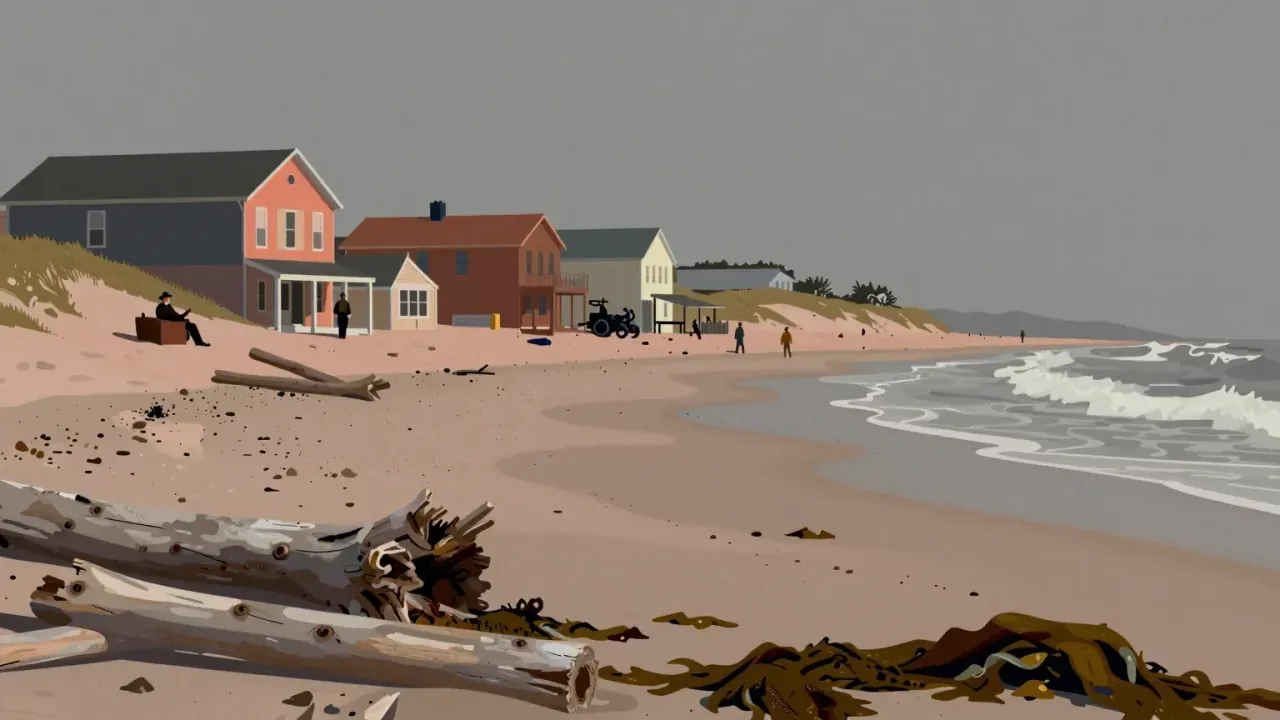
The film unfolds through a series of discrete but interwoven actions: a woman washed ashore, climbing driftwood only to arrive at a formal dinner table; crawling along its surface past unresponsive guests; cutting to her crawling through underbrush; encountering men who shift identities as she walks; entering a dust-covered room where a man emerges from beneath a sheet; gathering stones on a beach only to drop them; watching two women play chess before seizing the white queen and running. Deren’s performance is physically exacting — slow, deliberate, grounded — never gestural or expressive in a theatrical way. The editing, credited to Deren alone, relies on match cuts, spatial ellipses and rhythmic repetition: the same gesture recurs across locations, the same chess game appears twice, the same woman appears in multiple places simultaneously. There is no score, no dialogue, no diegetic sound — only the implied silence of the medium, which heightens attention to texture, weight and duration. John Cage appears briefly, as do Parker Tyler and Philip Lamantia, but their roles are functional, not interpretive: they occupy positions in Deren’s choreography of self-encounter.
The weight of things
What lands is the film’s physicality: the grain of sand under Deren’s palms, the resistance of driftwood, the awkwardness of crawling across polished tabletops, the weight of stones gathered and abandoned. These are not metaphors made legible, but sensations made persistent — repeated until they acquire symbolic density. The editing rhythms hold up: the cut from beach to dining room is jarring but coherent within the film’s internal logic; the recurrence of the Immortal Game anchors the structure without explaining it. The doubling — of Deren, of settings, of gestures — works precisely because it refuses resolution. The final run, passing earlier versions of herself, lands not as closure but as acceleration: identity becomes motion, not stasis. The film’s brevity helps — fifteen minutes allows no slack, no digression. Every shot serves the central proposition: that selfhood is enacted, not possessed; that it persists only through movement across terrain both literal and psychic. The absence of explanation does not weaken this; it strengthens it. The viewer is not guided to meaning but placed inside the conditions under which meaning might form — tentatively, provisionally, bodily.
What it does not say
What does not land is any attempt to read the film as allegory with fixed referents. Assigning symbolic meaning to each location — the beach as birth, the dining room as bourgeois constraint, the covered furniture as repression — collapses its ambiguity and misreads its method. Deren’s stated concern with identity is not illustrated but instantiated; to treat the chess pieces, the cat, the dust covers or the falling pawn as coded signs is to mistake the film’s procedural rigour for illustrative shorthand. Nor does the film sustain emotional identification in the conventional sense: Deren’s face remains largely impassive, her actions ritualised rather than reactive. Viewers expecting psychological motivation or narrative payoff will find the repetitions frustrating rather than resonant. The lack of sound design beyond silence — while historically accurate and formally consistent — may register today as austerity rather than intention, especially for audiences accustomed to even minimal ambient scoring in contemporary experimental work. The film assumes a viewer willing to sit with unresolved tension, and that assumption excludes more than it includes.
The work of being
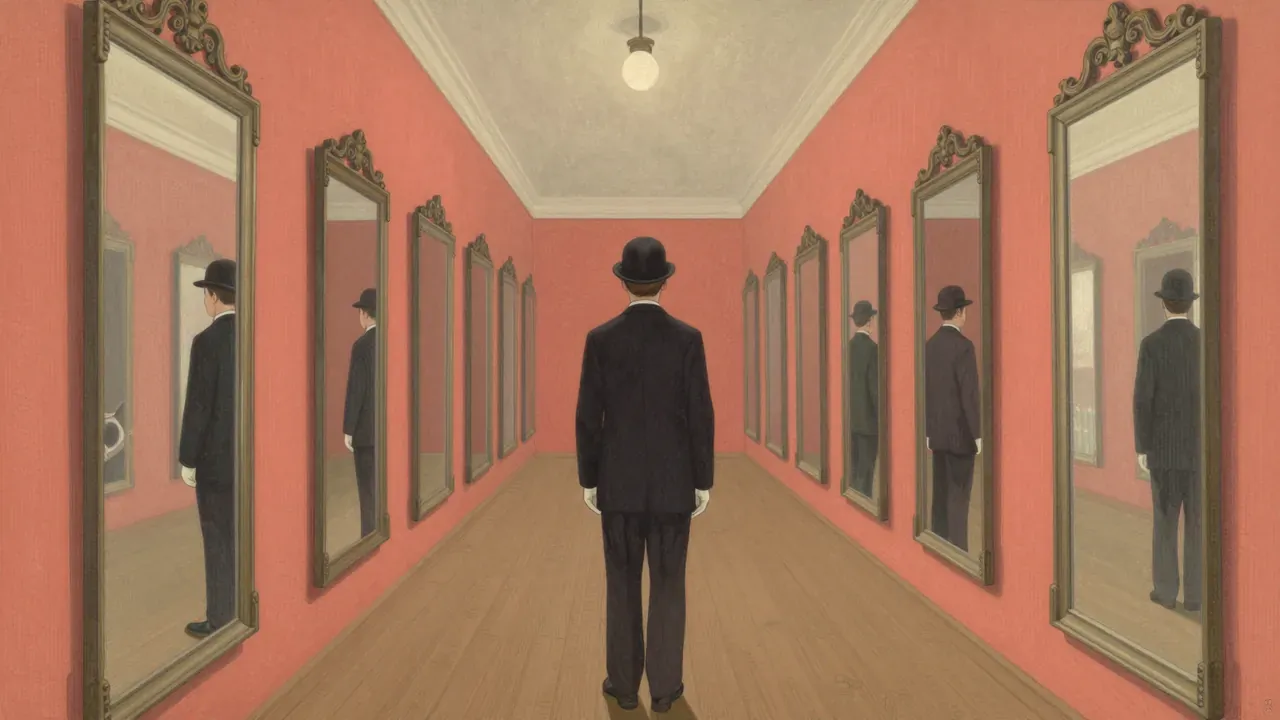
The themes that matter are endurance, recurrence, and the instability of the first person. Identity here is not a stable core but a series of positions occupied, abandoned and revisited — a path traced across shifting ground. The film treats space not as setting but as condition: the beach is not ‘where’ the story begins but the first instance of a physical law — gravity, friction, resistance — that governs all subsequent action. Time is non-linear but not arbitrary: events recur in altered contexts, suggesting memory as re-enactment rather than recollection. The chess game, cited in trivia as Anderssen–Kieseritzky, functions not as historical reference but as structural motif — a set of rules whose outcome is known, yet whose repetition generates new meaning each time. The cat’s leap, the falling pawn, the dropped stones: these are not symbols of loss or failure but demonstrations of consequence — small, irreversible events within a larger pattern of return. The film’s feminism is implicit, not declarative: it centres a woman’s body in motion without framing that motion as spectacle, victimhood or desire. It insists on presence as labour, not representation.
Who it meets
This film is for viewers who approach cinema as a practice of attention — those comfortable with silence, open to repetition as a mode of revelation, and willing to accept that some questions have no answer but many enactments. It rewards patience, rewatching and physical awareness of one’s own posture and breath while watching. It is not for viewers who require narrative propulsion, emotional cues, or thematic clarity — those who expect film to explain rather than propose. People who associate experimental work with abstraction alone may find its concrete physicality disorienting; those who expect feminist film to foreground speech or conflict may find its restraint withholding. A change in context would alter the verdict: shown with live piano accompaniment or embedded in a programme of mid-century avant-garde work with contextual notes, its rigour reads differently. Without that framing, its austerity risks reading as coldness — a misreading, but a common one.
What stays
Yes, it is worth your evening — provided you set aside the expectation of consumption and instead prepare for participation. Fifteen minutes is little time, but the film asks for full sensory engagement: noticing how light falls on Deren’s forearm, how her weight shifts when climbing, how long a single glance lasts between her and another version of herself. It repays close viewing not with insight but with recalibration — a subtle shift in how you perceive duration, repetition and selfhood afterwards. Those who dislike it tend to cite its refusal of explanation or its physical slowness; those who value it do so because it makes time feel newly tangible. It is not entertainment, nor is it instruction. It is an exercise in perceptual discipline — brief, exact, and unyielding. To dismiss it as obscure is to miss that its obscurity is the point: identity, like the film, resists summary. You do not solve it. You move with it.