The look of it
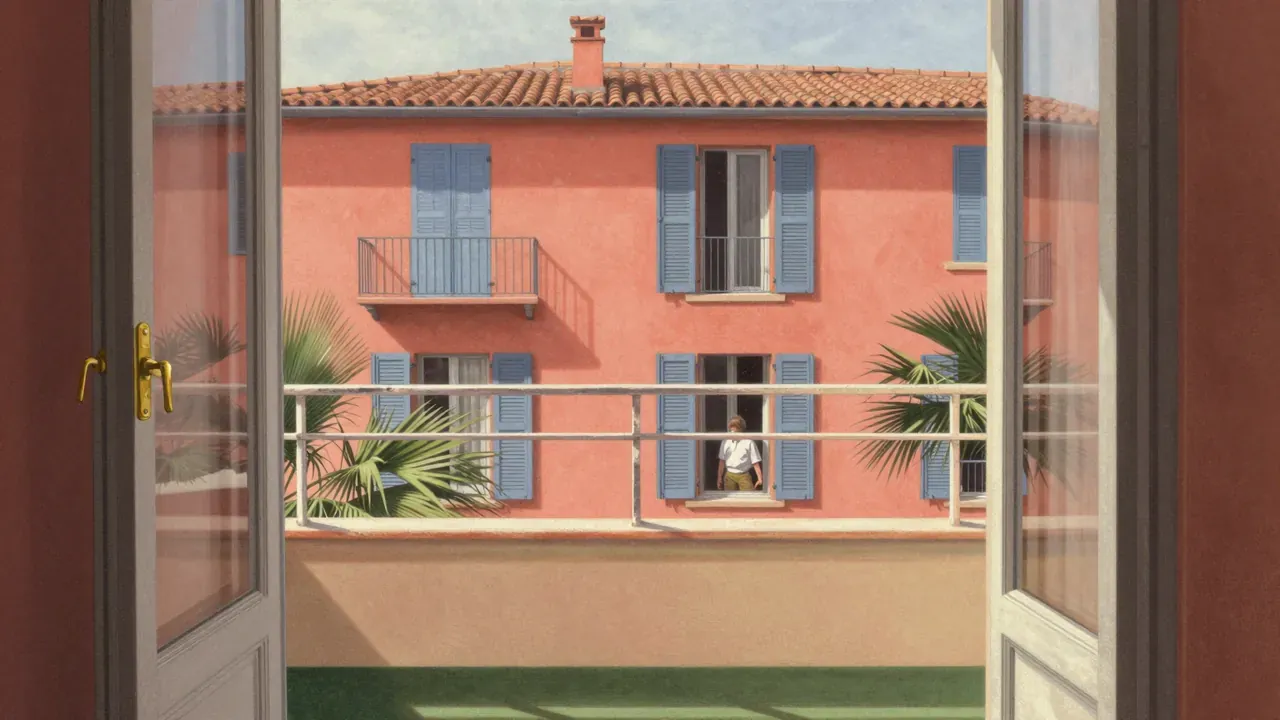
Anselm is a 3D documentary portrait of the German artist Anselm Kiefer, directed by Wim Wenders and released in 2023. It does not narrate a life chronologically, nor does it explain Kiefer’s work through commentary or interviews with critics or historians. Instead, it attempts to translate his practice into cinematic form: to make film behave like painting — slow, tactile, layered, materially aware. The film uses 6K 3D not as spectacle but as depth-perception technology, rendering textures of ash, lead, concrete, burnt canvas, and forest floor with near-tactile fidelity. It treats Kiefer’s studios — in Barjac, Paris, and Croissy — as living environments where scale, decay, and time are physical presences. The project aims to dissolve the boundary between seeing art and being inside its making, less a biography than an embodied encounter. Wenders has described it as stretching 3D into ‘unknown territory’, and the film’s ambition lies precisely there: not to illustrate Kiefer’s themes, but to enact them through duration, resolution, and spatial grammar. It is a film about gravity, weight, residue — things that settle, burn, weather, and persist. (158 words)
Three Ansels
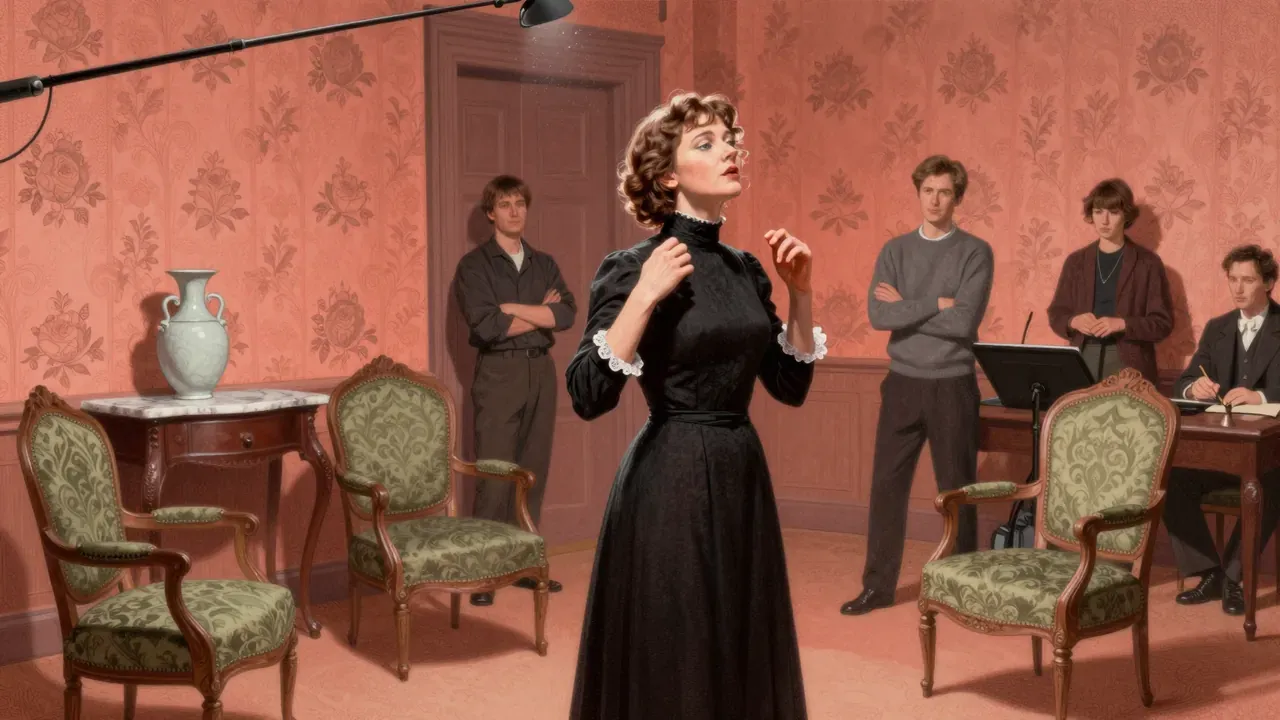
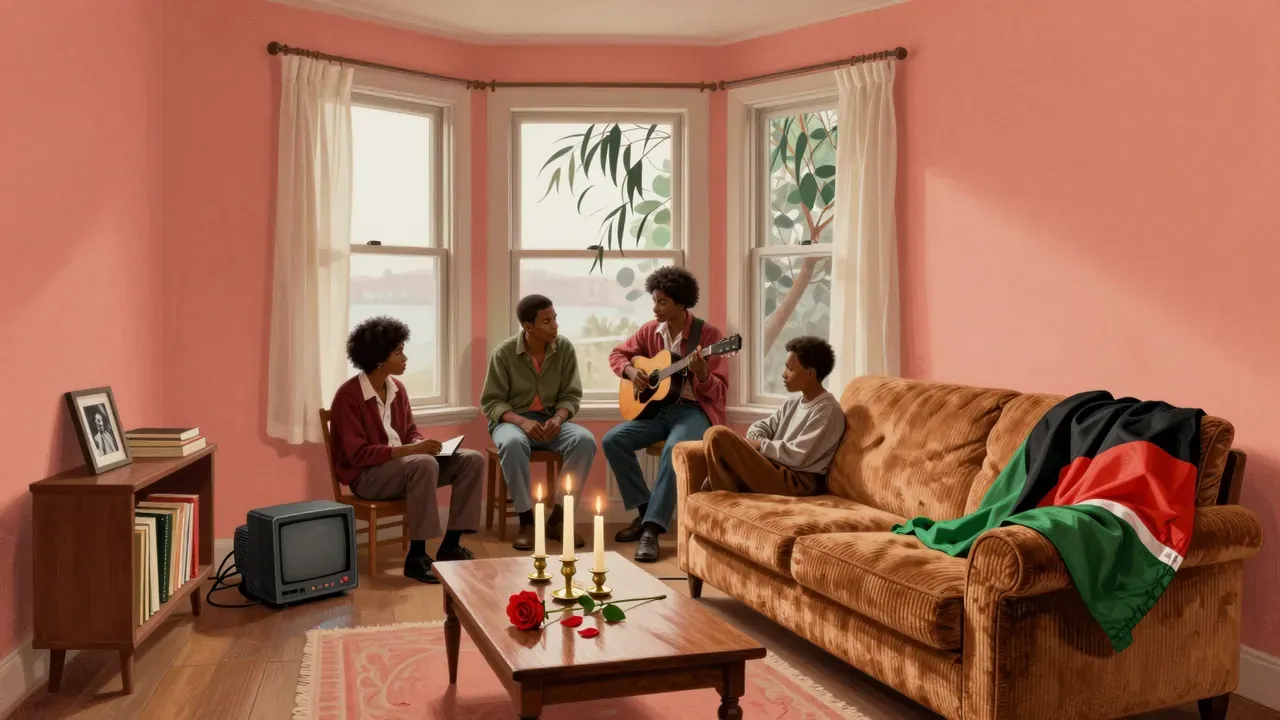
The film unfolds across three temporal layers: archival footage from the 1960s–1990s, present-day observation of Kiefer at work, and staged sequences in which Daniel Kiefer and Anton Wenders portray younger versions of the artist. These are not dramatisations but formal echoes — repetitions of gesture, posture, and silence that bind time without narrative cause. Franz Lustig’s cinematography holds long takes on surfaces: a brush dragging wet pigment across burlap, embers glowing under ash, light falling across a half-finished mural. Leonard Küßner’s score avoids melody in favour of low-frequency resonance and sparse piano tones that mimic the acoustic weight of large empty rooms. Maxine Goedicke’s editing avoids cross-cutting for contrast; instead, it juxtaposes eras through visual rhyme — a child’s hand turning a page, then an old man’s hand turning the same page decades later. There are no voice-over explanations. Poetry by Paul Celan appears as sound and text, not interpretation. The craft serves one principle: that attention, held steadily, becomes a mode of understanding. (159 words)
The edge of the flame
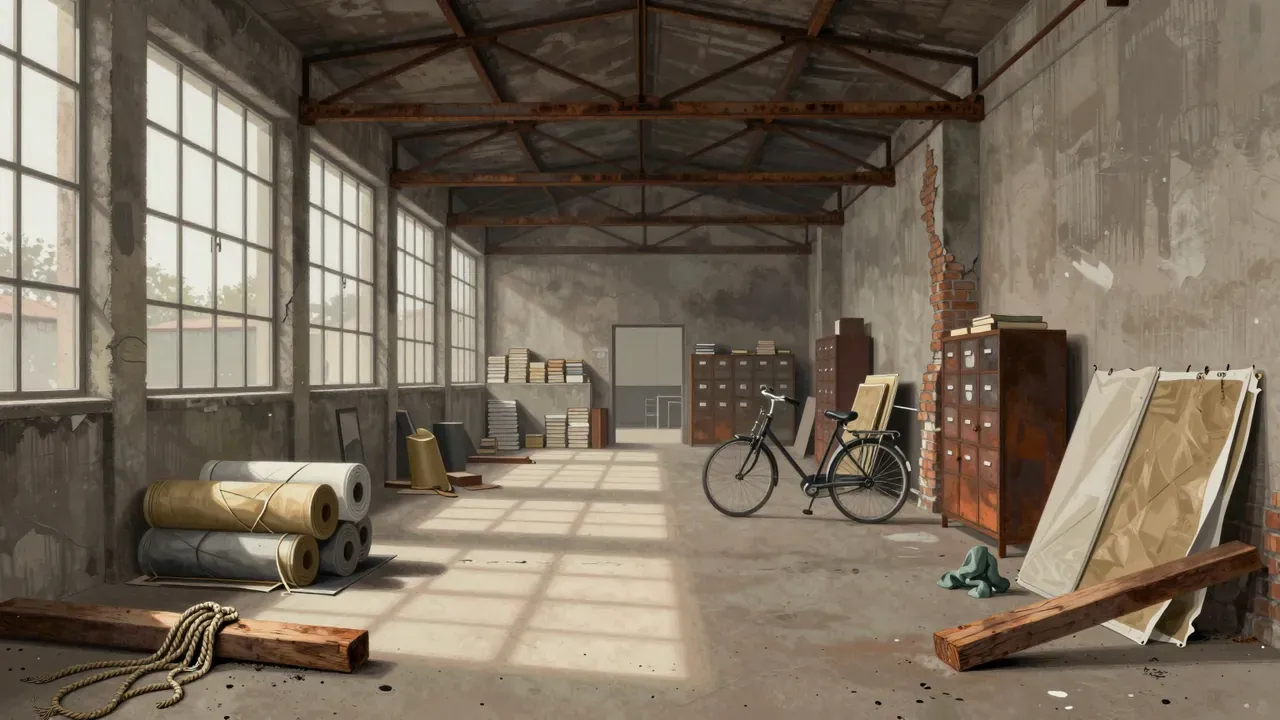
What lands is the film’s physical conviction. Its 3D does not leap from the screen but pulls the viewer inward — into the crevices of cracked plaster, the fibres of burnt linen, the dust motes hanging in warehouse light. The repeated motif of Kiefer cycling slowly through vast, cluttered spaces works because it is never hurried, never framed for irony or pathos: it simply registers scale, solitude, and routine as conditions of creation. The burning of crops and leaves on canvas is shown with clinical calm — no music swells, no close-up lingers on Kiefer’s face — and this restraint makes the act feel necessary rather than performative. The intercutting of 1970s studio footage with present-day shots of the same gestures — mixing pigment, stacking lead sheets — lands as quiet insistence, not nostalgia. Even the most abstract passages — a slow pan across a library of aerial photographs, a fixed shot of snow falling on a field where Kiefer once stood — hold their weight because they refuse to signify beyond their own material presence. The film trusts that texture, duration, and repetition can carry meaning without translation. (157 words)
Warehouses and fields
What does not land is the framing device of the three Ansels — child, young man, elder — converging in a lakeside tableau. This sequence arrives without preparation, its symbolism unearned by what precedes it. The line ‘Childhood is an empty room like the beginning of the world’ feels imposed, not discovered; it breaks the film’s otherwise consistent refusal of verbal abstraction. Similarly, the use of historic Celan recordings, while resonant in isolation, is not integrated into the film’s logic — it floats, unanchored, rather than deepening the relationship between language, memory, and material. The film’s resistance to exposition means some historical context remains opaque: the significance of Kiefer’s 1960s Nazi salute photographs, or why his 1980s work provoked such controversy, is implied but not clarified. A viewer unfamiliar with postwar German art discourse may grasp mood but miss stakes. The film assumes a baseline of familiarity — not with Kiefer’s biography, but with the ethical weight carried by certain images and materials in that cultural context. That assumption narrows its reach without broadening its argument. (159 words)
Argonauts and ashes
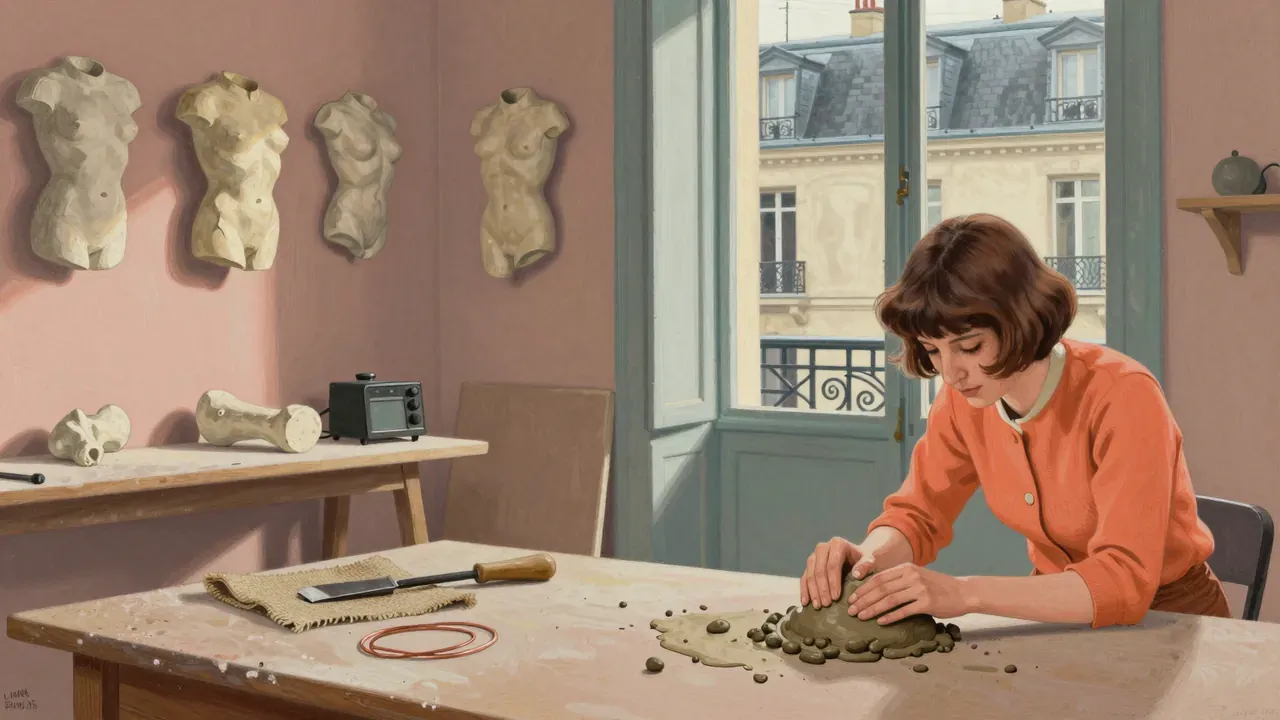
The themes that matter are time as sediment, not sequence; history as residue, not record; and creation as labour that accepts destruction as part of its grammar. The film returns repeatedly to processes that involve fire, erosion, burial, and re-emergence — torching canvases, photographing ruins, building towers from rubble, storing decades of work in warehouses that themselves become sculptures. Kiefer’s fascination with myth is not treated as escapism but as structural thinking: Argonaut legends, Heidegger’s notebooks, Celan’s poems — all function as frameworks through which to organise silence, loss, and endurance. The film also treats scale as moral condition: the enormity of Kiefer’s studios mirrors the enormity of the questions he engages — Germany’s past, the Holocaust, the limits of representation. But it never lets scale become grandeur. Every monumental gesture is undercut by intimacy — a child’s drawing, an analog camera’s grain, the sound of a match striking. The central tension is between monument and fragment, and the film insists they are inseparable: every tower contains its own ruin; every finished work bears the trace of what was burned away. (158 words)
Celan’s voice, unframed
This film is for viewers who value sustained attention over exposition, who find meaning in texture and duration, and who accept that some questions — about memory, responsibility, or how to live with inherited catastrophe — resist resolution. It suits those familiar with Kiefer’s work, or with Wenders’ earlier 3D films like Pina, but it does not require either. It is not for viewers who need narrative propulsion, biographical clarity, or interpretive guidance — those who expect documentaries to explain, contextualise, or argue will find it withholding. It is also not for those who dislike stillness: long takes, minimal movement, and extended silences are structural, not stylistic choices. Some critics have called it ‘mesmerising’; others have found it monotonous. The difference lies not in the film’s execution but in the viewer’s willingness to meet it on its own terms — to let a burnt edge speak before a sentence does. A change in pacing or added narration would alter its entire proposition. (159 words)
The lake at dusk
Yes, it is worth your evening — if you are prepared to watch it as you might stand before a large painting: without hurry, without demand for immediate legibility, letting your eye adjust to its tonal range. Its 93 minutes pass with the gravity of a single afternoon in a studio, not the velocity of plotted time. It rewards patience not with revelation but with recalibration — of how we perceive surface, depth, and duration. Those who find it alienating are not wrong; the film deliberately refuses the rhythms of conventional documentary engagement. It asks for surrender to its material logic, not agreement with its ideas. Anyone expecting a primer on Kiefer, or a survey of German postwar art, will leave unsatisfied. But anyone open to cinema as a space where thought takes shape through light, weight, and time will find it unusually substantial. Its value lies not in what it says, but in how insistently it makes you feel the thickness of history — not as story, but as substance. (158 words)