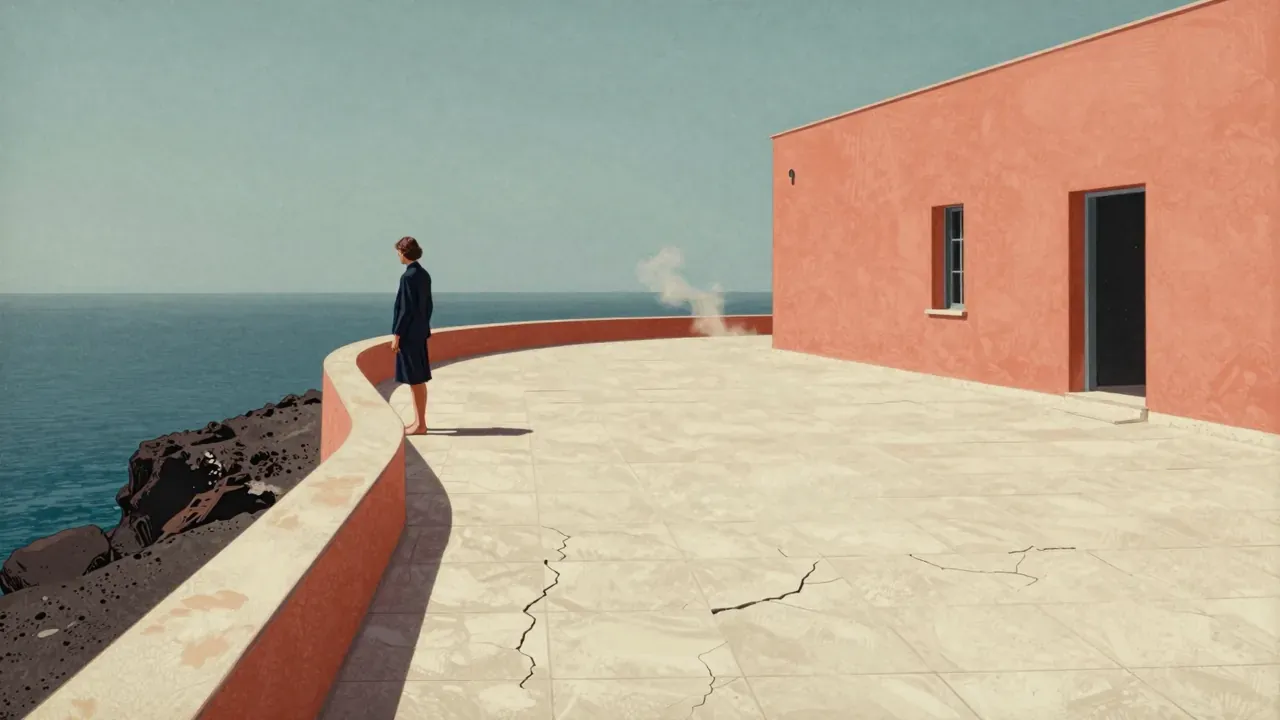
The sound of it
Confessions of a Cheat is a French film from 1936 that tells the life story of a man who calls himself ‘The Cheat’ — not as a confession of guilt, but as a taxonomy of dishonesty. Sacha Guitry wrote, directed and stars in it, adapting his own 1935 novel. The film’s central device is a first-person voiceover narration delivered by Guitry throughout nearly all of the flashback sequences: he speaks every line of dialogue, regardless of who appears on screen. This collapses character into commentary, turning performance into illustration. It is not trying to persuade the viewer that cheating is justified, nor does it moralise in any conventional sense. Rather, it treats deception as a habit, a skill, a reflex — something learned early, refined through circumstance, and eventually outgrown not by virtue but by exhaustion. The structure is deliberately circular: the Cheat writes his memoirs in a café, recounts a lifetime of small corruptions, and ends where he began — no longer lying for gain, but guarding against it. Word count: 148
The voice of it
The film works through strict formal economy. Guitry’s voice carries the entire narrative weight; only the ‘present-day’ scenes — brief interludes in the café — feature spoken dialogue from others, notably Marguerite Moreno as the Countess. Adolphe Borchard’s music is sparse and functional, underscoring transitions rather than emotions. The camera remains largely static, with few close-ups and minimal editing flourishes — cuts are used to mark shifts in time, not psychology. Performances are stylised but not exaggerated: Jacqueline Delubac’s Henriette is brisk and unillusioned; Elmire Vautier’s younger Countess moves with quiet confidence; Fréhel appears briefly as a singer, her presence registered more by vocal timbre than dramatic action. There are no elaborate sets: interiors are modest, exteriors limited to street corners and hotel lobbies. Guitry avoids visual metaphor — the poison mushrooms, the casino floor, the war trench — are shown plainly, without symbolic framing. The technique recalls silent-film narration, but it is applied here not to explain image but to replace interaction. Word count: 152
The habit of it
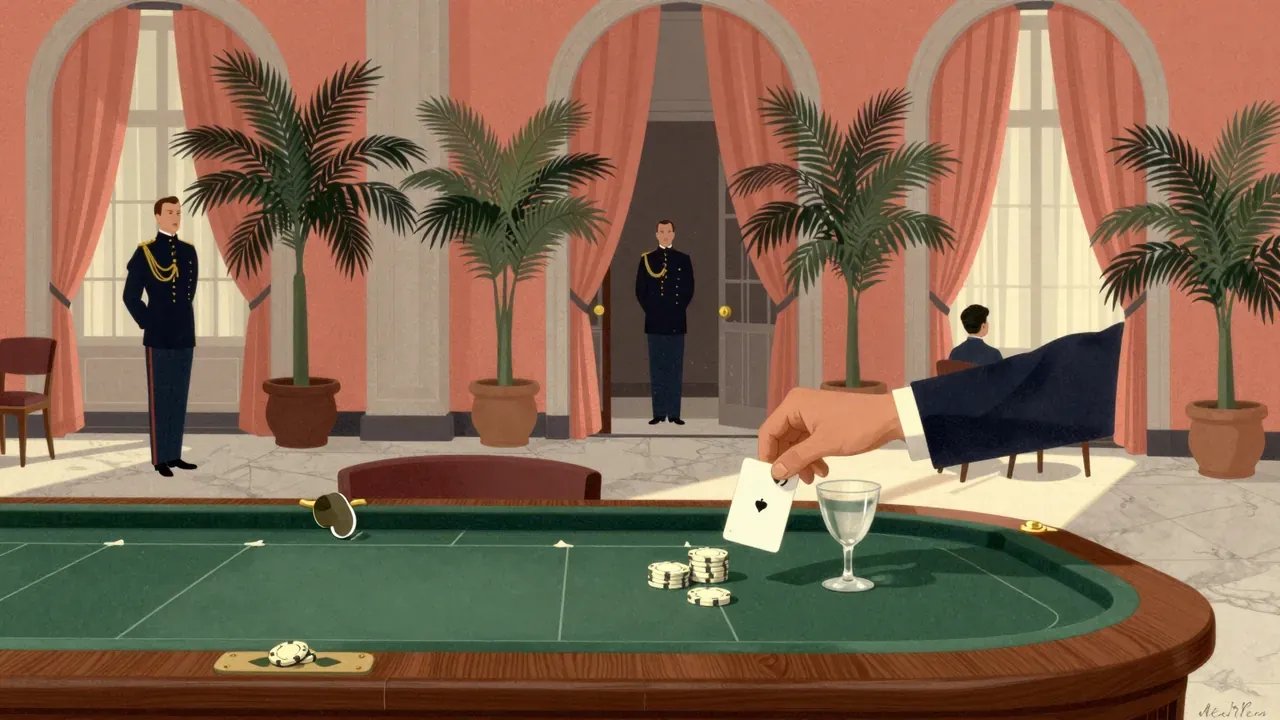
What lands is the rhythm of self-implication. Guitry never asks the viewer to like the Cheat, nor to condemn him — he simply insists on naming each act of deceit as it occurs, often with dry emphasis on its triviality. The scene where the twelve-year-old steals money and watches his family die from poisoned mushrooms lands not for its shock value, but because the narration refuses to separate cause from consequence: the theft does not cause the deaths, yet the boy draws the connection, and the film honours that logic. Similarly, the moment he cheats Charbonnier at baccarat — then stops — works because the shame is understated, the reversal unannounced. The film’s wit lies in its refusal to dramatise moral turning points. Instead, change arrives through accumulation: one lie too many, one win too hollow, one recognition too awkward. The final scene, where the elderly Countess offers him a job stealing from his former home, lands cleanly because it completes the circle without fanfare — he declines, not out of virtue, but because the work no longer fits. Word count: 154
The time of it
What does not land is the structural conceit when it strains against its own limits. The voiceover-as-dialogue device grows faintly monotonous in the middle stretch — particularly during the army and post-war gambling episodes — where the lack of vocal differentiation between characters flattens emotional contrast. Roger Duchesne’s Serge Abramich, for instance, registers as little more than a name attached to a plot function, because his lines are delivered in Guitry’s tone, without inflection or pause to distinguish urgency from irony. The film also assumes familiarity with interwar French social codes — the significance of a croupier’s status, the implications of a marriage of convenience, the class weight behind a Monaco hotel lobby — which remain opaque without context. Some transitions between decades feel abrupt not by design but by omission: we are told the Cheat reads books during the war, but not which ones, nor how reading reshapes him. These gaps are not ellipses; they are absences that weaken the internal logic. Word count: 150
The shape of it
The themes that matter are self-narration as survival, the banality of corruption, and the slow erosion of motive. The Cheat does not cheat for wealth, power or revenge — he cheats because it is easier than honesty, and because early success teaches him that consequences are unevenly distributed. His dishonesty is procedural, not ideological: he forges documents, misdirects attention, exploits timing — always with low stakes and high repeatability. Ageing is treated not as decline but as recalibration: the older man does not reject cheating on moral grounds, but because his skills now serve better ends — surveillance, detection, containment. The film quietly questions whether integrity is a principle or a habit formed by changing conditions. Memory is presented as unreliable not because it distorts, but because it selects — the Cheat remembers only what confirms his self-image, and the film makes no effort to correct him. There is no external judge, no off-screen conscience. The only morality on screen is practical: what continues to work, and what finally stops. Word count: 152
The demand of it
This film is for viewers who value narrative architecture over emotional immersion, and who find pleasure in watching a single idea — dishonesty as craft — worked through with surgical consistency. It rewards patience with structural intelligence, not with character revelation or catharsis. It is not for those who require psychological realism, strong visual storytelling, or moral resolution. Anyone expecting a satire in the manner of Molière or a thriller in the manner of Clouzot will find it underpowered. Those who dislike voiceover as a crutch, or who resist films where the lead actor narrates everyone else’s thoughts, will be alienated early. A viewer who values expressive cinematography or musical scoring over verbal precision will find little to hold them. The film assumes an audience comfortable with stillness, silence, and sentences that do not gesture toward feeling. Word count: 150
The end of it
Yes, it is worth your evening — provided you approach it as a demonstration of form, not a story to be felt. Its eighty-one minutes pass without strain because nothing is overstated or prolonged beyond necessity. It does not ask for empathy, only attention to how language constructs identity. Someone who prefers vivid acting or dynamic editing may find it inert; someone who values economy, irony and the quiet authority of a single controlling voice will find it exact and enduring. Its reputation among filmmakers — including Welles — rests not on influence but on precedent: it shows how much can be done with almost nothing but voice, text and timing. To dismiss it as quaint or dated is to miss its discipline. Word count: 150