The look of it
The Baron of Arizona is a low-budget, independently produced Western from 1950 that attempts to dramatise a real historical fraud: James Reavis’s late-nineteenth-century bid to claim sovereignty over the Arizona Territory through forged genealogical and land documents. Directed and written by Samuel Fuller, it treats the episode not as frontier adventure or legal thriller but as a study in sustained self-invention — a man constructing an entire aristocratic lineage from nothing, then weaponising bureaucracy to make it stick. The film frames its story as a retrospective account told by a Department of the Interior official, lending it the air of a cautionary bureaucratic fable rather than a conventional hero-or-villain narrative. Its ambition lies in using the Western genre’s familiar terrain — desert, lawlessness, territorial ambiguity — to examine how authority can be manufactured, not seized. It does not aim for realism in costume or setting, nor does it seek psychological depth in its central figure; instead, it leans into theatricality and moral paradox, asking what happens when a lie becomes so elaborate, so well-documented, that institutions hesitate to call it one. Word count: 148
The voice of it
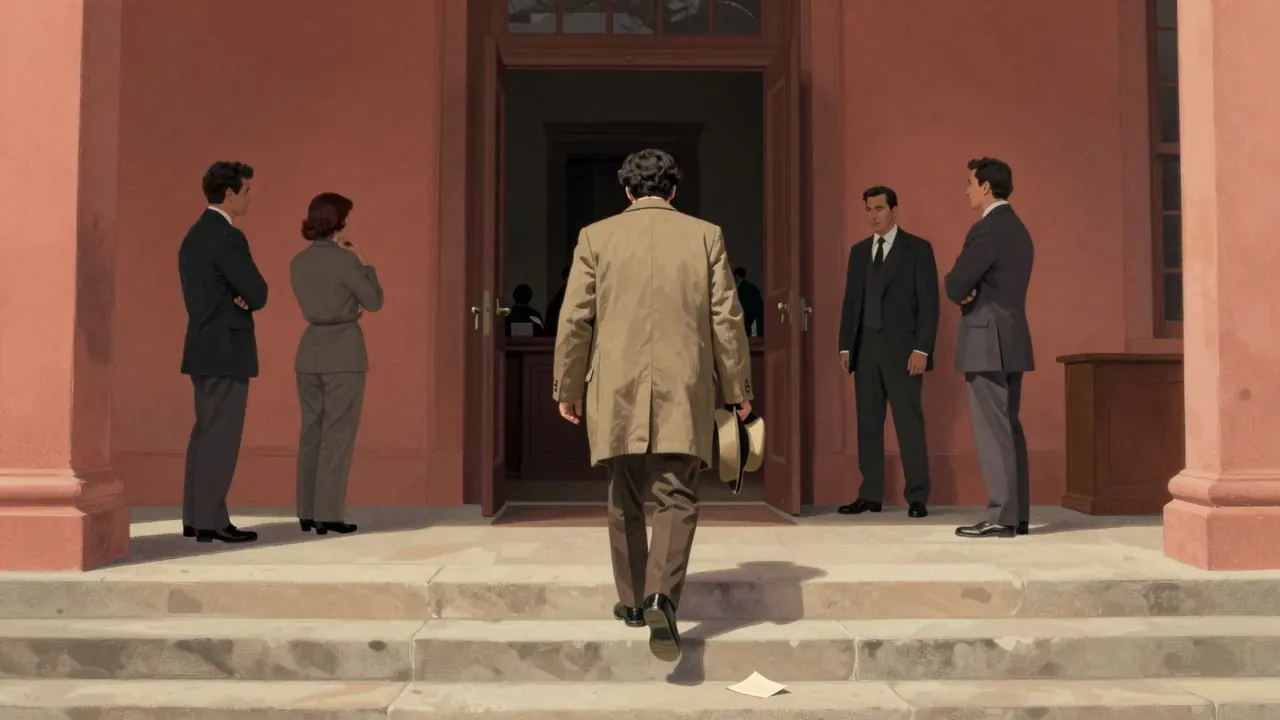
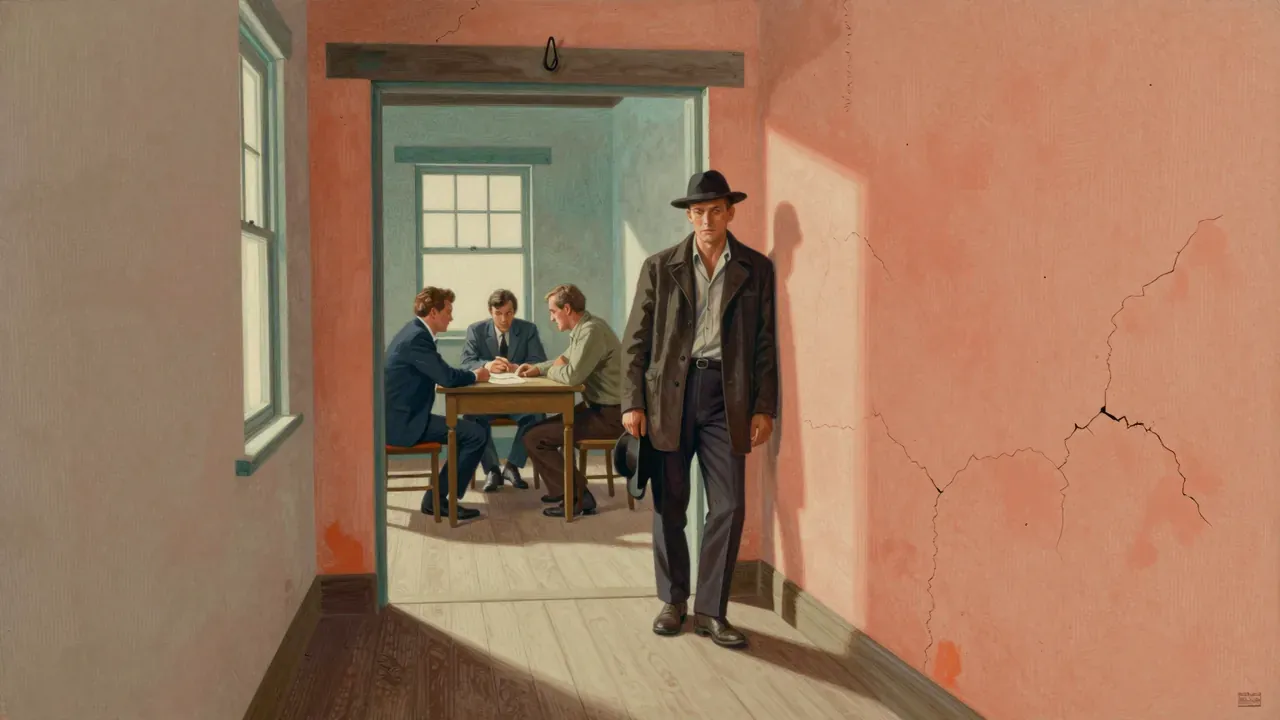
The story moves briskly across fifteen days of shooting, compressing years of Reavis’s scheme into a tightly wound sequence of forgeries, marriages, and bureaucratic brinkmanship. Vincent Price plays Reavis with a clipped, deliberate cadence — less a swindler than a pedant who has mistaken precision for legitimacy. Ellen Drew as Sofia carries quiet gravity, her performance anchored in restraint where others overstate. James Wong Howe’s cinematography avoids grandeur: interiors are flat and unadorned, exteriors sun-bleached and sparse, with little attempt at period texture. Paul Dunlap’s score is functional, underscoring transitions without shaping mood. Arthur Hilton’s editing maintains clarity but rarely surprises; cuts serve exposition, not rhythm or irony. Fuller’s script foregrounds document-based logic — deeds, seals, royal decrees — making forgery itself the film’s central action. There is no chase, no gunfight, no showdown: the tension resides in whether a clerk will spot a smudged ink line or a misplaced heraldic device. The craft is modest, coherent, and consistently aligned with the film’s preoccupation with paper, proof, and procedure. Word count: 152
The pace of it
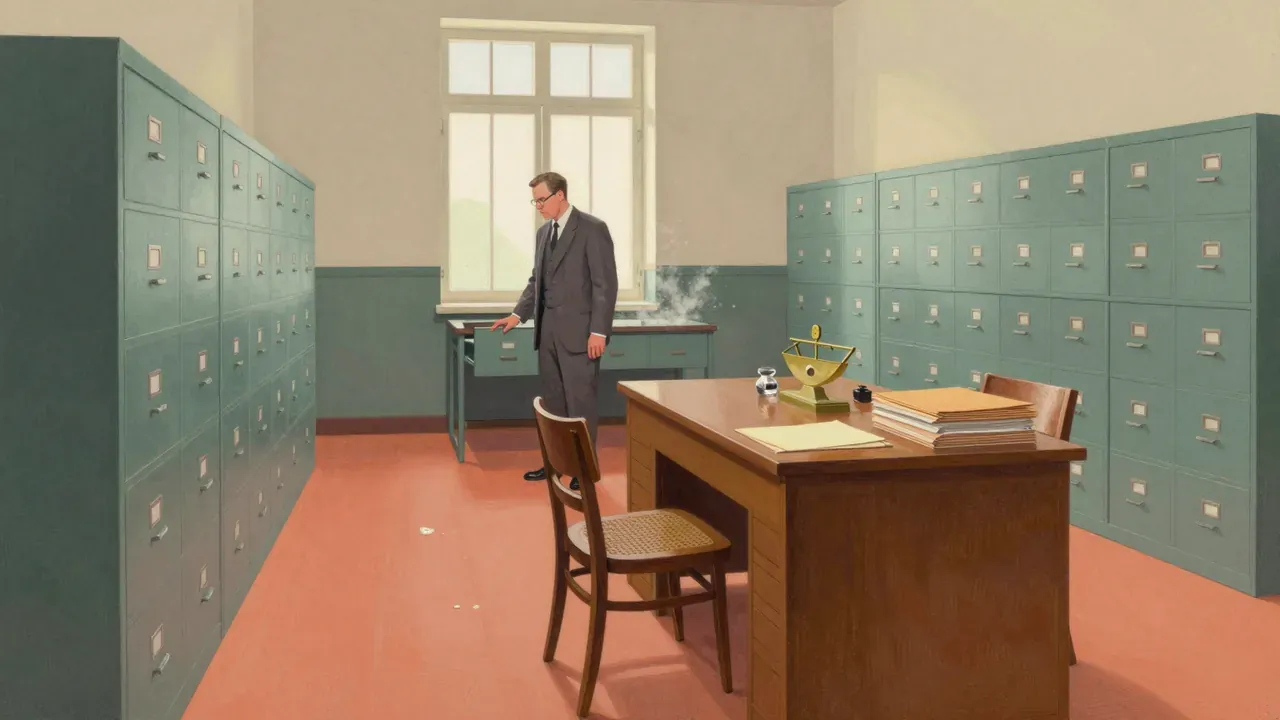
What lands is the sheer audacity of the premise treated seriously — not as farce, not as satire, but as a procedural anomaly in American expansion. The film holds attention when it dwells on the mechanics of deception: the Spanish archive scene, the careful rehearsal of Sofia’s noble bearing, the way Reavis rehearses his own backstory like a liturgy. Vladimir Sokoloff as Pepito Alvarez brings grounded warmth and moral weight, anchoring the film’s ethical pivot. Beulah Bondi and Angelo Rossitto deliver precise, economical turns that suggest lived-in communities disrupted by paper-thin claims. The final courtroom collapse works because it follows the logic established earlier: Reavis is undone not by conscience or violence, but by a single factual inconsistency — the mismatch between ancestry and origin — exposed through patient scrutiny. The film earns its moments of dry irony: a government offering $25 million to avoid litigation, settlers displaced by parchment, a baron whose title evaporates the moment someone checks the parish register. These land because they are earned by the film’s commitment to cause and effect, not spectacle. Word count: 154
The silence of it
What does not land is the emotional through-line. Sofia’s arc remains underdeveloped: her transition from abandoned child to baroness feels narratively convenient rather than psychologically earned, and her reunion with Reavis at the end lacks resonance because their relationship was never given interior space. The film’s pacing sags in the middle stretch, where exposition about archival research and land surveys accumulates without dramatic counterweight. Fuller’s direction, while clear, avoids visual risk — there are no striking compositions, no memorable framings, no tonal shifts to signal irony or dread. The finale, in particular, rushes past its own implications: Reavis’s imprisonment and release feel perfunctory, stripping the ending of moral weight or ambiguity. Critics at the time noted the lack of suspense, and that holds: the outcome is never in doubt, and the stakes remain abstract — territory, not people; title, not power. Without stronger character investment or stylistic distinction, the film’s intelligence stays intellectual, not visceral. Word count: 151
The paper of it
The themes that matter are forgery as statecraft, documentation as domination, and the porous boundary between legal fiction and political fact. The film treats archives not as neutral repositories but as contested terrain — places where authority is asserted, not discovered. Reavis does not break the law; he exploits its reliance on paper, precedent, and deference to provenance. His success hinges not on charm or force, but on the institutional reluctance to question documents that look authentic. The film quietly interrogates how American westward expansion depended on similar acts of imaginative possession: treaties signed under duress, maps drawn before survey, titles granted before settlement. Colonialism and forgery become parallel logics — both require the erasure of prior claims and the invention of plausible continuity. Sofia’s Indigenous parentage, revealed only late, reframes the entire enterprise as theft disguised as inheritance. This is not incidental: it is structural. The film’s quietest theme is the violence of paperwork — how a single forged seal can displace families, invalidate histories, and reassign sovereignty. Word count: 149
The truth of it
This film is for viewers interested in the mechanics of historical fraud, in early independent American cinema, or in Vincent Price’s pre-horror work as a performer of meticulous arrogance. It rewards patience with procedural detail and tolerance for understated delivery. It is not for those seeking kinetic energy, emotional immersion, or genre thrills — the Western trappings are nominal, the action minimal, the romance perfunctory. Anyone expecting the flamboyance of Price’s later roles or the visual boldness of Fuller’s later films will find this thin. Those who value strong thematic coherence over dramatic momentum may find it unexpectedly rich. A viewer who dislikes slow-burn exposition or finds bureaucratic tension inert will leave bored. The film assumes interest in its subject — it does not generate it. Its appeal narrows with each passing decade, yet its concerns about evidence, authority, and invented tradition grow more urgent. Word count: 147
The fold of it
It is worth your evening if you approach it as a compact, black-and-white case study in institutional gullibility — a film less about Arizona than about how systems certify reality. Its ninety-seven minutes pass without strain, its ideas linger after the credits, and its central conceit remains unnervingly relevant. It is not entertaining in the conventional sense, nor is it visually arresting, but it is coherent, intelligent, and morally precise. Those who dismiss it as ‘slow’ or ‘sloppy’ — as some contemporary critics did — are not wrong about its pacing or polish, but they mistake its purpose: it is not trying to dazzle, but to demonstrate. A different editor might have tightened the middle act; a more expressive lead might have deepened the human cost. But as it stands, it is a minor but unmistakable work — not great, not flashy, but singular in its focus. Its value lies in what it refuses to do as much as what it achieves. Word count: 149