The look of it
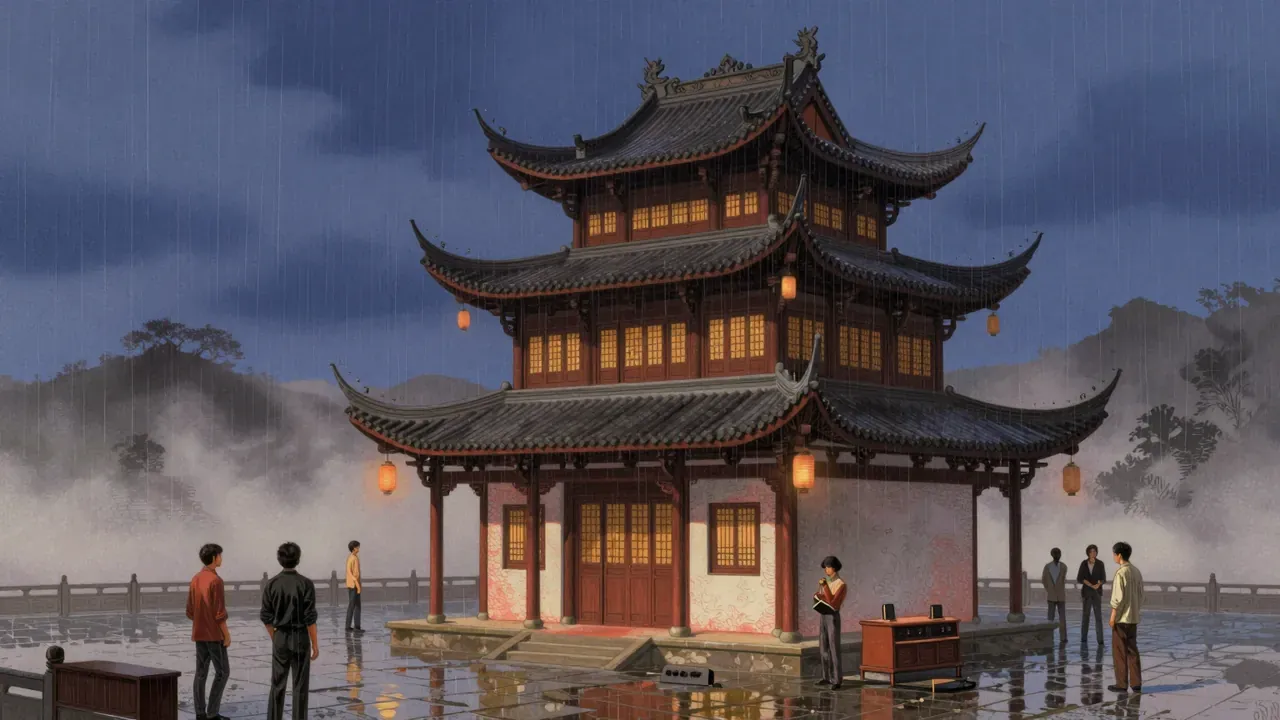
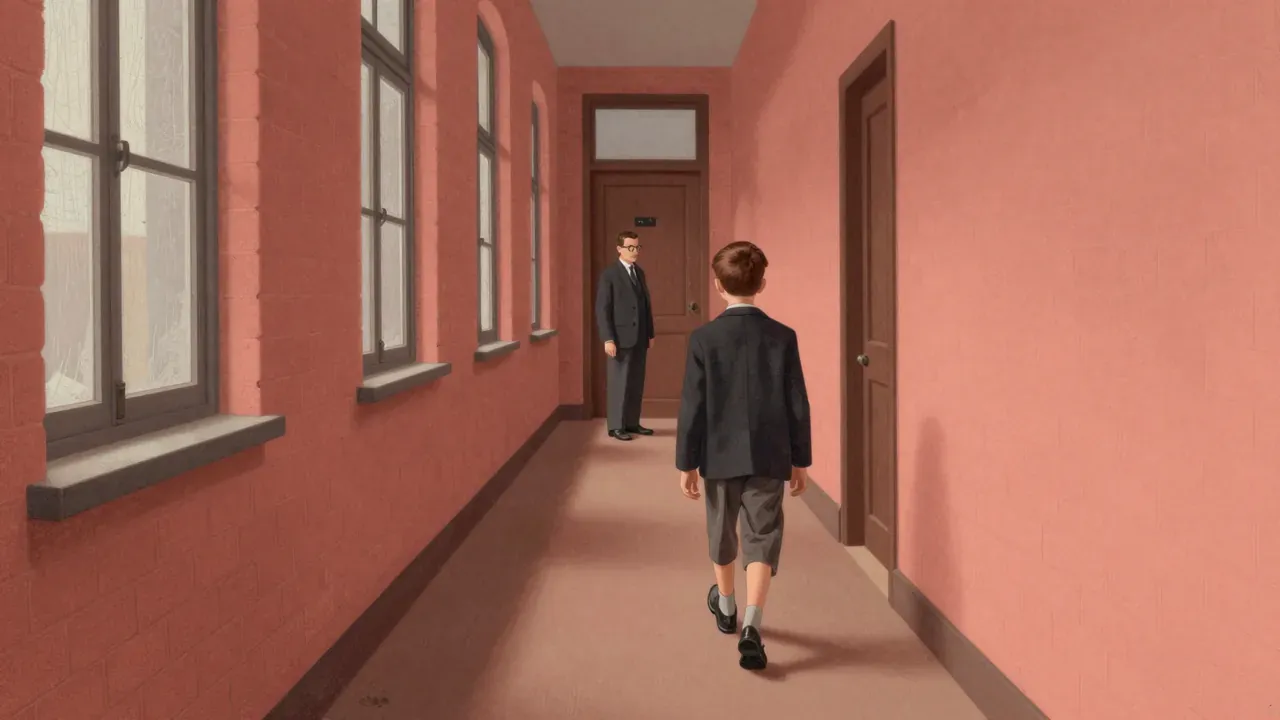
The Chess Game of the Wind is a Persian-language Iranian drama from 1976, written and directed by Mohammad Reza Aslani, set in the decaying grandeur of a Qajar-era mansion shortly after the death of its matriarch. It attempts to anatomise the collapse of aristocratic authority—not through historical exposition but through tightly wound domestic ritual, inherited silence, and withheld gesture. The film treats inheritance as both legal claim and psychic burden, mapping power not in speeches or declarations but in who wheels whom where, who handles the deeds, who burns them, and who stands just outside the frame while others negotiate. Its ambition is structural as much as thematic: to build a closed world where every prop, light source, and offscreen sound serves the logic of entrapment. It does not explain Iran’s pre-revolutionary tensions; it enacts them in real time, in one house, over nine days, using the grammar of classical European cinema—Ophüls’ tracking shots, La Tour’s chiaroscuro, Vermeer’s stillness—but grounded in Persian spatial hierarchy and Qajar-era interior logic. It is less a period piece than a pressure chamber.
The movement of it
The story unfolds with glacial precision: Aghdas, paralysed and confined to a wheelchair, inherits her mother’s house alongside her stepfather Hadji Amoo, whose claim rests on marriage rather than blood. Their mutual suspicion curdles into conspiracy, then murder, then doubt. Fakhri Khorvash’s Aghdas moves with deliberate, unblinking control—her face rarely betraying panic until it is too late. Shohreh Aghdashloo’s Kanizak is quieter, more porous: her loyalty shifts like candlelight across plaster walls. Houshang Baharlou’s cinematography keeps interiors under-lit, favouring deep shadow and narrow pools of light—oil lamps, window slivers, a single chandelier—so that faces emerge only partially, as if half-remembered. Sheida Gharachedaghi’s score uses sparse, resonant strings and percussion, never underscoring but punctuating silence. Abbas Ganjavi’s editing intercuts scenes of washerwomen gossiping with the main action, not as commentary but as parallel narration—oral history leaking into the margins of official memory. The Moshir ad-Dowleh Mansion is not backdrop but participant: its corridors echo, its doors creak with weight, its cellar breathes damp.
The rhythm of it
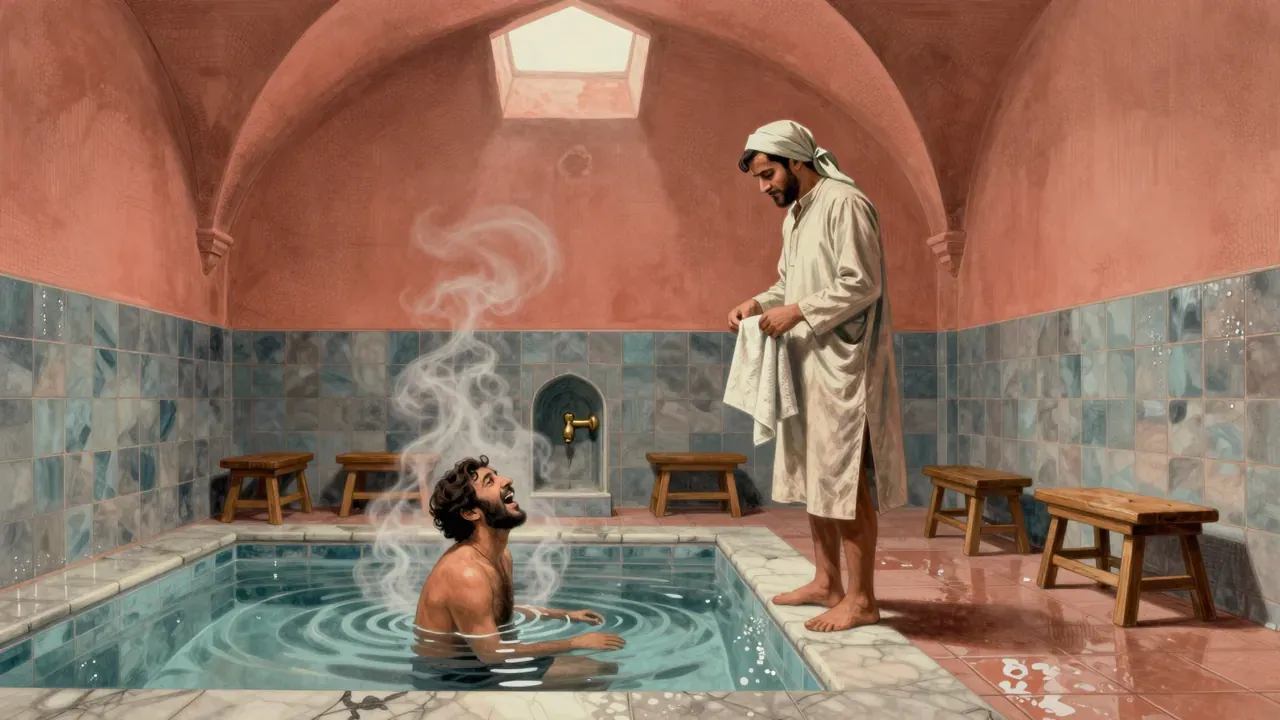
What lands is the film’s sustained tonal discipline—the way dread accumulates not through jump cuts or music swells but through duration and restraint. Aghdas dragging herself down stone stairs at night, hand over hand, takes twenty-seven seconds on screen and feels like minutes; the audience holds its breath not for what might happen next but because the effort itself is unbearable to witness. The bath scene—Hadji Amoo alive, wet, laughing—is horrifying not for its violence but for its utter normalcy: the water steams, the tiles gleam, the laughter sounds genuine. The film’s formal rigour pays off in moments like this, where realism and uncanny dissonance fuse. The intercut washerwomen scenes land because they are neither explanatory nor ironic—they simply exist as another layer of social texture, their voices overlapping, correcting, misremembering, asserting. Even the tinted sequences—amber for day, slate-blue for night—do not feel decorative but functional, marking temporal drift and emotional temperature. Nothing is wasted; nothing is arbitrary. Every object placed in frame has been considered, then placed again.
The uncertainty of it
What does not land is the final act’s pivot toward overt irony. Once Kanizak and Shaban’s collusion becomes explicit—and especially once Ramezan shoots Shaban upstairs—the film’s earlier ambiguity hardens into schematic betrayal. The revelation that Kanizak manipulated events from the start flattens her earlier complexity; her motives shift from survival and resentment to calculation so total it feels imported from a different genre. The young boy and elderly nanny left behind in the final shot are visually potent but emotionally underprepared—their presence reads less as haunting epilogue and more as symbolic shorthand. The film’s refusal to name political context also works against it in places: the creditors’ arrival feels abrupt, their function purely plot-functional, lacking the same sociological weight as the washerwomen’s talk. And while the restoration is meticulous, some grain patterns and contrast shifts in the 2020 regrade occasionally distract—not as flaws, but as reminders of the gap between original intention and recovered artefact.
The memory of it
The themes that matter are inheritance as erasure, silence as complicity, and architecture as archive. The house does not merely contain the characters—it preserves their silences, absorbs their lies, and outlives their claims. Aghdas’s paralysis is not metaphorical disability but a literal condition that reshapes power: she cannot walk, but she can order a man killed, and she can burn deeds. Her wheelchair becomes both prison and throne. The film treats class not as economic category but as embodied habit—how one sits, how one pours tea, how one looks away when spoken to. Sexuality appears obliquely: in the charged proximity of Kanizak and Shaban, in the unspoken tension between Aghdas and Ramezan, in the way Hadji Amoo’s body is handled after death—not as spectacle but as contested property. The film’s most persistent theme is the instability of testimony: who saw whom, when, where—each assertion undermined by another, each memory contradicted by a neighbour’s rumour. Truth here is not discovered but buried deeper with every attempt to unearth it.
The demand of it
This film is for viewers who value sustained mood over exposition, who tolerate slow accumulation and distrust narrative payoff as resolution. It is for those who watch films for how light falls on a wall, who notice where hands rest when no one is speaking, who find tension in the space between two held breaths. It is not for viewers who require clear moral alignment, causal clarity, or character arcs that resolve. Those who rely on dialogue to carry meaning will find themselves adrift: much of the story is told through objects—a silver flail, a jar, a pistol drawer left open—and through negative space. It is also not for those unwilling to sit with discomfort that is psychological rather than visceral: the horror here is of recognition, not shock. Anyone expecting the pacing or structure of contemporary Iranian neorealism—or even Aslani’s own documentary work—will be disoriented. The film assumes patience as prerequisite, not virtue.
The leaving of it
Yes, it is worth your evening—if you grant it your full attention and do not expect it to meet you halfway. Its ninety-nine minutes unfold with the gravity of a liturgical rite: every beat matters, every pause is calibrated. It repays close viewing not because it hides clues but because it rewards attention to texture—the grain of wood, the tremor in a hand, the way smoke curls from an extinguished lamp. Those who find it alienating are not wrong; its rhythms are deliberately out of step with mainstream narrative convention. But the disorientation is part of its design. It asks the viewer to recalibrate, to read silence as speech, stillness as action. To dismiss it as ‘slow’ is to mistake deliberation for inertia. It is not for casual viewing, nor for background consumption. It demands presence—and gives back, in return, a rare kind of cinematic density: one where every frame feels necessary, and none feels borrowed.