The time between them
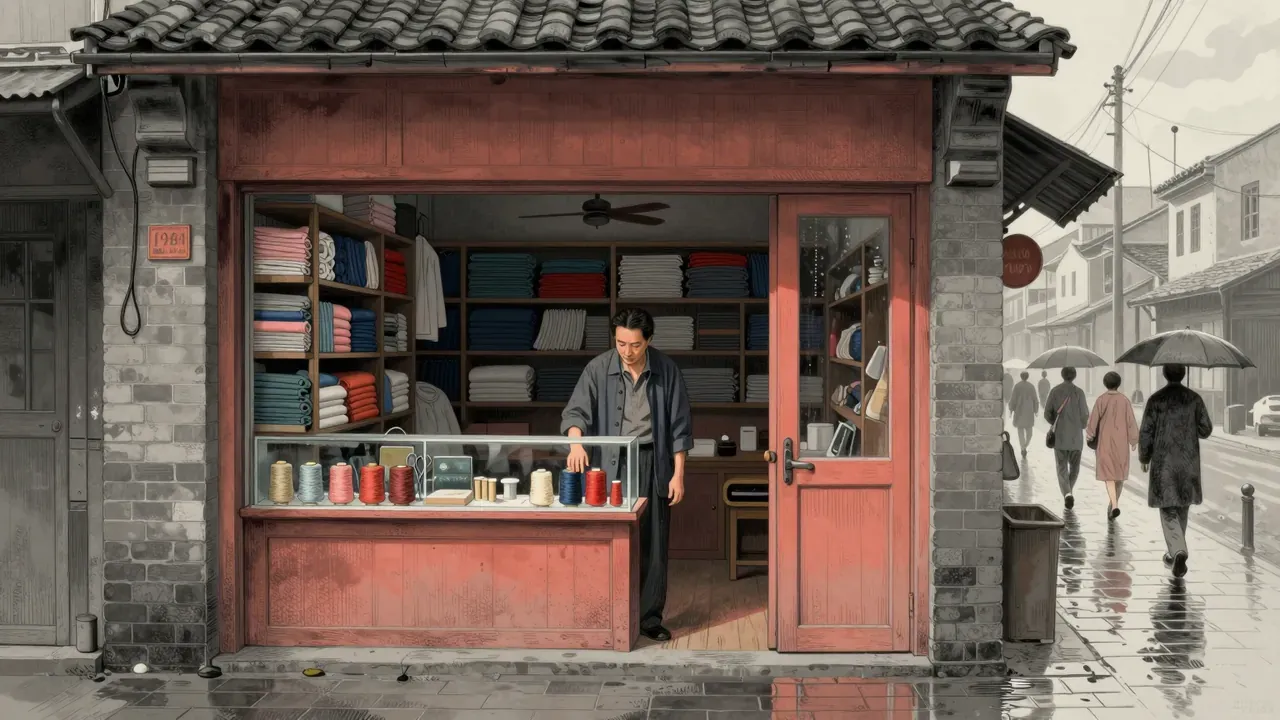
Taipei Story is a 1984 Taiwanese drama co-written by Edward Yang and Hou Hsiao-hsien, set in a Taipei undergoing rapid economic and cultural recalibration. It attempts to chart the quiet collapse of a long-standing relationship not through melodrama but through accumulation: of missed signals, unspoken compromises, and divergent responses to modernity. Ah-chen, an office worker newly unemployed and planning emigration, embodies forward motion — pragmatic, restless, emotionally guarded. Ah-lung, her childhood sweetheart and former baseball star, runs a cloth shop on Dihua Street and moves with deliberate slowness, anchoring himself in habit, loyalty, and unexamined tradition. The film does not diagnose their failure as personal weakness but situates it within structural shifts: the hollowing of local commerce, the allure and ambiguity of American capital, the erosion of intergenerational obligation. Its ambition is sociological as much as psychological — to treat a love story as a pressure gauge for a city in transition. It avoids exposition, voiceover, or symbolic shorthand; its method is observational, patient, and anchored in duration.
The look of it
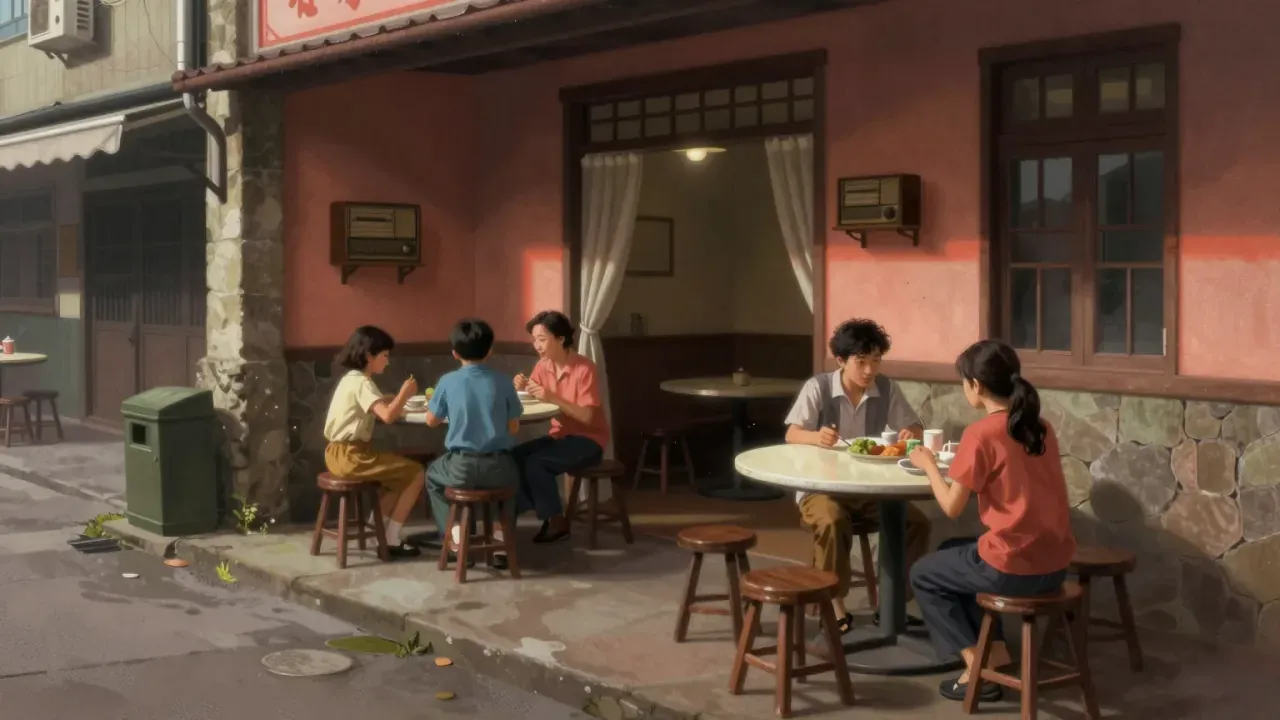
The story unfolds across 119 minutes with minimal incident and no narrative pivots disguised as climax. Scenes linger: Ah-chen waiting for a lift in rain; Ah-lung folding fabric in silence; both sitting side by side without speaking, the space between them thickening. Hou Hsiao-hsien’s performance as Ah-lung is physically restrained — shoulders slightly rounded, gaze often lowered, speech measured — conveying inertia not as laziness but as a kind of moral gravity. Tsai Chin’s Ah-chen wears sunglasses indoors and out, a barrier she never lowers, her frustration expressed in clipped sentences and abrupt exits. Yang’s own score is sparse, mostly piano motifs that recur like half-remembered thoughts, never underscoring emotion but marking time. Cinematographer Yang Wei-han keeps compositions balanced yet uneasy: doorways frame characters separately; windows reflect what is unseen; interiors are lit with flat, naturalistic light that refuses to flatter. Editing avoids rhythm or punctuation — cuts land without emphasis, trusting the weight of what precedes and follows.
What stays with you
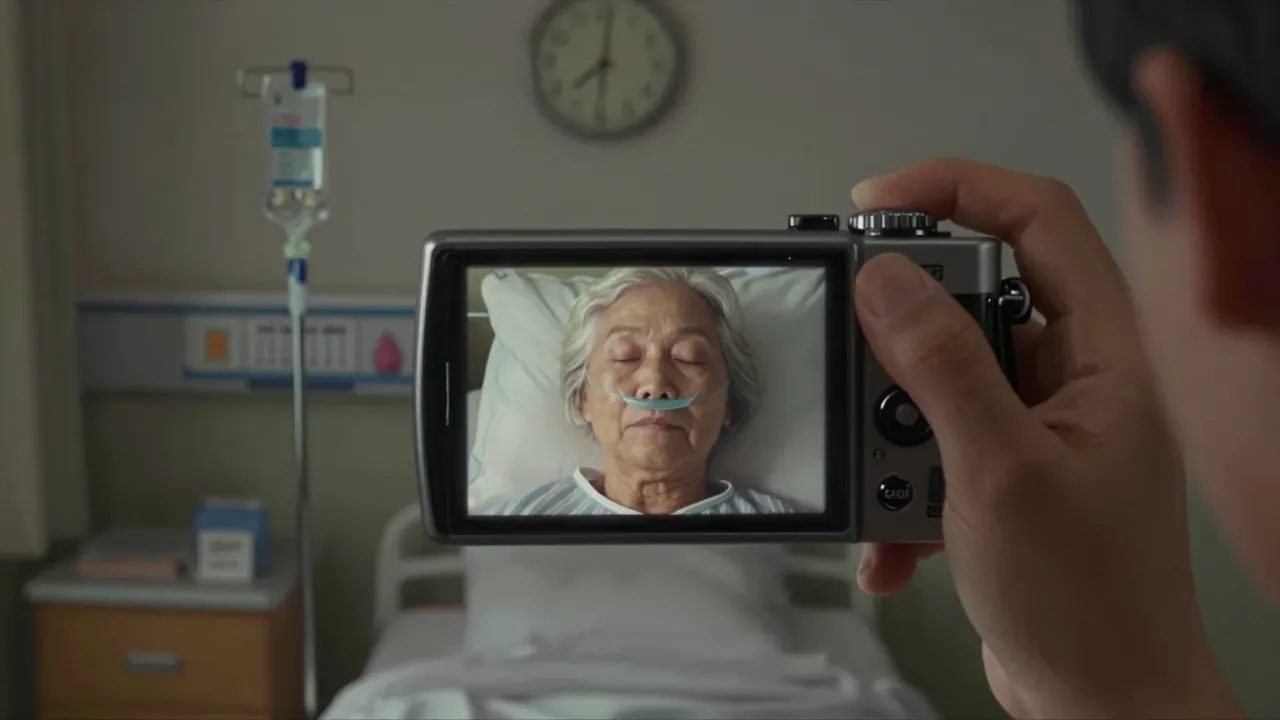
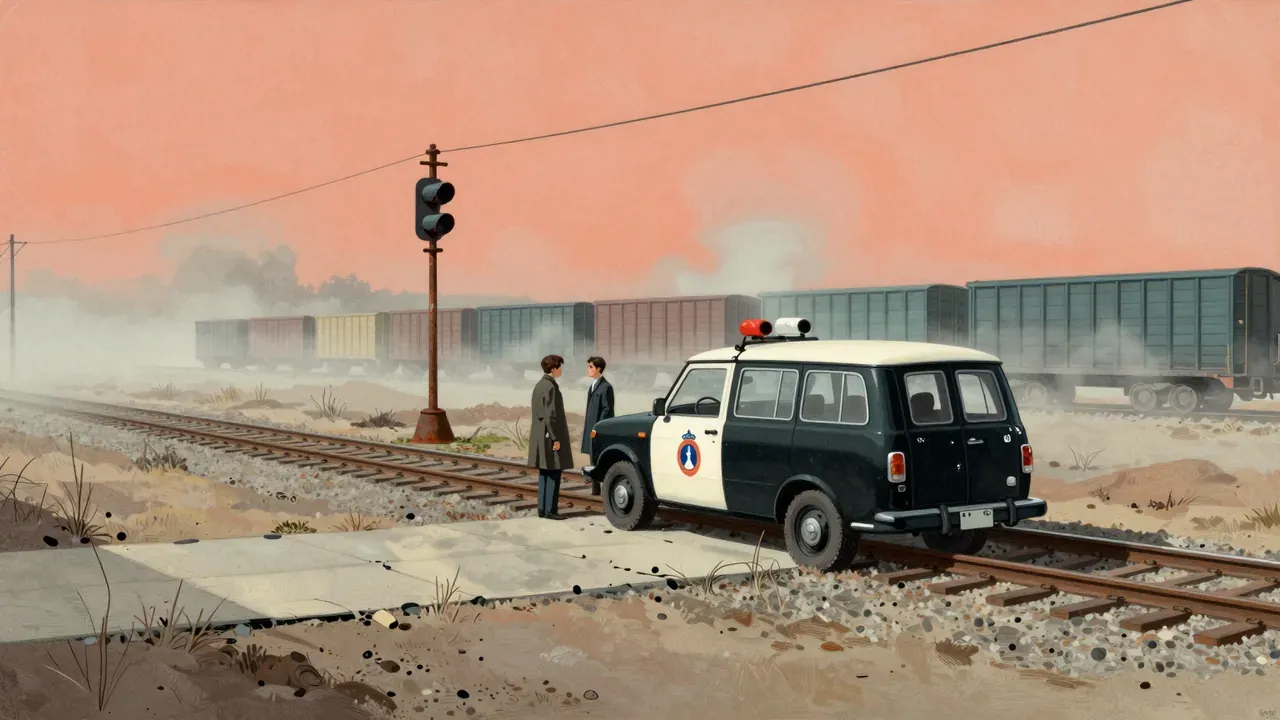
What lands is the cumulative ache of misalignment. The film makes palpable how two people can share history, geography, even affection, yet occupy irreconcilable temporal registers: one oriented toward departure, the other toward preservation. The scene where Ah-chen asks Ah-lung to marry her — not as a proposal but as a last attempt at shared purpose — carries quiet devastation because neither character raises their voice, and neither yields. The final sequence, with Ah-chen inspecting a gleaming new office while Ah-lung’s body lies undiscovered on a mountain road, lands not through irony but through precise, unsentimental juxtaposition. The film’s refusal to resolve or explain — leaving Ah-chen’s expression unreadable, the young man’s fate unmentioned, the brother-in-law’s US business unrealised — gives its realism weight. Its restraint becomes its authority: this is how endings often arrive, not with fanfare but with silence, vacancy, and the hum of air conditioning in a newly leased office.
Where it slips
What does not land is the film’s occasional drift into abstraction without sufficient grounding. A subplot involving Ah-chen’s younger sister and her delinquent friends feels underdeveloped, its function unclear beyond supplying ambient urban texture. The architect’s marital situation — introduced as ambiguous, then resolved off-screen with no emotional consequence for Ah-chen — reads less as thematic economy and more as narrative omission. Wu Nien-jen’s taxi-driver friend Ch’en serves primarily as exposition conduit, his presence functional rather than felt. Some scenes, particularly those in Ah-lung’s shop or Ah-chen’s apartment, risk monotony not from slowness but from repetition without variation: similar framings, similar pauses, similar tonal registers across too many exchanges. The film assumes a viewer willing to absorb meaning through implication alone, and when implication lacks sufficient anchor — a gesture, a glance, a shift in posture — the effect is not ambiguity but vacancy. This is not a flaw in intent, but in execution: some silences speak; others simply echo.
What the city does
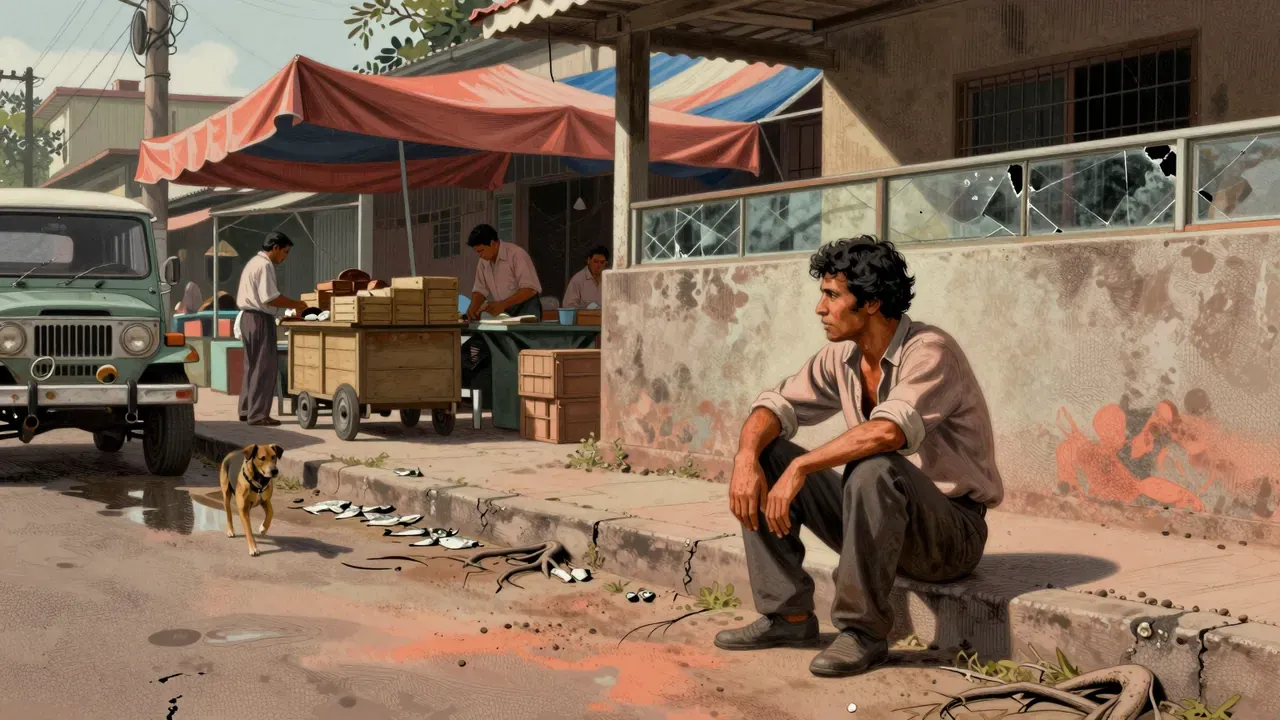
The themes that matter are rooted in time, class, and cultural translation. The film treats modernisation not as progress but as uneven displacement: Ah-lung’s cloth shop survives only as relic; Ah-chen’s job vanishes with a corporate acquisition; her father’s debts are settled with money meant for emigration — a transaction that privileges filial duty over individual future. The English title Taipei Story is literal: the city is the central subject, its skyline, street signs, construction sites, and office blocks functioning as silent agents. Yang’s critique of the middle class is unsparing but not moralistic — he shows how aspiration curdles into anxiety, how security becomes stasis, how ‘moving forward’ can mean severing everything that gave life shape. The idiom Qing Mei Zhu Ma — green plums and bamboo horse — is invoked not nostalgically but ironically: childhood intimacy proves no foundation for adult coexistence when the ground beneath both is shifting at different speeds and in different directions.
Who it’s for
This film is for viewers who value sustained attention over narrative propulsion, who find emotional resonance in stillness and who trust images and duration over explanation. It rewards patience, familiarity with New Taiwanese Cinema conventions, and tolerance for unresolved endings. It is not for those who require clear causality, psychological exposition, or cathartic release — viewers expecting a romance about rekindling will find only estrangement deepening. Those who dislike films where characters rarely articulate their inner states, or where plot advances via subtraction rather than addition, will feel alienated. A viewer who values strong visual metaphor may find the film’s realism too muted; someone drawn to Yang’s later work like A One and A Two may be surprised by the relative rawness here. What would change the verdict? A tighter edit — trimming ten minutes from the mid-section — would sharpen its focus without sacrificing its method.
Is it worth your evening
Yes, it is worth your evening — provided you approach it as a study in atmosphere and social texture rather than a story with resolution. Its 119 minutes unfold with the weight of lived time, not cinematic time, and that demands adjustment. It repays close viewing: the way light falls on a tiled floor, how a cigarette smoke curls in still air, the cadence of Mandarin spoken without theatrical inflection. It is not ‘entertaining’ in the conventional sense, but it is absorbing, quietly devastating, and historically significant as a foundational text of Taiwan’s New Cinema. Those who watch it expecting momentum or closure will leave dissatisfied. But for anyone interested in how cities reshape relationships, or how cinema can register societal change through the smallest gestures — a pause before answering, a hand withdrawing from a doorframe — it remains essential. Its value lies not in what it says, but in what it allows to remain unsaid, and how long it lets you sit with that silence.