What it is trying to do
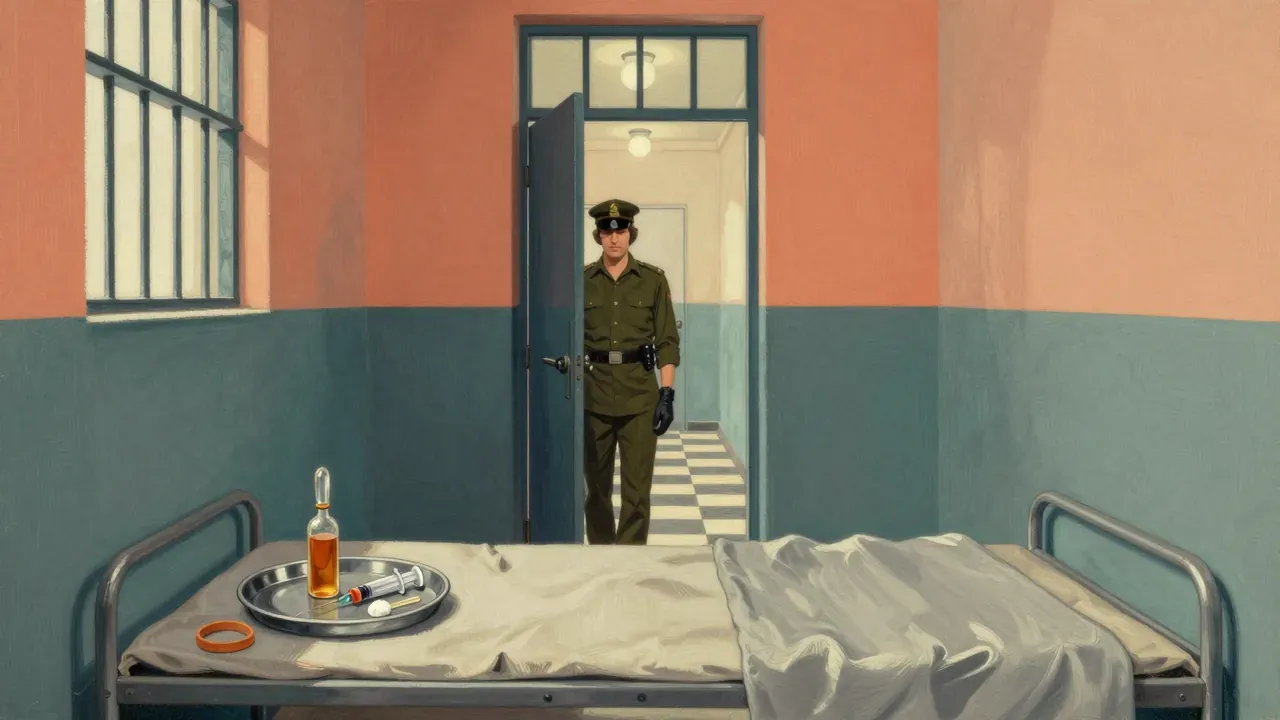
State of Siege is a French political drama from 1972, directed by Costa-Gavras and co-written with Franco Solinas, that dramatises the kidnapping and execution of a US government official by Uruguayan leftist guerrillas. It does not pretend to be a biographical account but uses the real-life case of Dan Mitrione as a scaffold for a forensic examination of counterinsurgency training, state violence, and the moral architecture of Cold War intervention. The film’s aim is argumentative: it seeks to expose how technical assistance programmes masked systematic instruction in torture, and how democratic governments colluded with authoritarian regimes under the cover of development aid. Its method is procedural — showing not just what happened, but how institutions shield themselves through language, bureaucracy, and staged mourning. It avoids psychological portraiture in favour of institutional portraiture, treating Santore not as a man but as a node in a transnational security apparatus. The setting is unnamed but unmistakably Montevideo; the dialogue is stripped of ornament, calibrated for clarity over ambiguity. This is cinema as indictment, built on fact-based inference rather than invention.
How it works
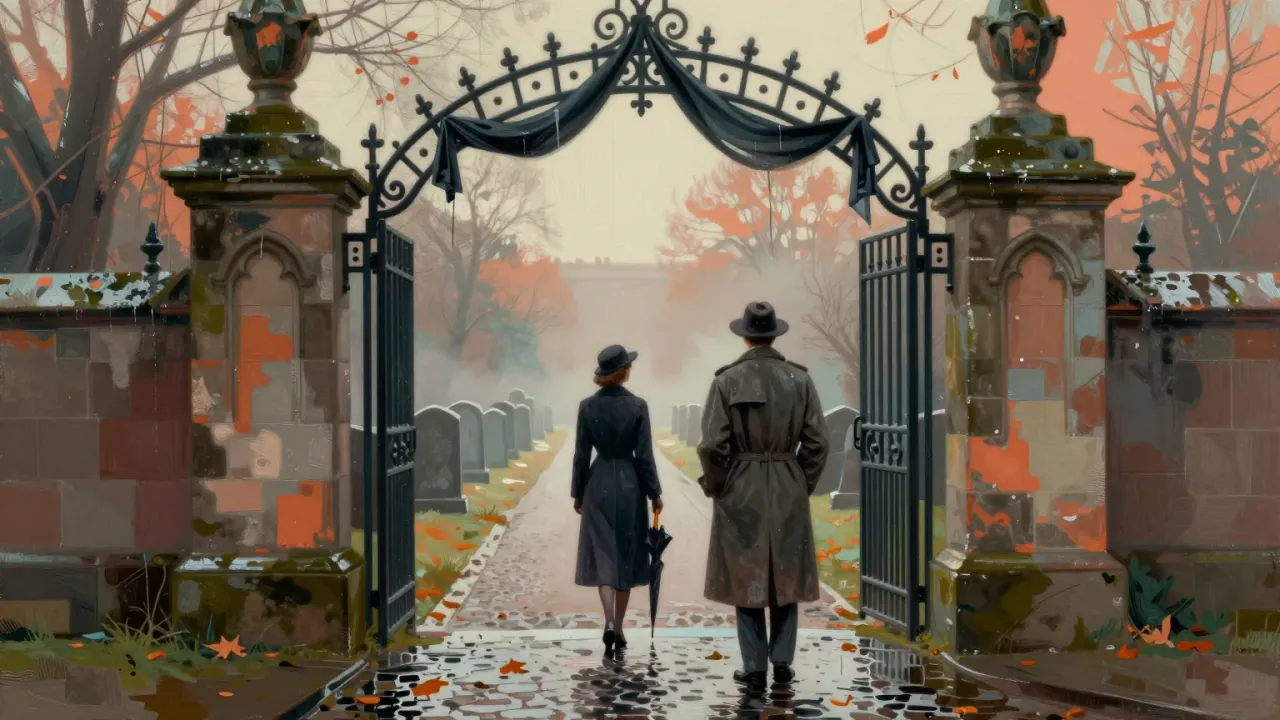
The story unfolds in two tightly interlocked movements: a state funeral followed by a sustained flashback that reconstructs the kidnapping, interrogation, and killing of Santore. Pierre-William Glenn’s cinematography keeps the Chilean locations unvarnished — wide shots of Santiago’s streets and government buildings, interiors lit with flat, functional light. Yves Montand plays Santore with controlled stillness, his calm a weaponised neutrality; Renato Salvatori’s Captain Lopez conveys institutional exhaustion without caricature. O. E. Hasse as journalist Carlos Ducas anchors the narrative’s moral inquiry, asking questions the state refuses to answer. Françoise Bonnot’s editing sustains tension not through pace but through rhythmic withholding — long takes during the interrogation, abrupt cuts to bureaucratic meetings where decisions are made off-screen. Mikis Theodorakis’s score is sparse, using strings and percussion to underscore gravity, not suspense. The performances avoid theatricality; even the Tupamaros speak with quiet precision, their masks concealing faces but not conviction.
What lands
What lands is the film’s structural rigour: its refusal to let the viewer rest in moral comfort. The sequence in which Santore calmly confirms his role in training torturers — not with defiance or remorse, but with the dry certainty of a technician — remains chilling because it is delivered without flourish. The final airport shot, where porters watch a new American official arrive, lands precisely because it offers no commentary: the machinery continues, unbroken. The film’s restraint in depicting violence — no close-ups of wounds, no slow-motion death — makes the political act of killing feel less like spectacle and more like consequence. The casting of Chilean painter Nemesio Antúnez as President Pacheco Areco adds quiet authenticity, not performance. The decision to shoot in Chile under Allende, knowing the coup was imminent, imbues every frame with historical weight the film never names but cannot escape. This is not polemic dressed as drama; it is drama built from documented practice, and that discipline gives its conclusions force.
What does not
What does not land is the flattening of the Tupamaros into near-abstract agents of justice. Their motives are clear, their methods disciplined, but their internal tensions, ideological fractures, or tactical disagreements remain off-screen. The film grants them moral coherence but denies them dramatic complexity — they function more as a collective conscience than as individuals. Similarly, the Uruguayan state is rendered as a monolith: ministers confer, police fail, generals posture, but no one within the apparatus doubts the premise of their authority. This simplification serves the film’s argument but weakens its psychological texture. The character of Mrs. Santore, played by Evangeline Peterson, appears only briefly and without dimension — a symbolic widow rather than a person. Some supporting roles, particularly the ministers, verge on cartoonish in their gluttony or pomposity, undermining the film’s otherwise sober tone. These choices do not sabotage the film, but they do limit its reach beyond the political register into the human one.
The themes that matter
The themes that matter are the banality of state violence, the laundering of coercion through technical language, and the asymmetry of accountability. The film treats ‘communications consultant’ not as a euphemism but as a diagnostic tool — a phrase that erases intent while preserving function. It asks how institutions sustain themselves when their operations depend on secrecy, plausible deniability, and the fragmentation of responsibility across agencies and borders. The contrast between Santore’s polished delivery and the brutality he enables is not ironic; it is systemic. The film also examines how dissent is managed: not only through repression, but through narrative control — the state funeral, the press releases, the dismissal of inconvenient journalism. Its most persistent theme is continuity: how one official replaces another, how one regime inherits the tools of its predecessor, how ideology becomes infrastructure. It is less about revolution than about the conditions that make revolution legible — and inevitable.
Who should watch it
This film is for viewers who expect cinema to clarify rather than console, who can sit with unresolved moral tension and follow arguments built from evidence rather than emotion. It rewards attention to bureaucratic detail, to shifts in tone between scenes, to the weight carried by a single line of exposition. It is not for those who require character arcs, emotional catharsis, or visual spectacle — there are no chase sequences, no romantic subplots, no moments designed for applause. Those who reject its thesis outright may find its structure alienating, mistaking its clarity for dogma. A viewer who believes state violence is always exceptional, not routine, will likely resist its central claim. But the film’s value does not depend on agreement: its power lies in how thoroughly it constructs its case. Change the verdict? Only if the facts it draws on — the existence of US torture training programmes in Latin America, the documented role of USAID personnel — were shown to be false. They are not.
Is it worth your evening
Yes, it is worth your evening — provided you approach it as a work of political reasoning in cinematic form, not as entertainment. Its 115 minutes pass without hurry but also without slack: every scene advances the argument or deepens the context. It demands focus, but repays it with intellectual precision and formal control. You will not leave energised, but you may leave unsettled in a useful way — aware of how language sanitises violence, how geography is elided in official discourse, how replacement officials arrive before the coffins are closed. It is not for casual viewing, nor for those seeking distraction. But for anyone interested in how power operates beneath the surface of diplomacy, or how cinema can function as archival testimony, State of Siege holds up. Its urgency has not faded; if anything, its method — exposing the infrastructure of coercion — feels more relevant now than in 1972. That relevance is earned, not asserted.