The premise without promise
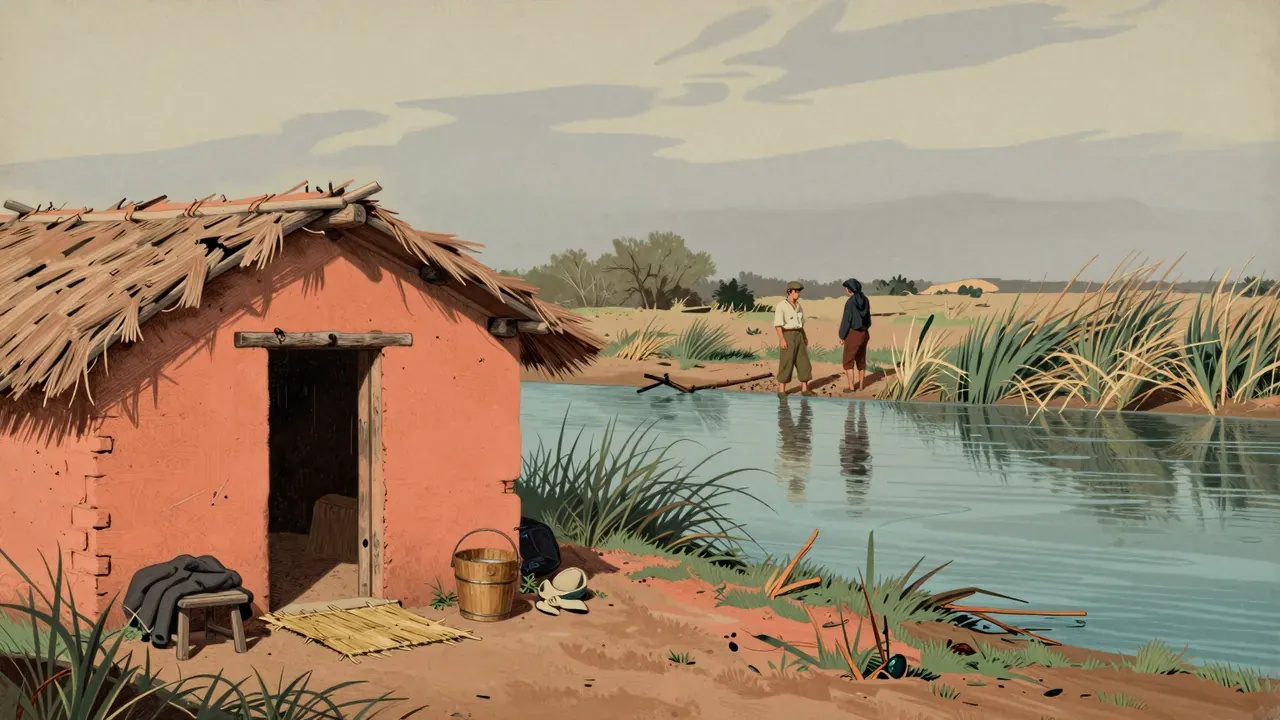
Stromboli is a neorealist drama that attempts to locate spiritual and psychological transformation within the physical and social constraints of postwar isolation. It follows a displaced Lithuanian woman who marries an Italian fisherman to leave an internment camp, only to find herself stranded on the volcanic island of Stromboli — barren, tradition-bound, and indifferent to her presence. Roberto Rossellini does not aim for narrative fluency or psychological exposition but instead constructs a parable of alienation and revelation, using the island’s terrain as both setting and moral register. The film’s ambition lies in its refusal to soften reality: non-professional villagers populate the frame; dialogue is sparse and often functional; time passes with the weight of weather and labour. It treats faith not as doctrine but as embodied crisis — a reckoning forced by landscape, silence, and social exclusion. This is not realism as documentation alone, but realism as theological pressure: the world must be endured before it can be understood, and understood before it can be transcended. The film’s structure leans into that delay, holding the viewer in discomfort until the final ascent offers not resolution but recalibration.
The look of it
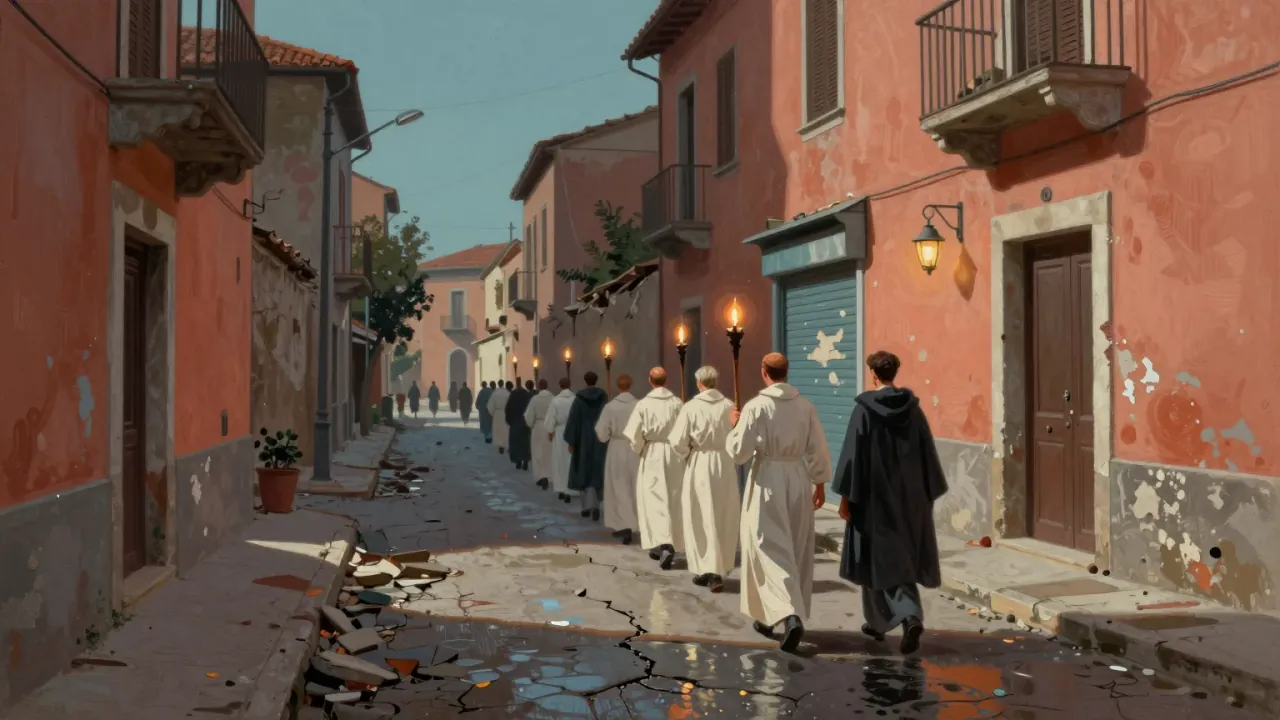
The story unfolds with minimal exposition and little cause-and-effect logic: Karin’s marriage is transactional, her disillusionment gradual, her rebellion wordless. Ingrid Bergman’s performance avoids theatricality; she registers fatigue, confusion, and quiet despair through posture and gaze rather than speech. Mario Vitale, a non-actor, plays Antonio with uninflected stoicism — his silence is neither cruel nor kind, simply there. Otello Martelli’s cinematography anchors the film in texture: wind-scoured rock, damp stone floors, the glint of fish scales under low sun. The editing, shared between Jolanda Benvenuti, Roland Gross, and Alfred L. Werker, favours long takes and abrupt cuts that resist rhythm — a formal echo of Karin’s disorientation. Renzo Rossellini’s score is sparse, mostly absent during key scenes, allowing ambient sound — waves, goat bells, distant shouts — to dominate. The script, co-written by Sergio Amidei and others, leaves motivation opaque; characters speak in fragments, and the priest’s sermons feel less like exposition than ritual interruptions. There is no musical swell at moments of feeling, no close-up to cue empathy — the camera watches, waits, and withdraws.
The weight of place
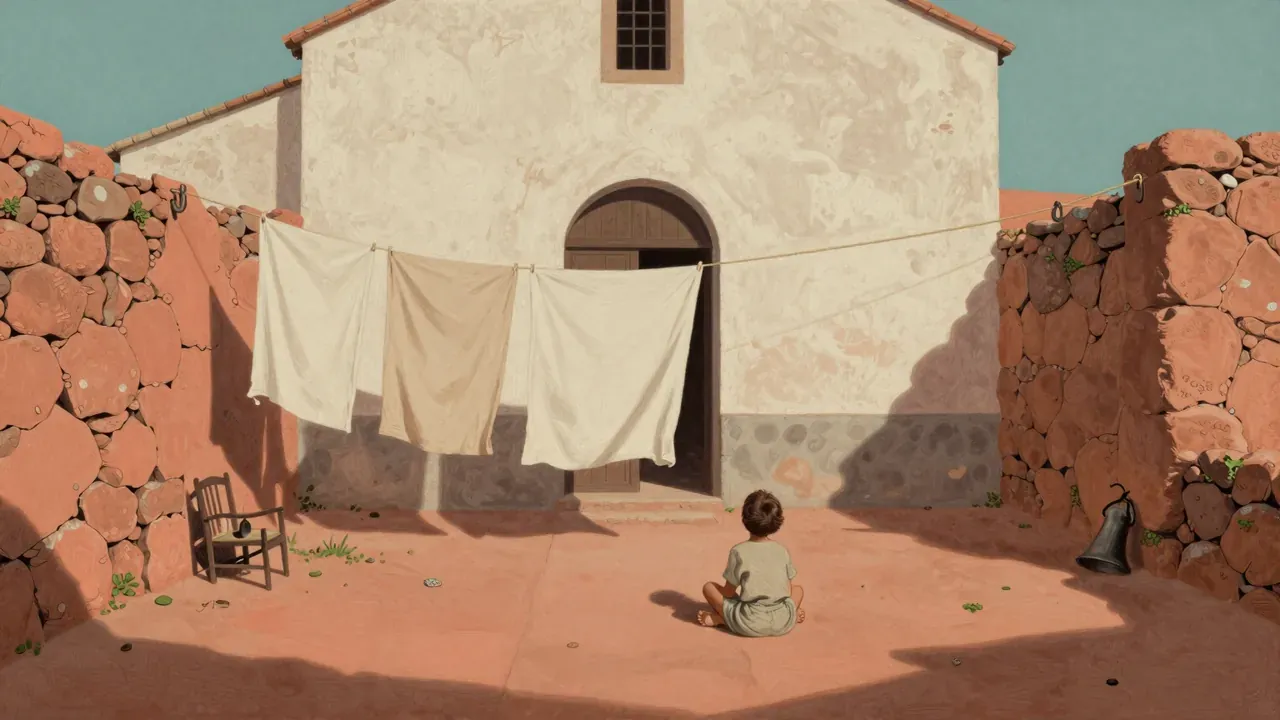
What lands is the island itself: Stromboli is not backdrop but protagonist. Its geography — steep slopes, black sand, sulphurous vents — generates tension without dialogue. The sequence where Karin climbs the volcano is the film’s fulcrum: her stumbling ascent, the abandoned suitcase, the raw, wordless cry at the summit — all arrive with physical inevitability, not dramatic calculation. The use of local non-actors gives social texture that studio casting could not replicate: suspicion, reserve, and communal inertia read as lived conditions, not plot devices. Bergman’s stillness works because it is calibrated against this environment — her grooming and posture, noted critically at the time, become markers of cultural dissonance rather than aesthetic failure. The film’s austerity pays off in moments of stark clarity: a child’s stare across a courtyard, the way light falls across a cracked wall at dawn, the sudden silence after a storm. These are not flourishes but structural elements — the film’s grammar is built from such details, and they accumulate with cumulative force.
The gaps in the script
What does not land is the script’s handling of Karin’s interior life. Her motivations shift without clear pivot: her initial hope, her growing resentment, her sudden decision to flee — none are anchored in dialogue, gesture, or sustained observation. The priest’s role remains vague, his sermons abstract rather than clarifying. The American version’s cuts exacerbated this, but even the restored Italian cut offers little insight into why Karin chooses the volcano over the village, or what she expects to find there. Some supporting characters dissolve into type: the lighthouse keeper, the guitarist, the baby — present as local colour rather than agents. Bergman’s performance, while committed, cannot compensate for writing that treats her as vessel rather than person. The film’s resistance to psychology becomes a liability in scenes requiring emotional continuity: a confrontation in the church feels abrupt, a moment of tenderness with Antonio unearned. The pacing, too, tests patience — long stretches pass with no narrative advance, relying on atmosphere alone, which risks monotony when the visual language lacks variation.
The shape of revelation
The themes that matter are displacement as ontological condition, faith as rupture rather than comfort, and transformation as bodily ordeal. Stromboli treats religion not as belief system but as lived crisis — the ‘Land of God’ title is ironic, then literal, then ambiguous again. Karin’s journey mirrors postwar Europe’s: uprooted, bargaining for survival, then confronting a reality that refuses redemption on easy terms. The island’s geology becomes metaphor: lava flows bury and renew; eruptions are neither punishment nor blessing, but fact. Class and gender operate silently but decisively — Karin’s foreignness is compounded by her sex and lack of kinship ties; her agency exists only at the margins, in small refusals and one final act of movement. The film also engages with authorship and control: Rossellini’s conflict with RKO over editing echoes Karin’s struggle against forces she did not choose and cannot shape. Her climb is not triumph but surrender — to exhaustion, to uncertainty, to something larger than intention. That ambiguity is central: the film refuses to name what she finds at the top, leaving revelation open, unfinished, and human.
The terms of attention
This film is for viewers who value formal rigour over narrative ease, who find meaning in duration and texture rather than exposition and payoff. It rewards attention to composition, sound design, and the weight of silence — those accustomed to neorealist or modernist cinema will recognise its lineage and intent. It is not for viewers who require psychological clarity, emotional signposting, or conventional character arcs. Those expecting Bergman’s Hollywood expressiveness or Rossellini’s later historical precision may find Stromboli frustratingly oblique. Critics at the time objected to its ‘inarticulacy’, and that remains a valid response: the film asks the viewer to sit with uncertainty longer than most dramas allow. A viewer who values thematic resonance over plot mechanics, or who seeks cinema that treats landscape as moral agent, will find it rich. But someone watching for diversion, catharsis, or even coherent storytelling will likely leave unrewarded — and that is not a flaw in the film, but a mismatch of expectation.
The climb
Yes, it is worth your evening — but only if you approach it as a work of sustained inquiry rather than entertainment. Its 107 minutes ask for patience, not passive consumption. The power lies in accumulation: the repeated image of the sea, the rhythm of fishing boats returning, the slow erosion of Karin’s composure. Those who dismiss it as ‘dull’ or ‘incoherent’ are not wrong about the surface — they are responding honestly to its resistance to conventional engagement. Yet that resistance is deliberate, and the final ascent repays the wait with visceral, unsentimental force. It is not a film to love immediately, but one that lodges, then clarifies. Anyone willing to watch it twice — first for its austerity, second for its architecture — will find it more legible, more moving, more necessary. Its reputation as a landmark rests not on accessibility, but on its unwavering commitment to a vision of cinema as ethical encounter.