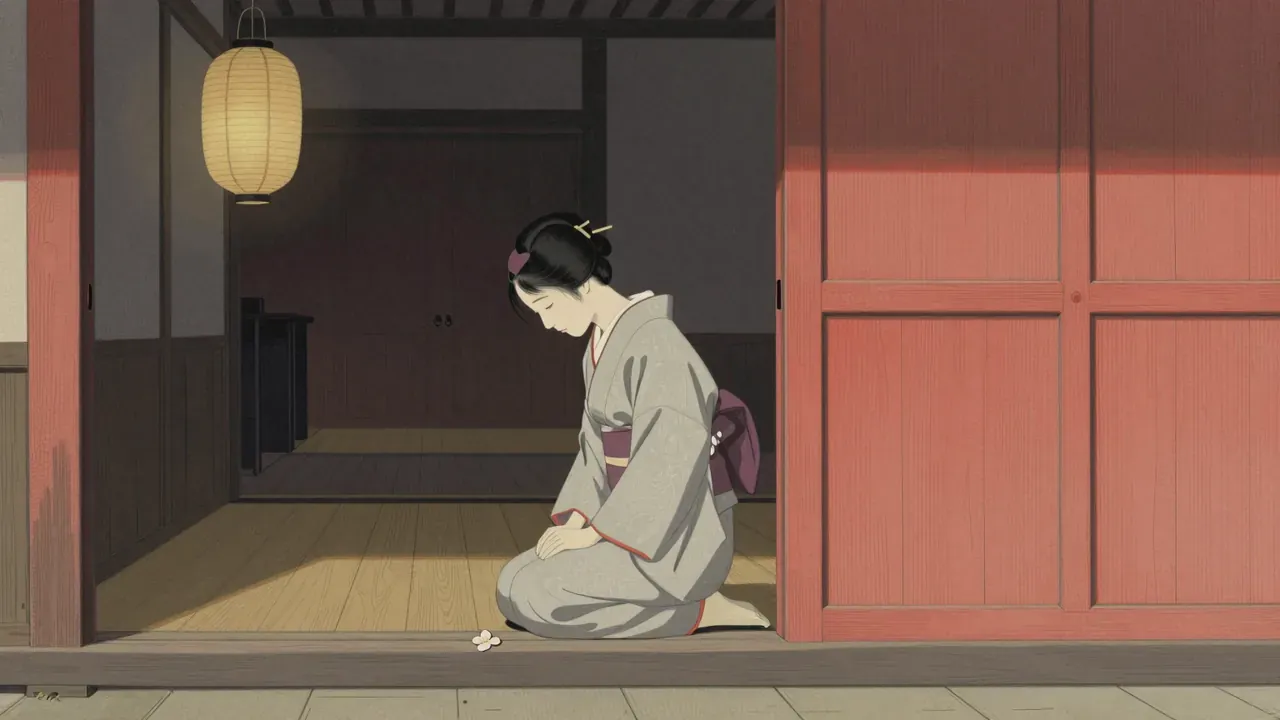
The two sisters
Sisters of the Gion is a 1936 Japanese sound film directed by Kenji Mizoguchi, adapted from Aleksandr Kuprin’s novel Yama: The Pit and co-scripted by Yoshikata Yoda. It sets out to examine the structural constraints on women in Kyoto’s Gion district through the divergent conduct of two geisha sisters — one bound by giri, the other by calculation — neither of whom escapes ruin. The film does not seek to romanticise or condemn geisha life outright, but to trace how economic precarity, gendered obligation and shifting modernity jointly determine individual agency. Its method is observational rather than expository: it shows patronage as transaction, loyalty as risk, and self-preservation as moral compromise. Mizoguchi avoids symbolic shorthand; the okiya is neither prison nor sanctuary, the kimono neither costume nor uniform. The film’s ambition is sociological precision within dramatic form — to render systemic pressure visible in posture, glance and silence. It treats its characters not as emblems but as people whose choices are narrowed by what the world permits them to own, inherit or refuse. Word count: 148
The look of it
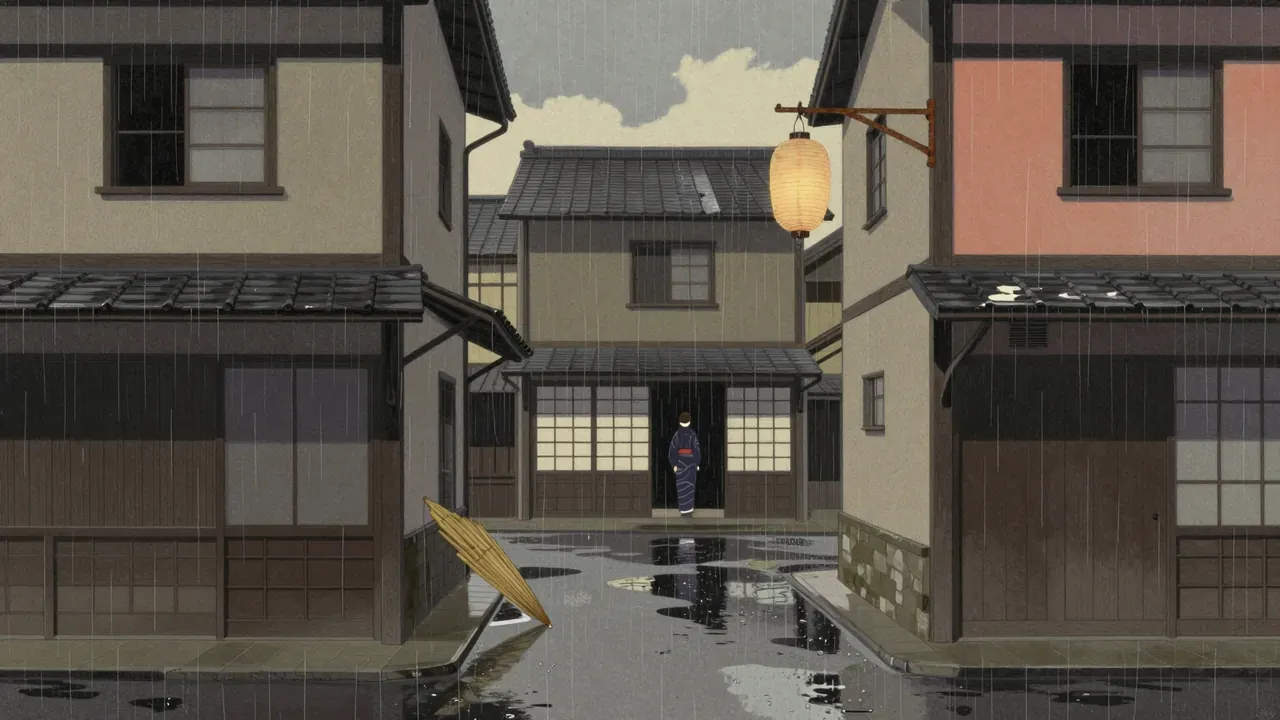
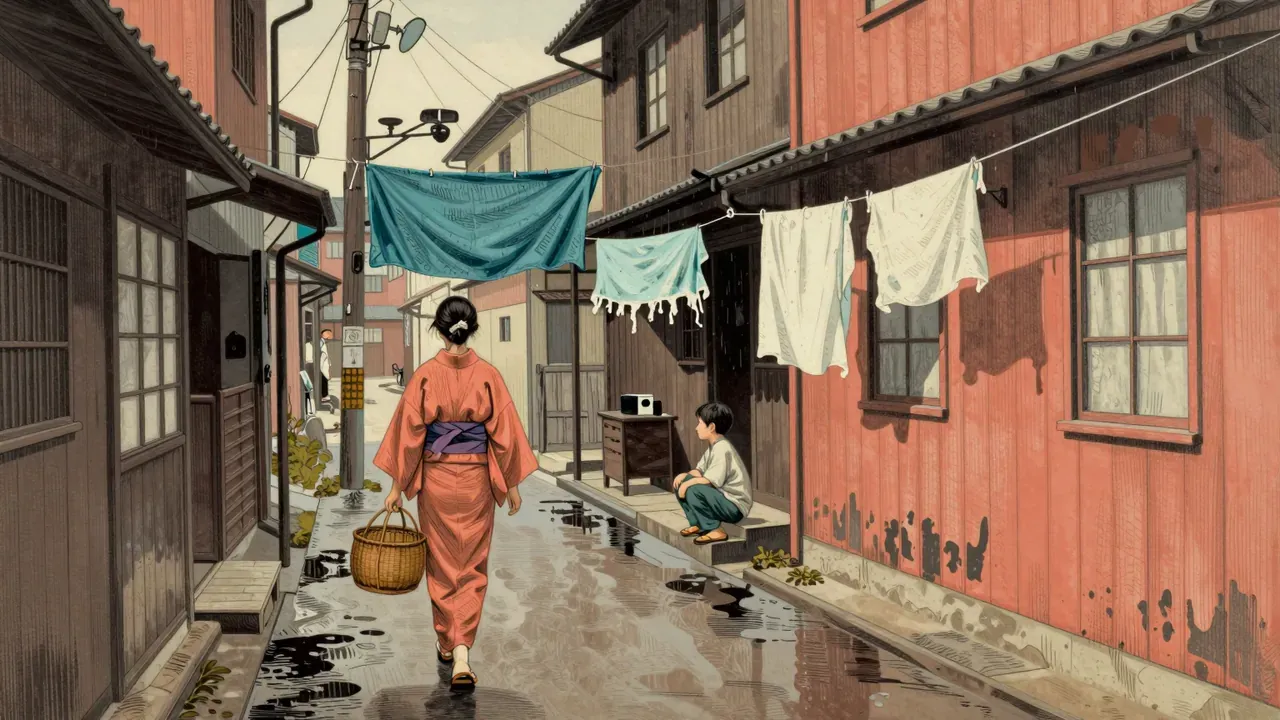
The story unfolds across a tightly compressed timeline, anchored in domestic interiors and narrow streets, with Minoru Miki’s cinematography favouring long takes and lateral tracking shots that follow characters through sliding doors and across tatami floors. Isuzu Yamada’s Omocha moves with restless physicality — her Western dress contrasts with Yōko Umemura’s Umekichi, whose stillness and lowered gaze register discipline as exhaustion. Benkei Shiganoya’s Furusawa is neither villain nor victim, but a man hollowed by failure, his presence made weightier by absence: he often appears off-centre, half-framed, or heard before seen. Dialogue is sparse and functional; exposition arrives via overheard conversation or bureaucratic detail — a dismissed clerk’s theft, a factory offer delivered by letter. Mizoguchi refuses psychological interiority; motivation is inferred from action, consequence from repetition. There are no flashbacks, no voiceover, no music cues to signal emotion. The craft serves restraint: every cut, every composition, every pause is calibrated to withhold interpretation while deepening implication. Word count: 157
The turning points
What lands is the cumulative force of inevitability. The film’s moral architecture rests not on judgement but on arithmetic: each character’s resources — money, time, reputation, bodily autonomy — are finite and non-renewable, and their depletion follows predictable paths. Omocha’s manipulation fails not because it is immoral but because it depends on others’ solvency, which evaporates under scrutiny. Umekichi’s fidelity collapses not from weakness but from having no alternative currency of value once patronage ends. The hospital bed scene works because it is the first moment where speech is unmediated by role — Omocha’s curse is not hysterical but diagnostic, naming the system rather than blaming men. The final image — Umekichi tending her sister — lands not as redemption but as reassignment: care becomes labour once again, now without remuneration or ritual framing. The film’s rigour makes its despair legible, not sentimental. Its power lies in refusing catharsis while making suffering intelligible as consequence. Word count: 152
What is left out
What does not land is the film’s occasional reliance on narrative shorthand that feels unearned by its own logic. The clerk’s revenge — abducting Omocha and throwing her from a car — arrives without sufficient build-up in motive or opportunity; his shift from aggrieved employee to violent actor lacks the same granular causality that governs the sisters’ arcs. Similarly, the clothing shop owner’s dismissal of him occurs off-screen, depriving the moment of procedural weight the film otherwise honours. A few exchanges between secondary characters — particularly Jurakudo and Kudō — drift into exposition that repeats what the visuals have already established. The film’s commitment to austerity occasionally tips into opacity: Shimbei’s decision to accept the factory post is presented as abrupt, with no prior indication of his desire to reconcile or rebuild. These gaps do not undermine the central thesis, but they dilute the film’s otherwise exact cause-and-effect chain. Word count: 150
The rules of the world
The themes that matter are not those of personal virtue or vice, but of institutional enclosure. Class operates not as background but as infrastructure: the okiya’s finances dictate who speaks, who stays, who is discarded. Gender functions as labour division — the sisters’ bodies are capital, their training an amortisation schedule, their relationships contractual with deferred payment. Modernity appears not as progress but as uneven replacement: Western dress signals education but offers no economic leverage; public schooling produces literacy but no profession. Loyalty (giri) is shown not as cultural ideal but as debt instrument — binding, non-transferable, enforceable only through social sanction. The film treats capitalism and patriarchy not as separate forces but as interlocking systems: Furusawa’s bankruptcy strips him of authority, but it also strips Umekichi of status, since her standing derives entirely from his solvency. What endures is not ideology but mechanism — how power circulates, consolidates and exhausts itself through routine. Word count: 153
What loyalty means
This film is for viewers who expect drama to clarify social logic, not soothe emotional need. It rewards attention to spatial hierarchy — who sits where, who opens doors, who waits — and patience with slow revelation. It is not for those seeking narrative propulsion, psychological insight or moral resolution. Some will find its refusal of empathy alienating; others may misread its neutrality as indifference. A viewer expecting the expressive stylisation of later Mizoguchi — the flowing camera, the mythic scale — may be unsettled by this film’s grounded, almost documentary tone. Its value shifts depending on context: it reads differently after Osaka Elegy, and differently still alongside Kuprin’s original novel. Without comparative framing, its formal rigour risks feeling austere rather than precise. Word count: 150
Where it ends
Yes, it is worth your evening — provided you watch it as a study in constraint, not as entertainment. Its ninety-five minutes accumulate like ledger entries: each scene tallies another cost of survival. It repays close viewing not because it is ‘difficult’, but because its economy demands attention to what is withheld — the off-screen debts, the unsent letters, the unspoken calculations. Those who prefer exposition over implication, or catharsis over consequence, will find it unrewarding. But for anyone interested in how cinema can map power without naming it, or show subjugation without spectacle, it remains unmatched in its prewar cohort. Its verdict holds only if you accept that clarity, not comfort, is the measure of worth. Word count: 150