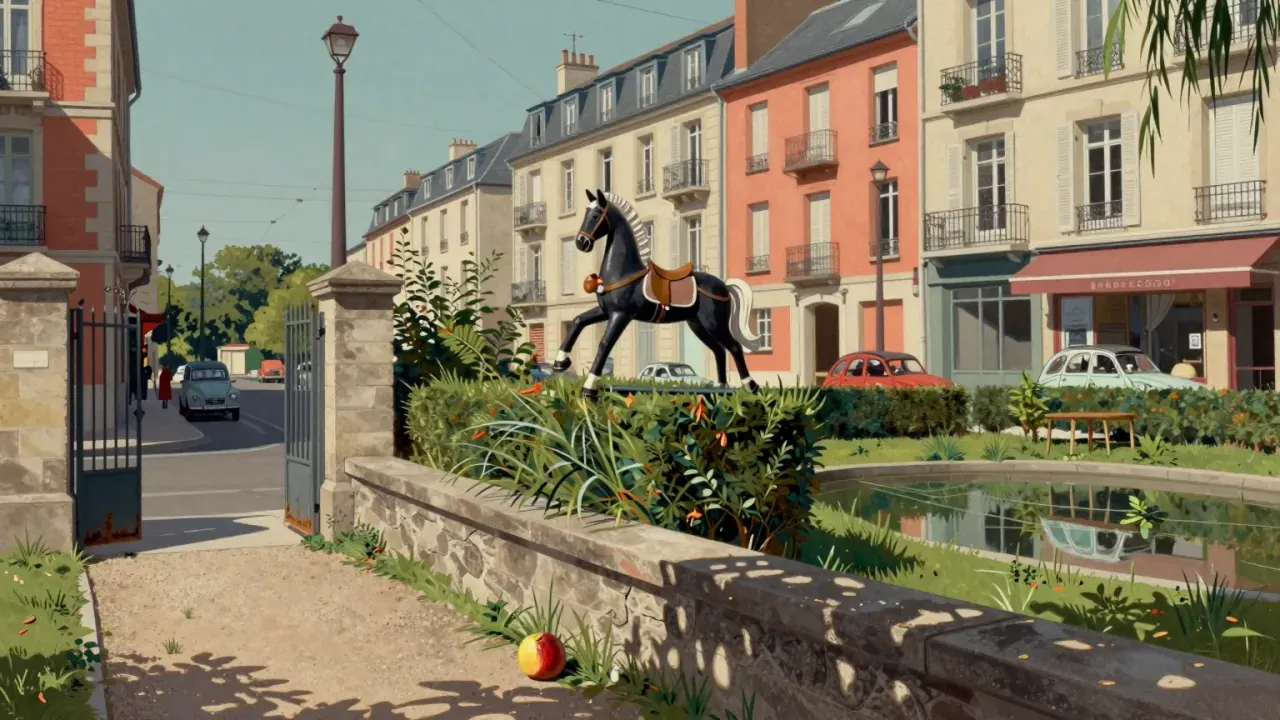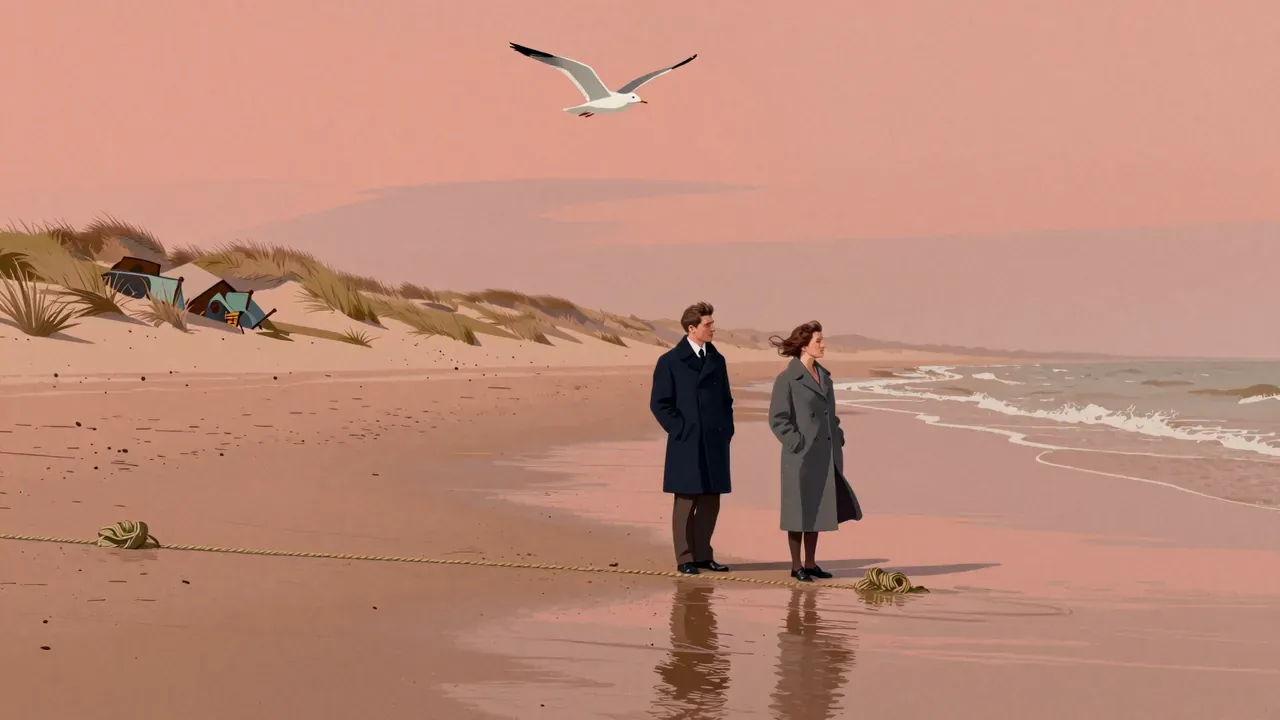
The gates at Chaillot
Stolen Kisses is the third film in François Truffaut’s Antoine Doinel cycle, returning to Jean-Pierre Léaud as a twenty-something adrift after army discharge. It is not a sequel in plot alone but a structural pivot: where The 400 Blows ended with Antoine running toward the sea and Antoine and Colette with him hesitating at a telephone booth, this film begins with him already inside adult life — unmoored, underemployed, emotionally reactive, and perpetually misreading signals. Truffaut aims to trace how romantic idealism survives its first sustained contact with compromise, routine, and minor betrayals. The film treats love not as destiny or climax but as accumulation: letters unanswered, jobs lost for reasons beyond control, seductions accepted without conviction, proposals made in silence. Its ambition is modest in scale but precise in focus — to show how identity stabilises not through resolution but through repetition, small returns, and the quiet persistence of one person choosing another again, even after having walked away. It is a comedy of errors that never mocks its protagonist’s sincerity, only his timing and tactics. (158 words)
The look of it
The story moves episodically, tethered less by cause than by Antoine’s shifting proximity to Christine Darbon. Denys Clerval’s cinematography avoids flourish: tracking shots follow Antoine down narrow Paris streets, interiors are lit evenly, faces held in medium close-up without dramatic emphasis. Agnès Guillemot’s editing sustains rhythm through duration — pauses linger just long enough to register awkwardness, not long enough to become theatrical. Léaud performs with understated physicality: a shrug, a blink, a hesitant hand on a doorframe. Delphine Seyrig’s Christine is composed but never opaque; her quiet reassertion of agency — disabling her own TV to draw Antoine back — lands with gentle force. Claude Jade, as the younger Christine, brings a warmth that feels earned rather than scripted. Antoine Duhamel’s score uses Charles Trenet’s ‘Que reste-t-il de nos amours?’ not as leitmotif but as recurring punctuation — light, wistful, slightly out of step with the action. There are no set pieces built for applause; even the slapstick — the hotel room raid, the van crash — unfolds with the slack tempo of lived consequence. (159 words)
What sticks
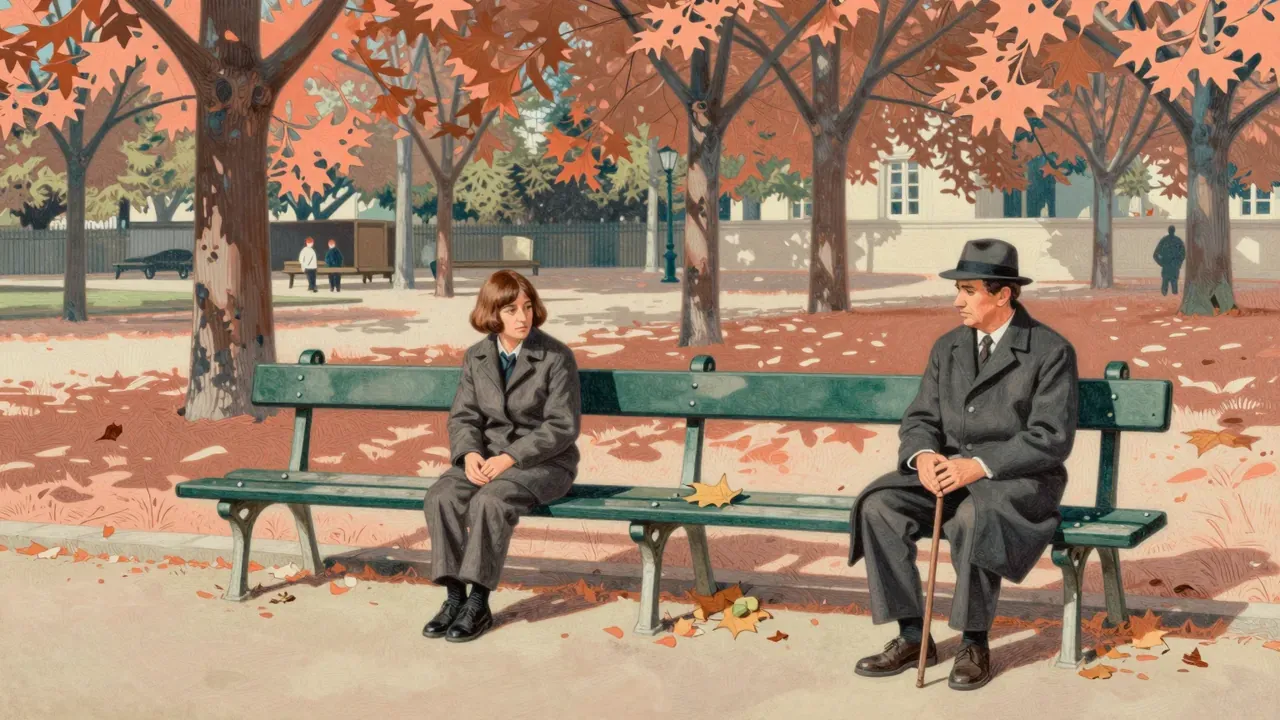
What lands is the film’s fidelity to emotional logic over narrative convenience. Antoine’s break-up with Christine feels neither cruel nor arbitrary but like the natural outcome of attention divided between surveillance work and courtship. His infatuation with Fabienne is rendered not as passion but as gravitational drift — she offers ease where Christine demands patience. The final reconciliation avoids sentimentality: Christine’s ruse is practical, Antoine’s proposal wordless, their embrace unchoreographed. Even minor characters register with economy — Michael Lonsdale’s weary detective, Harry-Max’s bemused shoe-shop owner, Marie-France Pisier’s dry-witted Colette — each occupying space without exposition. The film trusts the audience to infer motive from gesture: a glance held too long, a letter folded and refolded, a pause before answering a question. The park scene with the stranger declaring ‘permanent’ love works because it arrives without fanfare, its weight resting entirely on Antoine’s quiet admission — not as confession but as recognition. That moment lands not because it resolves anything, but because it names what the film has been showing all along: that self-awareness often arrives too late to change behaviour, but just in time to name it. (157 words)
What slips
What does not land is the film’s occasional reliance on coincidence as narrative glue. Antoine repeatedly stumbles into key encounters — meeting Colette while tailing someone, crashing into Christine’s father’s car, finding himself employed by the very man whose wife he has just betrayed — without sufficient groundwork to make these feel like extensions of his character rather than conveniences of structure. The detective agency subplot, though visually grounded, lacks internal stakes: Antoine’s training feels procedural, not transformative, and his firing follows no clear escalation of error. Some tonal shifts — from farce to melancholy to near-surrealism in the park — rely on Truffaut’s authority more than on cumulative logic. The film’s refusal to judge Antoine can blur into ambiguity: when he tells Christine he has never ‘admired’ her, the line reads as both cowardice and honesty, but the script gives no anchor for either reading. A viewer seeking moral clarity or psychological causality may find the film’s gentleness indistinct. Those who expect the New Wave to foreground formal rupture will find Clerval’s camerawork too restrained, the editing too classical. (156 words)
The shape of love
The themes that matter are fidelity to feeling over fidelity to promise, and the slow accretion of self-knowledge through repeated failure. The film treats love not as possession or transcendence but as practice — writing letters, waiting, repairing televisions, walking side by side. It explores how romantic commitment emerges not from grand declarations but from the decision to return after having left, to ask again after being rebuffed, to propose without speech. Class surfaces quietly: Antoine’s jobs — night clerk, detective, TV repairman — are all precarious, service-oriented, requiring obedience without authority. His literacy, his taste for Balzac and Woolrich, mark him as culturally mobile but economically stuck. The Cinémathèque gate at the start is not merely political allusion; it signals a world of access denied, of institutions closed to those who lack position — a condition Antoine inhabits personally and professionally. Time itself is a theme: the Doinel series measures life not in years but in returns — to Christine, to Paris, to the same mistakes. The film suggests that maturity is not the end of confusion but the ability to hold several confusions at once without collapsing them into certainty. (159 words)
Who walks in
This film is for viewers who value behavioural realism over plot propulsion, who find resonance in hesitation and recognise charm in small recoveries. It suits those familiar with the earlier Doinel films, though it stands alone in tone and texture — less about rebellion than recalibration. It rewards patience with cumulative detail: the way Antoine’s posture changes across jobs, how Christine’s expressions tighten then soften over three meetings, how the city’s light shifts from grey morning to golden afternoon without comment. It is not for those who require clear antagonists, escalating stakes, or cathartic turning points. Viewers expecting the kinetic energy of Breathless or the structural audacity of Week-end may find its pace too settled, its ironies too muted. Those who dislike unresolved endings or protagonists who act without full self-awareness will resist its central premise: that growth is often invisible, and love, even when won, remains provisional. A viewer who values narrative efficiency over emotional fidelity would likely call it slight. But slightness here is method, not shortfall. (159 words)
The last walk home
Yes, it is worth your evening — not as an event but as an atmosphere. Its ninety minutes pass without urgency yet leave residue: a phrase remembered, a gesture recalled, the quiet satisfaction of seeing two people choose each other again, knowing full well what they are choosing. It repays attention not with revelation but with recognition — of how often we misread intention, how easily affection becomes habit, how reconciliation can be both tender and tactical. Those who watch for craft will notice Clerval’s unobtrusive framing, Guillemot’s unhurried cuts, Duhamel’s economical variations on Trenet’s melody. Those who watch for character will see Antoine not as case study but companion — flawed, inconsistent, persistent. It is not a film to consume but to inhabit briefly, like stepping into a room where people are speaking softly about things that matter only to them. Anyone who has ever loved imperfectly, worked reluctantly, or returned to someone after walking away will find something true here — not explained, but shown. (158 words)