What it is
Streetwise is a documentary film made in Seattle over the autumn of 1983, directed by Martin Bell and shaped from footage shot by photographer Mary Ellen Mark. It follows nine teenagers living without stable shelter or adult supervision, focusing most closely on Erin Blackwell — known as Tiny — a fourteen-year-old who works as a prostitute and cycles between the streets and her mother’s apartment. The film does not seek to explain homelessness through policy or statistics; it declines voiceover, interviews with officials, or explanatory titles. Instead, it attempts immersion: to place the viewer alongside these young people as they negotiate hunger, danger, boredom, and fleeting camaraderie. Its method is observational, its frame unadorned, its duration fixed by the rhythm of their days rather than narrative convention. The project began as an extension of a Life magazine article, but the film departs from journalism’s distance. It aims for proximity — not advocacy, not diagnosis, but sustained attention to how survival looks, sounds, and feels when no institution is holding you upright. (159 words)
How it looks and sounds
The film unfolds across roughly ninety minutes with minimal structure: no chapters, no chronology beyond seasonal light, no score beyond diegetic sound — traffic, rain, distant sirens, laughter in alleyways. Gordon Willis did not shoot it; Mary Ellen Mark did, using available light and handheld 16mm, often at close range. Her compositions favour faces in half-shadow, shoulders hunched against cold, hands gripping coffee cups or cigarette packs. Bell’s editing avoids juxtaposition for irony or contrast; scenes run long enough to settle into discomfort or quiet. Performances are not performances: the subjects speak in their own voices, interrupt each other, trail off, lie, joke, deflect. There is no rehearsal, no retake. Rat’s monologue about flying is not scripted; it emerges mid-conversation, unbroken by cutaways. Tiny’s exchanges with her mother Pat are filmed inside a cramped apartment where silence hangs heavier than dialogue. The craft is unshowy but exacting: every frame assumes the viewer can bear what it shows, and refuses to soften it with music, narration, or moral framing. (158 words)
What stays with you
What lands is the cumulative weight of unmediated presence. Tiny’s matter-of-factness about her work, her mother’s weary tolerance, Rat’s dry humour amid squalor — none of these feel curated or coerced. The film earns its emotional impact not through crescendos but through repetition: the same bus stop, the same corner, the same gesture of pulling a hood up against wind. You begin to recognise the texture of exhaustion in a blink, the difference between resignation and defiance in a shrug. The absence of editorialising leaves space for the viewer to register contradiction — how Tiny can be both child and operator, how Pat’s love coexists with neglect, how solidarity among the group persists despite betrayal. The film’s power resides in its refusal to resolve. It does not offer redemption arcs or tidy exits, and that restraint makes the moments of tenderness — a shared cigarette, a laugh over burnt toast — land with greater force. What stays is the sense of time passing without permission, and bodies enduring it. (157 words)
What it leaves out
What does not land is any sense of context beyond the immediate. The city of Seattle appears only as backdrop: no establishing shots of civic buildings, no mention of housing policy, no interviews with social workers or shelter staff. This is not oversight but choice — yet it risks flattening structural failure into individual fate. Some viewers will find the film ethically uneasy: Mark and Bell returned repeatedly to photograph Tiny over decades, while offering no visible intervention in her life. The camera watches but does not act, and that passivity may read as complicity to those who expect documentary to propose solutions. Others will object to the focus on adolescence as spectacle — the glamour of grime, the aestheticisation of vulnerability — particularly given how many subjects died young, violently, or in obscurity. The film gives no account of its own position: who funded it, who granted access, whose consent was documented, whose story was edited out. These omissions are factual, not interpretive, and they leave gaps no amount of empathy can fill. (159 words)
What it’s really about
The themes that matter are autonomy and erasure. These teenagers assert control where they can — over language, posture, timing, self-naming — even as systems strip them of legal personhood, healthcare, education, and safety. The film treats their choices as real, not symptoms: Tiny’s prostitution is neither condemned nor romanticised, but presented as labour she negotiates with varying degrees of agency. Equally central is the theme of visibility: how being seen — by the camera, by passers-by, by police — shifts the terms of survival. The street is both stage and cage. Another theme is interdependence: the group forms temporary families, shares food and warnings, covers for each other with authorities — yet these bonds fracture under pressure, revealing how scarcity corrodes trust. There is no nostalgia here, no myth of found family as balm. The film insists that care and cruelty are not opposites but frequencies on the same spectrum of daily life. (156 words)
Who it’s for
This film is for viewers who can sit with unresolved tension and tolerate the ethical ambiguity of observation without intervention. It suits those accustomed to non-fiction that refuses explanation — fans of Frederick Wiseman, Alan Berliner, or early Errol Morris. It is not for those needing narrative closure, moral clarity, or reassurance that justice will follow suffering. Teachers might use it cautiously with older students, but only alongside discussion of documentary ethics, consent, and representation. Anyone expecting uplift, reformist argument, or sociological analysis will find it withholding. Those who believe documentary must serve advocacy may reject its stillness as indifference. That reading is defensible — but it mistakes restraint for neutrality. The film’s silence is not absence of stance; it is insistence that the subjects’ reality be met on its own terms, however uncomfortable that proves. Change the framing, add voiceover or data, and the film would become something else entirely — and likely less enduring. (159 words)
Why it lasts
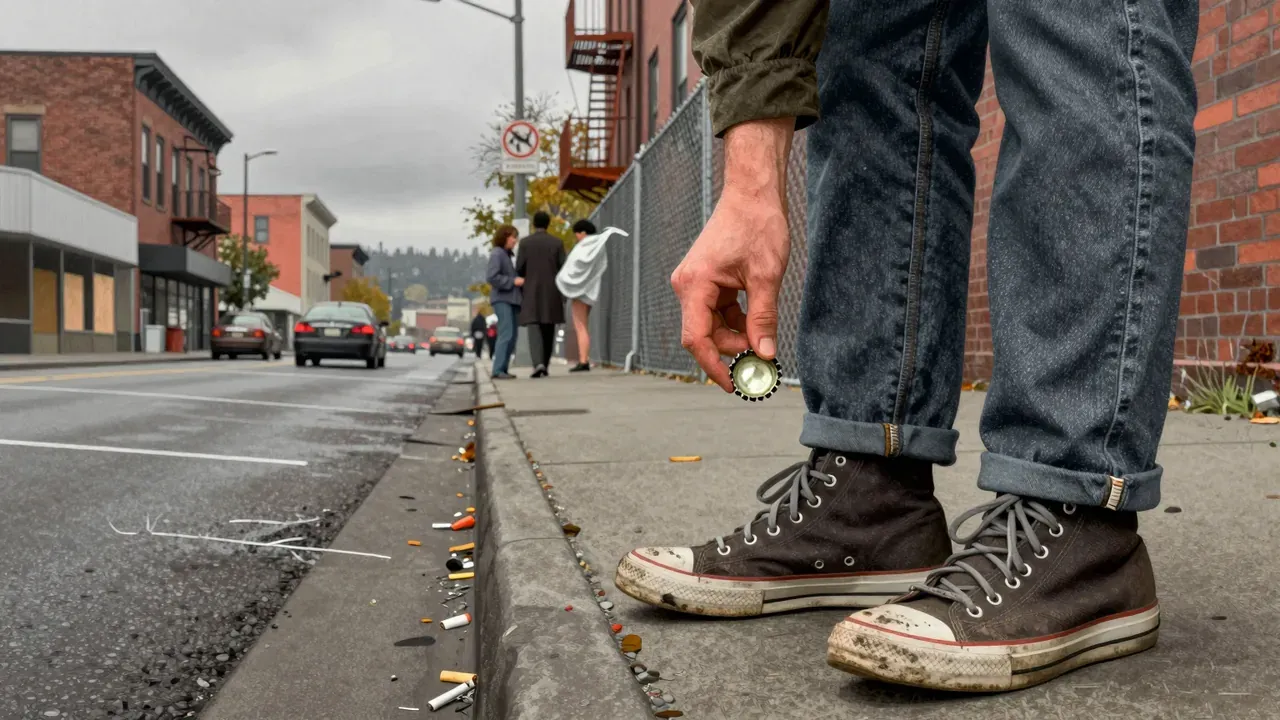
Yes, it is worth your evening — not as entertainment, but as reckoning. Its ninety minutes do not pass lightly, but they accumulate with rare fidelity. You will not forget Tiny’s face in profile as she lights a cigarette, or Rat’s hands turning over a discarded bottle cap, or the way silence falls when someone walks away from the group and does not return. It repays attention because it asks nothing in return: no tears, no donations, no action — just witness. Some will call this passive; others will call it necessary. The film’s endurance lies in its refusal to simplify. It does not claim to speak for the homeless, only to show nine lives as they were lived, briefly, in one American city in 1983. That specificity is its strength. To watch it is to accept that some truths resist resolution — and that seeing clearly is already a kind of work. (158 words)