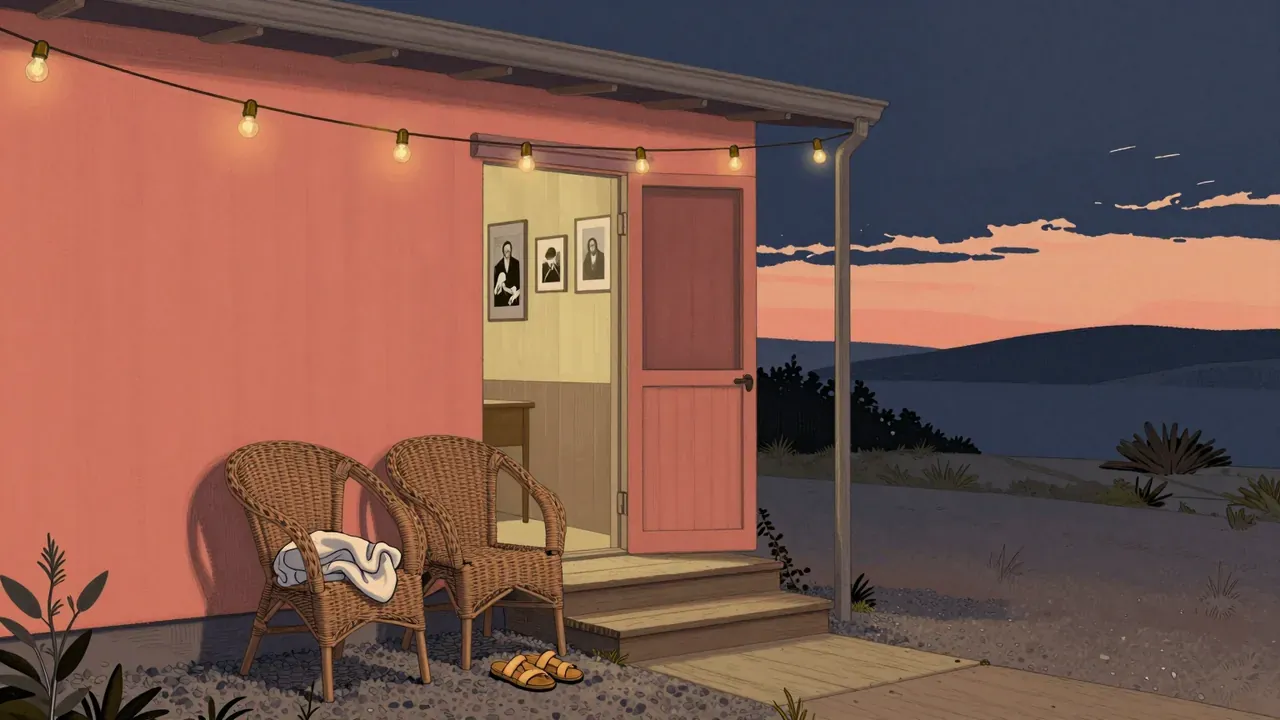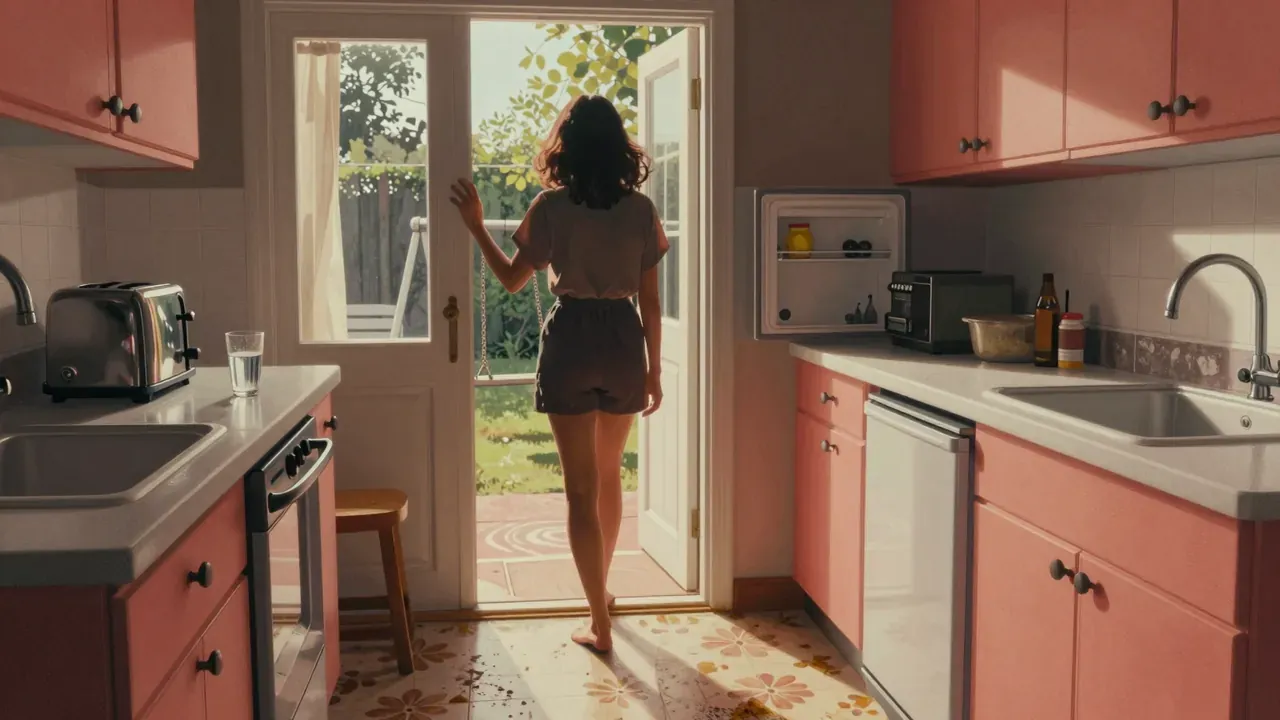
The setting is the subject
Smithereens is Susan Seidelman’s 1982 debut feature: a low-budget, black-and-white independent drama set in New York’s East Village at the tail end of punk’s local relevance. It follows Wren — played by Susan Berman — a young woman from New Jersey who arrives in the city with no plan beyond attaching herself to the scene, though its energy has already migrated west. The film does not romanticise her ambition or excuse her actions; it observes her as a case study in self-invention without self-knowledge. Its aim is structural and sociological: to map how identity functions as performance when economic and social scaffolding is absent. It treats punk not as music but as infrastructure — a set of rituals, spaces, and hierarchies that Wren tries, and fails, to navigate. There is no voiceover, no narration, no moral framing. The camera stays close, neutral, unflinching. It is not a satire, nor a tragedy, nor a cautionary tale. It is a taxonomy: of need, of mimicry, of the gap between aspiration and capacity. It asks what remains when charisma is stripped of consequence, and when loyalty is only ever transactional.
The look of it
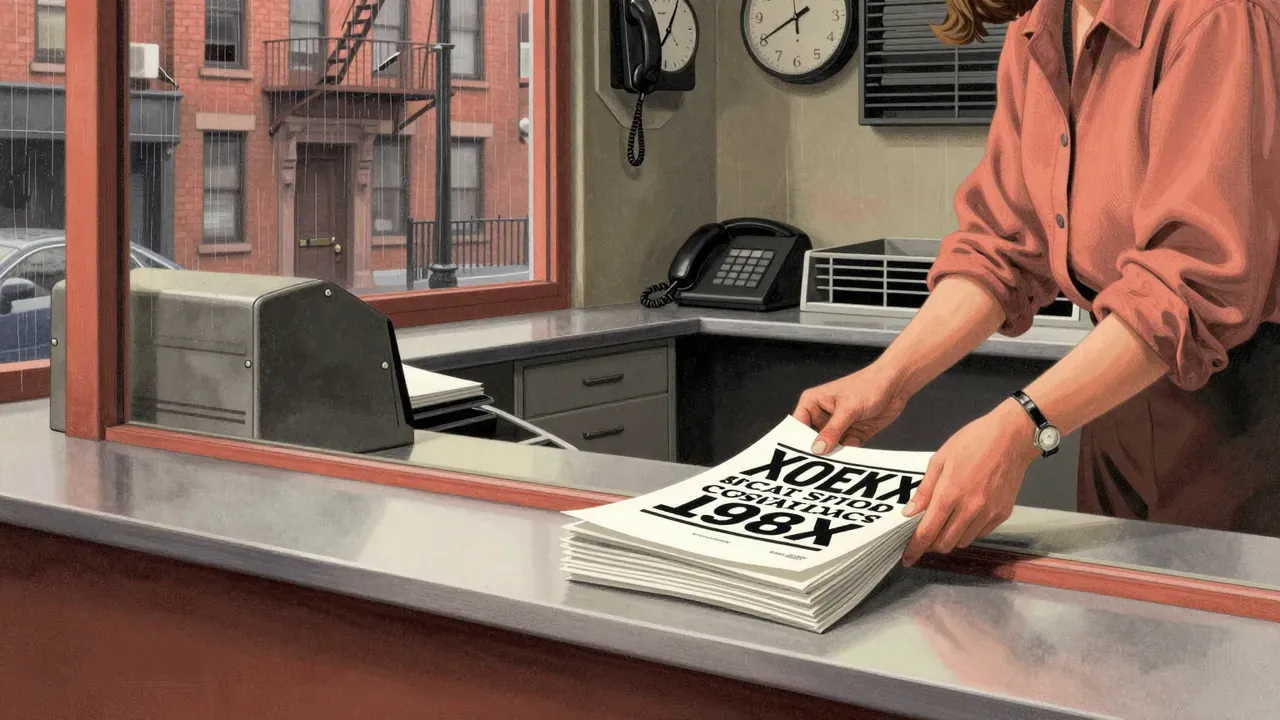
The story unfolds in episodic, cause-and-effect increments: Wren prints fliers, mugs women, attaches to Paul, abandons him for Eric, is abandoned in turn, returns, finds nothing waiting. Susan Berman’s performance is tightly coiled — restless, impatient, never pleading, rarely vulnerable except in flickers she quickly masks. Richard Hell appears as a spectral echo of the scene’s past, not its present. Brad Rijn gives Paul a quiet, uninflected stillness that makes his endurance feel less like devotion and more like inertia. Seidelman edits her own film, and the pacing reflects that: cuts are abrupt, scenes often end before resolution, dialogue is sparse and functional. The black-and-white photography — credited to Ed Lachman — avoids grittiness for clarity: fire escapes, subway platforms, Xerox shop counters, and van interiors are all lit with documentary plainness. The Feelies’ score is minimal, repetitive, ambient — underscoring rhythm over emotion. There are no montages, no flashbacks, no symbolic flourishes. Every prop, every location, every line of dialogue serves the logic of Wren’s immediate calculus: what gets her closer to Los Angeles, or at least to the idea of it.
The things she makes
What lands is the film’s precision of tone and economy of implication. Wren’s photocopied ‘WHO IS THIS?’ posters are absurd, pathetic, and perfectly legible as both strategy and symptom — a visual shorthand for the era’s collapsing distinction between fame and visibility. Her thefts are small, unspectacular, never dramatised: they register not as crime but as habit, part of the same continuum as sleeping in vans or borrowing money she won’t repay. The film’s refusal to judge her — or to let others judge her convincingly — creates a peculiar gravity. Even the blonde woman in the stairwell speaks without venom, delivering exposition like a tired clerk. The ending holds no irony, no uplift, no irony: Wren stops walking, turns, looks back — and the frame holds. That pause lands because everything before it has been so rigorously unadorned. There is no music swell, no slow motion, no cut to black. Just a woman reconsidering an offer she had already dismissed. It works because the film has spent ninety minutes training us to read hesitation as decision.
The places she stays
What does not land is the sustained passivity of Paul. His willingness to wait — in his van, on the street, outside apartments — stretches beyond plausibility into narrative slack. He is less a character than a receptacle for Wren’s projections, and his lack of interior life undermines the film’s otherwise tight cause-and-effect logic. Similarly, Eric’s betrayal lacks setup: his motives are opaque, his history thin, his exit too clean for the world the film otherwise renders with such granular texture. The robbery scene feels perfunctory, under-rehearsed in motive and execution — a plot device rather than an extension of character. The police incident during production (the prop gun arrest) hints at a friction the film itself avoids: the real-world stakes of performance, of imitation, of crossing lines. Smithereens keeps its gaze fixed on Wren’s surface, and when other characters recede into function — as obstacles, props, or exits — the film’s observational rigour starts to look like omission. Some viewers will find this austerity admirable; others will feel it as evasion.
The way it ends
The themes that matter are parasitism as survival strategy, visibility as currency, and self-invention as iterative theft. Wren does not create an identity — she samples, reprints, appropriates, and resells fragments of others: Paul’s stability, Eric’s mythos, the Peppermint Lounge’s residue. The film treats desire not as longing but as logistics: how much rent can be deferred, how many fliers printed before the Xerox machine jams, how long a man will wait before selling his van. Identity is shown as something assembled from available materials — flyers, clothes, poses, borrowed names — not revealed from within. There is no arc of growth or collapse, only recalibration. Class is implicit but unspoken: Wren’s brother refuses her loan not out of meanness but calculation — he knows her pattern. Gender is structural: every man in the film has mobility — Paul drives, Eric leaves, the pimp owns the van — while Wren walks, waits, watches. The film’s feminism is not declarative but architectural: it builds a world where autonomy is measured in square feet, bus fare, and access to a photocopier.
The tone it holds
This film is for viewers who value formal discipline over emotional payoff, who find resonance in restraint, and who are comfortable watching characters make bad decisions without explanation or redemption. It suits those familiar with early American indie film — especially the work of Jim Jarmusch or Amos Poe — and those attuned to the textures of early 1980s New York. It is not for viewers who require psychological motivation, narrative closure, or moral orientation. Anyone expecting a punk anthem, a coming-of-age story, or even a conventional anti-hero arc will leave unsatisfied. Those who disliked the passive pacing of Stranger Than Paradise or the ethical ambiguity of Down by Law may find Smithereens too withholding. A viewer who values strong female protagonists as aspirational figures — rather than as diagnostic subjects — would likely reject its central character outright. Its worth depends on whether you see observation as argument, and whether you trust a film that refuses to tell you how to feel.
The way it leaves you
Yes, it is worth your evening — provided you watch it on its own terms, not as a precursor to Desperately Seeking Susan or as a document of punk, but as a compact, unsentimental study in self-creation under scarcity. It runs ninety-three minutes and never wastes a frame. Its power lies in accumulation, not climax: the weight of each discarded relationship, each failed print job, each van door closing. Someone who values narrative momentum over tonal consistency might call it inert; someone who prizes behavioural accuracy over dramatic escalation will find it unnervingly precise. Its verdict does not hinge on likability or catharsis, but on whether you accept that some lives are lived in loops, not arcs — and that watching one unfold, without commentary, is itself a kind of rigour. It rewards attention, not empathy. And it repays a second viewing, not for hidden meaning, but for the clarity of its design.