What it is trying to do
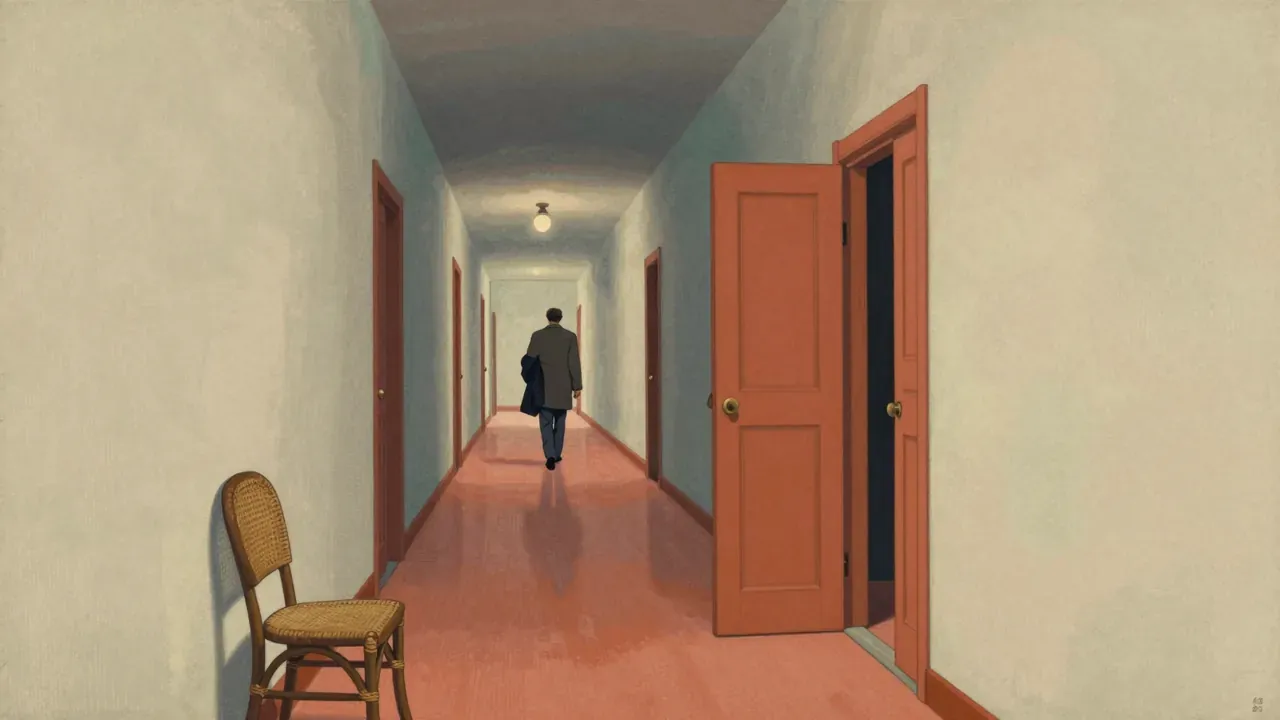
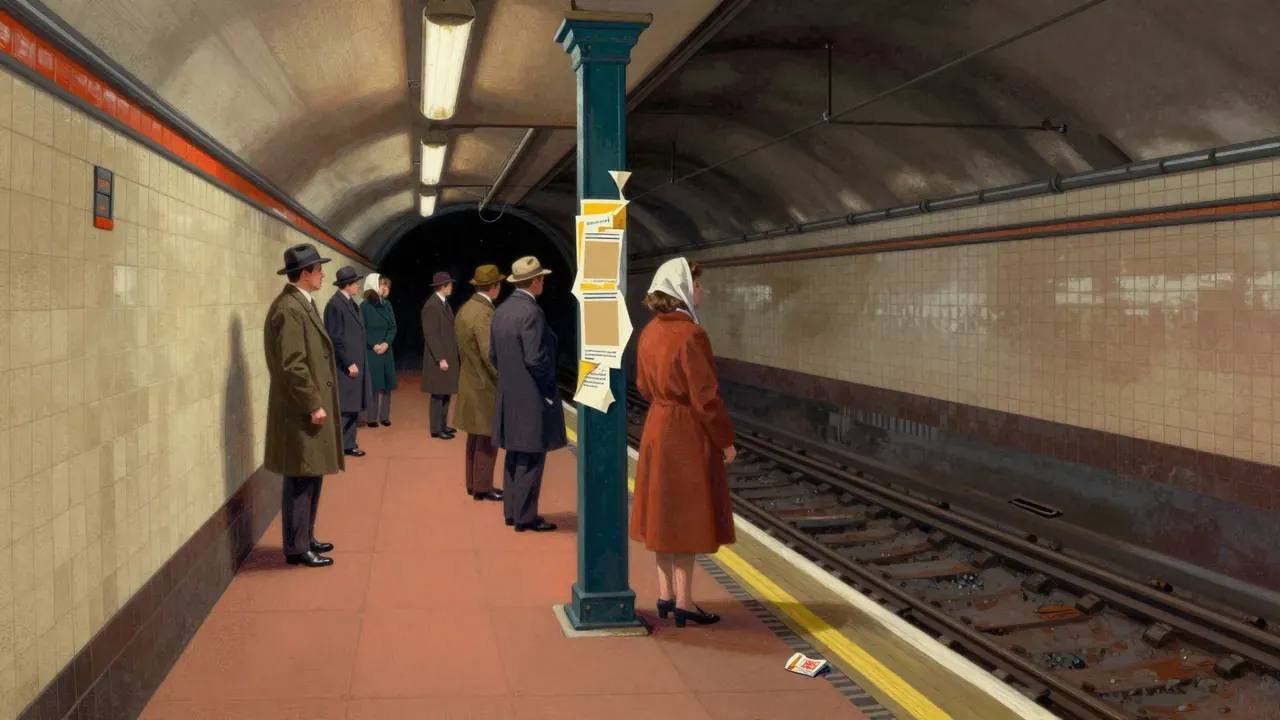
Sunday, Bloody Sunday is a British drama from 1971 that sets out to depict love not as possession or resolution but as sustained, unromantic coexistence across difference. It centres on a three-way relationship in London: a gay Jewish doctor, a divorced woman, and a younger bisexual sculptor who moves between them without commitment or concealment. The film does not aim to resolve the triangle, nor to moralise it; instead, it holds the arrangement in steady, unsentimental focus, treating each person’s emotional economy as legible and consequential. Its ambition is structural as much as thematic: to build a narrative where no character is protagonist or antagonist, where desire is neither punished nor rewarded, and where social convention appears not as a force to defy but as a background hum — present, audible, but not decisive. It refuses melodrama, avoids exposition about identity, and declines to offer catharsis. What it attempts is rarer: a portrait of adult feeling that accepts contradiction as ordinary, not pathological.
How it works
The story unfolds through quiet accumulation — meetings in clinics, flats, studios, parks — held together by rhythm rather than plot. Glenda Jackson gives Alex a tightly wound practicality, her voice low, her gestures economical; Peter Finch makes Daniel Hirsh’s dignity inseparable from his weariness, his warmth measured in pauses and glances. Murray Head’s Bob is less defined by psychology than by movement: restless, charming, emotionally porous. Billy Williams and David Harcourt’s cinematography favours natural light, medium distances, and interiors that feel lived-in rather than styled — offices with filing cabinets, kitchens with chipped enamel sinks. Ron Geesin and Douglas Gamley’s score uses Mozart’s ‘Soave sia il vento’ not as ornament but as counterpoint, its serenity underscoring the characters’ unresolved tension. Richard Marden and Mary Kessell’s editing avoids emphasis: scenes end before climax, transitions are unmarked, silences are left intact. There are no flashbacks, no voiceover, no symbolic objects. The craft serves restraint, not flourish.
What lands
What lands is the film’s refusal to simplify. The scene where Daniel and Alex meet for the first time — not in confrontation but over tea, with mutual recognition and no pretence — carries weight because it treats their shared vulnerability as matter-of-fact. The kiss between Bob and Daniel is not staged for shock or affirmation but as one gesture among many, filmed with the same neutrality as Bob sketching in a café or Alex reviewing CVs at her desk. Glenda Jackson’s performance lands most consistently: her stillness reads as containment, not emptiness; her irritation with Bob’s evasiveness feels earned, not petulant. Peter Finch’s final monologue — delivered without music, without close-up, just him speaking into a mirror — lands not because it explains anything, but because it confirms how little explanation the film has offered up to that point. The film’s integrity lies in its consistency: every choice reinforces the idea that these people are not case studies, but occupants of a shared, unexceptional reality.
What does not
What does not land is the sculptor Bob himself — not as a failure of acting, but as a structural limitation. Murray Head is physically present and technically assured, yet the script gives him little interior logic beyond charm and evasion. His motivations remain opaque, his emotional shifts unanchored; he functions more as a pivot than a person. This is not accidental — the film positions him as the object of attention, not its source — but it leaves a gap where psychological continuity might have deepened the triangle’s tension. Some supporting roles also falter under the weight of underwritten function: Peggy Ashcroft’s Mrs Greville is warm but thinly sketched, and Niké Arrighi’s role as Bob’s friend lacks definition. The film’s commitment to surface realism occasionally tips into emotional flatness: a scene where Alex cries alone in her car feels muted rather than restrained, its impact diluted by the surrounding tonal evenness. The absence of irony or distance risks making ambiguity read as indifference.
The themes that matter
The themes that matter are civility as endurance, love as habit, and identity as practice rather than declaration. The film treats sexuality not as revelation but as routine — Daniel’s Judaism is woven into his work and speech without exposition; Alex’s divorce is referenced once, then absorbed into her daily life. What matters is how people sustain themselves amid partial connection: Daniel’s clinical precision, Alex’s professional competence, Bob’s artistic drift. The film interrogates the cost of openness — not the cost of being gay or divorced in 1971, but the cost of choosing non-possessive intimacy when society assumes otherwise. It treats loneliness not as isolation but as cohabitation without reciprocity; not as absence of company, but as presence without alignment. There is no grand statement about liberation or tolerance. Instead, it asks what it means to live alongside someone you love but cannot hold — and whether that living can be dignified without resolution.
Who should watch it
This film is for viewers who value precision over propulsion, who find emotional resonance in withheld glances and unspoken agreements, and who do not require narrative payoff to feel satisfied. It suits those familiar with mid-century British social realism or Schlesinger’s earlier work, and those attentive to how silence and framing shape meaning. It is not for viewers who rely on clear motivation, escalating stakes, or character arcs — Bob’s lack of development may frustrate those expecting psychological causality. It will not serve those seeking historical context about homosexuality in 1971, as the film deliberately avoids period signposting or political framing. A viewer who values thematic clarity over tonal nuance may find it elusive. Someone who prefers dialogue-driven conflict or visual metaphor will likely leave unengaged. Its rewards are cumulative and subtle; its demands are patience and attention to texture, not plot.
Is it worth your evening
Yes, it is worth your evening — provided you approach it as a study in equilibrium, not a story with destination. Its 110 minutes pass without hurry, anchored by performances that deepen with stillness rather than intensity. It repays attention not through revelation but through recalibration: by the end, the characters’ compromises feel less like failures and more like adaptations. Those who expect catharsis or closure may feel short-changed; those who accept ambiguity as a condition of adult life will find it quietly resonant. Its value lies in its refusal to flatter the viewer with resolution or moral certainty. A different verdict would follow if the film attempted conventional romance or social commentary — but it does not. Its success is in its fidelity to its own terms: a sustained, unsentimental look at how people occupy the same emotional space without occupying the same ground.