The rhythm of it
Shadows in Paradise is a Finnish drama from 1986, the first instalment of Aki Kaurismäki’s Proletariat Trilogy. It sets out to portray quiet emotional life among working-class Finns without recourse to exposition, psychology, or narrative escalation. The film avoids melodrama, social commentary as argument, or even overt irony: its ambition is structural and tonal — to hold space for two people whose loneliness is unspoken but legible in posture, pause, and silence. It does not seek to explain why Ilona works a supermarket checkout or why Nikander collects rubbish; it treats their labour as neutral fact, like weather or light. The film’s project is one of restraint: to let feeling accrue through repetition, stillness, and minor deviation — a glance held half a second longer, a shared cigarette offered without words. Its fidelity is to duration, not development; to presence, not progression. This is not minimalism as austerity but as precision: every shot, line, and cut serves the same low-frequency register of attention.
The stillness of it
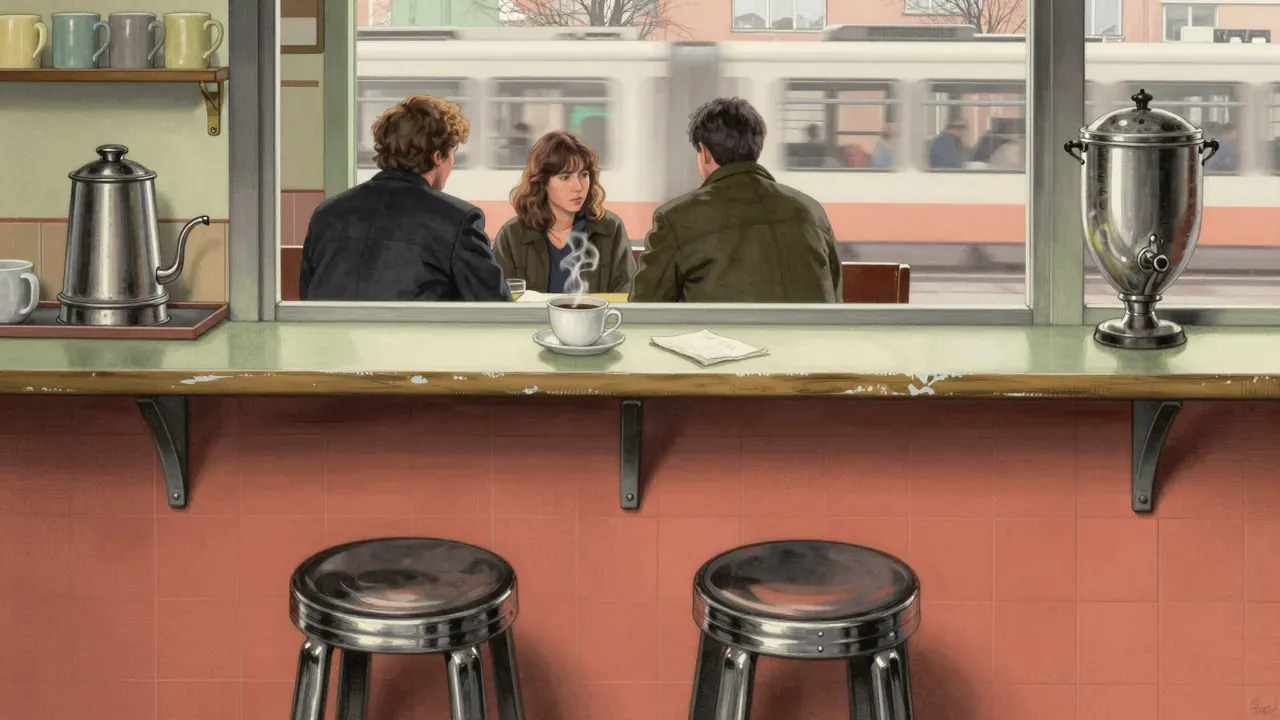
The story follows Ilona and Nikander across a series of small, uninflected encounters — a bus ride, a café visit, a walk home — each structured with the same deliberate pacing and compositional symmetry. Matti Pellonpää and Kati Outinen perform with near-total suppression of affect: no nervous tics, no vocal inflection shifts, no reactive glances. Their stillness is not vacancy but calibration — a refusal to signal interiority for the camera’s benefit. Timo Salminen’s cinematography keeps interiors flatly lit and exteriors washed in grey daylight; there are no dramatic shadows, no chiaroscuro, no lens flares — just consistent, medium-contrast exposure. Raija Talvio’s editing sustains this rhythm: cuts land on the beat, never early or late, often holding frames after action has ceased. Dialogue is sparse and literal, delivered without emphasis. Props — a thermos, a bicycle, a plastic bag of groceries — are placed with the care of inventory. Nothing is symbolic unless the viewer insists; the film offers objects as objects, people as people, time as time passed.
The weight of it
What lands is the cumulative weight of unperformed emotion. After twenty minutes, the absence of reaction becomes its own language: Ilona’s blink before accepting Nikander’s invitation reads as more decisive than any monologue could. The film’s repetitions — the same bus route, the same café counter, the same pause before answering — do not bore but accrete meaning, like sediment. The supermarket setting, with its fluorescent hum and conveyor-belt monotony, feels less like backdrop than co-character: a site where dignity persists without fanfare. When Ilona finally smiles — not broadly, but with the faintest softening at the corners of her mouth — it lands with physical force because nothing else in the film has prepared us for release. The performances succeed not by conveying inner life but by making its withholding palpable. The film’s tone remains steady, yet the viewer’s own emotional response gradually shifts from observation to participation: you begin to lean in, not for plot, but for the next barely-there shift in air.
The resistance of it
What does not land is any attempt to read the film as social critique or political allegory. Those expecting commentary on Finnish welfare structures, gender roles, or late-capitalist alienation will find no foothold: the film declines to name causes, assign blame, or propose alternatives. Its refusal to dramatise conflict — between characters, classes, or systems — leaves no room for catharsis or resolution, which some viewers may mistake for indifference. The pacing, too, resists accommodation: scenes do not tighten toward climax, nor do they loosen into digression. There is no music cue to guide feeling, no close-up to insist on significance. For those accustomed to narrative propulsion or psychological signposting, the film’s neutrality can read as evasion. Its resistance to interpretation is absolute — not coy, not ironic, but unwavering. That rigour is its strength and its barrier: it asks the viewer to meet it on its own terms, and offers no translation.
The texture of it
The themes that matter are solitude as condition rather than crisis, work as unremarkable continuity, and connection as something that arrives not through declaration but through shared routine. Class is present not as ideology but as texture: the worn soles of shoes, the sound of a bin lorry’s hydraulic lift, the way Ilona folds her coat over a café chair. The film treats love not as transformation but as slight recalibration — a change in who walks beside you, not in who you are. There is no nostalgia here, no lament for lost community; neither is there optimism about solidarity. What endures is quiet persistence: the act of showing up, day after day, at the same register, the same dumpster, the same bench. Time is not linear but cyclical — days repeat, seasons blur, relationships deepen incrementally, almost invisibly. The film’s moral centre is not justice or rebellion but endurance without complaint, affection without fanfare, dignity without demand.
The condition of it
This film is for viewers who value duration over event, stillness over revelation, and implication over explanation. It suits those comfortable with ambiguity, patient with silence, and attentive to the weight of ordinary gesture. It is not for those who require narrative momentum, character arcs, or emotional payoff within conventional frameworks — viewers who expect romance to culminate in confession, or realism to yield insight through dialogue, will leave unsatisfied. Some critics have called it emotionally withholding; others call it generous in its refusal to manipulate. The difference lies in whether you trust silence to hold meaning. If you need the film to tell you how to feel, or to confirm that its characters ‘deserve’ happiness, Shadows in Paradise will frustrate. But if you accept that tenderness can reside in a shared thermos, or that hope might look like two people walking side by side without speaking — then it meets you fully.
The return of it
Yes, it is worth your evening — provided you approach it as an act of attention, not consumption. Its seventy-four minutes pass without hurry but also without waste: every frame serves its tone, every pause earns its length. It does not ask for investment in plot but in perception — in noticing how light falls on a linoleum floor, or how a hand hesitates before reaching for another. Those who find it slow are not wrong; they are simply encountering a different contract between film and viewer. The verdict rests on whether you value films that expand the grammar of presence rather than compress experience into climax. It rewards rewatching not because it hides clues, but because its subtlety reveals itself only upon return — like learning to hear the hum beneath silence. To dismiss it as ‘nothing happens’ is to miss that the film’s subject is precisely what happens when nothing is made to happen.