The premise
Samurai Rebellion is a jidaigeki — a period drama set in Edo-era Japan — that tests the coherence of feudal loyalty against the weight of personal conscience. It does not seek to mythologise the samurai, nor to romanticise resistance; instead, it narrows its focus to a single moral rupture: the moment when obedience becomes complicity, and duty requires disobedience. Masaki Kobayashi frames this as a structural crisis, not a psychological one — the film’s tension arises from institutional rigidity, not inner conflict. Its aim is forensic: to trace how a system designed to preserve order produces, by its own logic, an inevitable and fatal contradiction. The narrative follows no arc of self-discovery or redemption but a downward spiral of consequence, where every concession tightens the noose. It treats honour not as virtue but as arithmetic — a balance sheet of obligation, debt, and retribution. This is not a story about becoming heroic, but about being left with no permissible choice except to break the rules entirely. The film assumes its audience understands the hierarchy it depicts not as backdrop but as active agent — a force as tangible as weather or gravity. (158 words)
The look of it
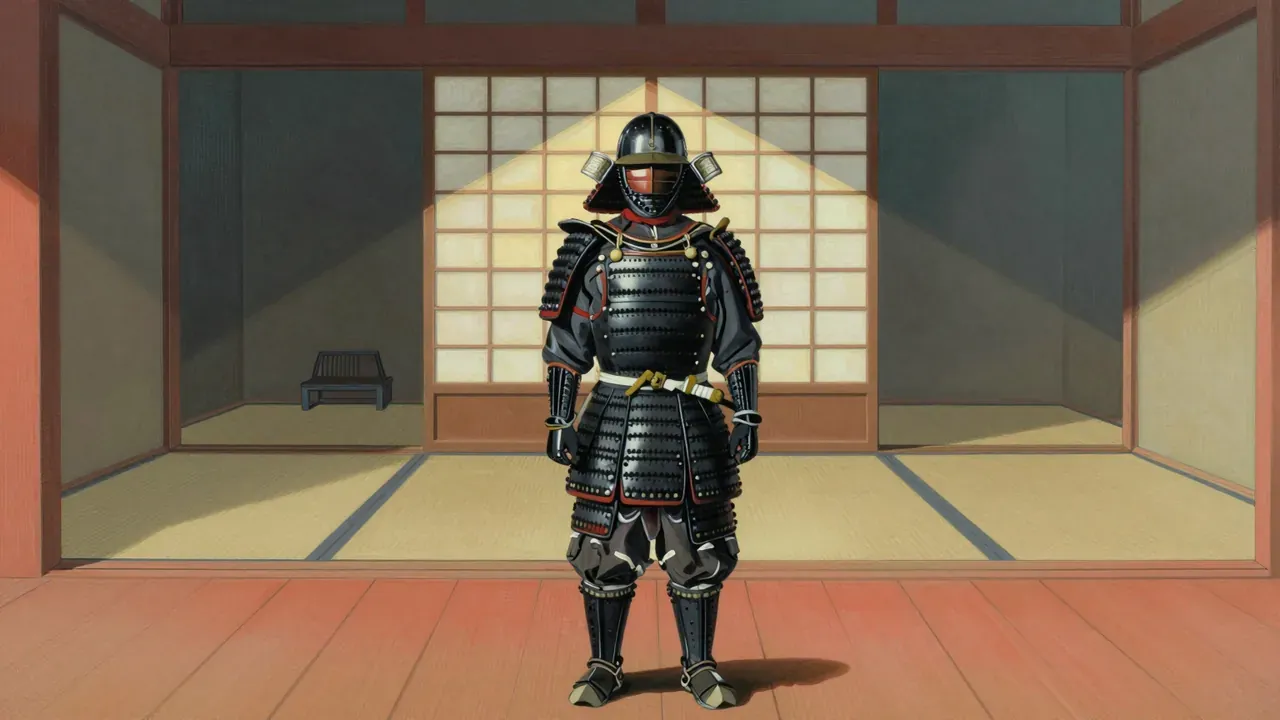
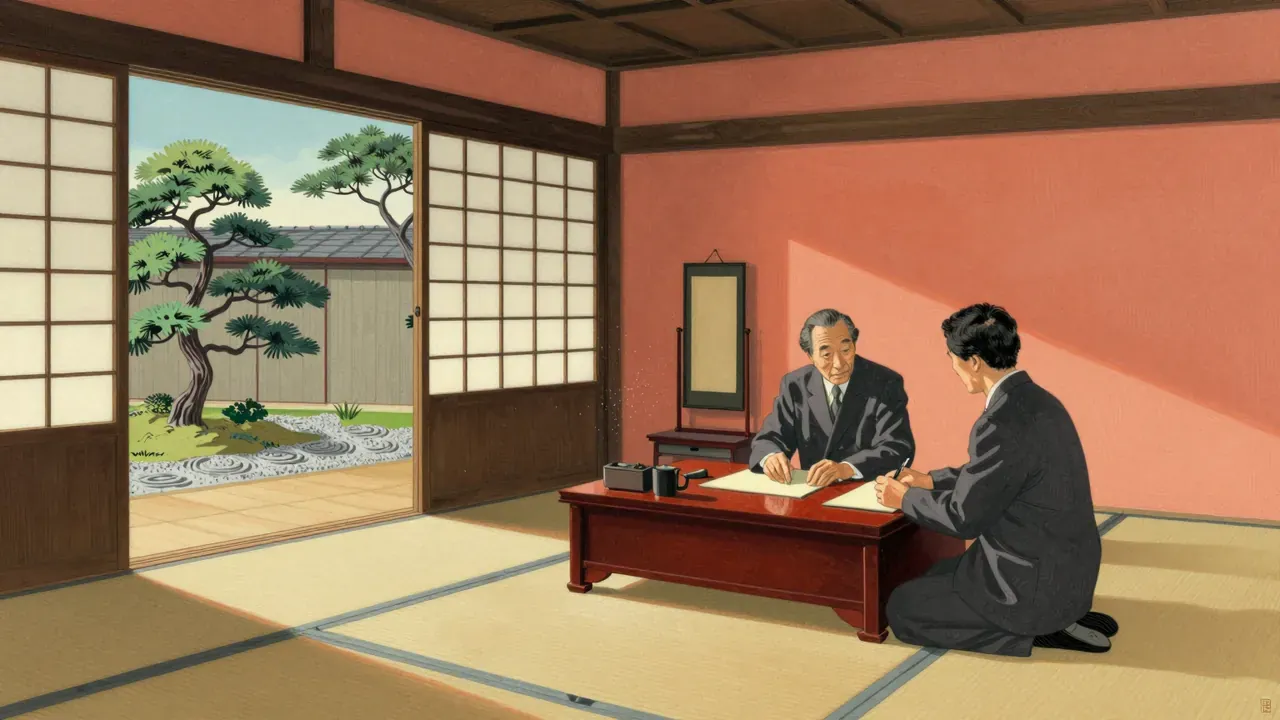
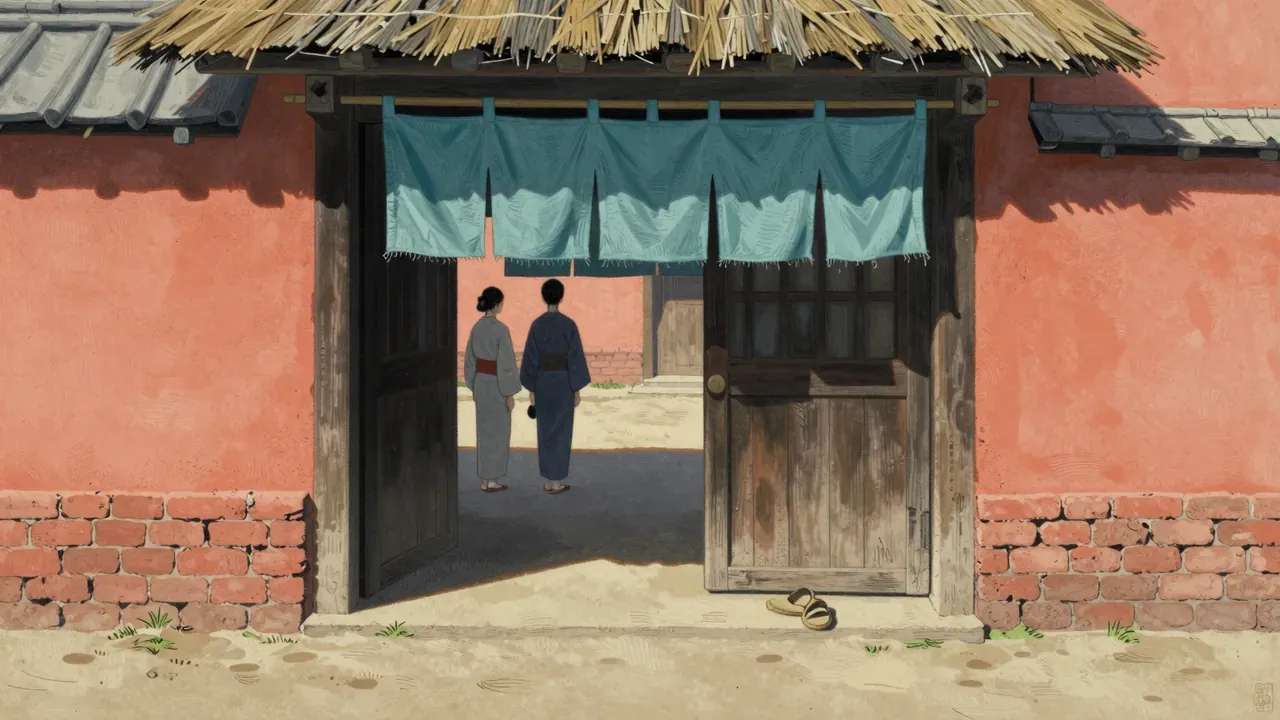
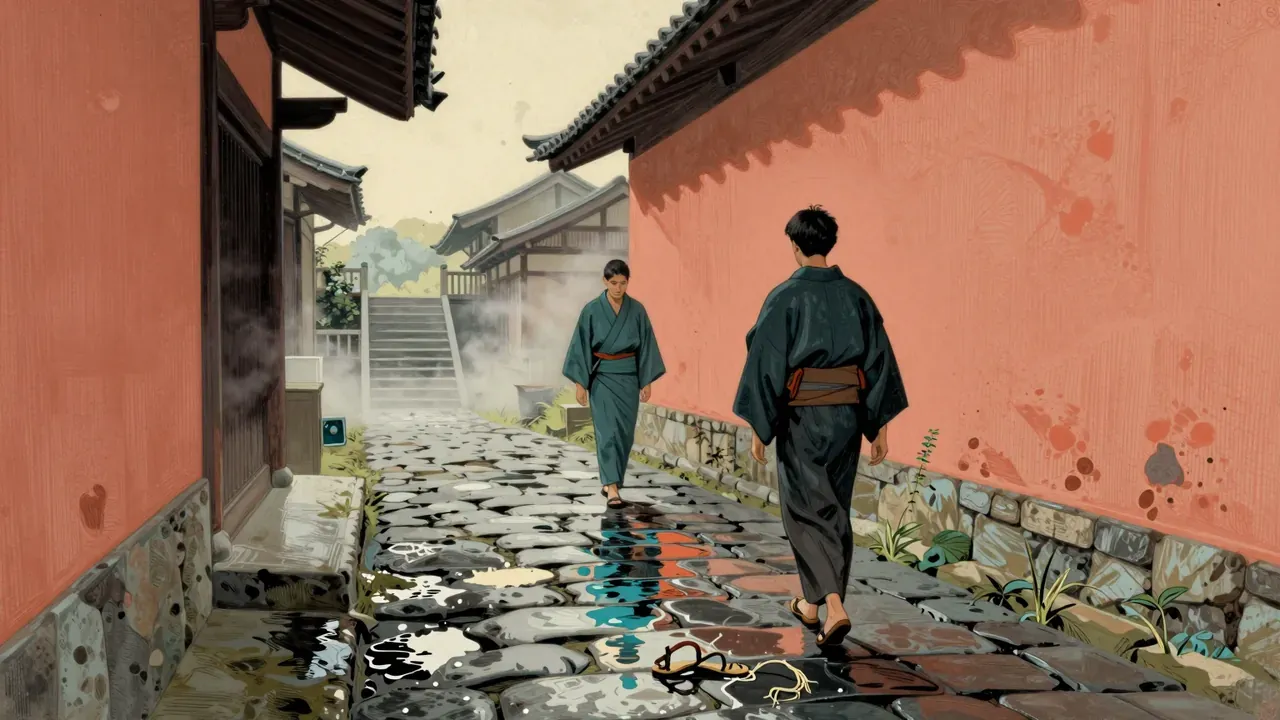
The story moves with the deliberation of a legal indictment: each scene establishes a precedent, then violates it. Shinobu Hashimoto’s script avoids exposition, trusting the viewer to infer status from posture, silence, and the placement of tatami mats. Toshirō Mifune’s Isaburo speaks less as the film progresses, his authority conveyed through stillness and the weight of withheld action. Tatsuya Nakadai’s Tatewaki is equally restrained — their final duel is not a flurry of blades but a slow, exhausted exchange, each parry a punctuation mark in a sentence already written. Kazuo Yamada’s cinematography favours low angles and shallow depth, compressing space until rooms feel like cages; corridors are shot end-on, turning them into gauntlets. Toru Takemitsu’s score uses shakuhachi and biwa not for atmosphere but as counterpoint — dissonant, halting phrases that interrupt rather than accompany. There are no establishing shots of castles or cherry blossoms; the Aizu domain is known only through documents, seals, and the sound of sandals on stone. Every craft decision serves the same principle: to make power visible as procedure, not spectacle. (159 words)
The rhythm
What lands is the cumulative pressure of ritualised injustice — the way a single demand, delivered politely and in writing, can unravel a life. The scene where Ichi throws herself onto the spear is not melodrama but the logical terminus of a system that grants women no legal personhood, only transferable status. Her act reads not as despair but as the only available assertion of agency: to choose death over erasure. Similarly, Isaburo’s refusal to accept commutation — his demand for the daimyo’s head before surrender — lands because it is framed not as rage but as procedural symmetry: if his son’s life is forfeit for disobedience, then the daimyo’s authority must be forfeit for its abuse. The film’s restraint makes these moments heavier, not lighter. Even the child Tomi, carried silently through the final sequence, functions not as sentiment but as evidence — a living record of what the domain tried, and failed, to unmake. The performances never gesture outward; they contract inward, making dignity legible in the set of a jaw or the pause before a bow. Nothing feels staged; everything feels adjudicated. (157 words)
The sound
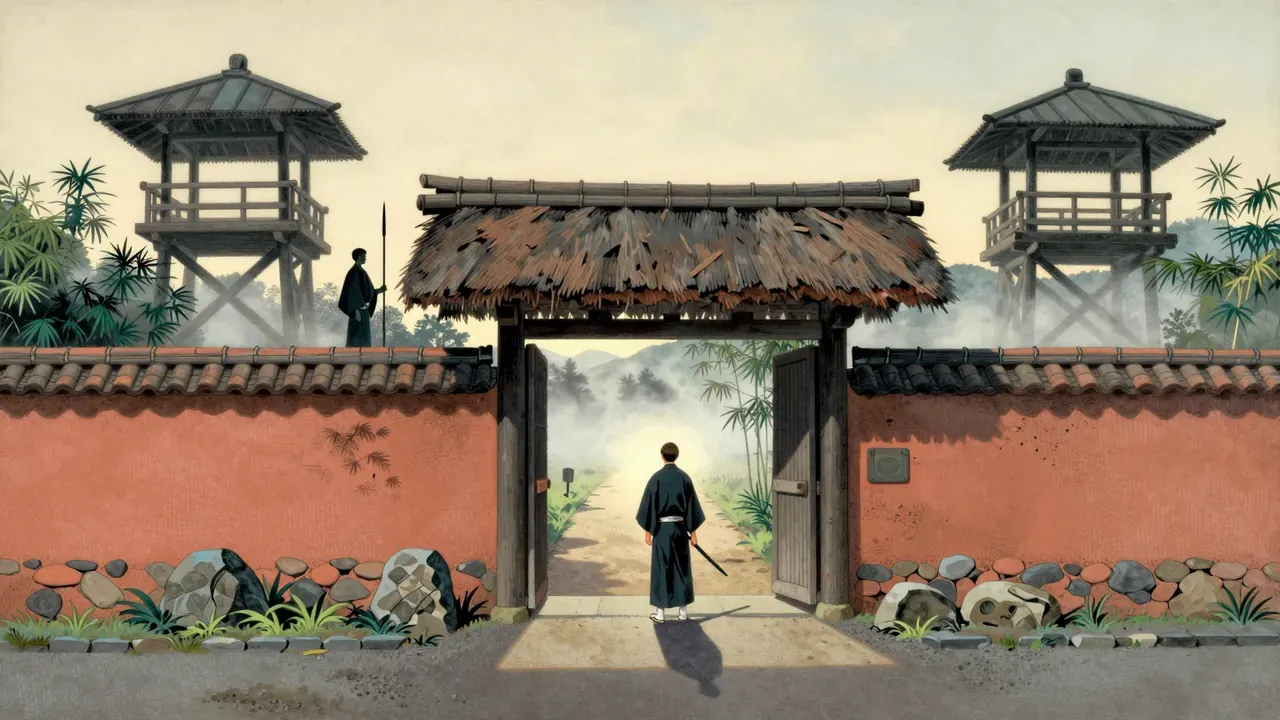
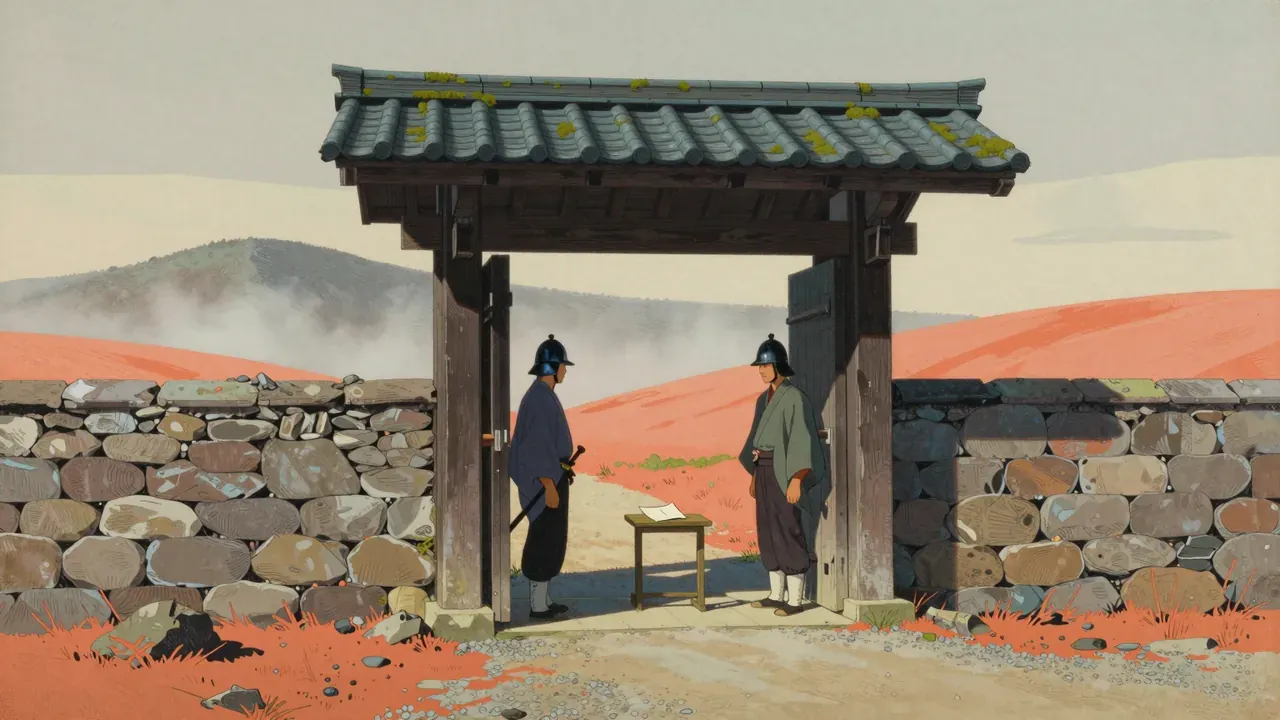
What does not land is the framing of Isaburo’s younger son Bunzo as a coward — his betrayal lacks sufficient motive or interiority, reducing him to plot function rather than character. The film gives him no scene where his fear is weighed, only shown, and his dismissal from the household arrives without the moral accounting the rest of the film insists upon. Similarly, the shogun’s court remains abstract: Isaburo’s journey to Edo is narratively necessary but visually underdeveloped — we see no gates, no guards, no bureaucracy, only Tatewaki waiting at a single threshold. This flattens the political scale; the shogunate feels like a rumour, not a power. The film also assumes fluency in Edo-period rank structure — names like ‘Kenmotsu Sasahara’ or ‘Shobei Tsuchiya’ carry weight only if the viewer knows their place in the hierarchy, and the film offers no cues beyond costume. Without that knowledge, some confrontations register as personal rather than systemic. These are not flaws in execution but limits of address: the film presumes a shared cultural grammar that modern non-Japanese audiences may lack without context. (156 words)
The stakes
The themes that matter are not loyalty or sacrifice in the abstract, but the violence of administrative continuity — how institutions sustain themselves by demanding that individuals absorb contradiction as routine. The film treats law not as justice but as inventory: wives, heirs, swords, and suicides are all items to be allocated, recalled, or discarded according to precedent. Class is not depicted as inequality but as ontological separation — the daimyo’s concubine is simultaneously mother and property, her body a vessel for lineage and a token of favour. The film’s central irony is that rebellion here is not revolutionary but conservative: Isaburo does not seek to abolish the system, only to hold it to its own stated terms — and finds those terms unenforceable. Honour is revealed as a ledger with no auditor; duty, a contract written in invisible ink. What persists beneath the period detail is a study in bureaucratic bad faith: the moment when compliance becomes indistinguishable from complicity, and the only ethical response is to withdraw consent entirely — even if withdrawal is fatal. (159 words)
The audience
This film is for viewers who treat historical setting as syntax, not scenery — those who follow legal or moral logic more readily than emotional arcs. It rewards patience with structural clarity: every gesture, every document, every silence has been placed to advance the argument. It is not for those who require catharsis, closure, or character growth; Isaburo does not change, only clarifies. Some will find its pacing glacial, its tone unremitting, its ending not tragic but terminal — a full stop, not a question mark. Those expecting the kinetic choreography of Kurosawa or the spiritual abstraction of Mizoguchi may misread its stillness as emptiness. But the verdict shifts if you value precision over propulsion: if you believe a film’s power lies in how tightly its parts interlock, not how far they soar. A viewer who dislikes it likely values empathy over equity, psychology over jurisprudence — and would prefer a different kind of justice, one that leaves room for mercy. That preference is valid, but it is not this film’s concern. (159 words)
The point
Yes, it is worth your evening — not as entertainment but as calibration. Its 128 minutes do not pass quickly, but they accumulate with the weight of evidence. You finish not with exhilaration but with recalibration: a sharper sense of how systems enforce compliance not through force but through exhaustion, not through cruelty but through consistency. It repays attention not with reward but with rigour — every frame asks you to track cause, precedent, and consequence. Those who find it alienating are not wrong; they are simply outside its intended contract, which assumes you accept that some injustices cannot be resolved, only witnessed. To call it ‘difficult’ mistakes its method for its intent: it is not withholding meaning, but refusing simplification. If you have ever questioned a rule you obeyed without thinking, or felt the quiet dread of institutional logic closing in, this film articulates that feeling with unnerving exactness. Its value is not in what it offers, but in what it refuses to grant — comfort, ambiguity, or escape. (159 words)