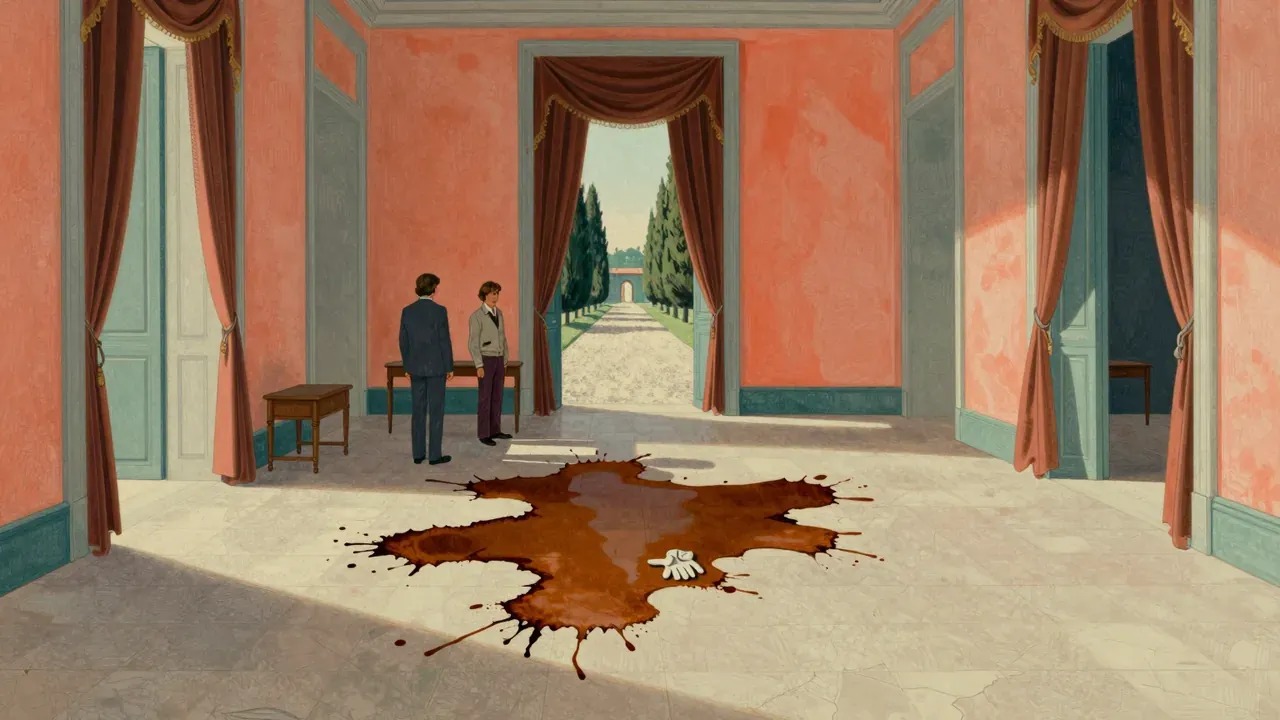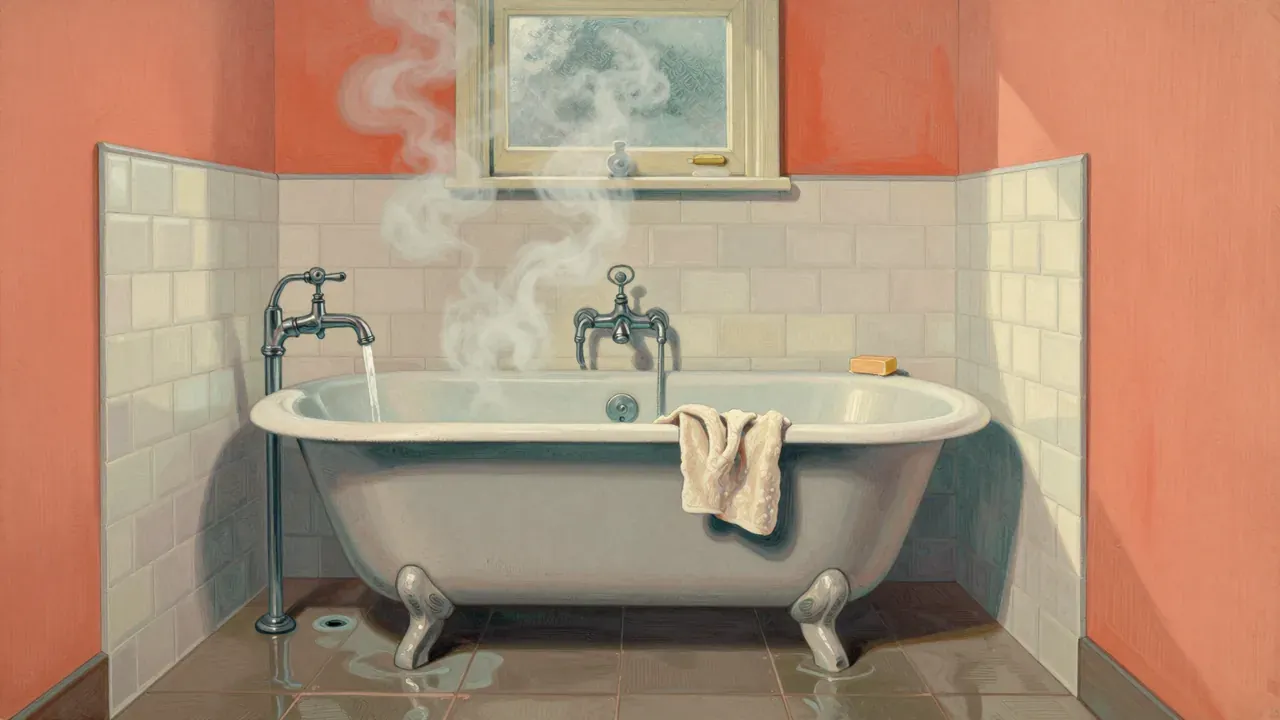
The look of it
Repulsion is a psychological horror film set in London, following Carol Ledoux — a Belgian manicurist living with her sister — as she unravels during a week alone in their South Kensington flat. Roman Polanski’s first English-language feature does not aim to frighten through threat or spectacle, but to replicate the texture of a disintegrating perception: time slows, surfaces warp, sound distorts, and space contracts until the apartment itself becomes an extension of Carol’s nervous system. It is not about schizophrenia as diagnosis, but as lived phenomenology — the way dread accumulates in silence, how touch becomes violation, how domestic objects accrue menace when unmoored from shared reality. The film avoids exposition, backstory, or explanation; it refuses to locate cause outside Carol’s point of view. Its ambition is structural and sensory: to make the audience inhabit, rather than observe, a mind losing its purchase on consensus. That it does so without voiceover, without flashbacks, and with minimal dialogue confirms its commitment to embodiment over interpretation. It is less a narrative about breakdown than a sustained act of cinematic mimesis.
The grammar of collapse
The story unfolds in strict chronological sequence, anchored to Carol’s physical location and sensory input: footsteps echo too long, a cracked wall appears without warning, a rabbit’s head sits uncooked in her handbag. Catherine Deneuve performs with near-total restraint — no monologues, few glances held, almost no vocal inflection — yet her stillness becomes increasingly charged, then alarming. Gilbert Taylor’s black-and-white cinematography uses shallow focus, tight framing, and deliberate camera drift to compress space; ceilings press down, doorways narrow, mirrors multiply without reflection. Alastair McIntyre’s editing sustains unease through duration — a bath fills for thirty seconds, a hallway stretches across three cuts — never cutting away from discomfort. Chico Hamilton’s score is sparse, mostly absent, replaced by amplified diegetic sound: dripping taps, ticking clocks, muffled breathing. Polanski and Brach’s script gives no interior monologue, no exposition of motive; every hallucination emerges from something tactile or auditory already present in the flat — a razor left behind, a phone ringing, a crack in pavement seen earlier. Craft here is not decorative but diagnostic: each decision serves the logic of perceptual collapse.
What holds true
What lands most decisively is the film’s spatial claustrophobia. The flat feels both real and impossible — lived-in enough to be credible (peeling wallpaper, mismatched crockery, damp patches), yet architecturally unstable, as if built to betray. The slow creep of distortion — a hand emerging from plaster, a figure in the mirror that isn’t there — gains force because it arrives without fanfare, embedded in mundane action. Deneuve’s performance lands not through expressiveness but through its refusal: her face remains closed, her posture rigid, her reactions delayed — which makes the moments when she finally flinches, vomits, or strikes feel inevitable, not hysterical. The sound design lands precisely where it should: a heartbeat swells not during violence, but while Carol stares at a blank wall; a door creaks not when opened, but when imagined. These are not effects added for impact, but symptoms made audible and visible. The film’s power resides in its consistency: every frame, every cut, every pause obeys the same internal grammar of dissolution. Nothing feels imposed; everything feels earned within its own rules.
What stays closed
What does not land is any attempt to read Carol’s condition as social commentary on female repression or patriarchal constraint. The film offers no critique of Colin’s persistence, no indictment of Michael’s casual entitlement, no suggestion that Carol’s breakdown stems from external pressure — only that men’s presence, proximity, and even their discarded objects trigger her. Attempts to locate feminist subtext in her isolation or resistance fall short because the film denies causality altogether: Helen is kind, Colin is gentle, Michael is indifferent — none behave abusively, yet all become vectors of terror. Similarly, the film’s ending — ambiguous, abrupt, unresolved — resists catharsis or insight, which some viewers may mistake for evasion. Its refusal to explain or contextualise means it cannot satisfy expectations of psychological realism or moral framing. It also assumes a tolerance for prolonged stillness and repetition: scenes of Carol sitting, staring, waiting, do not build toward revelation but deepen immersion in stasis. This is not a flaw in execution, but a limit of alignment — the film asks the viewer to accept disorientation as its own justification, and not all will consent.
The flat as organ
The themes that matter are perception as territory, silence as pressure, and domestic space as psychosomatic interface. Repulsion treats the flat not as setting but as organ — porous, reactive, responsive to Carol’s autonomic state. Walls crack not as metaphor but as somatic event; hands reach not from fantasy but from the grain of plaster. Time dilates not for dramatic effect but because attention, when unmoored, loses metric. The film explores how sensory input — smell, sound, texture — bypasses cognition and triggers visceral response, long before meaning attaches. It treats memory not as narrative but as residue: a crack in pavement reappears as fissure in wall; a man’s toothbrush becomes an invasive object. There is no theme of ‘madness versus sanity’, only of one perceptual regime displacing another, with no arbitration possible. The film’s enduring relevance lies in this precise mapping of subjective collapse — not as pathology to be corrected, but as experience to be rendered, without translation or judgment. It insists that what feels real is real, for as long as it holds.
Who it meets
This film is for viewers who tolerate extended ambiguity, who find tension in stillness rather than motion, and who trust cinema to operate through accumulation rather than exposition. It suits those familiar with avant-garde or modernist fiction, where meaning resides in pattern and rhythm, not plot resolution. It is not for viewers who require narrative clarity, moral orientation, or emotional release — those seeking catharsis, character development, or thematic argument will find it withholding. Anyone unsettled by prolonged depictions of dissociation, bodily distress, or unexplained threat may find it physically difficult to watch. Those expecting horror as genre convention — jump scares, clear antagonists, escalating stakes — will misread its method entirely. A viewer who values psychological precision over dramatic payoff, or who finds formal rigour more compelling than thematic messaging, will engage deeply. Those who believe film must explain, instruct, or resolve will leave frustrated — and rightly so, because the film has no intention of meeting that contract.
What it costs
Yes, it is worth your evening — provided you approach it as a controlled experiment in perception, not as entertainment or narrative. Its 104 minutes pass slowly, deliberately, without concession; it asks for attention, not distraction. You will not leave with answers, but with a recalibrated sense of how sound, space, and duration shape feeling. It rewards close viewing: noticing how light falls on Deneuve’s collarbone in shot seven, how the bathroom tiles shift focus between takes, how the telephone wire is severed not with drama but with a single snip. Those who dislike it tend to cite its lack of explanation or its oppressive tone — fair objections, but objections to its premises, not its execution. Change the film’s commitment to subjective fidelity, and it ceases to be Repulsion. Its value lies precisely in its refusal to soften, clarify, or justify. If you want cinema that thinks with its eyes and ears, not its mouth, this remains indispensable.