The shape of necessity
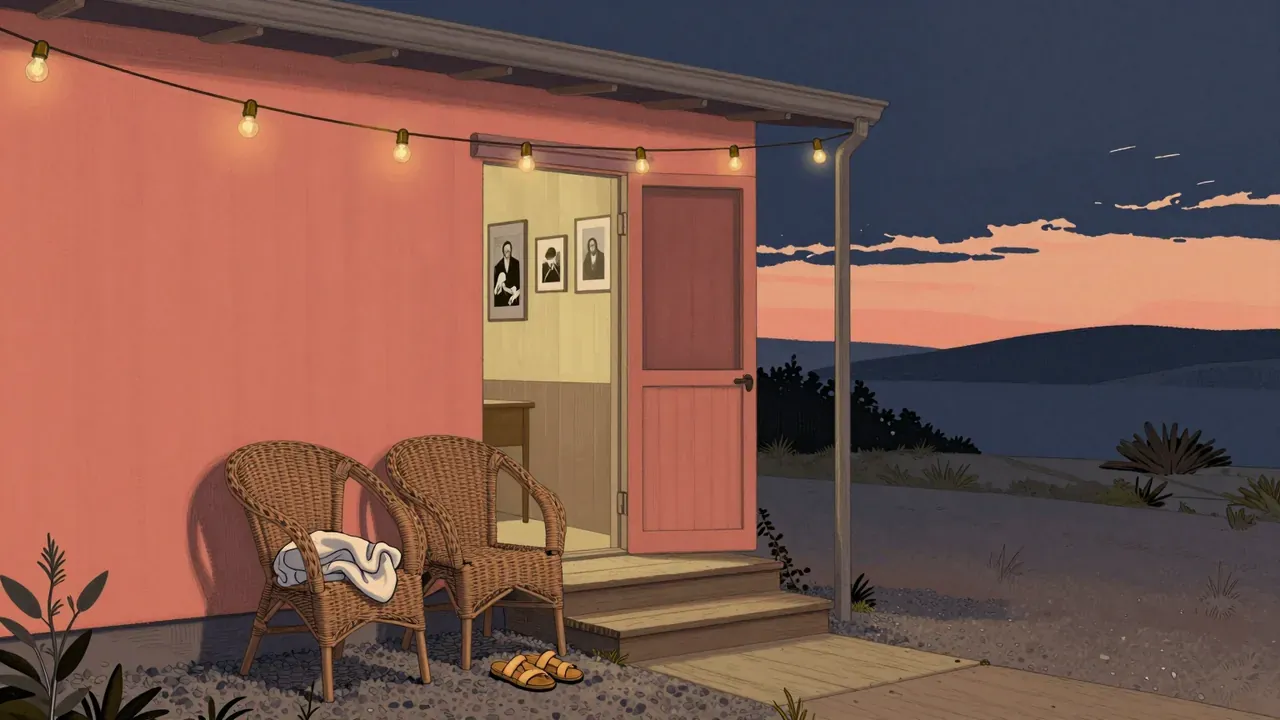
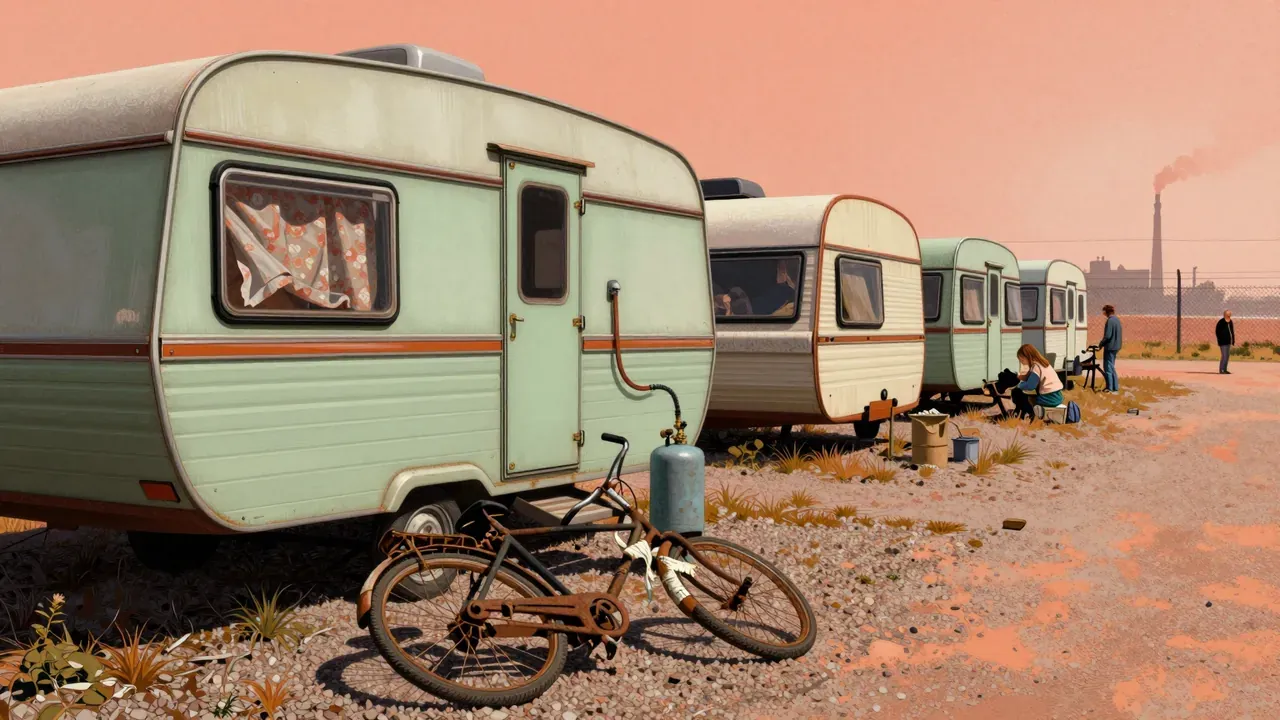
Rosetta is a Belgian social-realist drama from 1999, written and directed by Luc and Jean-Pierre Dardenne. It follows a teenage woman named Rosetta as she moves through a narrow circuit of survival: a caravan park on the edge of town, a riverside where she sets fish traps, a waffle stand where she seeks work, and the cramped interiors of her mother’s trailer. The film does not aim to explain her past or diagnose her condition; it refuses exposition, backstory, or psychological framing. Instead, it sustains a relentless focus on action — applying for jobs, negotiating wages, resisting eviction, hiding pain, withholding trust. Its intention is structural: to render employment not as one aspect of life but as its precondition, its grammar, its sole metric of dignity. There is no subplot, no flashback, no voiceover, no music. The Dardennes treat economic precarity not as context but as environment — as tangible, inescapable, and physically exhausting. The film’s rigour lies in this refusal to soften, interpret, or elevate its subject beyond what she does and says — which is almost nothing beyond the immediate need to hold on.
The look of it
The story unfolds in tight, unbroken sequences shot with Alain Marcoen’s handheld camera, rarely holding longer than necessary, often cutting mid-gesture. Émilie Dequenne’s performance is coiled and economical: her face stays closed, her movements precise, her voice low and flat except when rising in panic or fury. Olivier Gourmet plays the waffle-stand owner with quiet authority and no malice; Fabrizio Rongione’s Riquet carries warmth without sentimentality. Marie-Hélène Dozo’s editing avoids rhythm for its own sake — cuts land where breath catches or attention shifts, never to underline emotion but to follow it. Sound design is sparse and diegetic: the hiss of gas, the clatter of waffle irons, the thud of a body hitting water. There are no establishing shots, no cutaways to landscape or sky. Even the river appears only as a functional space — for fishing, for near-drowning, for hiding. The craft serves a single principle: to keep the frame occupied only by what Rosetta must contend with, right now, in this place, with these people.
The weight of repetition
What lands is the physical weight of routine under duress. Rosetta’s repeated attempts to secure work — asking at shops, waiting outside offices, rehearsing answers — accumulate not as repetition but as evidence: each failure tightens the vise. Her use of a hairdryer on her abdomen during cramps is not symbolic; it is a fact of resourcefulness, and it lands because it is specific, unsentimental, and utterly believable. The scene where she watches Riquet flounder in the pond and hesitates before pulling him out lands not for its moral ambiguity but for its duration — the silence, the mud, the delay — which makes the choice feel earned, not staged. The final image — Rosetta weeping on the ground, then slowly lifting her gaze to Riquet — lands because it is the first time her face opens without calculation or defence. Nothing here is performed for effect. The film earns its power by refusing to dramatise what it already shows: that dignity, for Rosetta, is measured in minutes of uninterrupted labour, in the ability to pay for gas, in not having to look away when someone offers help.
The cost of restraint
What does not land is the film’s absolute refusal of interiority beyond gesture and action. There are no private moments where Rosetta reflects, writes, listens to music, or looks at photographs — none of the conventional signposts of character depth. For some viewers, this feels like withholding rather than restraint. The mother’s alcoholism remains unexamined beyond its consequences; her history, her shame, her possible love for Rosetta, are all absent. Riquet’s betrayal is registered in action alone — he chases her on a moped, shouts, stops — but his hurt is not articulated, nor is Rosetta’s remorse given language. The film’s austerity risks flattening relationships into transactional logic: even care becomes conditional, even compassion arrives with hesitation. Those who rely on dialogue or psychological exposition to locate empathy may find the film emotionally impenetrable. It does not invite identification so much as observation — and that distance, while deliberate, can read as detachment rather than discipline.
The grammar of survival
The themes that matter are work as identity, dependency as violence, and self-preservation as moral erosion. Rosetta does not want freedom in the abstract — she wants a job, a room, a stove, a gas cylinder she can carry without collapsing. Her ambition is not upward mobility but horizontal stability: to stop falling. The film treats unemployment not as misfortune but as ontological crisis — a state where personhood frays at the edges. Her relationship with her mother is less about filial duty than about competing claims on the same dwindling resources: space, heat, credibility, even oxygen. When Rosetta turns on the gas, it is not a cry for help but an attempt at mutual erasure — the ultimate extension of interdependence. The betrayal of Riquet is not personal vengeance but systemic logic made flesh: in a world with no safety net, every act of solidarity must be weighed against survival. The film’s moral gravity comes from showing how easily ethics collapse when dignity is rationed.
The terms of watching
This film is for viewers who accept realism as method rather than genre — those who value precision over persuasion, duration over drama, and economy over explanation. It rewards attention to posture, timing, and silence. It is not for those who require narrative resolution, emotional catharsis, or psychological exposition; nor for those who find sustained bleakness indistinguishable from nihilism. Some critics have called it claustrophobic — and they are right, by design. Others argue its minimalism borders on abstraction — but abstraction implies distance, whereas Rosetta insists on proximity. A viewer who dislikes handheld camerawork, finds Dequenne’s performance too restrained, or expects thematic ‘takeaways’ will likely reject it outright. That verdict would change only if the film were re-cut with voiceover, score, or explanatory scenes — which would make it a different film entirely, and one the Dardennes did not make.
The measure of worth
Yes, it is worth your evening — provided you come prepared to meet it on its terms. It is ninety minutes long and asks for nothing more than your undivided attention to what is shown, not what is implied. Its power does not build gradually but accumulates in increments: a glance held too long, a door slammed too hard, a pause before answering. It does not offer comfort, but it does offer clarity — about how little separates endurance from collapse, how thin the line between loyalty and betrayal, how tightly work and worth are bound. Those who leave disappointed have usually expected a story about Rosetta’s past or future; the film is only about her present — and that present is urgent, exact, and unrelenting. To watch it is to witness a form of discipline, both cinematic and human — and that discipline, however austere, is rare, coherent, and deeply earned.