The intention behind it
Scandal is a 1950 Japanese drama produced by Shochiku, directed and co-written by Akira Kurosawa with Ryūzō Kikushima. It sets out to protest the rise of tabloid journalism in post-occupation Japan — specifically the fabrication of private lives for commercial gain. The film opens with a painter and a singer photographed without consent and misrepresented as lovers; their legal response forms the spine of the narrative. But Kurosawa’s intent shifts mid-conception: what begins as a social critique of press ethics becomes, in execution, a study of moral compromise centred on Hiruta, a lawyer whose poverty forces him to betray his clients. The screenplay was revised repeatedly during writing, with Kurosawa later acknowledging that Hiruta’s internal conflict overtook the original polemic. The film’s stated aim — to expose journalistic malpractice — is thus structurally undercut by its own focus: not on the press, but on one man’s conscience under material pressure. That pivot is neither concealed nor resolved; it is the film’s governing tension. (142 words)
The look of it
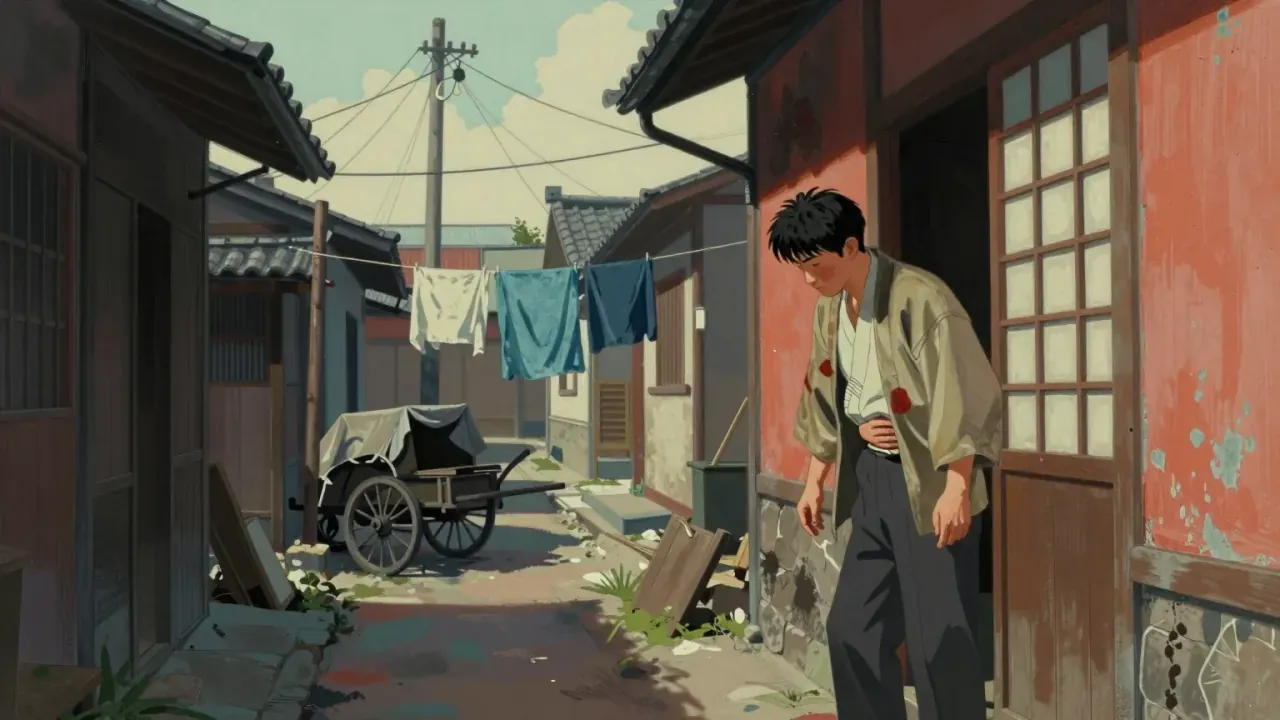
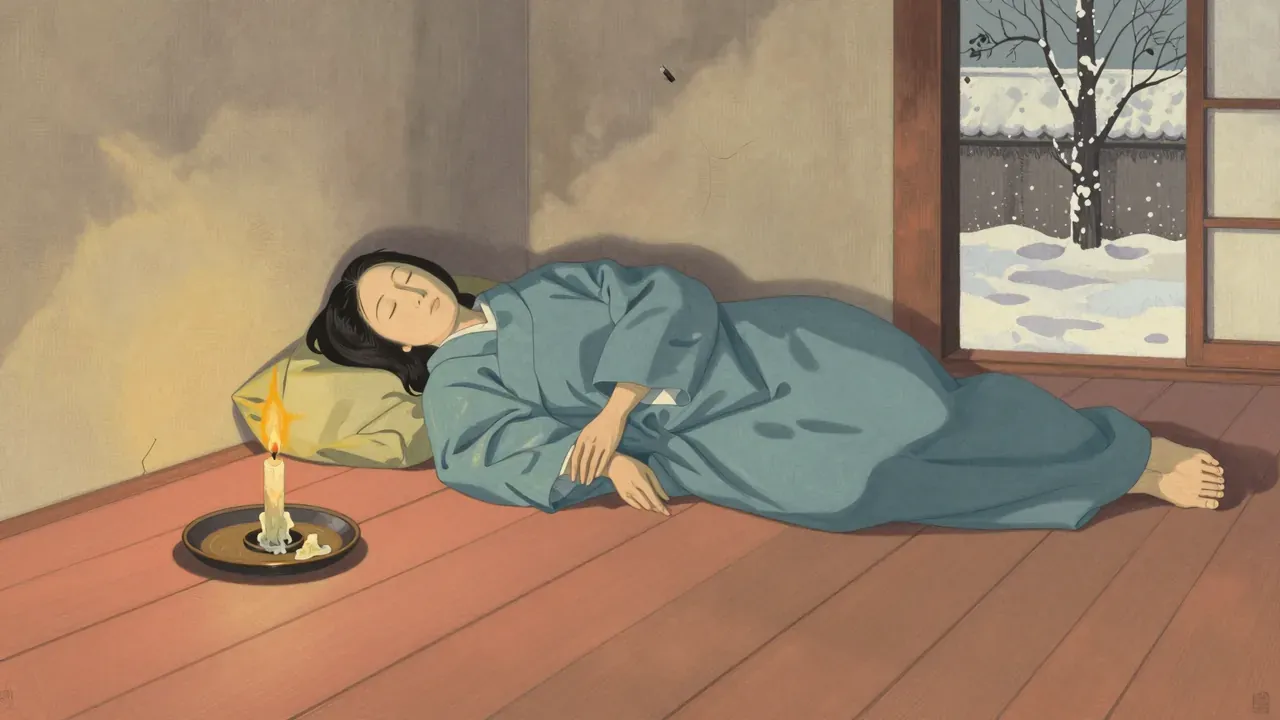
The story follows a linear courtroom arc but pivots decisively into Hiruta’s domestic sphere: his tubercular daughter Masako, his shabby apartment, his drinking, his evasions. Toshirō Mifune plays Aoye with contained intensity — less a romantic lead than a moral anchor — while Takashi Shimura’s Hiruta carries the film’s psychological weight through micro-expressions: hesitation, exhaustion, quiet shame. Yoshiko Yamaguchi’s Saijo is composed but circumscribed; her agency lies in presence, not action. Fumio Hayasaka’s score deploys irony — ‘Happy Tokyo’ over scenes of distress, fanfares at Masako’s death — sharpening dissonance between surface and feeling. Kurosawa’s framing is restrained: interiors are modest, light is even, compositions avoid flourish. There are no dramatic tracking shots or symbolic weather; the camera observes, rarely interprets. Editing is functional, not rhythmic. The courtroom sequences feel procedural rather than climactic, and the final confession lands not as catharsis but as exhausted relief. Performance and craft serve clarity over emphasis — a choice that suits the subject, but also limits emotional escalation. (158 words)
What stays with you
What lands is Hiruta’s moral erosion — not as melodrama, but as accumulation: the way he avoids eye contact when lying to Masako, how he fumbles with money before buying her gifts, the hollow cheer he forces at Christmas. These details build quietly, without commentary. The film’s ethical gravity resides in those silences, not in speeches. The contrast between public scandal and private suffering is sustained without strain: the magazine’s garish posters appear only in background glances, while Masako’s cough lingers in every room she occupies. The ending — Hiruta walking alone past torn, illegible billboards — works because it refuses resolution: justice is done, but no one is redeemed, no system reformed. The film’s restraint makes its compassion credible. It does not ask us to admire Hiruta, only to register the cost of his failure. That cost is rendered with specificity: the weight of a medical bill, the texture of a worn kimono, the sound of a child’s shallow breath. These are not metaphors. They are facts the film treats as consequential. The moral architecture holds because it rests on observed behaviour, not declared principle. (156 words)
Where it slips
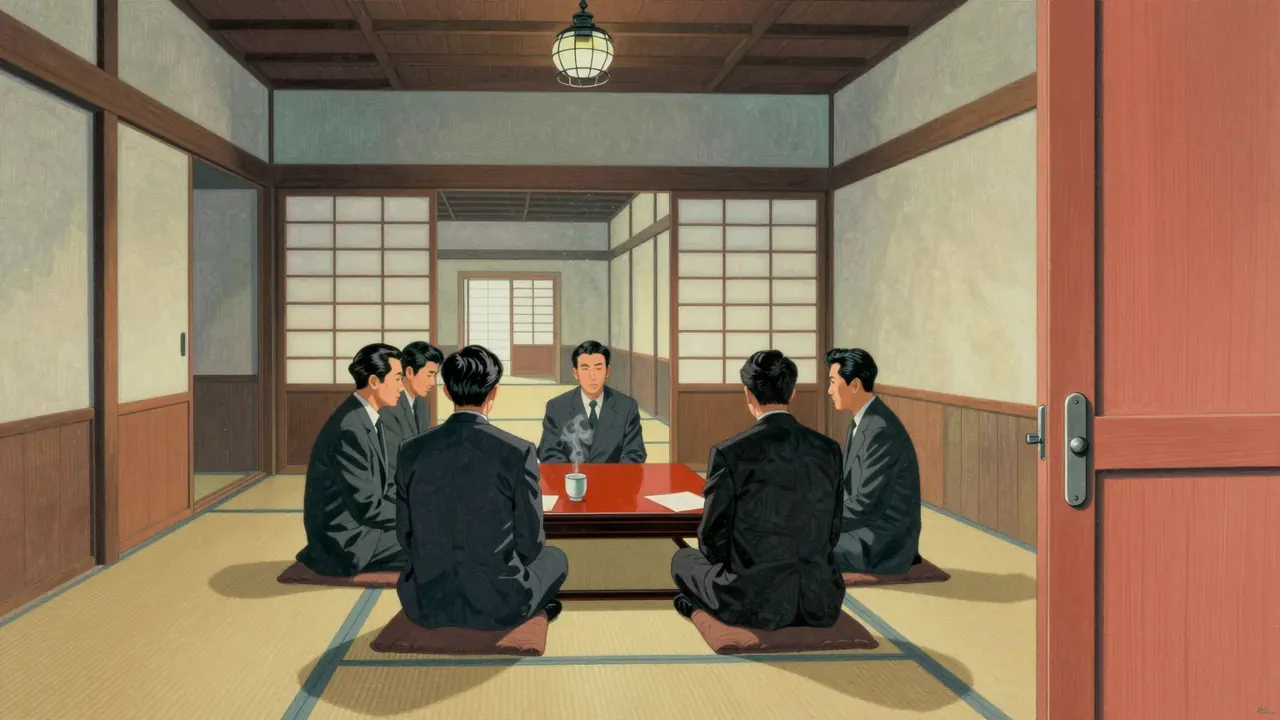
What does not land is the film’s initial premise: the tabloid press as antagonist. The editor of Amour is a cipher — slick, unrepentant, never interrogated beyond his function as briber. His motives, his editorial logic, even his name, remain vague. The courtroom trial lacks procedural detail or rhetorical force; witnesses go unchallenged not for thematic reason but because the script requires Hiruta’s silence. Aoye and Saijo’s outrage feels abstract — they are wronged, but their profession, their public standing, their actual relationship remains underdeveloped. Their romance is implied, not dramatised. The satire of mass media is muted: there are no headlines dissected, no circulation figures cited, no rival publications shown. The film names the problem — ‘scandal journalism’ — but declines to show how it operates, spreads, or profits. Instead, it substitutes institutional critique with individual guilt. That substitution works dramatically, but weakens the social argument Kurosawa claimed to make. Later scholars note this imbalance; the film’s power lies in psychology, not polemic — and it does not disguise that shift. (157 words)
What it is really about
The themes that matter are not freedom of speech or press ethics, but moral contingency: how integrity bends under material necessity. Hiruta’s crisis is not ideological but economic — his daughter’s illness makes ethics transactional. The film treats tuberculosis not as metaphor but as condition: Masako’s frailty dictates pace, tone, consequence. Related is the theme of performance — of self in public versus private life. Aoye paints landscapes others call ‘strange’; Saijo sings classical music in a culture shifting toward popular song; Hiruta performs competence while concealing betrayal. Each character wears a version of truth that frays under scrutiny. The film also engages with authenticity versus imitation: the tabloid photograph is a false likeness, Aoye’s painting an honest distortion, Masako’s illness an undeniable reality no performance can mask. These are not abstract debates. They are anchored in bodies, rooms, receipts, coughs. The film’s moral seriousness comes from refusing to separate ethics from economics, conscience from care, truth from breath. (148 words)
Who it is for
This film is for viewers who value psychological precision over narrative propulsion, and who accept that moral inquiry need not yield answers. It rewards attention to gesture, silence, and the weight of unspoken obligation. It is not for those seeking sharp satire, structural innovation, or clear villains — the editor is flat, the trial perfunctory, the press critique under-specified. Nor is it for viewers who require emotional release: Masako’s death is understated, Hiruta’s confession unaccompanied by music or close-up. Some will find the pacing unhurried to the point of inertia; others will see that slowness as necessary to the subject. A viewer expecting Kurosawa’s later formal daring — Rashomon’s fractured testimony, Ikiru’s existential urgency — may misread Scandal’s restraint as indecision. It is not. It is discipline. Those who reject it do so on grounds of tonal monotony or thematic drift — fair objections, but ones the film anticipates by making its pivot explicit in structure, not subtext. (152 words)
Is it worth your evening?
Yes, it is worth your evening — provided you watch it as a study in moral attrition, not as courtroom drama or social satire. Its 104 minutes unfold with deliberation, not delay: every scene serves Hiruta’s slow collapse or Masako’s quiet endurance. The performances are calibrated, not flamboyant; the direction is economical, not austere. You will not leave energised, but you may leave unsettled — by how easily principle yields to need, how little spectacle attends real failure. Those who find it inert likely expect sharper conflict or clearer stakes; those who find it profound respond to its refusal to flatter the audience with resolution. A different verdict would follow if the film had sustained its opening polemic — if Amour’s editor were fleshed out, if the trial had procedural rigour, if Aoye and Saijo’s public identities mattered beyond plot function. As it stands, Scandal earns its place not as Kurosawa’s most urgent work, but as his most unsparing portrait of conscience under duress. (151 words)