The concert itself
Ryuichi Sakamoto | Opus is a concert film documenting the composer’s final public performance, filmed in late 2022 at Tokyo’s Bunkamura Orchard Hall. It makes no claim to biography or exposition: there are no interviews, no archival footage, no voiceover narration. Its intention is singular—to hold still, without embellishment, the physical and sonic presence of Sakamoto playing his own work while terminally ill. The film does not frame his illness as narrative tension or emotional climax; it treats his frailty, pauses, breaths and adjustments as part of the same acoustic field as the piano’s resonance and pedal decay. Neo Sora’s direction avoids dramatisation, opting instead for sustained takes and unobtrusive framing that treat the concert as an event already complete in itself—not a farewell staged for posterity, but a rehearsal of presence under constraint. The film assumes familiarity with Sakamoto’s music, not his life story, and asks the viewer to attend to duration, silence and gesture as primary materials. It is less about legacy than about what remains audible when everything else has receded. (158 words)
The look of it
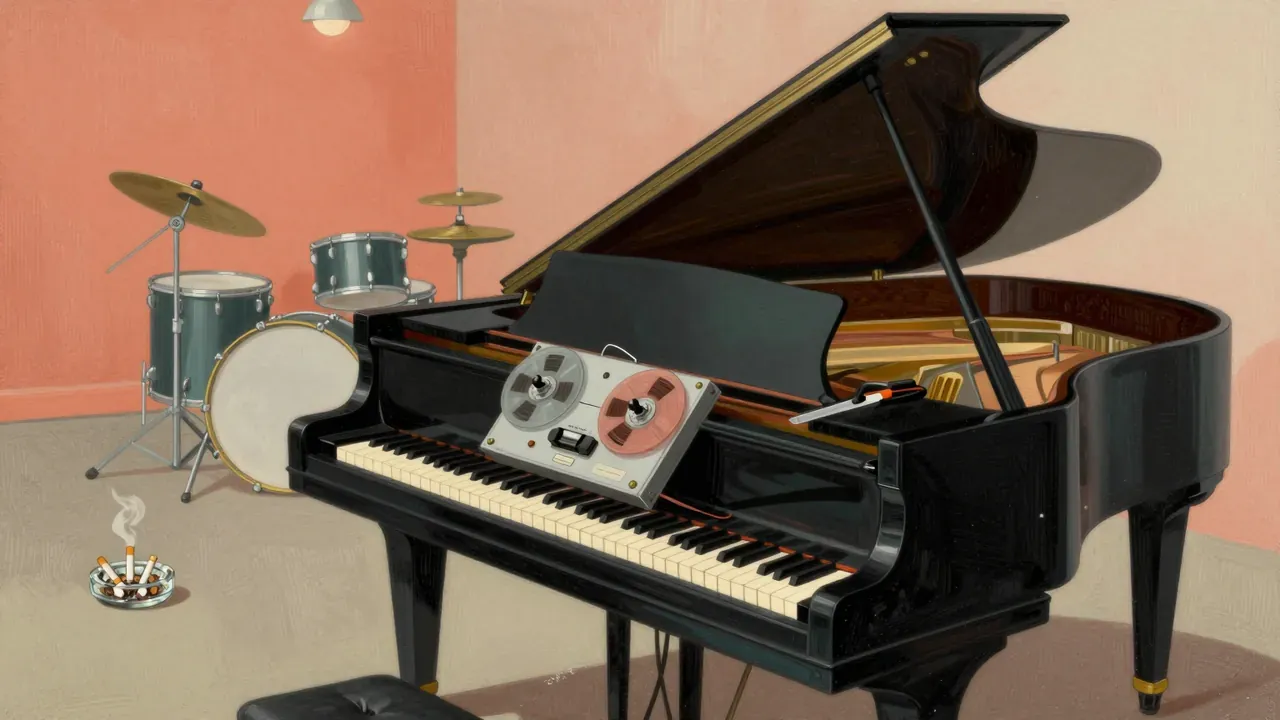
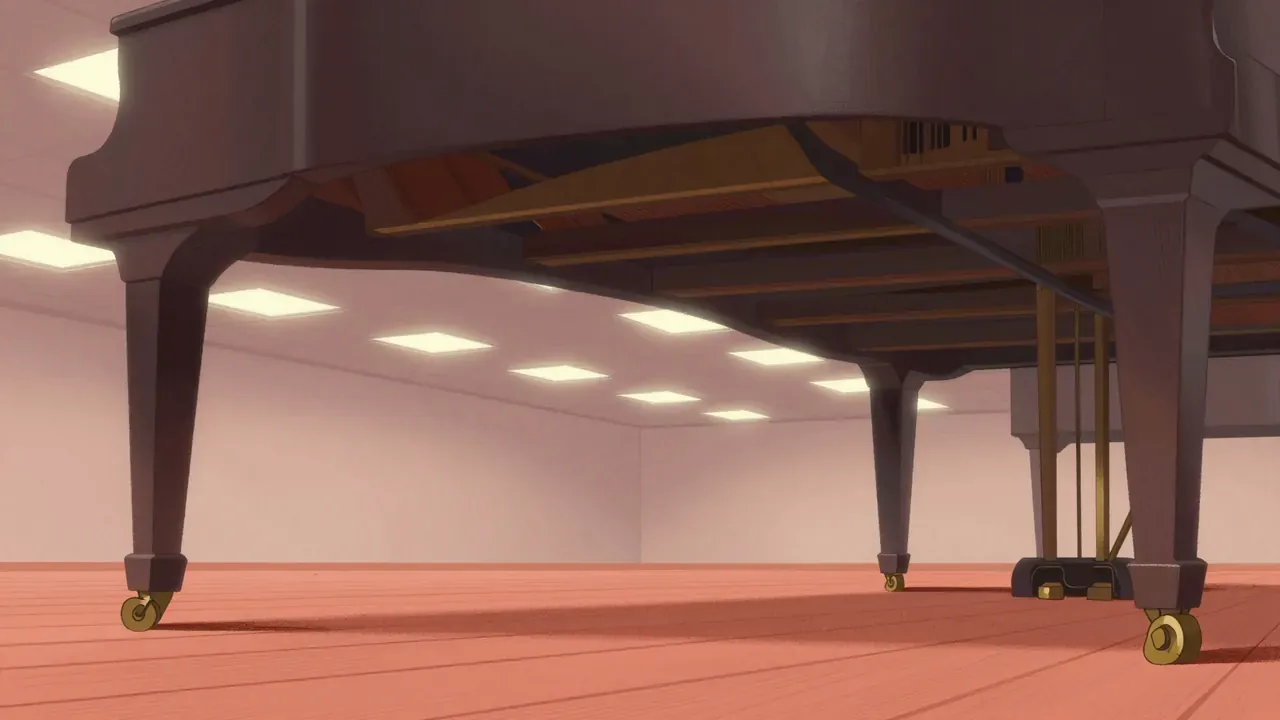
The film unfolds as a single uninterrupted concert—no cuts between songs, no intertitles, no visible audience beyond occasional reflections in the piano lid. Bill Kirstein’s cinematography keeps the camera low and static, often centred on Sakamoto’s hands and the keyboard, with shallow depth of field softening the periphery. Light is even and neutral, avoiding theatrical contrast; the hall feels like a room, not a stage. Takuya Kawakami’s editing is invisible by design: the 103-minute runtime matches the real-time duration of the performance, with no reordering or compression. Sakamoto plays solo piano arrangements of pieces spanning five decades—some sparse, some densely layered—but the emphasis stays on touch, weight and decay rather than virtuosity. There is no score beyond what he plays; no additional instrumentation, no ambient processing. The sound recording privileges proximity and air: pedal noise, key release, chair creaks, breath. This is not a polished document but a fidelity test—of instrument, body and attention. The craft serves restraint, not spectacle. (159 words)
What you feel
What lands is the quiet authority of Sakamoto’s physical continuity—the way his hands move with certainty even when his posture sags, how his listening remains acute between phrases, how silence is held not as absence but as active space. The film’s refusal to editorialise means the weight of his mortality arrives not through exposition but through accumulation: a longer pause before a repeat, a hand resting on the keyboard for three extra seconds, the slight tremor in a sustained note. These are not ‘moments’ but textures woven into the fabric of the performance. The acoustics feel lived-in, not mastered—reverberation lingers just long enough to blur the line between note and memory. Because the film offers no context, the music gains new gravity: a piece written in 1978 sounds like it was composed yesterday, not because it is timeless, but because it is being re-embodied now, under duress. The result is neither elegiac nor inspirational, but exact—a register of endurance without metaphor. (156 words)
Where it holds back
What does not land is any sense of musical argument or development across the setlist. Without sequencing logic, historical framing or variation in instrumentation, the concert risks flattening into repetition—especially for viewers unfamiliar with Sakamoto’s compositional range. Some passages blur: the distinction between early minimalism and later ambient work dissolves when stripped to solo piano and rendered at uniform volume and pace. The static camerawork, while principled, can dull rhythmic emphasis or harmonic shift—details more legible in audio than image. There is also no counterpoint to Sakamoto’s presence: no cut to the conductor’s score, no glimpse of sheet music, no reaction shot from an off-screen listener. This austerity works as ethics but not always as engagement. A viewer seeking insight into his process—how he revised a phrase, why he chose this key—will find nothing. The film honours his privacy so completely that it leaves no aperture for curiosity beyond the surface of sound and gesture. (157 words)
What it’s really about
The themes that matter are silence as duration, not absence; music as bodily practice rather than abstract output; and authorship as continuity under erosion. The film treats composition not as fixed text but as repeated act—each performance a minor revision of the last, each breath a deviation from the score. Ageing appears not as decline but as recalibration: Sakamoto adjusts bench height, shifts weight, rests fingers—these are not concessions but decisions. Mortality is present not as endpoint but as condition shaping tempo, dynamic and phrasing. There is no theme of legacy-building, no invocation of influence or discipleship; the focus stays resolutely on the singular body making sound in real time. The film also engages with Japanese aesthetics of ma—the interval, the pause, the space between notes—as structural principle, not ornament. This is not cultural commentary but embodied form: the timing of a pedal lift, the gap before a repeat, the breath before a phrase—all carry equal weight to the notes themselves. (159 words)
Who it’s for
This film is for people who listen to music as physical experience—not as background, not as data, not as identity marker—but as something that changes the shape of a room or the rhythm of breathing. It is for those who value stillness over exposition, who trust duration as a mode of understanding, and who do not require explanation to feel significance. It is not for viewers who rely on narrative scaffolding, biographical context or visual variety to sustain attention. Those who expect documentary to clarify, interpret or contextualise will find it withholding. Those who associate concert films with energy, crowd response or cinematic dynamism will find it austere to the point of resistance. A viewer who needs music to be framed as achievement, innovation or influence will leave unmoored. But for someone willing to sit with a single perspective for 103 minutes, watching hands that have played this music for fifty years, the film delivers a rare kind of concentration—one that asks not for empathy, but for attention. (159 words)
Is it worth your time?
Yes, it is worth your evening—if your evening includes the willingness to relinquish interpretation and accept duration as meaning. It demands no prior knowledge of Sakamoto, but it does demand tolerance for ambiguity, comfort with repetition and openness to silence as substance. It is not entertainment, nor is it education: it is a durational encounter, calibrated to the pace of breath and decay. Those who find value in slowness, in fidelity to material conditions, in the dignity of unvarnished presence, will find it resonant. Those who need momentum, revelation or resolution will not. The verdict does not hinge on technical execution—Kirstein’s lighting is precise, Kawakami’s editing is flawless—but on whether one accepts the film’s central proposition: that a final performance is not a summation, but a continuation, and that continuation is most legible when nothing is added, subtracted or explained. (159 words)