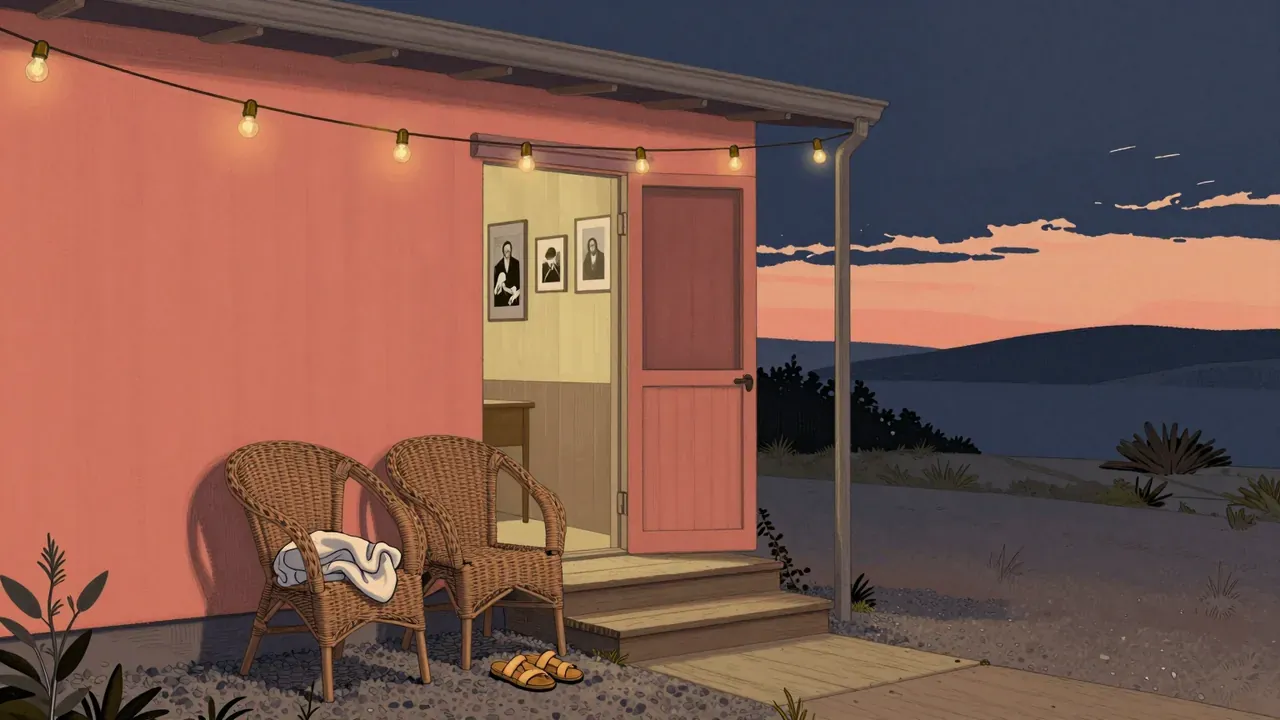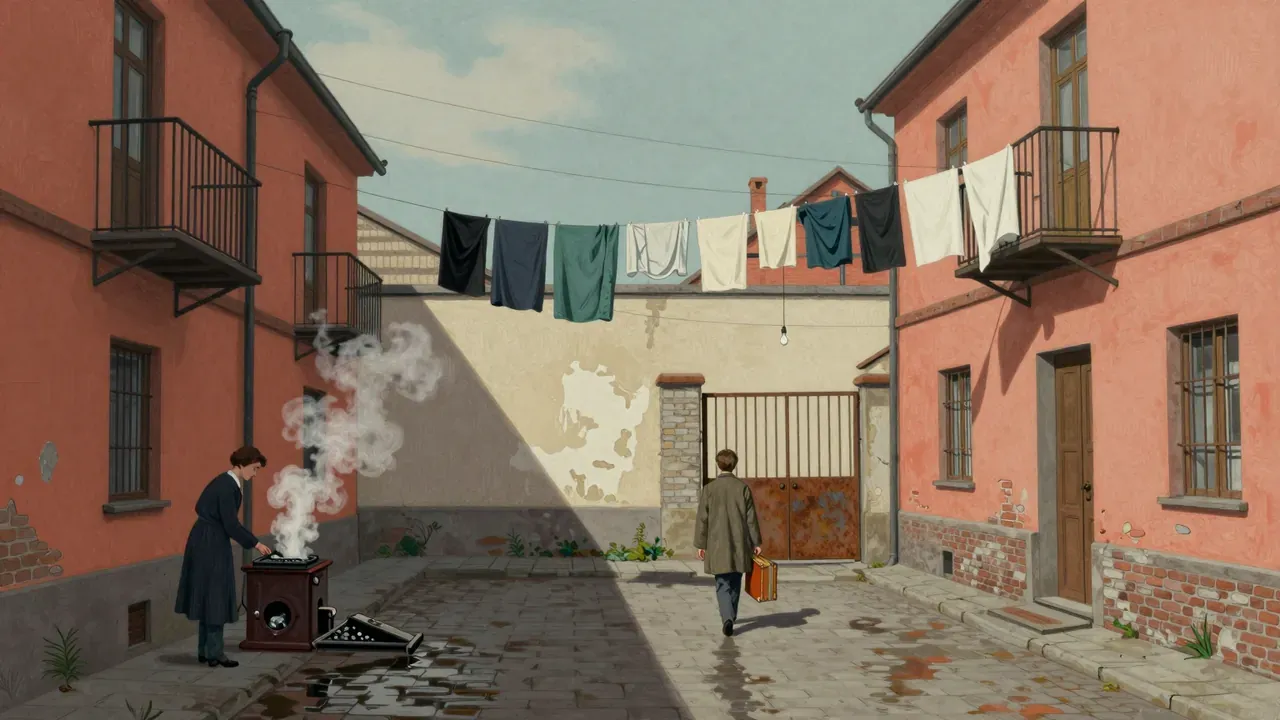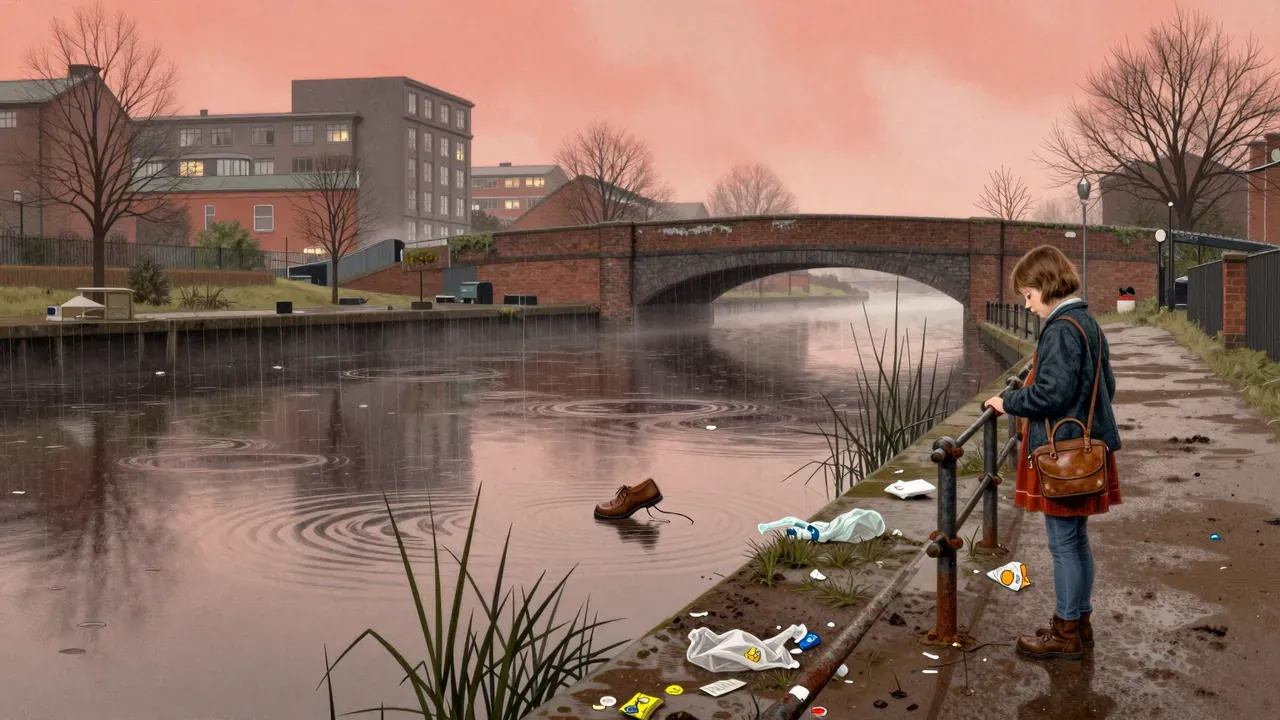
The look of it
Ratcatcher is a 1999 debut feature by Lynne Ramsay, set in a Glasgow council estate during the 1973 binmen’s strike. It follows James Gillespie, a pre-teen boy whose accidental role in a classmate’s drowning sets off a slow, internal unravelling. The film does not aim to explain or resolve that event, nor to indict its setting; instead, it sustains a sustained, tactile attention to how poverty, shame, and nascent feeling coexist in a child’s perception. Ramsay avoids exposition, moral framing, or psychological diagnosis. Her method is observational but never clinical: she holds space for silence, hesitation, and unspoken tension. The film treats memory not as narrative but as sensory residue — damp brick, static on a radio, the weight of wet clothes, the glare off canal water. It is not a social problem film, nor a nostalgic period piece; it is an act of patient, unsentimental witnessing, anchored in place and age. Its ambition lies in fidelity — to the physical texture of that world, and to the unformed, often contradictory interiority of its protagonist. (142 words)
How it tells
The story unfolds elliptically, with key events implied rather than dramatised: Ryan’s death occurs off-screen, his funeral is unseen, and James’s final immersion in the canal is intercut with his family’s move — a structural refusal of closure. William Eadie, cast without prior training, performs with minimal affect, relying on posture, gaze, and stillness; his restraint makes the few moments of release — a smile, a flinch — carry disproportionate weight. Alwin H. Küchler’s cinematography favours shallow focus and muted tones, keeping faces half-obscured in shadow or reflected in grimy glass. Rachel Portman’s score is sparse, often absent, letting ambient sound dominate: dripping taps, distant sirens, the rustle of plastic bags caught in wind. Lucia Zucchetti’s editing avoids conventional rhythm, holding shots just beyond comfort, then cutting abruptly — as when James stares at a mouse floating toward the moon, then cuts to his father’s bloodied face. There are no flashbacks, no voiceover, no symbolic objects explained. Everything is present-tense, materially specific, and deliberately unmoored from cause-and-effect logic. (158 words)
What stays
What lands is the film’s physical authenticity: the grime under fingernails, the way light falls across peeling wallpaper, the sound of bare feet on linoleum. The Govan locations feel lived-in, not dressed — cracked plaster, mismatched curtains, the damp chill of unheated rooms. James’s quiet observation registers as intelligence, not passivity; his hesitations read as moral awareness, not indecision. The bath scene with Margaret Anne works because it refuses to narrativise innocence or threat — it simply shows two children in water, their bodies unremarkable, their interaction unselfconscious. The mouse-and-balloon sequence lands not as whimsy but as a necessary rupture: a moment where imagination briefly overpowers gravity, both literal and social. The final sequence — James smiling underwater while his family crosses the wheat field — lands precisely because it resists interpretation: it is neither suicide nor transcendence, but a simultaneous holding of two irreconcilable states. This ambiguity is earned through the film’s consistent refusal to name emotion, leaving space for the viewer to sit with discomfort without resolution. (152 words)
Where it slips
What does not land is the film’s occasional drift into opacity without sufficient grounding. A few transitions — particularly between James’s interior states and external action — rely too heavily on visual metaphor without enough behavioural anchor, risking abstraction over empathy. The gang’s sexual abuse of Margaret Anne is rendered with deliberate distance — long takes, obscured angles — which serves the film’s anti-sensationalist ethics but may leave some viewers disengaged from its human cost. The decision not to show Ryan’s death or its immediate aftermath, while formally coherent, risks flattening the emotional gravity of James’s guilt. Some scenes — like the council inspectors’ visit — feel structurally necessary but emotionally thin, their purpose clearer in retrospect than in the moment. The film’s resistance to exposition means certain relationships — between James and his father, or James and Kenny — remain under-articulated, demanding more from the viewer than the text consistently provides. These are not flaws in intention, but points where formal rigour edges into withholding. (149 words)
What it’s really about
The themes that matter are not poverty as condition, but poverty as perceptual filter — how material scarcity shapes attention, memory, and the capacity for hope. The film treats childhood not as innocence but as a state of heightened, unmediated sensation, where trauma and beauty arrive with equal force and little warning. It explores masculinity not through action but through omission: James’s refusal to join the gang’s violence, his inability to articulate grief, his quiet care for Margaret Anne — all register as counter-narratives to dominant models of boyhood. The recurring motif of water — canal, bath, rain, sweat — functions less as symbol than as constant, indifferent presence: life-sustaining, dangerous, cleansing, suffocating. The film also examines time not as progression but as layering: the 1970s setting is deliberately porous, incorporating textures from earlier decades to resist nostalgic framing. Most centrally, it asks what remains when language fails — how feeling persists in gesture, silence, and the body’s response to environment. This is not a film about understanding, but about enduring perception. (146 words)
Who it’s for
This film is for viewers who value atmosphere over exposition, who trust image and sound to carry meaning without explanation, and who accept ambiguity as ethical necessity rather than narrative shortcoming. It suits those familiar with social realism but resistant to its didactic tendencies, and those drawn to films where performance resides in stillness, not speech. It is not for viewers who require clear causality, psychological motivation, or narrative resolution — those who expect James’s guilt to culminate in confession, punishment, or redemption will find none. It may frustrate viewers accustomed to classical pacing or character arcs, or those seeking historical context beyond what the film offers. Parents expecting a ‘coming-of-age’ story with uplift will misread its terms entirely. The film’s power depends on patience; its rewards accrue slowly, through accumulation of detail, not revelation. Those who reject its methods outright — its silences, its refusal to name emotion, its unflinching gaze at discomfort — would not be persuaded by any argument. A different edit, more dialogue, or a linear structure would make it another film entirely. (150 words)
Is it worth your evening
Yes, it is worth your evening — provided you approach it on its own terms. It demands attention but repays it with a rare kind of sensory honesty, one that lingers long after the screen goes dark. Its ninety-four minutes do not pass quickly, but they do not drag; the pace feels necessary, calibrated to the weight of its subject. It is not entertainment in the conventional sense, nor is it arduous — it occupies a middle ground where stillness becomes active, and restraint becomes expressive. Those who find value in films that trust the viewer to hold contradiction — tenderness and brutality, beauty and squalor, agency and helplessness — will find it deeply resonant. Those who need clarity, catharsis, or narrative propulsion will not. Its worth is not in what it says, but in how thoroughly it inhabits a single, fragile perspective. To watch it is to experience time differently: slower, heavier, more attentive. That shift alone justifies the duration. It is not a film to consume, but one to absorb — and absorption takes time. (149 words)