The weight of the mission
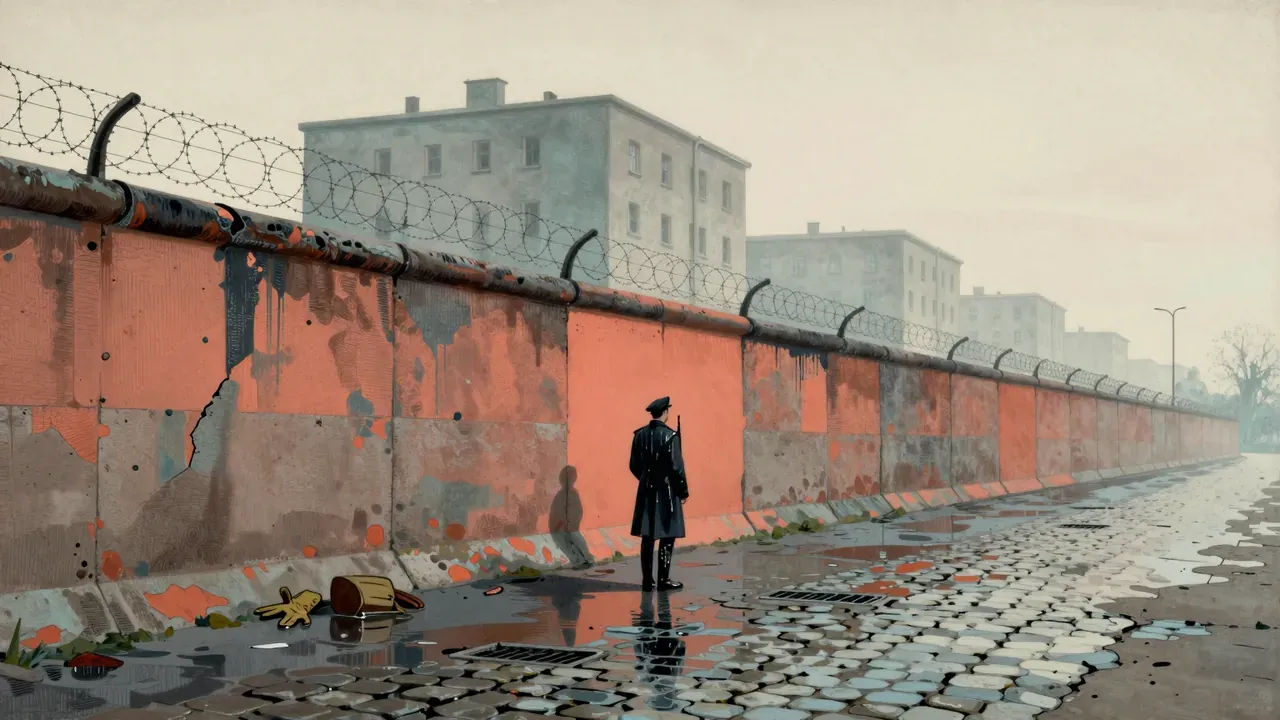
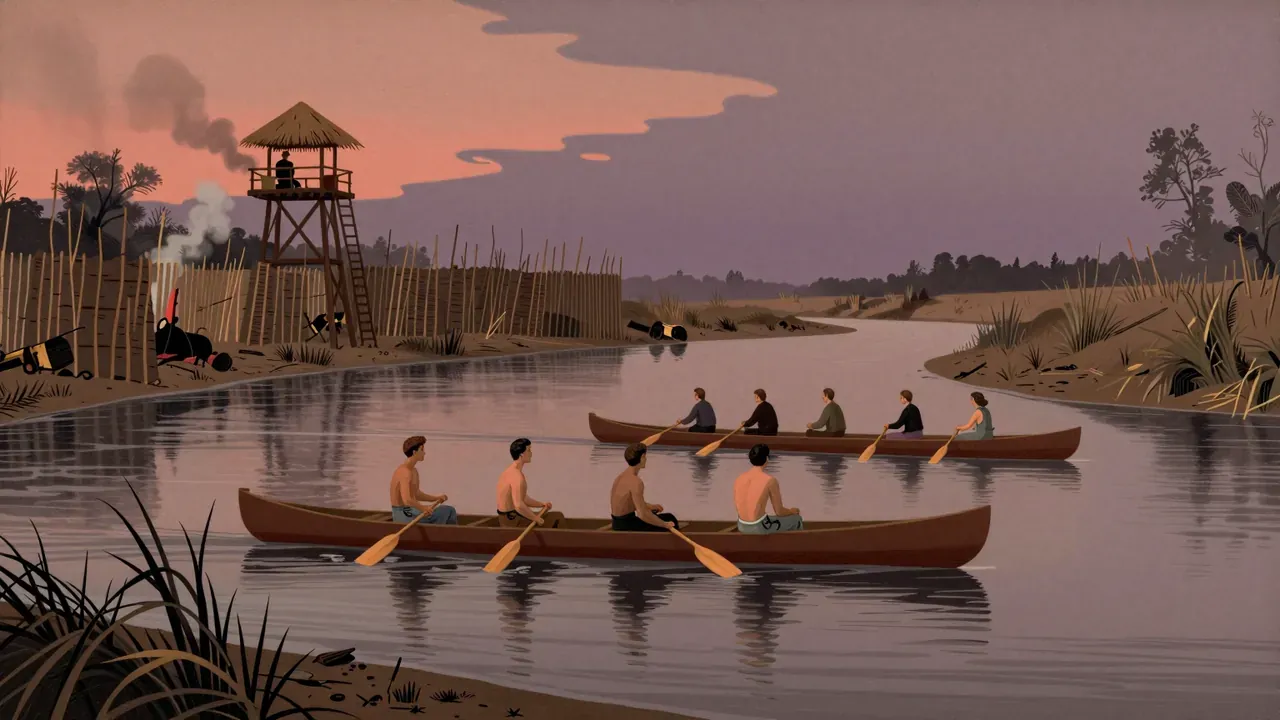
Samurai Spy is a 1965 Japanese period thriller set in the fragile interregnum between Sekigahara and Osaka, where political unity under Tokugawa masks deep fissures. Masahiro Shinoda directs not as a maker of swordplay spectacle but as a chronicler of moral erosion: the film treats espionage less as tradecraft than as symptom — of loyalty unmoored, identity dissolved, and peace bought at the cost of conscience. It adapts Koji Nakada’s novel with deliberate restraint, avoiding mythic elevation of its ninja protagonist Sasuke Sarutobi. Instead, it frames him as a man worn thin by repetition — a spy who sees every assignment as another loop in a cycle he cannot exit. The film’s ambition is structural and philosophical: to render suspicion as atmosphere, not plot device; to make allegiance feel like weather — shifting, inescapable, indifferent. It does not seek to resolve the Cold War allegory embedded in its 17th-century setting, nor to clarify who is ‘right’. Its project is to hold still long enough for the viewer to feel the weight of choosing — or failing to choose — a side when all sides are compromised. (148 words)
The grammar of doubt
The story moves through layered misdirection: Sasuke is drawn into intrigue despite his stated refusal, then framed, then compelled to investigate the framing — all while the lines between Tokugawa and Toyotomi operatives blur beyond legibility. Kōji Takahashi plays Sasuke with minimal inflection, his face often half-shadowed, his decisions deferred until the last possible frame. Shinoda and screenwriter Yoshiyuki Fukuda deny exposition; motivations are implied through gesture, silence, or the sudden absence of music. Tōru Takemitsu’s score avoids leitmotif, favouring sparse koto phrases and unsettling silences that stretch taut across scenes. Cinematographer Kazuo Miyagawa keeps compositions tight and asymmetrical — doorways bisect faces, corridors recede into darkness, lantern light pools narrowly on hands rather than eyes. Editing is elliptical: a murder occurs off-screen, its aftermath shown in the slow closing of a shōji screen. Performances are internalised — Shintaro Ishihara’s Saizo speaks in clipped tones, Eitaro Ozawa’s Koremura listens more than he commands, and Misako Watanabe’s Okiwa moves with dancer’s economy, her loyalties unreadable by design. (152 words)
The look of it
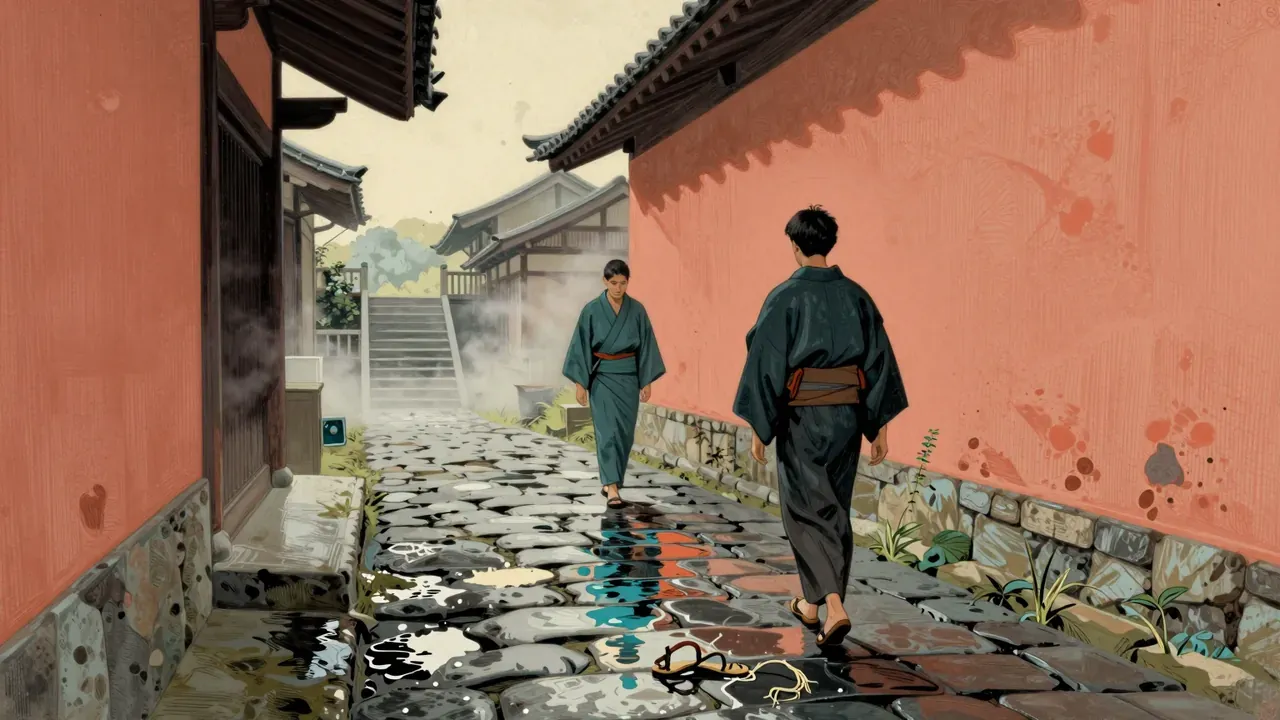
What lands is the film’s sustained unease — the sense that no character fully knows their own position, let alone anyone else’s. This is achieved not through twists but through accumulation: repeated visual motifs (a broken fan, a discarded sandal, the same temple bell heard from different distances), overlapping dialogue in crowded inns, and the way Shinoda lingers on faces after lines end. The magistrate Genba Kuni’s cruelty registers not in monologue but in how he adjusts his sleeve before ordering a Christian man paraded — a detail that lands because it is unexplained. Takemitsu’s music underscores this: a single plucked string recurs like a question that never receives an answer. The film’s refusal to name truth — even in its final shots — feels earned, not evasive. It trusts the viewer to sit with ambiguity, and rewards that patience with texture: the grain of tatami, the dampness of rain-slicked cobbles, the way candlelight catches sweat on a forehead just before a lie is told. These are not flourishes but functions — each element calibrated to deepen the impression that certainty is the first casualty of war, even after the fighting stops. (156 words)
The shape of absence
What does not land is the film’s attempt to anchor its moral drift in romance. Though Wikidata classifies Samurai Spy as a romance film, the relationship between Sasuke and Okiwa lacks development, chemistry, or narrative consequence — it appears as motif rather than motive, introduced late and resolved without emotional weight. The subplot involving the orphan Omiyo and priest Joshinji offers thematic resonance about innocence amid corruption, but remains structurally detached, its scenes brief and unconnected to the central espionage thread. Some supporting characters — notably Sakon Takatani and Tatewaki Koriyama — are sketched in broad strokes, their ideological positions asserted rather than dramatised. The film’s commitment to opacity occasionally crosses into obscurity: a key confrontation between Sasuke and Nojiri hinges on unstated prior knowledge, leaving the viewer adrift without sufficient visual or behavioural cues to reconstruct intent. Where ambiguity serves theme, here it risks alienation — not because the film refuses clarity, but because it withholds the tools needed to parse its own logic. A viewer expecting psychological continuity or narrative pay-off will find neither. (154 words)
The cost of stillness
The themes that matter are exhaustion, erasure, and the quiet violence of institutional loyalty. Sasuke’s weariness is not personal but historical — he embodies the rōnin condition before rōnin exist as a class: a skilled man whose purpose evaporates when the war ends, yet whose skills remain in demand for the next war. The film treats espionage as bureaucracy in disguise: messages are misdelivered, codes misread, informants betrayed not by malice but by administrative error or fatigue. Identity is fungible — names are aliases, faces are masked or obscured, uniforms borrowed and discarded. Shinoda frames this not as intrigue but as entropy: the gradual dissolution of meaning under pressure. The Cold War context is not metaphor but method — the film’s structure mirrors intelligence work itself, where verification is impossible, sources unreliable, and ‘truth’ a provisional consensus. Religion surfaces not as doctrine but as vulnerability: the persecuted Christian samurai is less a symbol of faith than of how easily belief becomes evidence. Power here does not declare itself; it waits, observes, and reassigns meaning after the fact. What persists is not ideology but habit — the muscle memory of deception, the reflex to watch one’s back, the instinct to speak in half-sentences. (149 words)
Who it is for
This film is for viewers who value atmosphere over exposition, who find tension in withheld information and resonance in unresolved endings. It suits those familiar with Japanese New Wave pacing — its 100 minutes unfold without hurry, trusting attention to accumulate like dust. It rewards patience with texture, not payoff. It is not for viewers who require clear antagonists, narrative closure, or emotional catharsis; those seeking kinetic action or romantic resolution will find its rhythms alienating. A viewer expecting the swashbuckling verve of Hiroshi Inagaki’s Samurai films or the moral clarity of Kurosawa’s jidaigeki will be frustrated — this is closer in tone to later works like Night and Fog in Japan than to mainstream chanbara. Someone who values Takemitsu’s scores or Miyagawa’s cinematography may approach it for craft alone, but the film asks for engagement with its ethical murk, not just appreciation of its surfaces. Those who dislike ambiguity as a principle — not as a device but as a worldview — should not begin here. (150 words)
The evening it asks for
Yes, it is worth your evening — provided you arrive without expectation of resolution and with willingness to sit inside uncertainty. Its power lies in how thoroughly it sustains a single mood: the low hum of distrust, the chill of compromised ideals, the quiet dignity of a man trying to walk away from systems that refuse to let him go. It repays close viewing not with answers but with sharper questions about what loyalty demands when no side holds the moral high ground. A viewer who dislikes its pace or opacity may argue it mistakes inertia for profundity — and that verdict would change if Shinoda had tightened the final act’s causal logic or given Okiwa’s arc structural weight. But as it stands, the film’s endurance is its argument: some conflicts do not end; they settle, like silt, into the foundations of peace. To watch it is to feel that sediment gather. (150 words)