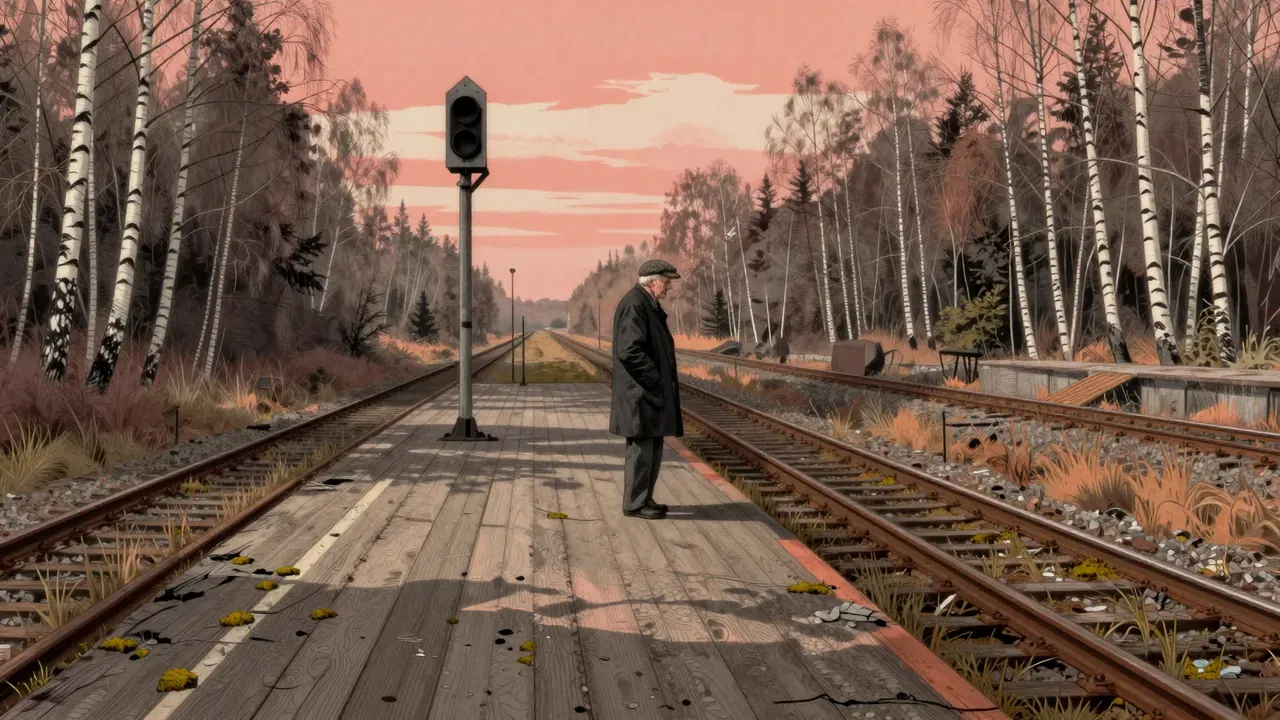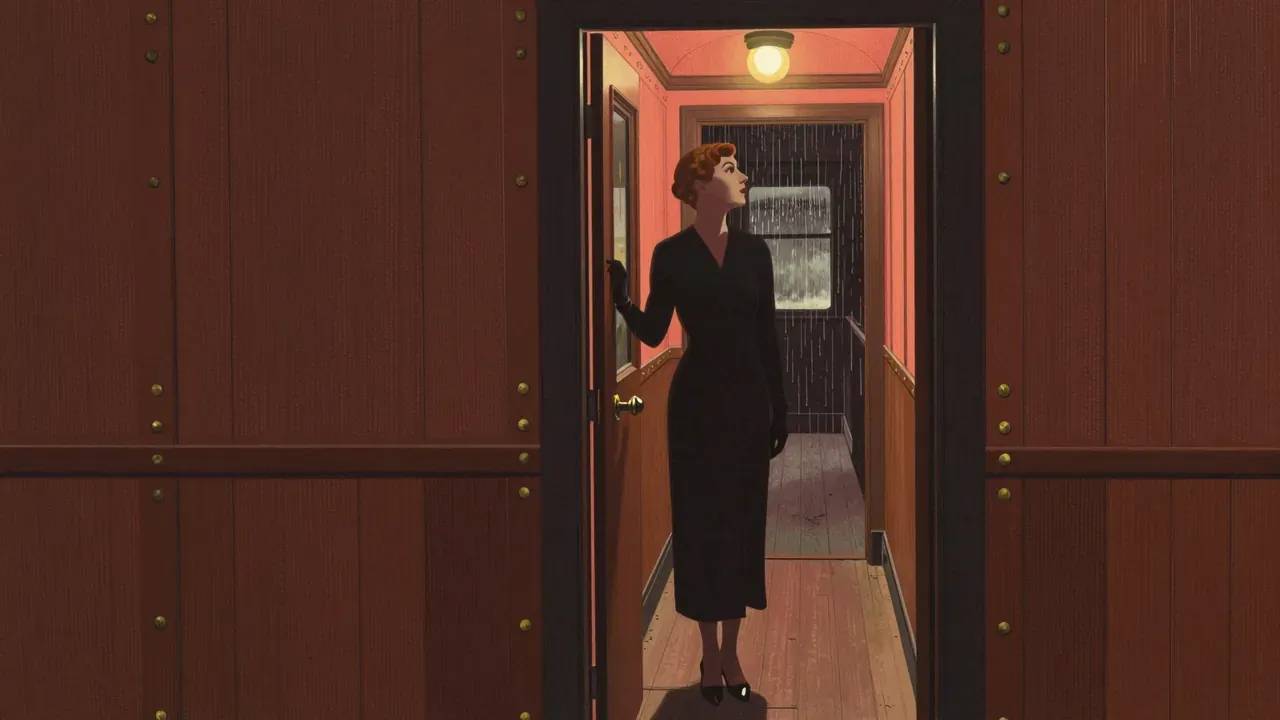
The look of it
Shanghai Express is a pre-Code Hollywood drama built around confinement, moral ambiguity, and the theatricality of identity. It uses a single train journey through war-torn China as a pressure chamber for social pretence and personal reckoning. Josef von Sternberg does not aim to depict China or its civil conflict with fidelity; the setting is a stylised backdrop, a series of shadowed compartments and fogged windows where colonial assumptions, gendered double standards, and racial hierarchies are exposed in close-up. The film’s ambition lies in condensing moral complexity into gesture and glance — a watch left open, a refusal to step into a warlord’s carriage, a knife drawn in silence. It treats narrative as secondary to atmosphere, dialogue as subordinate to posture. Its project is not realism but revelation: how power operates when civility is stripped away, and how dignity persists — or fails — under duress. It is less about what happens on the train than about who is allowed to speak, who is seen as human, and who bears the cost of others’ virtue. Word count: 148
How the people move
The story unfolds in tight, episodic confrontations, each passenger defined by a single trait that hardens under threat: the missionary’s hypocrisy, the gambler’s bluster, the opium dealer’s cowardice. Marlene Dietrich moves through it like smoke — still, deliberate, her voice low and uninflected, her face lit to hold both vulnerability and command. Anna May Wong’s Hui Fei is given fewer lines but more physical agency: her stillness before assault, her quiet return, her decisive act. Clive Brook’s Harvey remains emotionally constipated until the final station, his decency passive until forced into motion. James Wong Howe and Lee Garmes compose every frame in high-contrast chiaroscuro: ceilings vanish into black, faces emerge from gloom, doorways become thresholds between complicity and resistance. Von Sternberg directs with surgical control over composition and rhythm — no wasted movement, no unmotivated cut. Frank Sullivan’s editing sustains tension without haste, letting silence linger longer than speech. The music by W. Franke Harling is functional, never intrusive, underscoring mood without dictating it. Word count: 152
Who holds the line
What lands most firmly is the film’s visual authority and its refusal to simplify its central women. Dietrich’s Shanghai Lily is neither redeemed nor punished for her past; she acts decisively, negotiates danger, and retains full authorship over her choices — including the choice to withhold truth. Wong’s Hui Fei is not a sacrificial figure but an avenger whose violence is presented without flourish or apology. The cinematography earns its Oscar: light doesn’t illuminate so much as sculpt, carving faces out of darkness and making architecture feel like character. The train itself becomes legible as a microcosm — first-class compartment as gilded cage, corridor as contested territory, Chang’s quarters as a space of violation and reversal. Even minor performances land with precision: Eugene Pallette’s Sam Salt is all nervous bravado, Lawrence Grant’s Carmichael all brittle certainty — both undone by circumstance. The film’s pacing, at eighty minutes, leaves no room for digression, and its compression makes every glance consequential. Word count: 154
Where it refuses to go
What does not land is the film’s treatment of China as setting rather than subject. Though Anna May Wong appears in a major role, the Chinese context remains ornamental: place names are vague, historical reference points are flattened, and the warlord’s motives are reduced to personal grievance. Warner Oland’s Henry Chang — played in yellowface — is a cipher of menace, his cruelty unmoored from political reality and his characterisation reliant on stereotype rather than psychology. The missionary’s condemnation of ‘fallen women’ is critiqued only in hindsight, never interrogated in real time. The film’s colonial gaze is consistent: Western passengers debate morality while Chinese characters act, suffer, or die offscreen. Even the Lincheng Incident, which inspired the plot, is stripped of its actual complexity — no mention of the 300 Chinese hostages, no engagement with their fates. The film’s feminism and moral nuance do not extend to its racial framing, which remains fixed in the assumptions of its studio and era. Word count: 156
What the train carries
The themes that matter are performance as survival, the instability of reputation, and the asymmetry of moral weight. Shanghai Lily’s name is a label imposed by others, yet she reclaims it not by denying it but by acting within its terms — choosing when to speak, when to submit, when to strike. Hui Fei’s arc insists that courage need not be vocal to be decisive. The film dissects how respectability functions as currency: Carmichael’s piety grants him authority until he is proven wrong; Baum’s wealth offers no protection; Harvey’s professional status shields him only until Chang decides otherwise. Race and colonialism operate as structural forces, not subtext — they determine who is questioned, who is believed, who is touched, who is killed. The film’s enduring interest lies in how it exposes the fragility of hierarchy when the train stops moving: in that suspension, old roles dissolve and new ones are forged in silence, sacrifice, or steel. Word count: 149
Who it speaks to
This film is for viewers who value visual discipline, performative restraint, and morally unresolved storytelling. It rewards attention to composition, timing, and the weight of withheld information. It suits those familiar with early sound-era craft and willing to sit with discomfort — particularly the discomfort of watching racial caricature coexist with feminist insight. It is not for viewers seeking historical accuracy, psychological realism, or narrative transparency. Those who require clear moral alignment or empathetic identification with every protagonist will find its detachment alienating. Anyone unsettled by yellowface, colonial framing, or the eroticisation of coercion should approach with caution. A viewer who values character depth over exposition may still reject its stylisation as coldness. Change the casting, the script’s racial scaffolding, or the director’s visual austerity, and the film would be a different proposition — but none of those things were altered in 1932, and this brief judges the film as made. Word count: 150
Why it stays with you
Yes, it is worth your evening — provided you watch it as a crafted object, not a documentary or a progressive statement. Its eighty minutes pass without slack, its images remain potent ninety years on, and its central performances resist easy categorisation. It repays slow viewing: the way Dietrich’s hand rests on a seatback, the exact moment Wong turns her head before entering Chang’s quarters, the way light falls across Brook’s forehead as he realises what Lily has done. It is not ‘entertaining’ in the conventional sense, nor does it offer catharsis — but it does deliver coherence, control, and consequence. Those who expect resolution or uplift will leave dissatisfied. Those who accept that some films are less about answers than about the precision with which questions are posed will find it rich. Its value lies in what it achieves within its limits, not in what it fails to transcend. Word count: 149