filmbriefs
Highest rated

All briefs

2035 briefs · 26452 min · 1825–1920 on page 20 of 22
13:00

Mr. Freedom

William Klein · 1969

William Klein’s 1969 Mr. Freedom is a French-made English-language satirical comedy starring Albert Augier as a US vigilante sent to France to combat communism — and to enforce a ‘white wall of freedom’. With Delphine Seyrig, Donald Pleasence, and Daniel Cohn-Bendit, it deploys inflatable villains, supermarket embassies, and nuclear brinkmanship to dissect Cold War rhetoric, white nationalism, and the theatricality of power. Pierre Lhomme shot it; Michel Colombier scored it. It is abrasive, uncompromising, and deliberately exhausting — less a story than a sustained political provocation.
13:00

Mr. Thank You

Hiroshi Shimizu · 1936

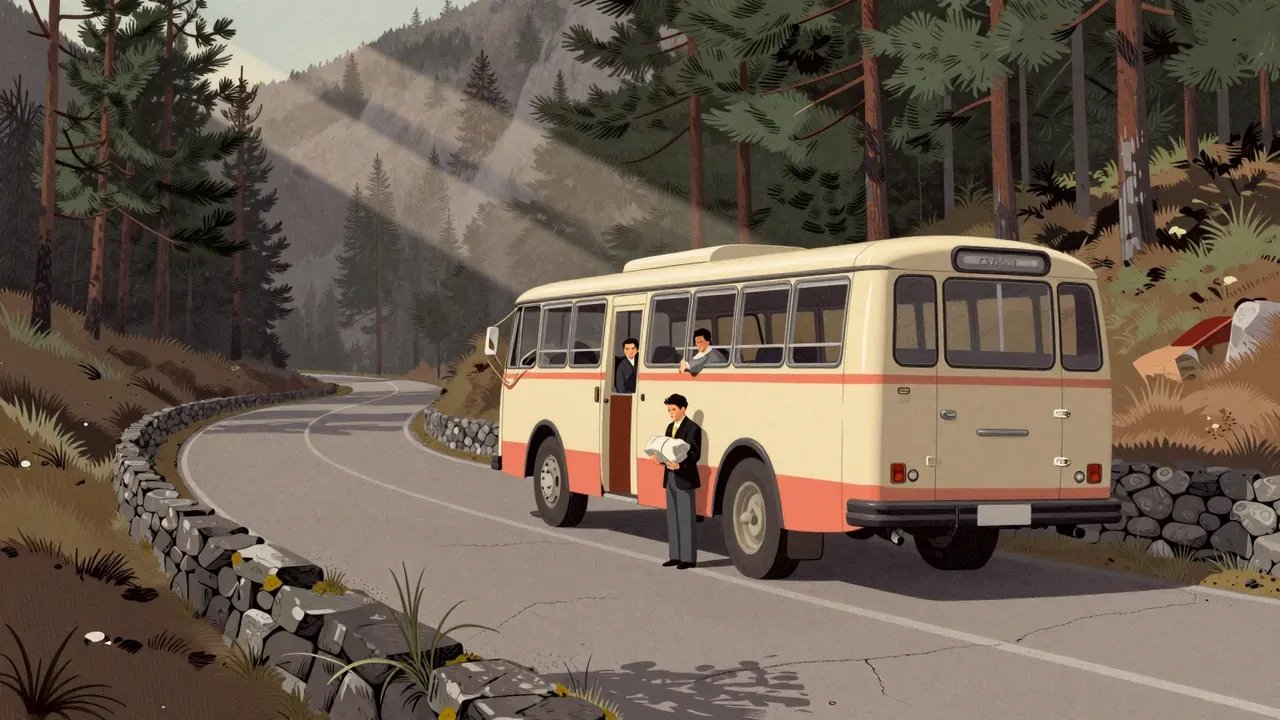
Hiroshi Shimizu’s 1936 film follows a bus driver nicknamed Mr. Thank You on a journey from rural Izu to Tokyo. Along the way, passengers reveal fragments of their lives — a mother preparing to sell her daughter, a Korean woman arranging her father’s funeral, migrants returning from the city. Shot on location with restrained performances and unadorned cinematography by Isamu Aoki, the film observes poverty, mobility, and quiet endurance without moralising or resolving. Based on a Yasunari Kawabata short story, it expands the source into a broader, though uneven, social portrait.

13:00

Naqoyqatsi

Godfrey Reggio · 2002

Naqoyqatsi (2002), the final film in Godfrey Reggio’s Qatsi trilogy, uses digitally manipulated archive footage and Philip Glass’s cello-led score to argue that modern life operates under a regime of ‘civilized violence’: abstraction, competition, and technological acceleration displacing embodied reality. Edited by Jon Kane and produced by Reggio, it abandons the observational style of its predecessors for a collage of stock, surveillance, and CGI imagery. Its reception was divided — critics called it the trilogy’s weakest — yet its formal rigour and thematic persistence make it a singular, unsettling document of early-digital consciousness.

13:00

Night on Earth

Jim Jarmusch · 1991

Night on Earth (1991) is Jim Jarmusch’s anthology film following five taxi rides across Los Angeles, New York, Paris, Rome, and Helsinki, all occurring over the same night. Each vignette centres on a temporary, often fraught, bond between driver and passenger. Shot on location with minimal intervention, it prioritises quiet observation over plot, using natural light, sparse music by Tom Waits, and unhurried performances to explore miscommunication, class, mortality, and fleeting kinship. Though uneven in impact—its Paris and Rome segments falter linguistically and tonally—the film’s cumulative power lies in its restraint and specificity.

13:00

Nouvelle Vague

Richard Linklater · 2025

Richard Linklater’s Nouvelle Vague dramatises the 23-day production of Jean-Luc Godard’s Breathless in 1959, using black-and-white 35 mm film, the Academy ratio, and a script by Laetitia Masson. Starring Zoey Deutch as Jean Seberg and Guillaume Marbeck as Godard, it focuses on logistical friction, creative disagreement, and the material conditions of a film that would redefine cinema — not as myth, but as work.

13:00

Nowhere

Gregg Araki · 1997

Gregg Araki’s 1997 surrealist teen film Nowhere follows a day in the lives of Los Angeles college students whose realities blur with alien visitations, televised sermons, and violent ruptures. Stylised, saturated, and deliberately unmoored from narrative cause and effect, it is the final chapter of Araki’s Teenage Apocalypse trilogy — a controlled descent into emotional and visual extremity, sustained by tight editing, a defining alt-rock soundtrack, and a cast performing in tones of weary detachment.

13:00

One-Eyed Jacks

Marlon Brando · 1961

Marlon Brando’s 1961 Western One-Eyed Jacks follows Rio, a bandit seeking revenge on his former mentor Dad Longworth, now sheriff of Monterey. Shot in VistaVision across California and Mexico, it foregrounds psychological tension over action, with Brando starring and directing. Though critically mixed on release and commercially disappointing, its reputation has deepened over decades for its atmospheric realism, complex male relationships, and formal restraint. Restored in 4K in 2016, it remains Brando’s only film behind the camera.

13:00

One Hour with You

Ernst Lubitsch, George Cukor · 1932

One Hour with You (1932) is a Paramount romantic musical comedy directed by Ernst Lubitsch with George Cukor, starring Maurice Chevalier and Jeanette MacDonald. Adapted from Lothar Schmidt’s play and Lubitsch’s own 1924 film, it follows a Parisian doctor whose marital calm is gently disrupted by his wife’s flirtatious friend. With Oscar Straus’s score and Samson Raphaelson’s script, it prioritises wit, timing, and surface elegance over psychological depth — a polished, pre-Code exercise in controlled charm.

13:00

One Hundred and One Nights

Agnès Varda · 1995

Agnès Varda’s One Hundred and One Nights (1995) is a French comedy essay-film set over 101 nights at a château belonging to Simon Cinéma, a centenarian film veteran whose fading memory blurs reality and reel. Starring Michel Piccoli and featuring cameos from Marcello Mastroianni, Anouk Aimée, Alain Delon, and others, it weaves scripted scenes with archival clips and playful allusion to celebrate cinema’s first hundred years — not as chronicle, but as collective, tactile memory.

13:00

Parade

Jacques Tati · 1974

Made for Swedish television in 1974, Parade is Jacques Tati’s final film — a low-budget, studio-bound circus revue starring Tati as Monsieur Loyal. Filmed at Stockholm Cirkus using mixed video and film stocks, it abandons narrative for a sequence of gags, mime, juggling, music and audience interaction. Gunnar Fischer’s unshowy cinematography and Charles Dumont’s light score support Tati’s precise physical comedy. Though slender in scope compared to PlayTime or Trafic, it is a deliberate return to fundamentals: gesture, timing, shared attention.

13:00

Paris Belongs to Us

Jacques Rivette · 1961

Jacques Rivette’s 1961 debut is a slow-burning, enigmatic drama set among Parisian artists haunted by unexplained deaths and whispered conspiracies. Shot in natural light and real locations, it sustains a mood of existential and political unease without offering explanations — treating paranoia as ambient, collective, and structurally embedded.

13:00

Pigsty

Pier Paolo Pasolini, Sergio Citti · 1969

Pigsty is a 1969 dual-narrative allegory co-directed by Pier Paolo Pasolini and Sergio Citti. One strand follows a mute, cannibalistic youth on Mount Etna around 1500; the other traces Julian, a listless German industrialist’s son who retreats into a pigsty in 1967. Shot in Italy and Germany with stark cinematography and near-silent editing, the film draws a structural parallel between premodern violence and postwar consumer fascism — not through argument, but through relentless, unrelieved juxtaposition.

13:00

Place de la République

Louis Malle · 1974

Louis Malle’s 1974 documentary Place de la République observes daily life at its namesake Paris square with fixed cameras, natural sound, and no narration. Eschewing context or commentary, it treats duration and routine as primary subjects — a rigorous, unsentimental study of public space as lived, uninterpreted time.

13:00

Poetic Justice

John Singleton · 1993

Poetic Justice is John Singleton’s 1993 romantic road film following Justice (Janet Jackson), a grieving poet and hairdresser, on a journey from South Los Angeles to Oakland with friends and postal workers Lucky (Tupac Shakur) and Chicago (Joe Torry). Shot by Peter Lyons Collister and scored by Stanley Clarke, it attempts to centre Black women’s emotional lives within the ‘hood film’ tradition. Though criticised for narrative slack and exposition-heavy writing, it endures for its textured portrayal of grief, care and quiet connection — anchored by Jackson and Shakur’s restrained, resonant performances.

13:00

Police Story 2

Jackie Chan · 1988

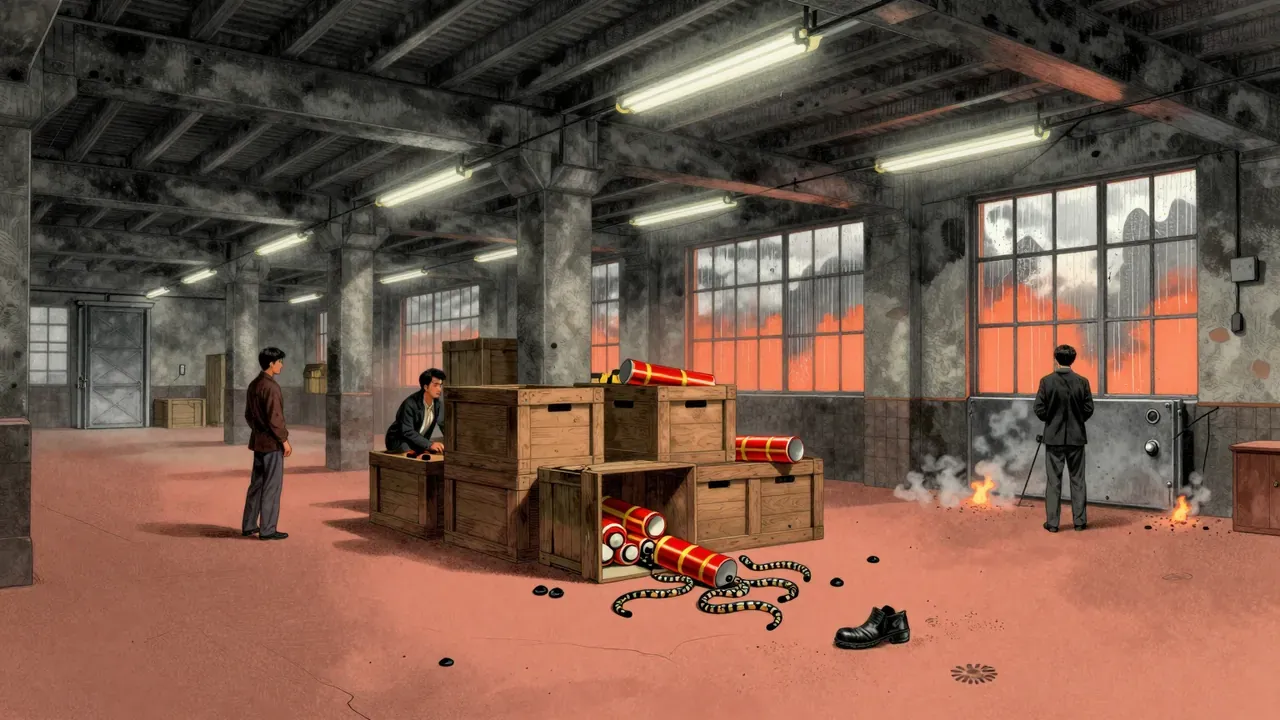
Jackie Chan’s 1988 sequel trades the first film’s procedural texture for streamlined stunt logic: Ka-kui is demoted, provoked, resigns, then re-enters a bomb plot that culminates in the mall explosion and fireworks warehouse finale. Written by Chan and Edward Tang, shot by Arthur Wong, and awarded Best Action Choreography at the 1989 Hong Kong Film Awards, it delivers physical clarity over psychological depth — a film where every punch lands because the ground beneath it was measured first.

13:00

Port of Flowers

Keisuke Kinoshita · 1943

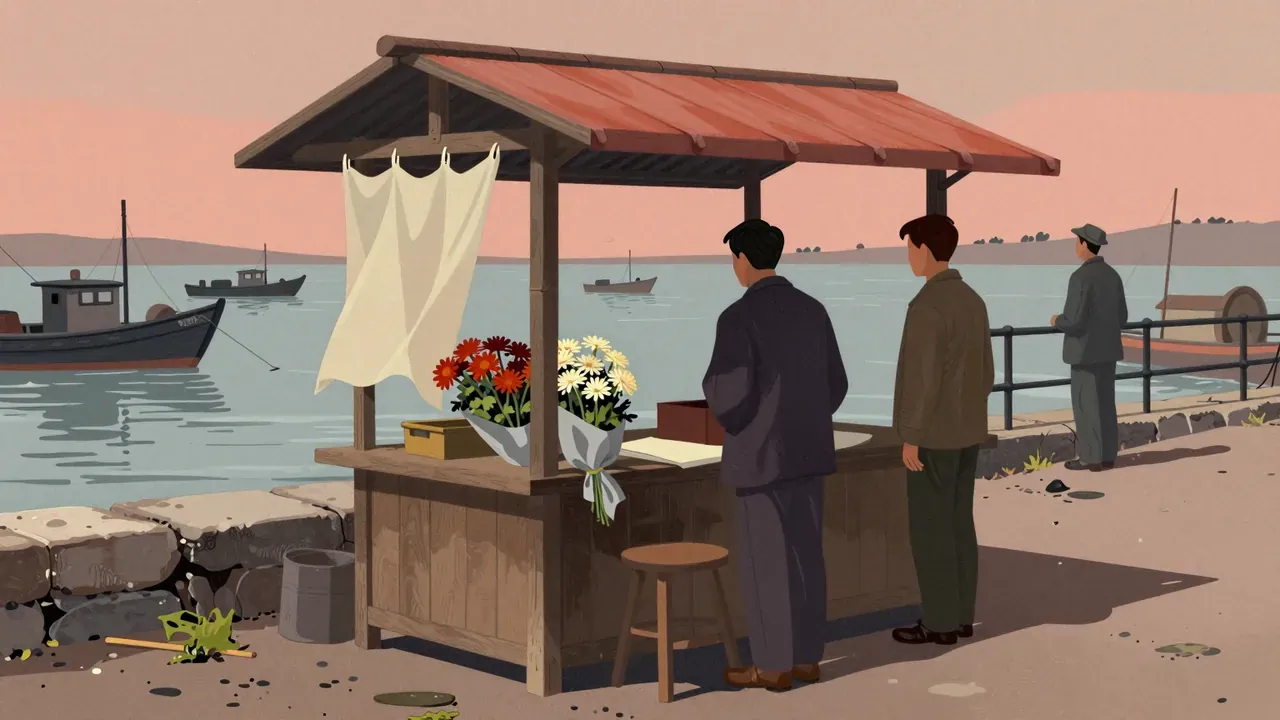
Port of Flowers (1943), directed by Keisuke Kinoshita for Shochiku, is a restrained domestic drama set in a Japanese port town during wartime. Starring Eitarō Ozawa and Ken Uehara, it traces quiet exchanges between two men bound by memory, duty, and proximity rather than plot. With no credited score and minimal sound design, the film relies on duration, composition, and performance to evoke continuity amid uncertainty. Its themes — care as routine, loyalty as repetition, time as tide — emerge through accumulated detail, not exposition. It is neither propaganda nor protest, but a sustained act of attention to what endures when history narrows.

13:00

Powaqqatsi

Godfrey Reggio · 1988

A 1988 non-narrative documentary directed by Godfrey Reggio, Powaqqatsi observes labour, ritual and urban flux across Africa, Asia and Latin America, scored by Philip Glass. With no dialogue or exposition, it builds meaning through rhythm, scale and repetition — proposing transition, not progress or decay, as its central condition.

13:00

Prince of Broadway

Sean Baker · 2008

Sean Baker’s 2008 debut Prince of Broadway follows Lucky, a New York street vendor, after his ex-girlfriend brings their young son into his life. Shot on digital with minimal resources, it relies on behavioural nuance and environmental texture rather than plot mechanics. Though its second act sags and some relationships remain underdeveloped, the film’s commitment to quiet observation — and Adu’s understated performance — yields moments of genuine, unforced emotional weight.

13:00

Putney Swope

Robert Downey Sr. · 1969

Putney Swope (1969), written and directed by Robert Downey Sr., follows Arnold Johnson as Putney Swope, the sole Black board member who accidentally becomes head of an ad agency. Renaming it Truth and Soul, Inc., he fires the white staff, bans harmful clients, and commissions surreal, colour-saturated commercials — all while being voiced by Downey himself. The film’s low-budget aesthetic, jagged editing, and deadpan absurdity target advertising, corporate liberalism, and racial tokenism. Though uneven in pacing and reliant on period-specific references, its structural rigour and thematic persistence earned it preservation in the US National Film Registry.

13:00

Quadrille

Sacha Guitry · 1938

A 1938 French comedy written and directed by Sacha Guitry, Quadrille follows a Paris newspaper editor whose carefully balanced domestic life unravels when an American film star arrives at his hotel. Staged with clockwork timing and performed with understated wit, it treats romance and professional life as interchangeable roles in a refined, self-contained dance.

13:00

Querelle

Rainer Werner Fassbinder · 1982

Rainer Werner Fassbinder’s 1982 Querelle is a highly stylised, studio-bound adaptation of Jean Genet’s novel, starring Brad Davis as a murderous sailor navigating a closed world of erotic power games. Shot in lurid expressionist colour, it privileges symbolic repetition and artificial lighting over narrative logic or psychological realism. Though divisive, it stands as Fassbinder’s most uncompromising formal statement — a film less about story than about the weight of gesture, colour, and silence.

13:00

Real Life

Albert Brooks · 1979

Albert Brooks’ 1979 directorial debut is a dry, structural satire in which a filmmaker embeds himself with the Yeager family to document 'real life' for a year. Using helmet-mounted cameras and clinical oversight, the project unravels as intrusion replaces observation, ethics erode, and the family withdraws. The film’s strength lies in its precise, unblinking exposure of power imbalances in media — not its jokes.

13:00

Ride the Pink Horse

Robert Montgomery · 1947

Robert Montgomery’s 1947 adaptation of Dorothy B. Hughes’ novel relocates film noir from urban decay to the fiesta-drenched towns of northern New Mexico. A wounded veteran named Gagin arrives to blackmail a mobster for his friend’s death, but finds himself dependent on local people — Pancho, Pila, and others — whose loyalties and languages he does not share. Shot by Russell Metty and anchored by Thomas Gomez’s restrained performance, the film treats place as moral terrain and refuses easy resolution.

13:00

Ride with the Devil

Ang Lee · 1999

Ang Lee’s 1999 film Ride with the Devil follows young Missouri bushwhackers during the Civil War, adapting Daniel Woodrell’s novel with deliberate slowness and minimal exposition. Shot by Frederick Elmes and written by James Schamus, it foregrounds domestic endurance over battlefield drama, treating violence as rupture rather than climax. Its themes — loyalty, freedom, gendered labour, and the weight of time — emerge through gesture and silence, not speech. Though commercially overlooked and structurally demanding, it remains a singular, unhurried portrait of war’s human residue.

13:00

Rolling Thunder Revue: A Bob Dylan Story by Martin Scorsese

Martin Scorsese · 2019

Rolling Thunder Revue is a hybrid concert film and constructed documentary, built from restored 1975 tour footage shot by Dylan for Renaldo and Clara, intercut with contemporary interviews — some real, some fictionalised. Directed by Martin Scorsese and produced by Jeff Rosen, it deliberately obscures the line between fact and invention, inviting the viewer to question memory, myth, and the ethics of archival storytelling. Released by Netflix in 2019, it foregrounds performance over biography and texture over testimony.

13:00

Room 999

Lubna Playoust · 2023

Room 999 (2023) is a French documentary directed by Lubna Playoust, filmed in a single hotel room with thirteen international filmmakers — including Cronenberg, Wenders, Farhadi and Ramsay — speaking freely over one day. Shot by Marine Atlan and scored by Pierre Rousseau, it offers no narration, no subtitles for overlapping dialogue, no biographical context. Its rigour lies in restraint: fixed framing, natural light, unedited duration. It captures conversation not as argument but as collective thinking-in-motion — hesitant, contradictory, embodied. A film about presence, not position.

13:00

Rusty Knife

Toshio Masuda · 1958

A 1958 Nikkatsu crime drama starring Yūjirō Ishihara as an ex-convict resisting vengeance while a district attorney pursues the same syndicate. Directed by Toshio Masuda with tight, low-key noir aesthetics and a script by Shintarō Ishihara, it foregrounds moral exhaustion over action, ambiguity over catharsis.

13:00

Salò, or the 120 Days of Sodom

Pier Paolo Pasolini · 1975

Pasolini’s final film transposes de Sade’s novel to Mussolini’s puppet republic in 1944, depicting four fascist libertines who subject eighteen teenagers to escalating physical, sexual and psychological violation over four months. Structured like Dante’s Inferno and shot with forensic restraint by Tonino Delli Colli, it treats cruelty as bureaucracy and the body as commodity. Its themes — power, nihilism, fascism, consumerism — are rendered without ornament or release. Controversial on release and banned in several countries, it remains a demanding, unflinching inquiry into authority unmoored from consequence.

13:00

Samaritan Zatoichi

Kenji Misumi · 1968

Released in December 1968 and directed by Kenji Misumi, Samaritan Zatoichi is the twelfth instalment in Daiei’s long-running series. Starring Shintarō Katsu as the blind masseur-swordsman, it follows his intervention in a rural town exploited by a yakuza gang. Less concerned with action than with ethical presence, the film uses restraint — in pacing, performance and composition — to explore endurance, reciprocity and the weight of unspoken complicity. Cinematographer Kazuo Miyagawa frames scenes with quiet clarity, and the script avoids exposition in favour of implication. Though some character arcs remain underdeveloped, the film’s cumulative power resides in its unwavering commitment to stillness as moral grammar.

13:00

Sanshiro Sugata Part II

Akira Kurosawa · 1945

Made in early 1945 for Toho, Sanshiro Sugata Part II follows Sanshiro Sugata’s training under judo’s founder, culminating in a symbolic boxing match against an American sailor. Directed and edited by Akira Kurosawa, with cinematography by Takeo Itō and music by Seiichi Suzuki, the film departs from the spiritual focus of its predecessor to assert judo’s moral and physical supremacy amid Japan’s wartime collapse. Its fights are tightly structured, its ideology unambiguous, its landscape functional rather than lyrical. It is less a character study than a controlled rehearsal of triumph — historically revealing, aesthetically restrained.

13:00

Sapphire

Basil Dearden · 1959

A 1959 British crime drama in which police investigate the murder of a light-skinned Black woman who passed as white, using the procedural format to expose everyday racism in post-war London. Directed by Basil Dearden from a script by Janet Green, it balances genre conventions with social observation, winning Best British Film at the 1960 BAFTAs and an Edgar Award for its screenplay.

13:00

Satyricon

Federico Fellini · 1969

Federico Fellini’s 1969 Satyricon is a hallucinatory, episodic reimagining of Petronius’s fragmented Roman satire. Shot on studio sets and Italian locations by Giuseppe Rotunno, it follows Encolpius (Martin Potter) through a surreal, decaying empire — brothels, banquets, pirate ships, deserts — where power is performative, desire transactional, and narrative secondary to texture and tone. Nino Rota’s score and Danilo Donati’s production design anchor its visceral, dreamlike logic.

13:00

Saving Face

Alice Wu · 2004

Alice Wu’s 2004 debut follows Wilhelmina Pang, a Chinese American surgeon in New York, as she navigates her closeted relationship with dancer Vivian Shing and her mother Hwei-Lan’s unexpected pregnancy. Filmed on location in Flushing, Queens, and performed in English and Mandarin, it treats intergenerational tension, queer identity, and cultural expectation with lightness and precision. Though criticised for underdeveloped professional detail and predictable structure, its strength lies in understated performances, authentic bilingualism, and a vision of change that accumulates in glances, pauses, and small, unheralded choices.

13:00

Scandal

Akira Kurosawa · 1950

A painter and a singer sue a tabloid for fabricating their romance, but the case becomes secondary to their lawyer’s moral collapse under financial pressure. Set in postwar Tokyo, Scandal pivots from social critique to intimate tragedy, anchored by Takashi Shimura’s performance as a man whose conscience frays in silence. Kurosawa’s direction is plain and precise; Fumio Hayasaka’s score uses irony to deepen unease. The film’s power lies not in its courtroom climax, but in the weight of unspoken guilt, a sick child’s breath, and torn posters fading on a city wall.

13:00

Schizopolis

Steven Soderbergh · 1996

Steven Soderbergh’s 1996 experimental comedy Schizopolis uses fractured narrative, invented speech, and role-swapping to dissect communication, identity, and social scripting. Shot in Baton Rouge on a $250,000 budget, it follows three overlapping perspectives — office worker Fletcher Munson, dentist Dr. Korchek, and exterminator Elmo Oxygen — all played by Soderbergh and his collaborators. With no traditional credits and a deliberately alienating style, it tests the limits of audience patience and narrative coherence.

13:00

Secrets of Women

Ingmar Bergman · 1952

Ingmar Bergman’s 1952 drama Secrets of Women unfolds across three interwoven stories told by women waiting for their husbands. Shot in crisp black-and-white by Gunnar Fischer, it observes marital tension, concealed pregnancy, and marital farce with quiet precision — avoiding grand statements in favour of subtle shifts in tone, glance, and silence.

13:00

Shallow Grave

Danny Boyle · 1994

Danny Boyle’s 1994 debut follows three Edinburgh flatmates who conceal the death of a mysterious new tenant and keep his suitcase of cash — only to fracture under paranoia, betrayal and violence. Shot in Glasgow on a £1 million budget, it’s a tightly wound crime thriller built on escalating consequences, not character revelation.

13:00

Shampoo

Hal Ashby · 1975

Shampoo (1975), directed by Hal Ashby and co-written by Warren Beatty and Robert Towne, follows a Beverly Hills hairdresser across Election Day 1968 as he navigates overlapping affairs, professional frustration, and the quiet hypocrisies of his social circle. Shot by László Kovács and scored with period-appropriate music by Paul Simon and others, it uses romantic comedy structure to dissect sexual politics, class, and the erosion of public attention. Though commercially successful and awarded an Oscar for Lee Grant’s supporting performance, its satire remains understated, its pacing deliberate, its conclusions ambiguous.

13:00

Sólo Con Tu Pareja

Alfonso Cuarón · 1991

Alfonso Cuarón’s 1991 debut Sólo Con Tu Pareja is a tightly wound Mexican romantic comedy about a womanising ad man falsely diagnosed with AIDS, whose ensuing suicide pact with a disillusioned flight attendant becomes an accidental path to emotional honesty. Shot by Emmanuel Lubezki and edited by him too, it balances farce, satire, and quiet realism across 94 minutes in Mexico City. Though it won Ariel Awards and international festival acclaim, it was delayed for domestic release until 1993. Its strength lies in formal control and moral unsentimentality — not in likable characters or tidy resolutions.

13:00

Son of Godzilla

Jun Fukuda · 1967

Son of Godzilla (1967) is Toho’s eighth kaiju film and the first to introduce Minilla, Godzilla’s infant son. Directed by Jun Fukuda on a reduced budget, it shifts focus from nuclear anxiety to familial bonding and juvenile spectacle. Filmed in Guam and Japan, it features marionette Kamacuras, a giant spider named Kumonga, and a deliberately oversized Godzilla suit to convey paternal stature. Marchan the Dwarf performs Minilla, whose design draws from contemporary manga. Though critics were divided and the film underperformed in the US, it remains a distinctive artefact of Shōwa-era genre filmmaking — tactile, economical, and quietly committed to its own small-scale logic.

13:00

Spiritual Kung Fu

Lo Wei · 1978

Spiritual Kung Fu (1978) is a Lo Wei-directed Hong Kong martial arts comedy starring Jackie Chan as Yi-lang, a quick-witted Shaolin student who learns the Five Style Fists from five spectral masters. Made early in 1978 but shelved due to budget constraints, it was released late that year after Chan’s breakout success in Snake in the Eagle’s Shadow. The film blends slapstick, modest special effects, and clear, varied fight choreography — with Yuen Biao uncredited as one of the ghostly instructors. Its strengths lie in Chan’s timing and the functional integration of animal-style kung fu; its weaknesses are thin motivation and underdeveloped lore. It is a transitional work — technically assured, thematically light, and structurally coherent.

13:00

Stowaway in the Sky

Albert Lamorisse · 1960

Albert Lamorisse’s 1960 film Stowaway in the Sky blends documentary footage and staged flight to follow a ten-year-old boy drifting over France in his grandfather’s balloon. Shot in Eastman Color and Dyaliscope, it privileges observation over narrative, using silence, wide shots and unhurried editing to recast landscape as texture and altitude as perspective. Maurice Fellous’s cinematography and Jean Prodromidès’s score sustain its gentle, airborne logic — one that values wonder without condescension, and drift without destination.

13:00

Straw Dogs

Sam Peckinpah · 1971

Straw Dogs (1971), directed by Sam Peckinpah, follows an American mathematician and his wife who retreat to a Cornish farmhouse, only to face escalating hostility from locals culminating in a violent siege. Adapted from Gordon M. Williams’s novel, the film strips away moral framing to examine the erosion of pacifism under sustained provocation. Shot by John Coquillon and scored by Jerry Fielding, it relies on meticulous realism, rhythmic editing and restrained performances — particularly Dustin Hoffman’s and Susan George’s — to build dread. Its themes of territoriality, masculinity and civilised self-deception remain urgent, though its handling of agency and motivation continues to divide viewers.

13:00

Suzanne's Career

Éric Rohmer · 1963

Éric Rohmer’s 1963 film follows two Parisian students — the timid Bertrand and the brash Guillaume — as they encounter Suzanne, a working woman studying Italian at night. Guillaume seduces and discards her; Bertrand watches, judges, and gradually finds his certainties undermined when Suzanne moves on — not in defeat, but in quiet self-determination. Shot in black-and-white with non-professional actors, it is the second of Rohmer’s Six Moral Tales: a precise, unsentimental study of self-deception, class, and the asymmetry of moral attention.

13:00

Sweet Movie

Dušan Makavejev · 1974

Dušan Makavejev’s 1974 Sweet Movie is a formally rigorous, politically charged art film split between two women — a Canadian beauty queen and a communist sailor — whose bodies become battlegrounds for competing systems of control. Shot in France, Canada and West Germany, it uses surreal juxtaposition, taboo imagery and real archival footage to dissect the failures of both capitalism and state socialism. Controversial on release and banned in multiple countries, it remains a demanding, uncompromising work that prioritises dialectical tension over narrative resolution.

13:00

Take Aim at the Police Van

Seijun Suzuki · 1960

Take Aim at the Police Van is a 1960 Japanese action thriller directed by Seijun Suzuki for Nikkatsu. Built around the ambush of a police van transporting a prisoner, it deploys tight framing, high-contrast monochrome cinematography by Kazuo Miyagawa, and a lean script by Shinichi Sekizawa to sustain relentless forward motion. Starring Michitaro Mizushima, Misako Watanabe, and Shinsuke Ashida, it exemplifies Nikkatsu’s ‘borderless’ studio strategy — genre stripped of local specificity, yet anchored in Tokyo’s post-war textures. Its strength lies in formal discipline, not character depth or thematic elaboration.

13:00

Terror of Mechagodzilla

Ishirō Honda · 1975

Terror of Mechagodzilla (1975), directed by Ishirō Honda and written by Yukiko Takayama, is the fifteenth Godzilla film and the last of the Shōwa era. It follows Interpol agents confronting a reclusive scientist, his cyborg daughter Katsura, and the rebuilt Mechagodzilla 2 — all converging in a Tokyo battle with Godzilla and the newly awakened Titanosaurus. With a tight 83-minute runtime, functional performances, and Teruyoshi Nakano’s tactile special effects, it trades spectacle for narrative compression and bodily stakes. Akira Ifukube’s score and Yoshitami Kuroiwa’s editing sustain urgency, while themes of technological possession and paternal control anchor its modest ambitions. Released by Toho, it remains the franchise’s least financially successful entry.

13:00

That Hamilton Woman

Alexander Korda · 1941

That Hamilton Woman (1941) is a black-and-white historical drama directed by Alexander Korda, starring Vivien Leigh and Laurence Olivier as Emma Hamilton and Horatio Nelson. Made in Hollywood during British exile, it uses the Napoleonic Wars as allegory for Britain’s resistance to Nazi Germany. The film follows Emma’s rise from courtesan to national symbol and her tragic decline, framed by Nelson’s principled defiance and ultimate sacrifice at Trafalgar. Crafted with restraint and moral clarity, it prioritises thematic weight over psychological nuance or visual spectacle.

13:00

The Atomic Submarine

Spencer Gordon Bennet · 1959

The Atomic Submarine (1959) is a low-budget American sci-fi film following the USS Tigershark as it hunts an extraterrestrial underwater saucer near the North Pole. Directed by Spencer Gordon Bennet and written by Orville H. Hampton, it centres on a moral and tactical clash between a career submariner and a pacifist scientist, culminating in a biologically grounded alien threat and a technically inventive resolution. Shot in six days with stock footage and minimal sets, it prioritises conceptual cohesion over visual grandeur.

13:00

The Ballad of Gregorio Cortez

Robert Milton Young · 1982

Robert Milton Young’s 1982 biographical Western follows Gregorio Cortez, a Mexican-American farmer wrongly accused after a fatal misunderstanding in 1901 Texas. Starring Edward James Olmos and shot on authentic locations—including the real Gonzales courthouse—the film unfolds with documentary restraint, charting twelve years of trials and imprisonment. Its strength lies in structural clarity and historical fidelity; its limitation, in emotional distance. Preserved by the Library of Congress in 2022, it is a rigorous, unsentimental account of jurisdictional violence on the US-Mexico border.

13:00

The Baron of Arizona

Samuel Fuller · 1950

Samuel Fuller’s 1950 film tells the true-ish story of James Reavis, a conman who forged documents to claim the Arizona Territory as his personal fiefdom. Starring Vincent Price as the fastidious fraudster, it unfolds as a procedural drama of paper, precedent, and institutional hesitation — less a Western than a forensic study of how authority is manufactured, authenticated, and eventually unmade.

13:00

The Beales of Grey Gardens

Albert Maysles, David Maysles · 2006

Assembled from footage shot for the 1975 documentary Grey Gardens but left unused for over thirty years, The Beales of Grey Gardens (2006) offers a slower, denser immersion in the East Hampton home of ‘Big’ and ‘Little’ Edie Beale. Directed by Albert and David Maysles and edited by Ian Markiewicz, it deepens rather than reinterprets the original — showing more of the mother-daughter dynamic, their caretaker Jerry, friend Lois Wright, and the ever-present cats, including the origin of the famous hallway fire. With no narration or context, it trusts observation over exposition.

13:00

The Big Boss

Lo Wei · 1971

Bruce Lee’s 1971 debut for Golden Harvest, filmed in rural Thailand, establishes his screen persona through disciplined physicality rather than dialogue or psychology. Directed by Lo Wei with functional clarity, it tells a simple revenge story among Chinese migrant workers, using sparse settings and extended fight sequences to foreground Lee’s stamina, timing and presence. Its strengths lie in authenticity of effort and historical significance as the catalyst for Hong Kong’s martial arts boom — not in narrative depth or thematic elaboration.

13:00

The Big Chill

Lawrence Kasdan · 1983

The Big Chill follows eight former University of Michigan students reuniting in Beaufort, South Carolina, after the suicide of their friend Alex. Over a weekend, conversations, silences, and a soul-heavy soundtrack reveal how their 1960s idealism has settled into early-1980s compromises — in love, work, and self-understanding. Directed by Lawrence Kasdan and shot by John Bailey, it relies on ensemble performance and atmospheric craft rather than plot mechanics. Though its portrait of baby boomer disillusionment remains culturally resonant, its structural gaps and tonal consistency divide opinion. Selected for the National Film Registry in 2025, it endures as a study in emotional realism over narrative resolution.

13:00

The Blob

Irvin Yeaworth · 1958

The Blob is a concise, location-bound science fiction horror film from 1958, directed by Irvin Yeaworth and starring Steve McQueen in his first leading role. It follows a gelatinous extraterrestrial organism that crashes to Earth near a Pennsylvania town, consumes people, grows larger, and is ultimately contained — not destroyed — by extreme cold. Made on a modest budget with practical effects and regional filming, it prioritises escalation, spatial logic, and collective response over psychology or allegory. Its enduring appeal lies in its structural rigour, tonal consistency, and refusal to over-explain.

13:00

The Comfort of Strangers

Paul Schrader · 1990

Paul Schrader’s 1990 adaptation of Ian McEwan’s novel, scripted by Harold Pinter, follows an English couple drawn into the unsettling hospitality of a Venetian couple. With Natasha Richardson, Christopher Walken, and Rupert Everett, it builds dread through restraint: sparse dialogue, controlled framing, and the gradual erosion of autonomy. Not a thriller of action but of atmosphere, it asks the viewer to sit with ambiguity, not solve a mystery.

13:00

The Count of the Old Town

Sigurd Wallén, Edvin Adolphson · 1935

The Count of the Old Town (1935) is a Swedish studio comedy directed by Sigurd Wallén and Edvin Adolphson, adapted by Arthur Natorp from his stage play. Starring Valdemar Dalquist as a penniless artist mistaken for nobility, it unfolds in Stockholm’s Gamla Stan with light farce, ensemble timing, and Jules Sylvain’s waltz-led score. Ingrid Bergman appears in her first speaking film role, though her part is brief and underdeveloped. The film prioritises rhythm and social observation over plot or psychology.

13:00

The Darjeeling Limited

Wes Anderson · 2007

Three estranged brothers travel across Rajasthan aboard a luxury train one year after their father’s death, attempting a spiritual journey that unravels into confrontation, failure, and quiet reconnection. Directed by Wes Anderson and shot by Robert Yeoman, the film employs symmetrical framing, a muted palette, and carefully curated music to explore inherited mourning, cultural distance, and the slow dissolution of control. It premiered at Venice in 2007, grossed $35.3m on a $17.5m budget, and received generally favourable reviews.

13:00

The Daytrippers

Greg Mottola · 1996

The Daytrippers (1996) follows Eliza and her family on a single-day drive from Long Island to Manhattan after she finds evidence her husband may be having an affair. Written and directed by Greg Mottola, it unfolds through tightly observed interactions, subtle performances, and a refusal to resolve its tensions neatly. With a strong ensemble cast and a focus on emotional authenticity over plot mechanics, it captures the friction and tenderness of family life under uncertainty.

13:00

The Delta

Ira Sachs · 1996

Ira Sachs’s 1996 debut The Delta follows 18-year-old Lincoln Bloom as he drifts from his straight-laced life in Memphis into queer spaces and a relationship with Vietnamese immigrant Minh Nguyen. Shot on grainy 16 mm, the film avoids exposition and psychology in favour of texture, silence, and place. Its strengths lie in atmosphere and restraint; its weaknesses in underdeveloped relationships and structural thinness after the river journey begins. A quiet, unsentimental portrait of emergent desire — not as revelation, but as recalibration.

13:00

The Devil's Eye

Ingmar Bergman · 1960

Ingmar Bergman’s 1960 fantasy comedy The Devil’s Eye follows Satan’s attempt to cure a metaphysical stye by sending Don Juan to seduce a Swedish vicar’s chaste daughter. Shot by Gunnar Fischer and scored by Erik Nordgren, it treats heaven, hell, and bourgeois domesticity as adjacent departments in the same administrative system — dry, precise, and quietly subversive.

13:00

The Doom Generation

Gregg Araki · 1995

Gregg Araki’s 1995 film follows three teenagers — Jordan, Amy and X — as they flee after a convenience-store killing, descending into surreal violence across Los Angeles. Shot on a $800,000 budget, it merges teen drama, black comedy and thriller tropes with deadpan delivery, saturated night photography, and a synth-heavy score. Though critically divided and commercially unsuccessful, it endures as a defining artefact of 1990s American indie cinema — less for its plot than for its uncompromising tonal architecture.

13:00

The Drum

Zoltan Korda · 1938

The Drum (1938), directed by Zoltan Korda, is a British Technicolor adventure set on the North-West Frontier during the Raj. It follows Prince Azim’s flight after his uncle’s coup, his alliance with British officer Carruthers, and his climactic warning on the Sacred Drum. Filmed partly on location in Chitral and North Wales, it foregrounds military detail and imperial certainty — making it a revealing artefact of pre-war British cinema, not a neutral period piece.

13:00

The Emperor Jones

Dudley Murphy · 1933

Dudley Murphy’s 1933 adaptation of Eugene O’Neill’s play stars Paul Robeson as Brutus Jones, a charismatic Black man whose self-made empire on a Caribbean island collapses under guilt, fear and colonial myth. Made independently in New York with a Black-led creative core, it attempts avant-garde cinematic translation — using music, rhythm and stylised performance — but is hampered by Hays Office censorship, budget limits and narrative additions. Though structurally uneven, Robeson’s performance and the film’s formal ambition secure its place as a culturally significant, aesthetically urgent work.

13:00

The End of Summer

Hélène Angel · 2019

Hélène Angel’s 2019 French drama The End of Summer observes a small group across a few days in a provincial house. With no score, minimal dialogue, and restrained performances from Talid Ariss, Christiane Millet, Bernard Le Coq and Maël Rouin Berrandou, it builds meaning through duration, silence and physical detail — not plot or revelation.

13:00

The Fearless Hyena

Jackie Chan · 1979

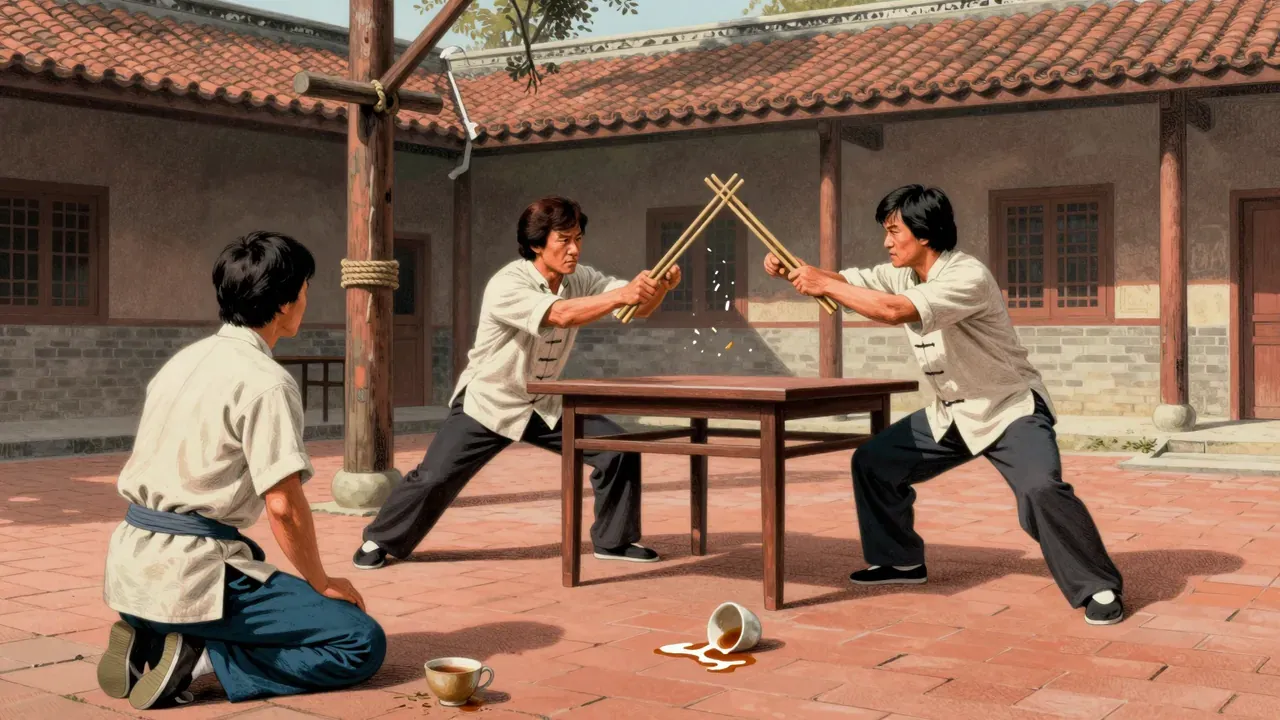
Jackie Chan’s 1979 directorial debut is a Hong Kong action comedy built around his own body as instrument, prop, and punchline. It follows a reckless martial arts student whose flaws drive both plot and fight design — gambling, disobedience, and emotional volatility become narrative engines. Though its revenge arc feels tacked-on and its supporting characters thinly drawn, its slapstick-infused choreography (chopsticks duels, cross-dressing, ‘Emotional Kung-Fu’) remains inventive and influential. Shot with functional clarity by Jung-Shu Chen and scored with brassy levity by Frankie Chan, it is a pragmatic, performer-first film — uneven, urgent, and foundational.

13:00

The Girl Can't Help It

Frank Tashlin · 1956

Frank Tashlin’s 1956 comedy stars Jayne Mansfield as a mobster’s girlfriend launched into stardom against her will. Built around performances by Little Richard, Fats Domino, Gene Vincent and others, it uses animation-derived timing and saturated DeLuxe Color to frame rock ’n’ roll as both commodity and spectacle. Though narratively thin and romantically inert, its visual confidence and musical density make it a singular artifact of mid-century media logic.

13:00

The Haunted Strangler

Robert Day · 1958

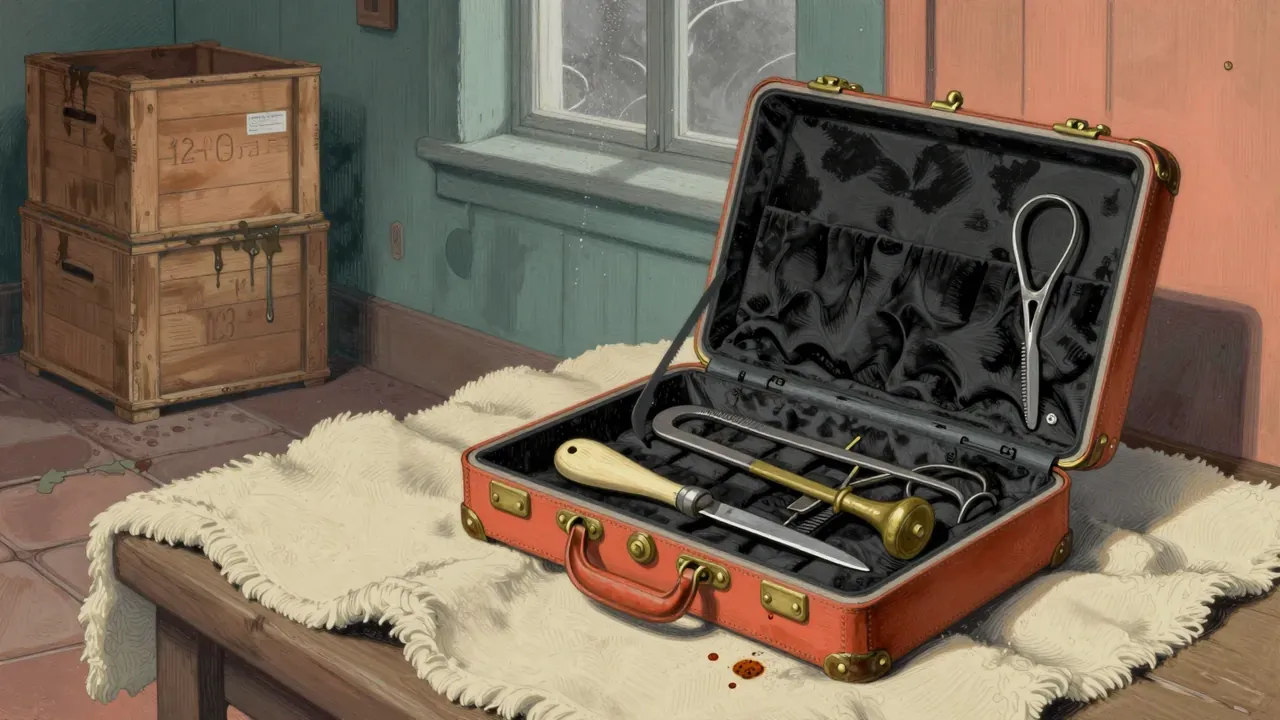
The Haunted Strangler (1958) is a British horror film directed by Robert Day and starring Boris Karloff. Set in Victorian London, it follows novelist James Rankin as he re-examines the conviction of Edward Styles, the so-called Haymarket Strangler. His investigation leads him to uncover his own forgotten identity as Dr. Tennant, the real murderer — a revelation triggered by handling the Strangler’s knife. Shot at Walton Studios, with music by Buxton Orr and editing by Peter Mayhew, the film blends procedural detail with psychological horror, prioritising atmosphere and physical transformation over shock or gore.

13:00

The Idiot

Akira Kurosawa · 1951

Akira Kurosawa’s 1951 The Idiot transposes Dostoevsky’s novel to post-war Hokkaido, following Kameda — a gentle, epileptic man returning home — as he becomes entangled with Taeko, a woman discarded by her wealthy patron, and Akama, a volatile heir. Shot in stark black-and-white and severely cut by Shochiku from its original 265-minute form, the film relies on restraint: minimal music, extended silences, performances built on micro-gestures. Its moral force lies in what it refuses — explanation, catharsis, resolution — making it a demanding but deeply resonant portrait of integrity in a compromised world.

13:00

The King of Kings

Cecil B. DeMille, Arthur Rosson, Frank Urson · 1927

Cecil B. DeMille’s 1927 silent film The King of Kings depicts the life of Jesus with deliberate spectacle—Technicolor halos, sepia-tinted sermons, hand-coloured torchlight—and a script that blends Gospel texts with invented moments designed to jolt contemporary audiences. H. B. Warner stars as a calm, physically present Christ; Jacqueline Logan plays a vividly secular Mary Magdalene. Though structurally episodic and occasionally blunt in its symbolism, the film remains a landmark of studio-era craft, theological address, and early colour technology.

13:00

The King of Marvin Gardens

Bob Rafelson · 1972

The King of Marvin Gardens (1972) follows depressive Philadelphia radio host David Staebler as he visits his charismatic, scheming brother Jason in a decaying Atlantic City. Against the backdrop of soon-to-be-demolished hotels, Jason pitches a Hawaiian casino venture while tensions mount among the four adults sharing his suite. László Kovács’ muted cinematography and Bob Rafelson’s unhurried direction treat delusion as routine, not crisis — making this a film less about plot than about the weight of unfulfilled promise, both personal and architectural.

13:00

The Last Days of Disco

Whit Stillman · 1998

Whit Stillman’s 1998 drama follows a group of Ivy League graduates navigating Manhattan’s early-1980s club scene. Built on extended dialogue rather than plot, it examines how class, ideology, and self-presentation shape relationships in a world where moral certainty masks uncertainty. With flat lighting, restrained editing, and performances tuned to verbal nuance, it offers a dry, observant portrait of privilege in transition — one that rewards attention to subtext over spectacle.

13:00

The League of Gentlemen

Basil Dearden · 1960

Basil Dearden’s 1960 heist film assembles seven disgraced former army officers to rob a London bank. Built on Bryan Forbes’ script and anchored by Jack Hawkins, it prizes procedural precision over psychological depth, dry irony over moral judgement, and ensemble cohesion over individual revelation. Its strengths lie in tightly orchestrated set-pieces and consistent tone; its limits in underdeveloped characters and withheld emotional stakes.

13:00

The Life Aquatic with Steve Zissou

Wes Anderson · 2004

Wes Anderson’s 2004 film follows oceanographer Steve Zissou on a quixotic quest for revenge against a mythical shark. Stylised to the point of abstraction, it uses symmetry, deadpan delivery, and invented marine life to explore grief, paternal fantasy, and the erosion of authority. Though box-office unsuccessful and critically divided on release, it has since accrued a devoted following for its unwavering formal discipline and muted emotional resonance.

13:00

The Living Magoroku

Keisuke Kinoshita · 1943

Keisuke Kinoshita’s 1943 film The Living Magoroku is a tightly controlled drama set in a traditional swordsmith’s workshop during wartime Japan. With no credited cast or composer, it relies on gesture, duration, and compositional restraint to explore transmission, duty, and the ethics of making. Its power lies in what it omits—psychological exposition, overt politics, dramatic climax—as much as in what it shows: the physical labour of preserving form under constraint.

13:00

The Love That Remains

Hlynur Pálmason · 2025

Set over one year in Iceland, The Love That Remains follows a family adjusting to separation with quiet, unsentimental attention. Directed and shot on 35 mm by Hlynur Pálmason, it stars Saga Garðarsdóttir and Sverrir Guðnason as parents navigating shared custody, their children absorbing the shift in atmosphere more than in words. With no score-driven emotion or narrative climax, it builds meaning through repetition, texture, and the accumulated weight of small gestures.

13:00

The Man in Grey

Leslie Arliss · 1943

The Man in Grey (1943), directed by Leslie Arliss for Gainsborough Pictures, is a dual-timeline period drama adapting Eleanor Smith’s novel. In 1943 London, a Wren and an RAF pilot visit an auction; the event triggers a flashback to the early 1800s, where Clarissa Rohan’s loyalty to the ambitious, bitter Hesther Shaw sets in motion a chain of betrayal, coercion, and vengeance. Margaret Lockwood, James Mason, Phyllis Calvert, and Stewart Granger lead a cast defined by stark moral contrasts, supported by Arthur Crabtree’s expressive cinematography and a tightly wound studio aesthetic. It inaugurated the Gainsborough melodramas — escapist, emotionally direct, and formally assured.

13:00

The Mikado

Victor Schertzinger · 1939

The Mikado (1939) is a British Technicolor film adaptation of Gilbert and Sullivan’s 1885 comic opera, starring Martyn Green and members of the D’Oyly Carte Opera Company. Directed by Victor Schertzinger and produced by Geoffrey Toye, it preserves the original music and libretto with minimal alteration, using the London Symphony Orchestra and Marcel Vertès’s vivid art direction. Its strength lies in vocal precision and ensemble discipline; its limitation is its adherence to stage convention over cinematic language. It offers no cultural critique of its Japanese setting, treating it as decorative backdrop. A document of a performing tradition, not a reinterpretation.

13:00

The Model Couple

William Klein · 1977

William Klein’s 1977 film follows a 'model couple' subjected to relentless observation in a state-run experiment designed to engineer future society. With deadpan performances, sterile cinematography, and a score that veers between lounge jazz and electronic unease, it satirises surveillance capitalism, bureaucratic theatre, and media-driven reality before those terms existed — not through prophecy, but through forensic mimicry of their logic.

13:00

The Moment of Truth

Francesco Rosi · 1965

Francesco Rosi’s 1965 drama follows Miguel Romero, a young man from rural poverty who abandons farming for bullfighting in search of dignity and recognition. Shot with restrained realism by Di Venanzo, De Santis and Parolin, and performed largely by real bullfighters including Miguelín himself, the film avoids mythmaking in favour of procedural observation — tracing how ritual, class and visibility reshape identity. Linda Christian appears as an ambiguous outsider. Its themes centre on substitution, erasure and the cost of becoming legible in a hierarchical world.

13:00

The Most Beautiful

Akira Kurosawa · 1944

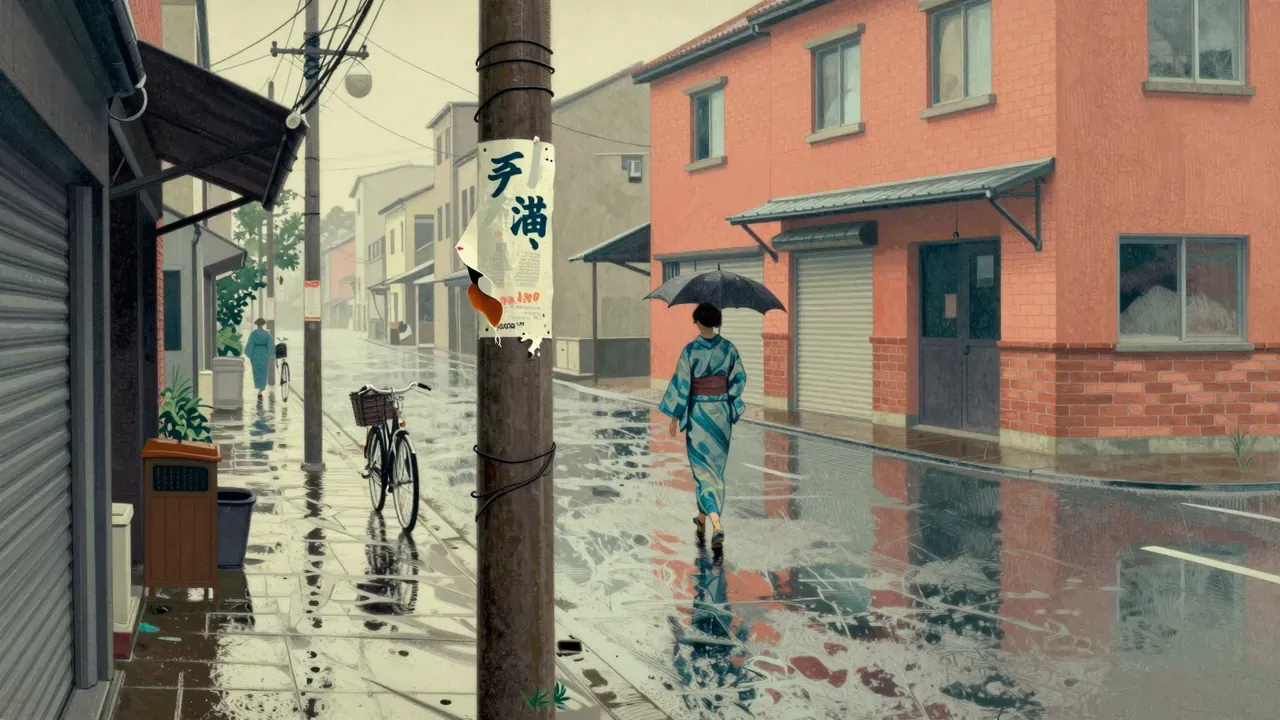
Akira Kurosawa’s 1944 film The Most Beautiful follows young women working at a Japanese optics factory during the Second World War. Shot on location with a semidocumentary approach, it depicts their collective effort to meet production targets, their dormitory life, and the personal costs of unwavering dedication. Though commissioned as propaganda, its austerity and focus on physical and emotional strain lend it an unexpected gravity — less a celebration of sacrifice than a quiet record of its weight.
13:00

The Mystic

Tod Browning · 1925

Tod Browning’s 1925 silent drama The Mystic follows a Hungarian carnival troupe recruited to run a fraudulent spiritualist act in New York. With Aileen Pringle and Conway Tearle, it explores belief as craft and deception as labour — avoiding horror tropes for moral ambiguity, slow pacing, and quiet performances. Shot by Ira H. Morgan and edited by Frank Sullivan, it sustains tension through restraint, not revelation. A surviving print was restored by Criterion in 2023 with a new score by Dean Hurley.

13:00

The Night Porter

Liliana Cavani · 1974

Liliana Cavani’s 1974 art film stars Dirk Bogarde and Charlotte Rampling as a former SS officer and a concentration camp survivor who reunite in postwar Vienna. Set almost entirely in a grand but decaying hotel, it explores power, memory, and eroticised dependency through restrained performances, Alfio Contini’s underlit cinematography, and Franco Arcalli’s elliptical editing. It avoids exposition and historical context, focusing instead on behavioural recurrence and moral ambiguity.

13:00

The Pleasures of the Flesh

Nagisa Ōshima · 1965

Directed by Nagisa Ōshima and released in 1965, The Pleasures of the Flesh follows a university graduate’s gradual withdrawal from responsibility, relationships, and self. Starring Katsuo Nakamura and Toshiko Higuchi, and scored by Joji Yuasa, it uses restraint, duration, and environmental texture to chart a descent that feels less like tragedy than quiet attrition. It belongs to Ōshima’s early, formally disciplined period — observational, unsentimental, and resistant to interpretation.
13:00

The Prince of Tides

Barbra Streisand · 1991

Barbra Streisand’s 1991 adaptation of Pat Conroy’s novel follows South Carolina teacher Tom Wingo (Nick Nolte) as he travels to New York to help his suicidal twin sister, guided by psychiatrist Susan Lowenstein (Streisand). Through therapy sessions and flashbacks, buried family trauma surfaces — violence, repression, and the long shadow of the Lowcountry. Though the film foregrounds romance over the novel’s sibling-centred depth, its power lies in restrained performances, Stephen Goldblatt’s naturalistic cinematography, and its unwavering focus on how silence shapes identity.

13:00

The Private Life of Don Juan

Alexander Korda · 1934

Alexander Korda’s 1934 film stars Douglas Fairbanks, aged 51, as an ageing Don Juan returning to Seville only to discover his name has become a public fiction. Adapted from Henry Bataille’s play by Frederick Lonsdale, it uses irony, restraint, and studio-era craft to explore reputation, ageing, and the quiet persistence of self amid erasure. Georges Périnal’s cinematography and Ernst Toch’s music support a tone of wry melancholy, anchored by Fairbanks’s physically diminished but emotionally precise performance.
13:00

The Rise of Catherine the Great

Paul Czinner · 1934

The Rise of Catherine the Great (1934) is a UK-produced biographical drama directed by Paul Czinner and produced by Alexander Korda. Starring Elisabeth Bergner as Catherine, Douglas Fairbanks Jr. as Grand Duke Peter, and Flora Robson as Empress Elizabeth, it adapts a 1912 Hungarian play to trace Catherine’s path from German princess to Russian empress. Shot by Georges Périnal with music by Ernst Toch, the film privileges interiority over action, restraint over spectacle, and performance over exposition.
13:00

The Rock

Michael Bay · 1996

The Rock is a 1996 action thriller directed by Michael Bay, set on Alcatraz Island, where a rogue Marine general threatens San Francisco with VX gas. An FBI chemist and a retired SAS operative must infiltrate the prison to disarm the rockets. Anchored by Sean Connery and Nicolas Cage, it prioritises spatial logic, procedural detail and moral calibration over political complexity or stylistic experimentation.
13:00

The Seventh Victim

Mark Robson · 1943

The Seventh Victim (1943) is a Val Lewton-produced RKO horror film directed by Mark Robson, following a young woman’s search for her missing sister in New York City, which leads her to a secretive Satanic cult called the Palladists. Shot in 24 days with restrained performances, Nicholas Musuraca’s shadow-heavy cinematography, and Roy Webb’s dissonant score, it sustains unease through implication and omission. Four scenes were cut in post-production, leaving narrative gaps that critics have long noted. Though commercially unsuccessful on release, it gained stature as a moody, morally ambiguous precursor to modern psychological horror.

13:00

The Shrouds

David Cronenberg · 2024

David Cronenberg’s 2024 film *The Shrouds* follows a widowed inventor who develops ‘GraveTech’, a technology that broadcasts live 3D images of decomposing corpses via modified shrouds. Set in Toronto and conceived as a response to the director’s own bereavement, the film explores grief as a physical, technological, and architectural condition — one that can be hacked, misrendered, and eroticised. With Vincent Cassel, Diane Kruger, and Guy Pearce, it sustains a tone of clinical unease, privileging conceptual rigour over narrative resolution.
13:00

The Story of Temple Drake

Stephen Roberts · 1933

Stephen Roberts’s 1933 adaptation of William Faulkner’s Sanctuary stars Miriam Hopkins as Temple Drake, a Southern woman whose recklessness leads to coercion, assault, and courtroom reckoning. Produced by Benjamin Glazer at Paramount, shot by Karl Struss, and adapted under strict pre-Code scrutiny, it softens the novel’s extremes but retains its moral unease — making it a key document of Hollywood’s transition into enforced restraint.

13:00

The Touch

Ingmar Bergman · 1971

Ingmar Bergman’s 1971 English-language debut follows Karin, a Swedish housewife whose affair with an American archaeologist unravels her assumptions about duty, desire, and selfhood. Shot on Gotland with Sven Nykvist, it privileges psychological nuance over plot, using restraint and silence to trace a woman’s slow, uncertain reclamation of agency. Though criticised at release for stiffness and imbalance, it remains a rare, transparent record of Bergman adapting his methods to new language, cast, and expectation.

13:00

The White Angel

Raffaello Matarazzo · 1955

Raffaello Matarazzo’s 1955 sequel The White Angel follows a wrongfully imprisoned woman’s return to society under a false name, her search for her lost child, and her slow reintegration into a world that punished her for motherhood. Starring Amedeo Nazzari and Yvonne Sanson, and shot by Tonino Delli Colli, it sustains emotional force through restraint — in performance, editing, and score — rather than escalation.

13:00

The Wicked Lady

Leslie Arliss · 1945

The Wicked Lady (1945) is a Gainsborough Pictures swashbuckler starring Margaret Lockwood as a bored noblewoman who becomes a highway robber. Directed and written by Leslie Arliss, it adapts Magdalen King-Hall’s novel into a tightly paced moral fable, where transgression is glamorous, consequence inevitable, and redemption absent. Shot at Gainsborough Studios and Blickling Hall, it relies on Jack E. Cox’s high-contrast cinematography, Terence Fisher’s brisk editing, and Hans May’s ironic score. Though criticised for thin supporting characters and abrupt plot turns, its enduring power lies in Lockwood’s commanding, physically assured performance and its unwavering commitment to its own logic.

13:00

The Wiz

Sidney Lumet · 1978

Sidney Lumet’s 1978 musical The Wiz recasts The Wizard of Oz in Harlem and a decaying, stylised New York City, starring Diana Ross and Michael Jackson. Though critically panned on release for its script, pacing, and direction, its bold production design, choreography, and performances have cemented its status as a culturally vital, if uneven, cult classic.

13:00

The X from Outer Space

Kazui Nihonmatsu · 1967

The X from Outer Space (1967) is a Japanese kaiju film directed by Kazui Nihonmatsu, produced under governmental tax incentives to promote Japanese genre cinema abroad. It follows a Martian spore that mutates into Guilala — a jet-headed, feathered monster — which rampages through Tokyo before being neutralised with a fictional compound and launched into solar orbit. Made with shared effects resources and minimal narrative scaffolding, it prioritises momentum and tactile spectacle over coherence or character. Released theatrically in Japan and later on US television, it has endured as a touchstone of earnest, low-budget tokusatsu.