filmbriefs
Highest rated

All briefs

2035 briefs · 26452 min · 961–1056 on page 11 of 22
13:00

The Social Network

David Fincher · 2010

The Social Network reconstructs the founding of Facebook through the two lawsuits that followed it, cutting between Harvard in 2003 and the depositions years later where Mark Zuckerberg, Eduardo Saverin, and the Winklevoss twins each give a different account of who invented what. David Fincher directs Aaron Sorkin's script, based loosely on Ben Mezrich's book, with Jesse Eisenberg as Zuckerberg and a score by Trent Reznor and Atticus Ross that treats a founding myth as something closer to a thriller.
13:00

The Thing

John Carpenter · 1982

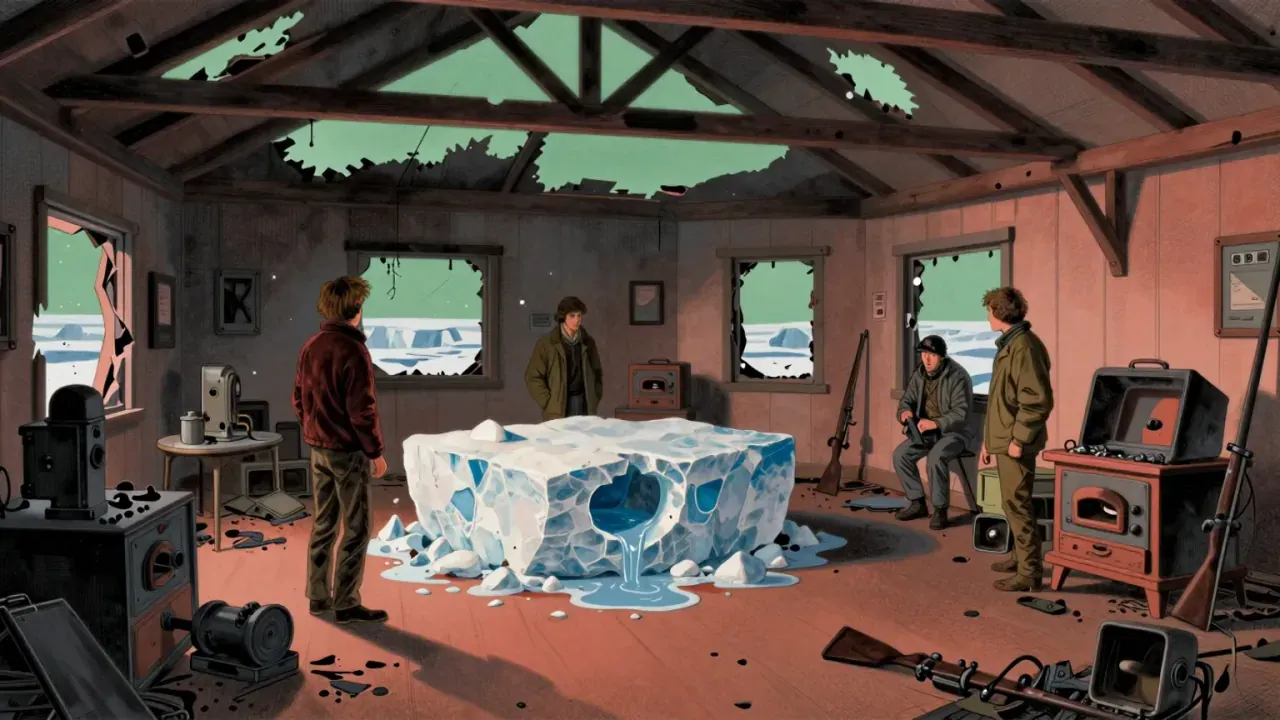
A helicopter pilot and a research crew at a remote Antarctic base find a shape-shifting alien freed from a Norwegian camp, and John Carpenter turns the ensuing hunt for the impostor into a study of paranoia as much as a monster film. Poorly received and a box-office loss on release, it has since been reassessed as one of the strongest science-fiction horror films made.

13:00

The Triplets of Belleville

Sylvain Chomet · 2003

The Triplets of Belleville follows an elderly Frenchwoman who reshapes her life around her grandson's obsessive cycling career, then pursues him across an invented city, an amalgam of New York, Montreal and Quebec City, after gangsters kidnap him mid-Tour de France. Sylvain Chomet's first feature, told almost entirely through pantomime, sound and song, cost $8 million, took $14.8 million worldwide, and earned two Academy Award nominations, including the first for a PG-13 animated feature.

13:00

The Truman Show

Peter Weir · 1998

Jim Carrey plays a man raised from birth inside a soundstage as the unwitting star of a round-the-clock broadcast, gradually noticing the cracks in a world built entirely around him.

13:00

The Wild Robot

Chris Sanders · 2024

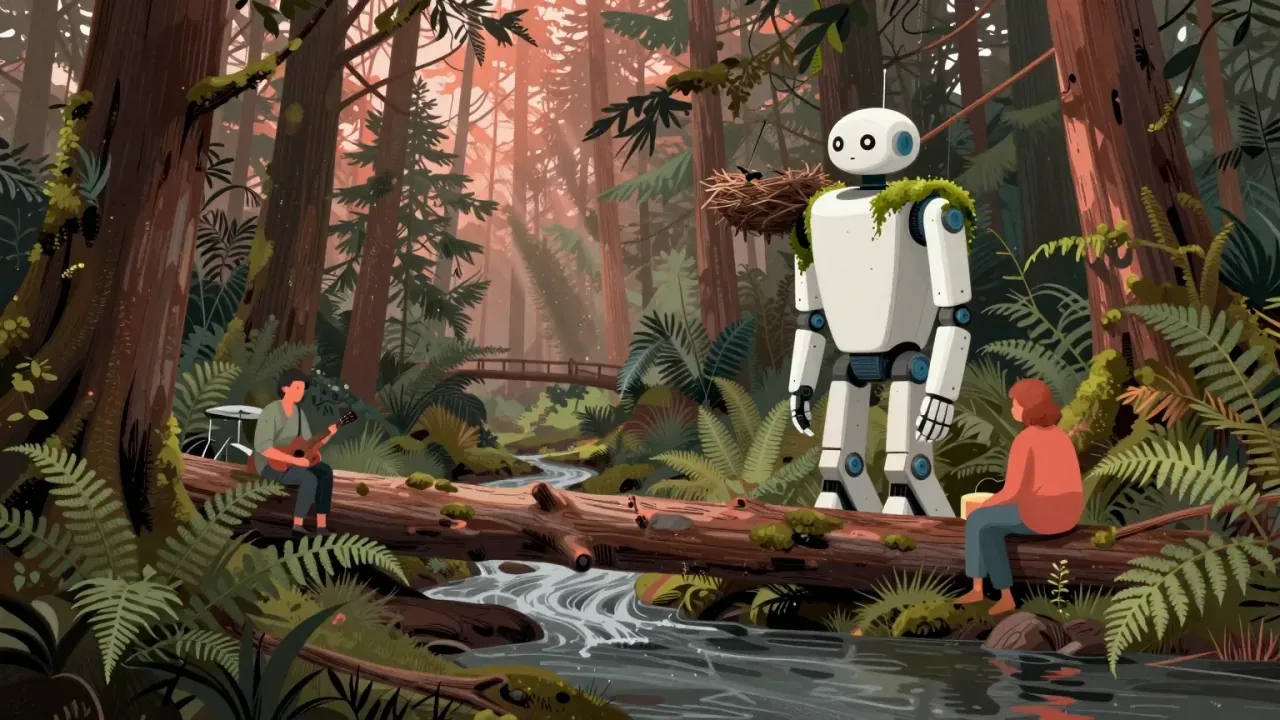
Shipwrecked on an uninhabited island, service robot Roz has to learn to survive among wildlife that first treats her as a monster, and ends up raising an orphaned gosling as her own. Chris Sanders adapted Peter Brown's 2016 novel with a hand-painted, watercolour visual style built to resemble Bambi filtered through Hayao Miyazaki.

13:00

Toy Story 2

John Lasseter, Lee Unkrich, Ash Brannon · 1999

Toy Story 2 has Woody stolen by a toy collector who plans to sell him to a Tokyo museum, forcing Andy's other toys into a rescue mission while Woody weighs eternal preservation against a childhood that will end. Originally planned as a direct-to-video cash-in, it was rebuilt into a theatrical Pixar film on a compressed nine-month schedule, going on to gross $497 million against a $90 million budget and a 100% Rotten Tomatoes score.

13:00

Wallace & Gromit: The Curse of the Were-Rabbit

Nick Park, Steve Box · 2005

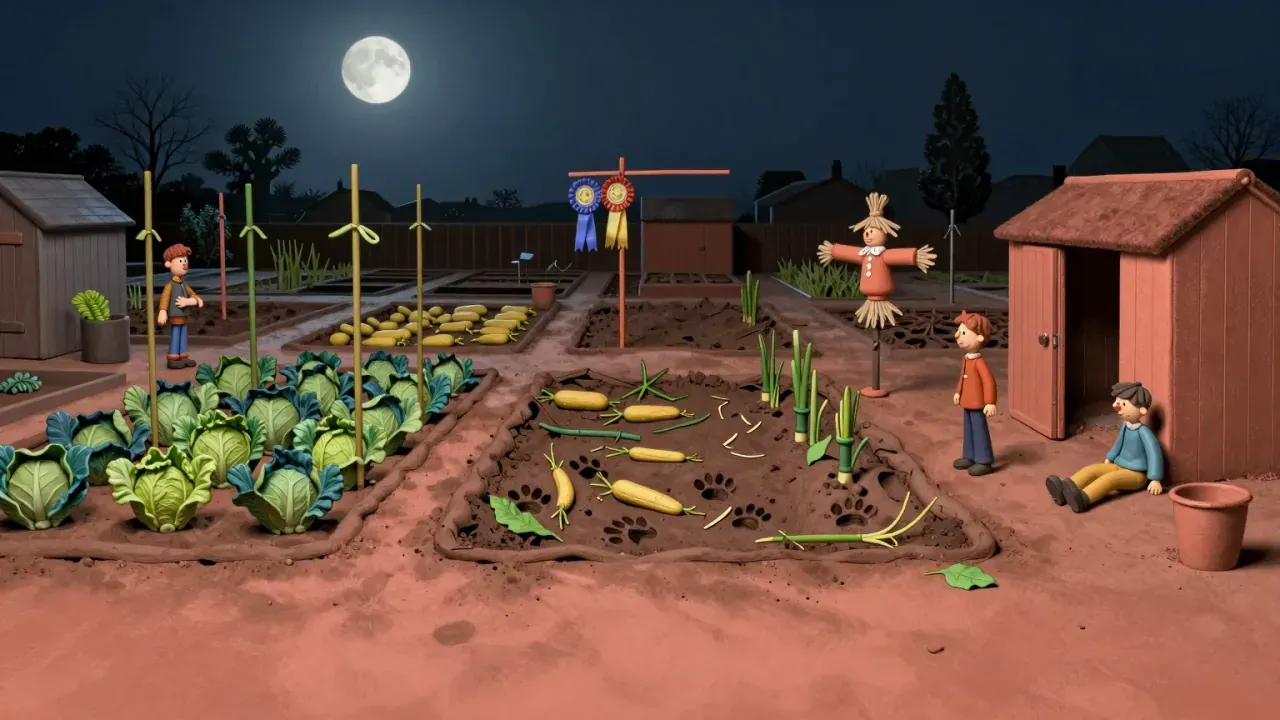
Wallace & Gromit: The Curse of the Were-Rabbit expands the stop-motion duo into a monster-movie parody, following the pair's pest-control business as a mysterious Were-Rabbit starts terrorizing a town's giant-vegetable competition. Directed by Nick Park and Steve Box for Aardman and DreamWorks Animation on a $30 million budget, it grossed $194 million and became the first stop-motion film to win the Academy Award for Best Animated Feature.

13:00

Wallace & Gromit: Vengeance Most Fowl

Nick Park, Merlin Crossingham · 2024

Vengeance Most Fowl brings back Feathers McGraw, the silent penguin villain from The Wrong Trousers, who hijacks Wallace's new robotic garden gnome to rebuild his criminal operation and settle an old score. Nick Park and Merlin Crossingham direct from Mark Burton's screenplay, with Ben Whitehead voicing Wallace in his first feature appearance following Peter Sallis's death. Made by Aardman Animations, the film holds a 100% Tomatometer score, won the inaugural BAFTA for Best Children's and Family Film, and became the BBC's most-watched scripted broadcast since 2002 after its Christmas Day airing.

13:00

Wild Strawberries

Ingmar Bergman · 1957

Victor Sjöström, in his last screen role, plays an elderly professor driving to collect an honorary degree while dreams and hitchhikers force him to confront the coldness he built his life on. Ingmar Bergman wrote it from a hospital bed the same year as The Seventh Seal, and it won the Golden Bear in Berlin, becoming one of the clearest statements of his recurring interest in memory, guilt, and old age.

13:00

Wolfwalkers

Tomm Moore, Ross Stewart · 2020

Robyn, an English hunter's daughter in occupied Ireland, is sent to help exterminate the last wolf pack outside Kilkenny and instead befriends Mebh, a girl from a wolf-linked tribe whose spirit runs as a wolf by night, discovering along the way that a bite has made her one of them too. Tomm Moore and Ross Stewart's Cartoon Saloon feature, the third in Moore's Irish folklore trilogy, builds its visual design and its politics from the same conflict, an authoritarian Lord Protector's rule against nature versus everything the forest represents.

13:00

Your Name

Makoto Shinkai · 2016

A Tokyo boy and a rural girl who have never met begin waking up in each other's bodies, building a friendship across the swap before a hidden twist reveals the stakes are far higher than a shared inconvenience. Makoto Shinkai wrote, directed, shot and edited the film after visiting a village destroyed by the 2011 tsunami, and Your Name became the first entry in what critics now call his disaster trilogy, and briefly the highest-grossing Japanese film ever made.

13:00

20th Century Women

Mike Mills · 2016

Set in 1979 Santa Barbara, Mike Mills’ 20th Century Women follows 15-year-old Jamie as his single mother Dorothea enlists two younger women — photographer Abbie and teenage friend Julie — to help raise him. Anchored by Annette Bening’s restrained performance, the film observes their overlapping lives with warmth and precision, treating feminism, illness, ageing and adolescence as lived conditions rather than themes. Shot by Sean Porter and edited by Leslie Jones, it moves at the pace of real conversation, building meaning through accumulation rather than climax.

13:00

24 Frames

Abbas Kiarostami · 2017

Abbas Kiarostami’s final film, 24 Frames, comprises twenty-four uncut, static shots — each ninety seconds long — observing nature, animals, and thresholds between interior and exterior. Beginning with animated movement superimposed on Bruegel’s Hunters in the Snow, it proceeds into real-world stillness, testing how much meaning resides in time, attention, and unmediated presence. Released posthumously at Cannes 2017, it is a rigorous, unsentimental essay on perception and impermanence.

13:00

71 Fragments of a Chronology of Chance

Michael Haneke · 1994

Michael Haneke’s 1994 Austrian drama arranges thirty-seven fragmented scenes — intercuts of Viennese lives, real news footage, and black pauses — into a chronology that culminates in a bank shooting. Shot by Christian Berger and edited by Marie Homolkova, it avoids psychology and music, presenting migration, isolation, and mediated violence as systemic conditions rather than personal tragedies. Set in Vienna between October and December 1993, it forms the final part of Haneke’s early trilogy. Winner of the Sitges Film Festival’s Best Feature and Best Screenplay awards, and the Gold Hugo at Chicago.

13:00

A Brief History of Time

Errol Morris · 1991

Errol Morris’s 1991 documentary profiles Stephen Hawking not as a disembodied genius but as a man whose physical constraints and intellectual ambitions coexist in constant dialogue. Shot on studio sets with a score by Philip Glass, it weaves family testimony, scientific reflection, and quiet observation into a portrait where cosmology and biography are inseparable.

13:00

A Christmas Tale

Arnaud Desplechin · 2008

Arnaud Desplechin’s 2008 French drama follows the fractured Vuillard family as they reunite for Christmas after matriarch Junon is diagnosed with leukemia. Set over several wintry days in Roubaix, the film charts shifting alliances, buried resentments, and fragile intimacies among three adult siblings, their partners, children, and extended kin — all held in uneasy orbit by Junon’s iron will and Abel’s quiet endurance. With a dense script, naturalistic performances, and Éric Gautier’s muted cinematography, it treats family as a site of repetition, inheritance, and unspoken history.

13:00

A Colt Is My Passport

Takashi Nomura · 1967

Takashi Nomura’s 1967 yakuza noir follows contract killer Shuji Kamimura as he navigates a collapsing web of yakuza betrayals after a botched hit. With precise, unhurried direction and Joe Shishido’s stoic performance, the film treats survival as a series of calibrated actions — installing a second brake, digging a ditch, building a bomb — rather than a psychological journey. Its power lies in functional coherence, not thematic elaboration.

13:00

A Confucian Confusion

Edward Yang · 1994

Edward Yang’s 1994 satirical comedy follows a web of young professionals in 1994 Taipei whose relationships, careers, and self-presentation are governed by unspoken codes of duty, face, and transactional loyalty. Over three days, misunderstandings accrue not from malice but from systemic pressure to perform coherence — whether in love, work, or art. With muted performances, flat lighting, and procedural pacing, it maps the quiet corrosion of authenticity under late-capitalist professionalism.

13:00

A Constant Forge

Charles Kiselyak · 2000

A two-hundred-minute documentary portrait of John Cassavetes, assembled from interviews and archival footage. It focuses on his working process — rehearsal, editing, directing — rather than biography or filmography. Featuring Ben Gazzara, Gena Rowlands, Peter Falk, Sean Penn and others, it treats filmmaking as embodied resistance, refusing summary or resolution.

13:00

A Dry White Season

Euzhan Palcy · 1989

Euzhan Palcy’s 1989 drama follows a white South African teacher drawn into resistance after his Black gardener is tortured and killed by police in 1976 Soweto. Adapted from André Brink’s novel, it traces Ben Du Toit’s moral unraveling through courtrooms, classrooms and clandestine document-hiding — with Donald Sutherland, Marlon Brando and Janet Suzman. Shot in Zimbabwe and at Pinewood Studios, it is a trial film grounded in legal process, not polemic.

13:00

A Generation

Andrzej Wajda · 1955

Andrzej Wajda’s 1955 debut A Generation follows two young men in Nazi-occupied Warsaw as they move from alienation to resistance within a communist underground cell. Shot on location in Wola with natural light and unvarnished performances, it grounds political commitment in workshop routines, shared silences, and the physical texture of daily survival. Though ideologically specific and formally austere, its power lies in its restraint — in what it shows, not what it tells.

13:00

A Man and a Woman

Claude Lelouch · 1966

Claude Lelouch’s 1966 French romantic drama follows a widow and widower whose tentative bond forms across train platforms, rainy drives, and seaside walks. Shot on mixed film stocks with Francis Lai’s iconic score, it privileges mood and gesture over plot, tracing love not as catharsis but as quiet, embodied recurrence.

13:00

A Married Couple

Allan King · 1969

Allan King’s 1969 Canadian documentary observes Billy and Antoinette Edwards in their Toronto home for ten weeks, with no script, no direction during filming, and no narration. Shot by Richard Leiterman and edited by King, it presents marital life as unvarnished duration — arguments, tenderness, boredom, and silence unfolding without commentary. Though controversial on release for its explicitness and perceived voyeurism, it endures as a landmark of cinema vérité, testing whether sustained observation can reveal truths about intimacy that fiction and journalism obscure.

13:00

A Master Builder

Jonathan Demme · 2013

Jonathan Demme’s 2013 film A Master Builder adapts Ibsen’s play into a tightly contained, single-set drama starring Wallace Shawn as the ageing architect Halvard Solness. With Declan Quinn’s restrained cinematography and Tim Squyres’ unhurried editing, it foregrounds language, pause and presence over action or spectacle. Julie Hagerty and Lisa Joyce deliver precise, understated performances that deepen the film’s study of memory, guilt and the slow collapse of authority. Though its formal austerity divides opinion, it remains a rare and committed act of textual fidelity — demanding, quiet, and morally unblinking.

13:00

A Poem Is A Naked Person

Les Blank · 1974

Les Blank’s 1974 documentary A Poem Is a Naked Person spent forty years unreleased, emerging only after his death. Shot over two years at Leon Russell’s Oklahoma studio, it avoids biography in favour of immersive texture: rehearsals, murals painted in drained pools, lakeside light, and unscripted encounters. Its power lies in sustained attention, not exposition — a film that treats music, place, and personality as inseparable elements of a single, breathing world.

13:00

A Report on the Party and the Guests

Jan Němec · 1966

A group of picnickers are intercepted in the woods and directed to a celebration, where arbitrary rules govern their conduct. When one guest disappears, the party mobilises to retrieve him — not out of concern, but to preserve the integrity of the event. Made by Jan Němec at Barrandov Studios, the film uses stark visual discipline and behavioural minimalism to trace how authority takes root in shared compliance.

13:00

A Summer's Tale

Éric Rohmer · 1996

Éric Rohmer’s 1996 comedy-drama follows mathematics graduate Gaspard over three weeks in the Breton seaside town of Dinard, as he navigates hesitant affections for three women — Margot, Léna and Solène — without ever resolving between them. Shot with quiet precision by Diane Baratier and edited to sustain long takes and unhurried dialogue, the film treats romantic uncertainty not as failure but as sustained, everyday practice. Its power lies in its fidelity to duration, silence and the moral weight of small, unremarkable choices.

13:00

A Woman Is a Woman

Jean-Luc Godard · 1961

Jean-Luc Godard’s 1961 colour debut is a self-aware, formally restless romantic comedy starring Anna Karina as Angéla, an exotic dancer determined to have a child. Shot in Paris by Raoul Coutard and scored by Michel Legrand, it uses musical interludes, abrupt edits, and stylised dialogue to interrogate genre conventions, gender roles, and the language of desire — all without relinquishing its wit or warmth.

13:00

A Woman of Paris

Charlie Chaplin, A. Edward Sutherland · 1923

A Woman of Paris (1923) is Charlie Chaplin’s sole silent drama without the Tramp, starring Edna Purviance as Marie St. Clair — a woman whose life unravels not through vice, but through miscommunication, social constraint, and quiet consequence. Directed with surgical restraint, it uses décor, editing, and understated performance to trace fate as environment rather than destiny. Though its contemporary reception was mixed and its lead performance uneven, its influence on narrative realism endures.

13:00

A Woman's Face

Gustaf Molander · 1938

A disfigured Swedish woman, Anna Holm, joins a blackmail ring out of social exile. After a botched break-in, she is taken in by a plastic surgeon who repairs her face — not to make her beautiful, but to restore her ability to move unseen in the world. As she assumes a new identity to infiltrate a wealthy family, she begins to protect the very child she was meant to kill. Gustaf Molander’s 1938 drama traces moral change not through epiphany but through repeated, quiet choices — about care, labour, and who gets to belong.

13:00

About Dry Grasses

Nuri Bilge Ceylan · 2023

Nuri Bilge Ceylan’s About Dry Grasses follows a disillusioned Istanbul teacher stationed in eastern Anatolia after he and a colleague face student accusations. Shot in Erzurum and Adıyaman by Kürşat Üresin and Cehavir Şahin, the film unfolds across winter in long takes and muted tones, anchored by Merve Dizdar’s Cannes-winning performance. Co-written by Ceylan, Ebru Ceylan and Akın Aksu, it resists narrative resolution in favour of sustained atmosphere, probing education, geography and epistemic limits without recourse to exposition or catharsis.

13:00

Ådalen 31

Bo Widerberg · 1969

Bo Widerberg’s 1969 Swedish drama Ådalen 31 reconstructs the 1931 Ådalen shootings through the daily life of the working-class Andersson family. Anchored by Peter Schildt and Roland Hedlund, it traces springtime tensions between strikers and strikebreakers in northern Sweden, culminating in a military massacre that kills five. Shot by Jörgen Persson with deliberate restraint, it avoids polemic in favour of tactile realism — fishing, jazz, French lessons, abortion, grief — making ideology legible through habit, not speech. It won the Cannes Grand Prix and remains a landmark of socially engaged arthouse cinema.

13:00

Adventures of Zatoichi

Kimiyoshi Yasuda · 1964

The ninth Zatoichi film finds the blind masseur stepping into a town gripped by bureaucratic corruption and quiet desperation. He does not seek conflict but cannot avoid it — and when he draws his sword, it is never to win, but to weigh. With Shintarō Katsu at peak control and Kimiyoshi Yasuda framing each scene like a scroll painting, Adventures of Zatoichi is a study in restraint: in violence, in revelation, in what a man owes the world when no one is watching.

13:00

Alambrista!

Robert Milton Young · 1977

Alambrista! (1977), written and directed by Robert Milton Young, follows Roberto, a Mexican farmer who crosses into the US to find work. Shot on location with non-professional actors, it observes his journey with minimal dialogue, no exposition, and sustained attention to physical detail. The film avoids drama, psychology and commentary, instead building meaning through repetition, duration and quiet encounters. Inducted into the National Film Registry in 2023, it remains a rigorous, unsentimental portrait of endurance.

13:00

Alex Wheatle

Steve McQueen · 2020

Steve McQueen’s Alex Wheatle (2020) follows the British novelist from institutional childhood through Brixton’s sound-system culture to imprisonment after the 1981 uprising, where he discovers literature. Starring Sheyi Cole and shot by Shabier Kirchner, it is the fourth film in the Small Axe anthology — a focused, atmospheric biographical drama that prioritises sensory detail and quiet transformation over exposition or historical sweep.

13:00

Alice Doesn't Live Here Anymore

Martin Scorsese · 1974

Martin Scorsese’s 1974 film follows widow Alice Hyatt as she travels with her son from New Mexico to California, detouring through Arizona. Working first as a lounge singer, then a diner waitress, she navigates grief, economic precarity, and tentative new relationships. Ellen Burstyn won an Academy Award for her layered, unsentimental performance. The film avoids easy resolutions, favouring psychological fidelity and quiet observation over plot mechanics or stylistic flourish.

13:00

Alice in the Cities

Wim Wenders · 1974

Wim Wenders’ 1974 road film follows a stalled writer and a nine-year-old girl as they search across Germany for her estranged grandmother. Shot in black-and-white 16 mm by Robby Müller, it favours duration over exposition, silence over speech, and observation over explanation. Its power lies in restraint: in the weight of a glance, the rhythm of a bus ride, the quiet persistence of mutual attention.
13:00

All Night Long

Basil Dearden · 1962

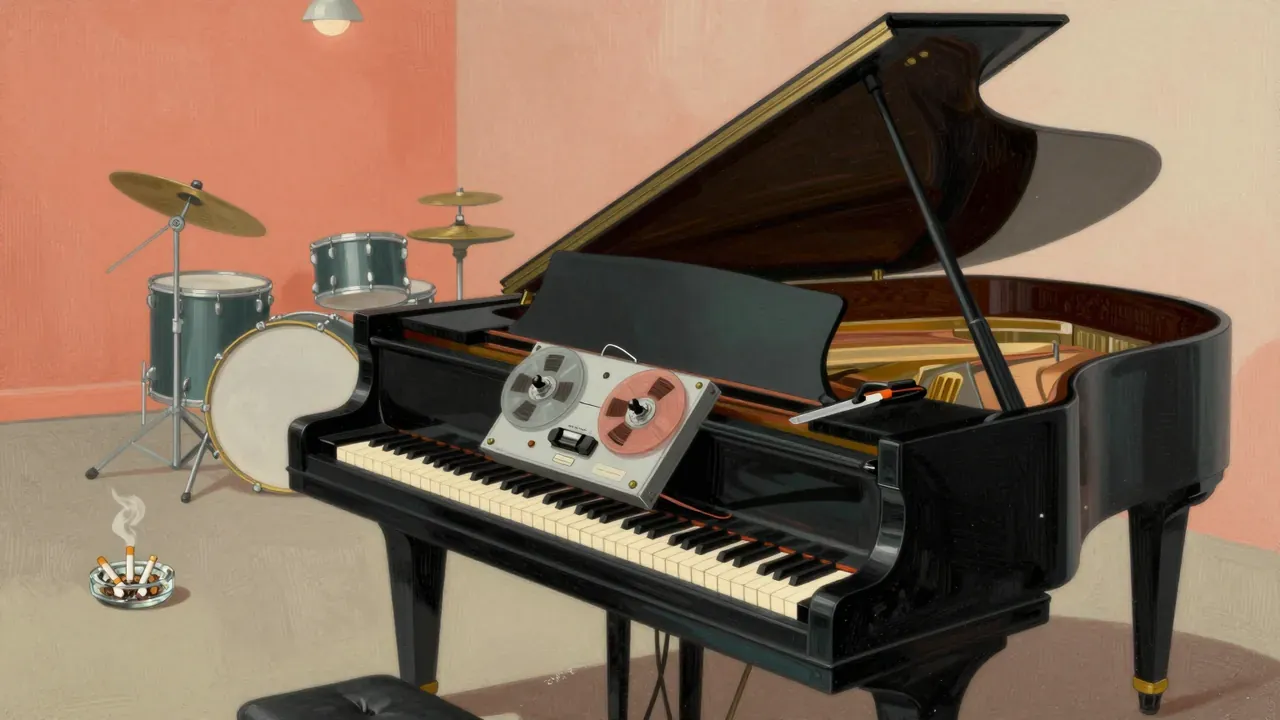
Basil Dearden’s All Night Long transposes Shakespeare’s Othello to a single night at a Thames-side jazz party, starring Patrick McGoohan as a scheming drummer, Paul Harris as a bandleader, and Marti Stevens as his wife. With contributions from Dave Brubeck, Charles Mingus and John Dankworth, the film treats jazz not as ornament but as narrative grammar — its rhythms, improvisations and silences shaping character and consequence. Shot in black and white by Edward Scaife, written by blacklisted screenwriter Paul Jarrico, it is a study in mediation, mistrust and the cost of control.

13:00

Altered States

Ken Russell · 1980

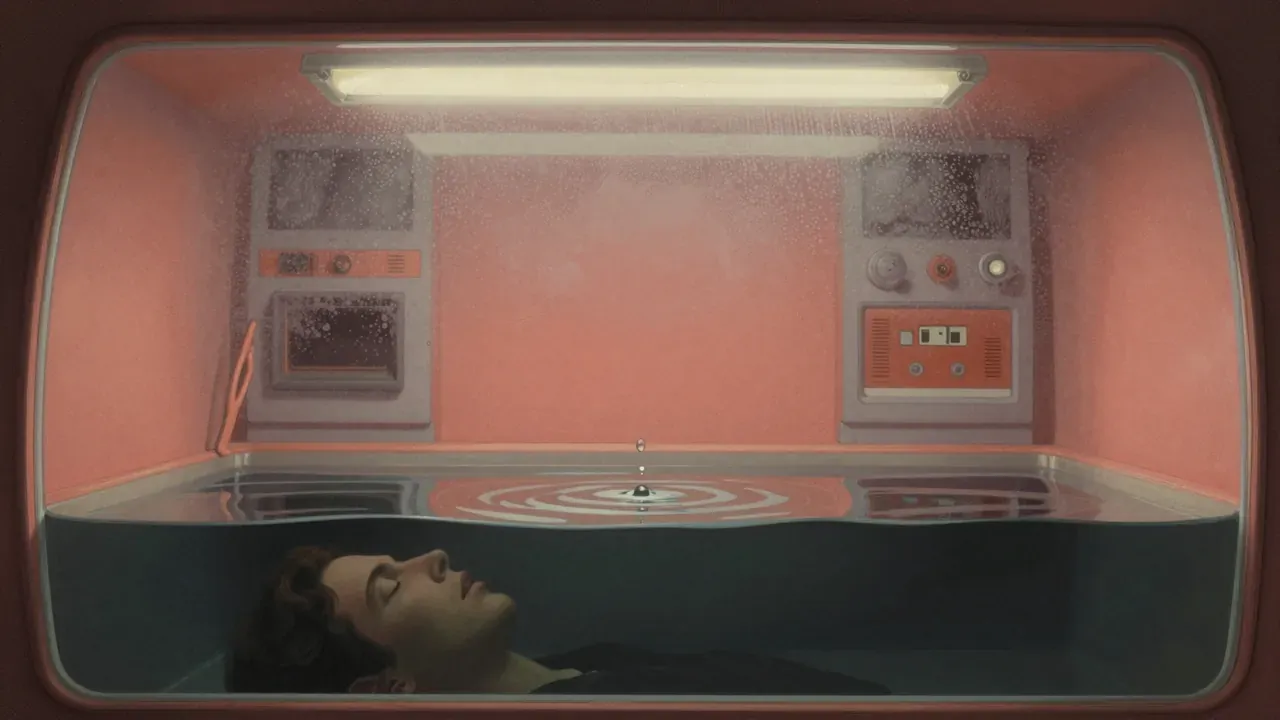
Altered States (1980), directed by Ken Russell from Paddy Chayefsky’s novel, follows a scientist whose experiments with sensory deprivation and psychoactive drugs trigger a terrifying biological regression. Anchored by William Hurt’s debut performance and Dick Smith’s groundbreaking makeup effects, it merges psychological horror with surrealist science fiction. Though marked by creative conflict between writer and director, the film endures as a formally audacious, physically immersive inquiry into consciousness, identity, and the fragility of the human form.

13:00

An Enemy of the People

Satyajit Ray · 1990

Satyajit Ray’s 1990 Bengali-language drama transposes Ibsen’s An Enemy of the People to a small Indian town whose economy depends on a temple’s ‘holy water’. When doctor Ashok Gupta (Soumitra Chatterjee) proves the water is contaminated, he is systematically silenced by municipal officials, journalists and religious authorities — all invested in maintaining the status quo. Shot with clinical precision and performed with restrained gravity, the film traces the erosion of professional integrity and communal trust. Though its resolution feels underprepared, its central inquiry — how facts are weighed against utility — remains urgently relevant.

13:00

And Everything Is Going Fine

Steven Soderbergh · 2010

Steven Soderbergh’s 2010 documentary And Everything Is Going Fine assembles archival monologues, interviews and home movies of Spalding Gray into a portrait built entirely from his own words and presence. Edited by Susan Littenberg and scored by Gray’s son Forrest, it avoids biography-by-explanation in favour of temporal layering and verbal recurrence. The film premiered at Slamdance in January 2010 and was released on Criterion Collection Blu-ray and DVD in 2012.

13:00

And the Pursuit of Happiness

Louis Malle · 1986

And the Pursuit of Happiness (1986) is a television documentary directed by Louis Malle for HBO’s America Undercover series. Shot in the mid-1980s, it profiles six immigrants — including General José R. Somoza, poet Derek Walcott, and physicist Franklin Chang-Díaz — as they navigate work, language, and belonging in the United States. Narrated by Malle, the film avoids commentary or advocacy, favouring sustained observation and unvarnished interview. Released on Independence Day 1986, it screened at Cannes in 1987 and won a Peabody Award in 1989.

13:00

Anselm

Wim Wenders · 2023

Wim Wenders’ 2023 documentary Anselm is a 3D portrait of German artist Anselm Kiefer, filmed over three years across Germany, France, and Italy. Eschewing biography and exposition, it renders Kiefer’s creative process — burning canvases, photographing ruins, building towers from rubble — through sustained, tactile 6K 3D imagery. Staged sequences with younger actors echo Kiefer’s life across decades, while poetry by Paul Celan and archival footage anchor the film in postwar German reckoning. The result is less a film about art than an attempt to make cinema behave like painting: slow, material, heavy with time.

13:00

Antonio Gaudi

Hiroshi Teshigahara · 1984

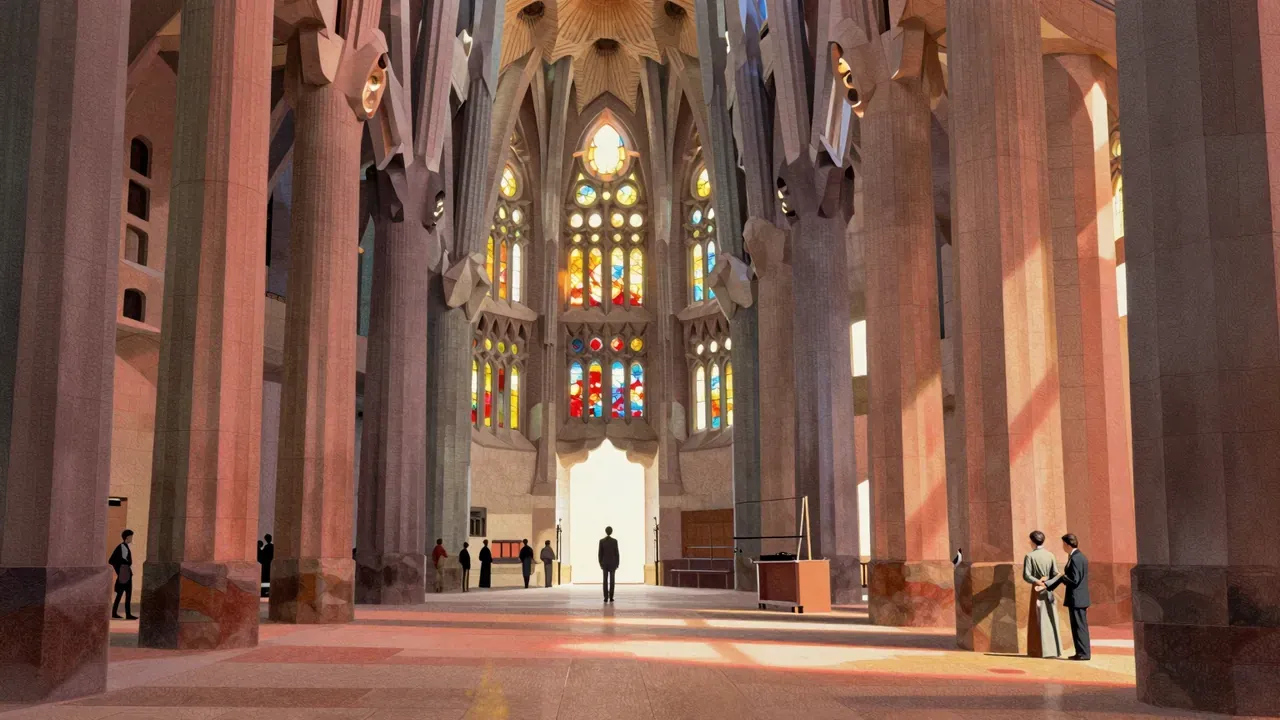
Hiroshi Teshigahara’s 1984 documentary Antonio Gaudi is a wordless, immersive study of Antoni Gaudí’s architecture in Barcelona. Shot in Spanish but produced in Japan, it uses sustained camera movement, deliberate pacing, and Toru Takemitsu’s evocative score to foreground the physical presence of buildings like the Sagrada Família and Park Güell — avoiding biography, history, or explanation entirely.

13:00

Apart from You

Mikio Naruse · 1933

Mikio Naruse’s 1933 silent drama follows Kikue, an ageing geisha, her ashamed teenage son Yoshio, and Terugiku, a younger colleague who mediates between them. Set in Tokyo’s geisha districts and a coastal fishing village, the film traces shifting loyalties, familial duty, and the cost of survival in a rigid social order. With precise editing, understated performances, and a pragmatic view of its world, it avoids moralising in favour of sustained observation.
13:00

Arabian Nights

Pier Paolo Pasolini · 1974

Pier Paolo Pasolini’s 1974 Arabian Nights is the final film of his ‘Trilogy of Life’, adapting fragments from the One Thousand and One Nights across real locations in Yemen, Iran, Ethiopia and Nepal. It abandons the frame narrative to focus on bodily pleasure, poetic recitation and episodic storytelling, using non-professional actors, long takes and Ennio Morricone’s sparse score. Though formally daring and visually rich, its resistance to psychology and narrative cohesion divides viewers. It won the Cannes Grand Prix in 1974.

13:00

Ariel

Aki Kaurismäki · 1988

Aki Kaurismäki’s 1988 drama follows a displaced Finnish miner, Taisto Kasurinen, as he drifts from Lapland to Helsinki, surviving eviction, robbery, imprisonment, and finally a bank heist — all with deadpan reserve and minimal dialogue. Shot by Timo Salminen in muted tones and edited with deliberate stillness, the film treats economic abandonment as atmosphere rather than crisis, and resilience as routine rather than triumph.

13:00

As Long as You've Got Your Health

Pierre Étaix · 1966

Pierre Étaix’s 1966 anthology comedy As Long as You’ve Got Your Health presents four self-contained sketches—on insomnia, cinema queues, psychiatric consultation, and forest visits—unified by deadpan timing, restrained performances, and Jean Boffety’s unobtrusive cinematography. Written by Jean-Claude Carrière and edited with surgical calm, it observes urban alienation and bureaucratic fatigue not through satire but through repetition and pause. Its humour is physical, its themes implicit, its pace deliberate.

13:00

Autumn Sonata

Ingmar Bergman · 1978

Ingmar Bergman’s 1978 drama centres on pianist Charlotte and her daughter Eva, who invite her to their rural Swedish home after seven years apart. Over two days, suppressed grief, resentment, and guilt surface in a series of tightly framed confrontations. Shot by Sven Nykvist in muted tones, with Chopin’s Prelude No. 2 as its only musical motif, the film sustains emotional intensity through stillness, silence, and the physical proximity of Ingrid Bergman and Liv Ullmann. It is Bergman’s last theatrically released film and Ingrid Bergman’s final screen role.

13:00

Baal

Volker Schlöndorff · 1970

Volker Schlöndorff’s 1970 adaptation of Brecht’s Baal transposes the 1923 play into late-1960s West Germany, starring Rainer Werner Fassbinder in the title role. Shot in vivid, expressionistic colour by Dietrich Lohmann and scored sparsely by Klaus Doldinger, it refuses psychological exposition or moral framing. Instead, it holds Baal — a self-destructive, charismatic, violently entitled poet — in unrelenting focus, exposing the social machinery that enables his ‘genius’. Long suppressed and recently restored, it remains a rigorous, uncomfortable, and formally exacting work.

13:00

Bad Timing

Nicolas Roeg · 1980

Nicolas Roeg’s 1980 psychological thriller Bad Timing follows an inspector’s investigation into a woman’s suicide attempt, using non-linear editing and restrained cinematography to dissect the obsessive, destructive relationship between a psychoanalyst and his lover. Set in Vienna and shot by Anthony B. Richmond, it stars Art Garfunkel and Theresa Russell, with Harvey Keitel as the investigator. Adapted by Yale Udoff from an Italian story, the film was controversial on release — rejected by its UK distributor and X-rated in the US — yet won the Toronto International Film Festival People’s Choice Award. Its formal rigour and emotional austerity have secured its status as an arthouse landmark.

13:00

Barnvagnen

Bo Widerberg · 1963

Bo Widerberg’s 1963 Swedish drama Barnvagnen follows a young father’s first months in a Stockholm apartment, using restrained performance, Jan Troell’s naturalistic cinematography, and Jan Johansson’s sparse piano score to observe the uneventful gravity of early care. It avoids narrative escalation, psychological exposition, or symbolic framing — instead building meaning through duration, acoustic detail, and the physical presence of domestic objects.

13:00

Bay of Angels

Jacques Demy · 1963

Jacques Demy’s 1963 black-and-white drama follows a young bank clerk and a compulsive gambler through the casinos of Nice and Monte Carlo. Built around Jeanne Moreau’s tightly coiled performance and Michel Legrand’s percussive score, it studies addiction as rhythm, not pathology — where money is incidental, and the real stakes are time, attention, and the diminishing space between decisions.

13:00

Beginners

Mike Mills · 2010

A graphic designer in early-2000s Los Angeles navigates a fragile new relationship while reflecting on his recently deceased father’s late-in-life coming out and four-year journey as an openly gay man. Interwoven flashbacks and restrained performances anchor a film about inherited emotional patterns, the weight of unspoken things, and love as sustained attention rather than resolution.

13:00

Benny's Video

Michael Haneke · 1992

Michael Haneke’s 1992 Austrian horror film follows Benny, a Vienna teenager obsessed with video recording, whose emotionally detached parents enable his fixation. After filming a pig’s slaughter, he invites a girl to his home, kills her on camera, and proceeds with chilling normalcy — cleaning, socialising, travelling — while his parents dispose of the body. The film uses static camerawork, diegetic sound, and layered recordings to dissect how media saturation erodes moral response, treating violence not as rupture but as data.

13:00

Betty Blue

Jean-Jacques Beineix · 1986

A 1986 French psychological drama directed by Jean-Jacques Beineix, Betty Blue follows Zorg, a handyman and aspiring writer, and Betty, a volatile 19-year-old, as their passionate relationship unravels across coastal, urban and provincial France. Shot by Jean-François Robin and scored by Gabriel Yared, it renders emotional extremity through saturated visuals, rhythmic editing and physical performance — prioritising mood and texture over exposition or diagnosis.

13:00

Beware of a Holy Whore

Rainer Werner Fassbinder · 1971

Rainer Werner Fassbinder’s 1971 drama Beware of a Holy Whore stages the slow disintegration of a film crew stranded in a Spanish hotel, awaiting production that never begins in earnest. Shot by Michael Ballhaus and edited by Fassbinder and Thea Eymèsz, it uses repetition, confinement and unresolved tension to explore self-deception, dependency and the violence of creative collaboration.

13:00

Beyond the Hills

Cristian Mungiu · 2012

Beyond the Hills (2012), directed by Cristian Mungiu, follows two orphaned Romanian women — one newly professed at an Orthodox convent, the other arriving from Germany seeking reunion — as their bond unravels under the weight of doctrine, isolation, and escalating restraint. Based on real events surrounding the 2005 Tanacu exorcism, it unfolds with clinical restraint: long takes, muted sound, no score, and performances that withhold explanation. The film builds not to revelation but to consequence — a death that arrives not with fanfare, but as the logical endpoint of unchallenged assumptions.

13:00

Black River

Masaki Kobayashi · 1957

Masaki Kobayashi’s 1957 drama Black River follows a university student and a waitress in a Tokyo district shadowed by a US military base. When she is raped by a local gangster and forced into a coercive relationship, and when both are evicted as part of a development scheme, their fragile bond culminates in an act of desperate, unsentimental violence. Shot with stark realism and performed with restrained intensity, the film treats systemic oppression as atmosphere rather than argument.

13:00

Blast of Silence

Allen Baron · 1961

Blast of Silence is a 1961 American neo-noir crime film written, directed by, and starring Allen Baron. Set over Christmas week in New York City, it follows Frankie Bono, a hitman returning to his hometown to carry out a contract killing. Shot on location without permits and scored with stark minimalism, the film leans on atmosphere, silence, and moral ambiguity rather than plot mechanics. Its narration — written by blacklisted Waldo Salt and voiced uncredited by Lionel Stander — adds a layer of literary distance. Though modest in budget and scope, it endures as a precise, unsparing study of alienation and consequence.

13:00

Blind Chance

Krzysztof Kieślowski · 1987

Krzysztof Kieślowski’s 1987 film follows Witek (Bogusław Linda) through three divergent lives, each triggered by how he navigates a single encounter at Łódź Fabryczna station. In one, he joins the Communist Party; in another, he joins the anti-Communist resistance; in the third, he retreats into apolitical domesticity. Shot with procedural restraint by Krzysztof Pakulski and edited with mathematical parity by Elżbieta Kurkowska, the film treats political identity as emergent from physical circumstance — not philosophy, but timing, surface, and sequence.

13:00

Blow Out

Brian De Palma · 1981

Brian De Palma’s 1981 crime thriller follows a Philadelphia sound technician who records a fatal car crash, then uncovers evidence of assassination in the audio. With John Travolta, Nancy Allen, and John Lithgow, it uses split screens, long takes, and meticulous sound design to explore how truth is assembled from fragments—and why it so often goes unheard.

13:00

Blue Is the Warmest Colour

Abdellatif Kechiche · 2013

Abdellatif Kechiche’s 2013 drama follows Adèle Exarchopoulos as a young woman navigating desire, class, and vocation across a decade. Adapted from Jul Maroh’s graphic novel, it uses extreme length, close-up cinematography, and unvarnished performance to chart intimacy as physical labour and identity as accumulated habit — though its focus remains resolutely, sometimes problematically, on Adèle’s perspective.

13:00

Body Heat

Lawrence Kasdan · 1981

A 1981 neo-noir thriller set in sweltering south Florida, Body Heat follows a small-time lawyer drawn into a lethal affair with a wealthy man’s wife. Written and directed by Lawrence Kasdan, it updates classic noir fatalism with 1980s sexual frankness and structural rigour. Its power lies in atmosphere, implication, and the slow, inevitable collapse of illusion — forged wills, assumed identities, and withheld truths all converge in a climax that reframes everything that came before.

13:00

Bogeyman

G. Aravindan · 1979

G. Aravindan’s 1979 Bogeyman (Kummatty) is a lyrical Malayalam fantasy following a boy named Chindan whose encounter with a wandering masked man blurs the line between folklore and lived reality. Shot by Shaji N. Karun and scored by M. G. Radhakrishnan, it unfolds in unhurried, observational rhythms across a Kerala village, culminating in literal transformation — children become animals, one remains a dog, and only witnessing restores him. Awarded Kerala’s Best Children’s Film, it resists explanation in favour of sensory fidelity and quiet moral weight.

13:00

Borderline

Kenneth Macpherson · 1930

Borderline (1930), written and directed by Kenneth Macpherson, is a silent British-Swiss drama starring Paul and Eslanda Robeson and H.D. Set in a Swiss guesthouse, it traces an interracial love triangle amid local hostility, using Eisensteinian montage and Pabst-influenced psychological framing. Restored in 2006 and again in 2010 with new soundtracks, it remains a demanding, formally rigorous work — less concerned with storytelling than with how cinema constructs meaning around race, gender, and social boundary-making.

13:00

Born in Flames

Lizzie Borden · 1983

Born in Flames (1983), directed and produced by Lizzie Borden, is a low-budget science fiction drama set in an alternate socialist-democratic United States ten years after revolution. It follows intersecting feminist groups — pirate radio collectives, a radical newspaper, and a militant Women’s Army — as they confront state-backed sexism, racism and classism. Shot on location in New York with non-professional performers and fragmented, urgent editing, it rejects narrative polish in favour of political precision. Its themes remain starkly relevant: media control, reproductive labour, surveillance, and the necessity of coalition across difference.

13:00

Bound

Lilly Wachowski · 1996

A 1996 neo-noir crime thriller directed by Lilly Wachowski, Bound follows two women — a gun moll and an ex-convict — who conspire to steal Mafia money from the man who controls them. Shot on a tight budget, it uses confined spaces, deliberate pacing and tactile visual motifs to anchor a story about agency, enclosure and erotic autonomy. Its craft is precise, its politics implicit, its impact cumulative.

13:00

Breaktime

Abbas Kiarostami · 1972

Breaktime (1972) is Abbas Kiarostami’s fourteen-minute observational drama, shot during an actual school break in Tehran. With no script, no score and no intervention, it records children’s unstructured movement and interaction in static, natural-light frames. Made early in his career for Kanun, it exemplifies his commitment to unvarnished presence over narrative artifice.

13:00

Brief Encounters

Kira Muratova · 1967

Brief Encounters (1967) follows two women unknowingly in love with the same geologist in Odessa. Nadya, newly arrived from the village, falls for his charm and wanderlust; Valya, his long-term partner, endures his absences with quiet rigour. When Nadya takes work as Valya’s maid, they live under one roof without ever naming their shared attachment. Directed by Kira Muratova, the film builds emotional weight through restraint — minimal dialogue, precise framing, and the physical labour of waiting — culminating not in confrontation, but in Nadya’s silent departure.

13:00

Buchanan Rides Alone

Budd Boetticher, Harry Joe Brown · 1958

Buchanan Rides Alone (1958) is a tightly wound Western starring Randolph Scott as a lone drifter caught in a corrupt border town run by the Agry family. Directed by Budd Boetticher and Harry Joe Brown, written by Charles Lang, and shot by Lucien Ballard, it uses sparse dialogue, confined spaces, and deliberate pacing to explore jurisdiction, consent, and quiet resistance. At 78 minutes, it prioritises behavioural precision over plot escalation, anchoring its themes in posture, framing, and silence.

13:00

Carl Th. Dreyer: My Metier

Torben Skjødt Jensen · 1995

Torben Skjødt Jensen’s 1995 documentary examines Carl Theodor Dreyer’s filmmaking practice through interviews with collaborators, archival material, and voiceover readings of his notes. It focuses on method — rehearsal, lighting, editing, negotiation — rather than biography or interpretation, assuming prior knowledge of Dreyer’s major works.

13:00

Caught by the Tides

Jia Zhangke · 2024

Caught by the Tides is a 2024 Chinese drama directed by Jia Zhangke, constructed from footage shot between 1999 and 2024 — including material from Unknown Pleasures, Still Life, and Ash Is Purest White — and centred on Zhao Tao’s character Qiao Qiao across two decades of social and personal change. It premiered in competition for the Palme d’Or at Cannes.

13:00

Celine and Julie Go Boating

Jacques Rivette · 1974

Jacques Rivette’s 1974 film follows two women who enter a looping, magical-realist narrative housed in a Paris mansion, gradually learning its rhythms and rewriting its ending. Built on repetition, collaboration and patient observation, it models fiction as a space to inhabit rather than interpret.

13:00

Certain Women

Kelly Reichardt · 2016

Kelly Reichardt’s 2016 triptych adapts three Maile Meloy stories set in Montana, following a lawyer, a builder’s wife and a ranch hand as they navigate quiet crises of agency, expectation and connection. Shot by Christopher Blauvelt and edited by Reichardt, it uses precise framing, location sound and deliberate pacing to explore how law, geography and gender shape ordinary lives — without exposition, score or resolution.

13:00

Chains

Raffaello Matarazzo · 1950

Raffaello Matarazzo’s 1950 Italian melodrama Chains follows mechanic Guglielmo Aniello, his wife Rosa, and the returned ex-fiancé Emilio whose blackmail threatens their marriage and family. Shot by Carlo Montuori and edited by Mario Serandrei, it builds tension through restraint — in performance, framing, and narrative economy — culminating in a courtroom verdict that affirms legality over morality. Though maligned by neorealist critics, its commercial success and inclusion in Italy’s ‘100 films to be saved’ list attest to its cultural resonance.

13:00

Chan Is Missing

Wayne Wang · 1982

Wayne Wang’s 1982 debut is a black-and-white arthouse comedy-drama structured as a search for a missing Chinatown taxi broker. As two men interview locals, each offers a contradictory portrait of him — revealing not Chan, but the fractured, polyglot reality of Chinese American life. Shot on location with non-professionals, it privileges ambiguity over exposition, sound over subtitle, and absence over answer.

13:00

Chilly Scenes of Winter

Joan Micklin Silver · 1979

Joan Micklin Silver’s 1979 adaptation of Ann Beattie’s novel follows Charles Richardson, a Salt Lake City civil servant clinging to a failed relationship. Shot with quiet precision and performed with unshowy realism, it charts his slow, uneventful withdrawal from obsession — not through epiphany, but through accumulated small choices. Two versions exist: the original 1979 cut ends with reconciliation; the 1982 re-release concludes with quiet resignation. Neither offers catharsis. Both insist on the dignity of ordinary endurance.

13:00

Chimes at Midnight

Orson Welles · 1965

Orson Welles’s 1965 Chimes at Midnight condenses five Shakespeare plays into a stark, tactile drama centred on Sir John Falstaff and Prince Hal. Shot in Spain on a tight budget, it privileges physical presence and moral ambiguity over narrative fluency or sonic consistency. Its enduring power lies in Welles’s performance, Edmond Richard’s muted cinematography, and a vision of kingship as betrayal dressed as duty.

13:00

Claudine

John Berry, John Berry · 1974

A 1974 drama set in Harlem, Claudine follows Claudine Price, a single Black mother of six who works as a housekeeper while relying on welfare. When she begins dating Rupert, a cheerful garbage collector, their relationship is tested by poverty, bureaucratic constraints, her children’s resistance, and systemic pressures. Directed by John Berry and written by Tina Pine, the film grounds its social observation in specific place and unvarnished performance—Diahann Carroll and James Earl Jones anchor a portrait of endurance, interdependence, and quiet dignity.

13:00

Cloud

Kiyoshi Kurosawa · 2024

A Japanese factory worker abandons his job to run an online resale business, only to be hunted down by disgruntled suppliers and customers after his operations expand and isolate him. When a former assistant intervenes violently, the survivor finds himself bound not to redemption but to deeper complicity — suggesting the system consumes even those who escape it.

13:00

Clouds of Sils Maria

Olivier Assayas · 2014

Olivier Assayas’s 2014 drama follows Juliette Binoche as an established actress cast opposite a young starlet in a revival of a play that made her famous two decades earlier. Shot on 35mm in Switzerland, Germany and Italy, it traces her psychological recalibration alongside her American assistant (Kristen Stewart) against the backdrop of the Alps and the Maloja Snake — both weather phenomenon and metaphor. The film explores performance, time, and shifting power between women, with restrained craft and deliberate ambiguity.

13:00

C'mon C'mon

Mike Mills · 2021

Mike Mills’ 2021 drama follows radio journalist Johnny (Joaquin Phoenix) as he temporarily cares for his nine-year-old nephew Jesse (Woody Norman) while his sister tends to her husband’s mental health crisis. Shot in black-and-white across multiple US cities, the film centres on quiet exchanges, authentic child interviews, and the slow recalibration of fractured family bonds — all held together by Robbie Ryan’s textured cinematography and a restrained Dessner score.

13:00

Code Unknown

Michael Haneke · 2000

Michael Haneke’s Code Unknown (2000) assembles intersecting lives in Paris, Romania and rural France through unedited long takes and strict perspective shifts. Juliette Binoche plays Anne, an actress whose professional command of emotion contrasts with her passivity amid real suffering — a neighbour’s screaming child, a deported homeless woman, her boyfriend’s war trauma. The film refuses exposition or resolution, using structure itself to examine translation, jurisdiction and silence as political conditions. Shot by Jürgen Jürges and edited by Prochaska, Hartusch and Muse, it sustains discomfort without catharsis.

13:00

Cold Water

Olivier Assayas · 1994

Olivier Assayas’s 1994 drama Cold Water follows two French teenagers—Christine and Gilles—as they flee unstable homes and converge at an all-night party in an abandoned country house. Set in the early 1970s and scored entirely with period American rock, the film immerses itself in the physicality of youth: smoke, sweat, vinyl crackle, and unspoken understanding. Shot by Denis Lenoir and edited by Luc Barnier, it favours duration and texture over exposition. Though its ending falters in abstraction, its middle section remains a masterclass in atmospheric storytelling—quietly political, deeply sensory, and resolutely unsentimental.

13:00

Color Adjustment

Marlon Riggs · 1992

Marlon Riggs’s 1992 documentary examines four decades of African American representation on US prime-time television, tracing how sitcoms and variety shows absorbed racial conflict into safe, marketable formats. Narrated by Ruby Dee and built from archival clips, interviews with performers and producers, and cultural criticism, it argues that inclusion was conditional — granted only when it reinforced, rather than challenged, dominant myths of the American family and dream.

13:00

Colossal Youth

Pedro Costa · 2006

Pedro Costa’s 2006 Colossal Youth is a DV-shot, static-take meditation on ageing, memory and displacement in Lisbon’s Fontainhas district. Starring non-professional Cape Verdean residents — especially the 75-year-old Ventura — it blends documentary observation with scripted recitation, refusing narrative clarity in favour of durational presence. Shot in high-contrast interiors and stark new housing blocks, it explores the aftermath of Portugal’s Carnation Revolution through quiet encounters, repeated phrases and sustained silences.

13:00

Cooley High

Michael Schultz · 1975

Set in 1964 Chicago, Cooley High follows two Black high school seniors navigating friendship, romance, and impending adulthood in the final weeks before graduation. Written by Eric Monte and directed by Michael Schultz, it balances light-hearted moments — skipping class, betting on love, dancing to Motown — with sudden, unvarnished tragedy. Shot on location in and around Cabrini–Green, it avoids stereotype, opting instead for behavioural realism and quiet specificity. Its legacy rests on its humane focus, its influence on later Black cinema, and its preservation in the US National Film Registry.

13:00

Coup de Grâce

Volker Schlöndorff · 1976

Volker Schlöndorff’s 1976 Coup de Grâce, adapted from Marguerite Yourcenar’s novel and co-written by Margarethe von Trotta, relocates the story from Erich von Lhomond’s first-person account to Sophie von Reval’s silent, searching presence. Set in a Latvian chateau during the 1919 Freikorps campaign, it uses black-and-white cinematography, elliptical editing and muted performances to examine desire, trauma and ideological vacancy amid collapsing empires. Not a conventional war film, it holds violence at a distance and finds its force in omission, restraint and unresolved tension.

13:00

Coup de Torchon

Bertrand Tavernier · 1981

Bertrand Tavernier’s 1981 adaptation of Jim Thompson’s Pop. 1280 relocates the story to French West Africa in 1938, following a lethargic, humiliated police chief who begins murdering local figures to assert control. Starring Philippe Noiret and Isabelle Huppert, it is a satirical neo-noir dark comedy that treats violence as bureaucratic procedure and colonialism as ambient condition — dry, exact, and morally unflinching.

13:00

Crazed Fruit

Kō Nakahira · 1956

Crazed Fruit (1956), directed by Kō Nakahira and written by Shintarō Ishihara, follows two brothers whose rivalry over a woman escalates to fatal violence on Japan’s summer coast. Stylised and restrained, it uses heat, water, and motor noise as narrative forces, avoiding psychology in favour of physical and rhythmic inevitability. Its power lies in what it omits: explanation, redemption, or moral framing.

13:00

Crossing Delancey

Joan Micklin Silver · 1988

Crossing Delancey (1988), directed by Joan Micklin Silver and adapted by Susan Sandler from her play, follows Isabelle Grossman — a New York bookseller torn between literary aspiration and familial expectation — as she navigates a matchmaker’s introduction to Sam Posner, a pickle merchant. Set against the Lower East Side’s Orthodox Jewish community, the film charts quiet emotional recalibrations rather than grand transformations, anchored by Amy Irving’s restrained performance and Reizl Bozyk’s luminous final screen role.

13:00

Cruel Story of Youth

Nagisa Ōshima · 1960

Nagisa Ōshima’s 1960 debut Cruel Story of Youth follows two Tokyo teenagers whose relationship unravels through coercion, petty crime, and illegal abortion. Shot on location with hand-held cameras and stark, uninflected performances, it rejects moral framing in favour of structural realism — showing how class, gender, and political neglect shape intimacy. Though controversial on release, it helped define Japan’s New Wave and remains a rigorous, unsentimental study of youth as condition rather than stage.

13:00

Cul-de-sac

Roman Polanski · 1966

Roman Polanski’s 1966 Cul-de-sac follows two injured American gangsters who take refuge in a remote Northumberland castle owned by a brittle Englishman and his French wife. Trapped by the tide and their own unraveling composure, the four characters enact a series of increasingly absurd rituals — a beachside wake, a forced dinner party, a futile escape attempt — until all pretence collapses. Shot on location at Lindisfarne Castle, the film uses geography, silence, and precise performance to explore alienation, failed masculinity, and the fragility of domestic order. It won the Golden Bear at Berlin in 1966.

13:00

Daddy Longlegs

Josh Safdie, Benny Safdie · 2009

Daddy Longlegs (2009) follows Lenny, a divorced Manhattan projectionist, during his annual two-week custody of his sons Sage and Frey. Shot on digital video with non-professional performers and minimal score, it observes his chaotic, often reckless parenting — from impromptu road trips to drugging the boys to avoid leaving them alone — without moral framing or psychological exposition. Directed by Josh and Benny Safdie and written by Benny Safdie and Ronald Bronstein, it is a rigorously unsentimental study of adult failure witnessed by children.

13:00

Daguerréotypes

Agnès Varda · 1975

Made in 1975 on Paris’s Rue Daguerre, Agnès Varda’s Daguerréotypes is a quietly radical documentary composed of static portraits of local shopkeepers and residents, all filmed within ninety metres of her home. Each subject answers three questions about origin and arrival, their responses left unedited and unframed by commentary. Nurith Aviv and William Lubtchansky’s cinematography is unobtrusive and naturalistic; Varda’s direction is resolutely local, anti-extractive, and typologically curious. The film treats the street as both subject and limit—offering not analysis, but sustained attention.