The look of it
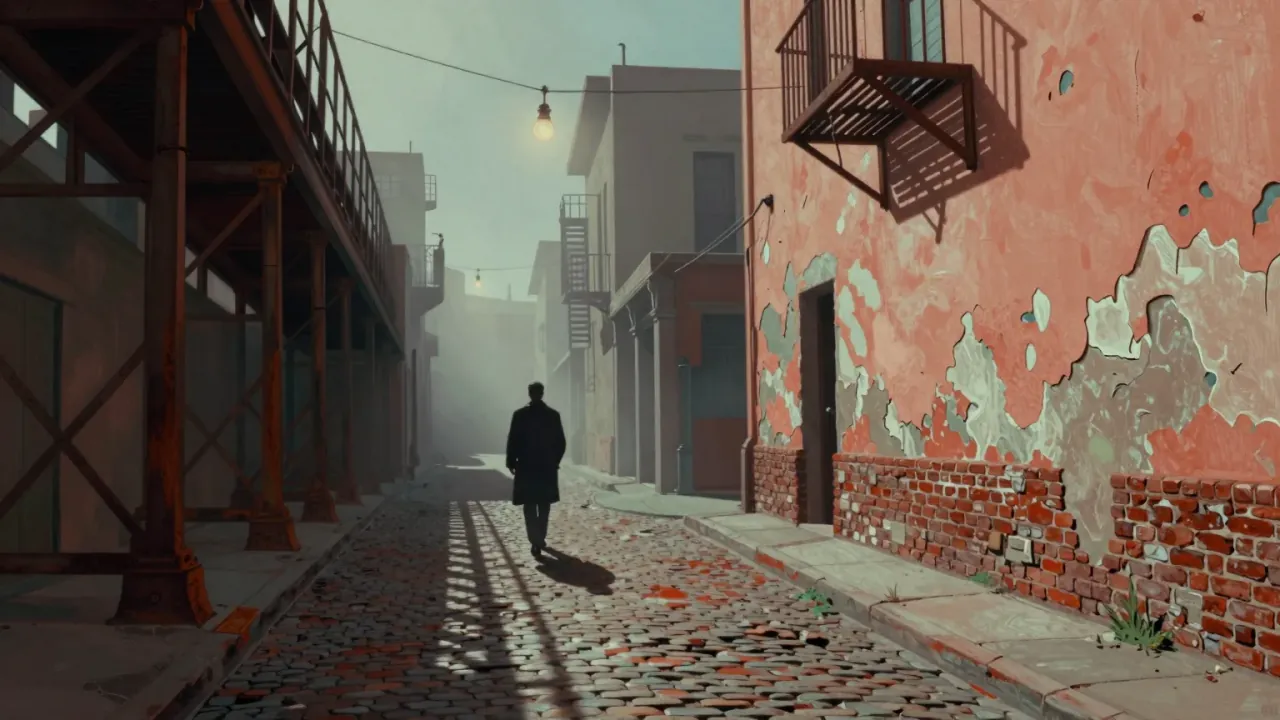
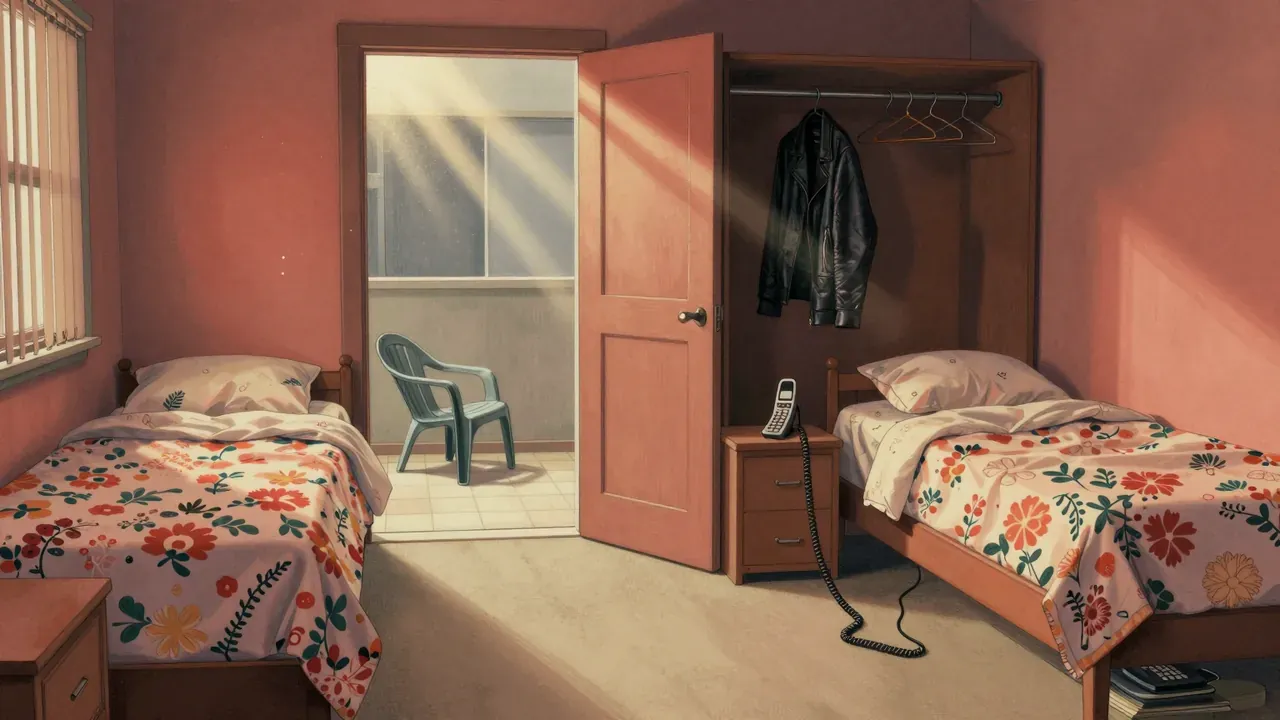
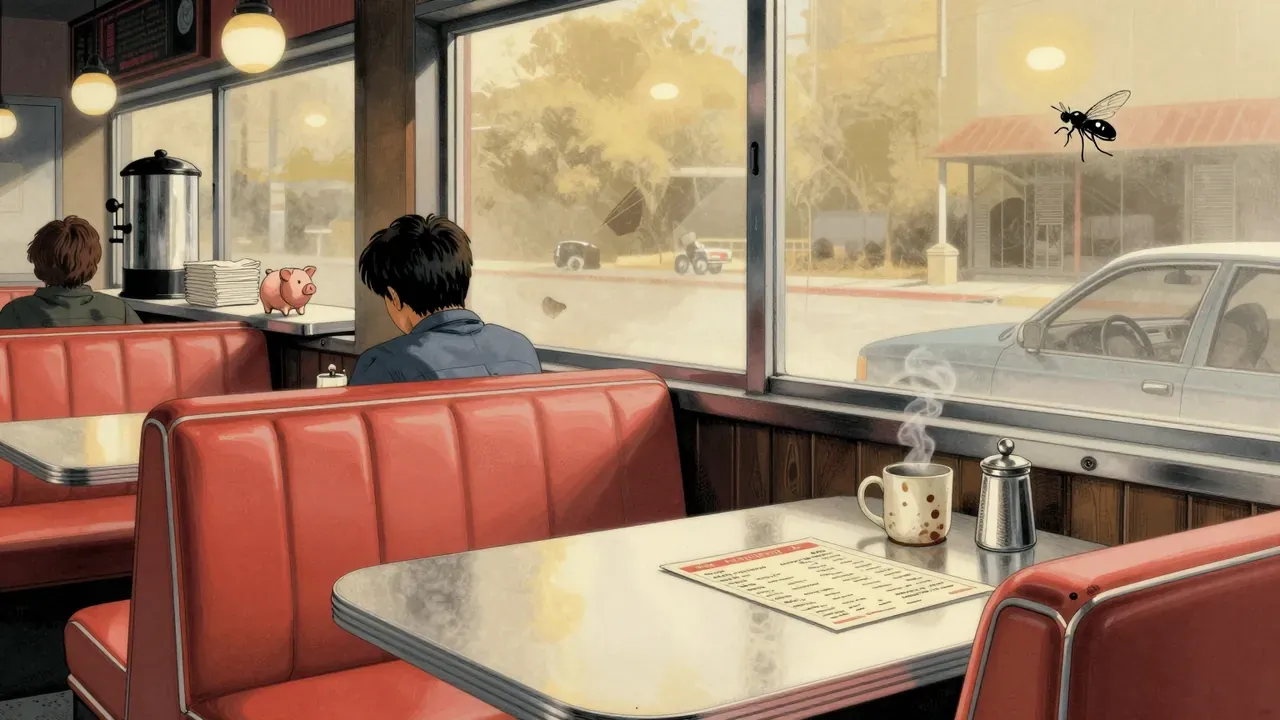
The Doom Generation is a 1995 American teen film written and directed by Gregg Araki, conceived as the second part of his Teenage Apocalypse Trilogy. It attempts a stylised, hyperreal distillation of adolescent disaffection — not as mood or metaphor, but as physical terrain: sun-bleached Los Angeles at night, convenience stores under fluorescent glare, motel bathtubs, abandoned warehouses. Its ambition is structural and tonal: to collapse satire, thriller, road movie and teen romance into a single nervous system, where violence and sex are delivered with the same flat affect as a Dorito offer. It declares itself ‘A Heterosexual Movie’ in irony-laced self-awareness, foregrounding desire without sincerity, allegiance without loyalty, consequence without catharsis. The film does not seek realism, nor even consistent internal logic; it builds a world where narrative causality gives way to associative rhythm — where a machete-suicide on local news justifies a fugitive’s moral suspension, and a severed penis becomes punctuation rather than plot point. It is less about what happens than how it feels to be unmoored inside late-capitalist adolescence.
How it moves
The story follows Jordan White and Amy Blue, teenage lovers who pick up Xavier Red — a drifter given the nickname ‘X’ — and descend into escalating violence across suburban LA. James Duval plays Jordan with slack-jawed passivity; Rose McGowan’s Amy is all clipped aggression and deadpan delivery; Johnathon Schaech’s X moves between predatory charm and hollow-eyed vacancy. Jim Fealy’s cinematography favours high-contrast night shooting, shallow focus, and saturated but desaturated colour — neon signs bleeding into asphalt, interiors lit like interrogation rooms. Dan Gatto’s score layers synth pulses and distorted guitar with abrupt silence. Gregg Araki edits with jarring cuts and lingering holds, refusing conventional pacing. Performances are stylised, not psychological: gestures are repeated, lines delivered like slogans, reactions withheld. The craft serves a deliberate artificiality — sets feel deliberately cheap, lighting deliberately theatrical, dialogue deliberately stilted. This is not amateurism but a calibrated refusal of naturalism, where every frame signals its own construction.
What sticks
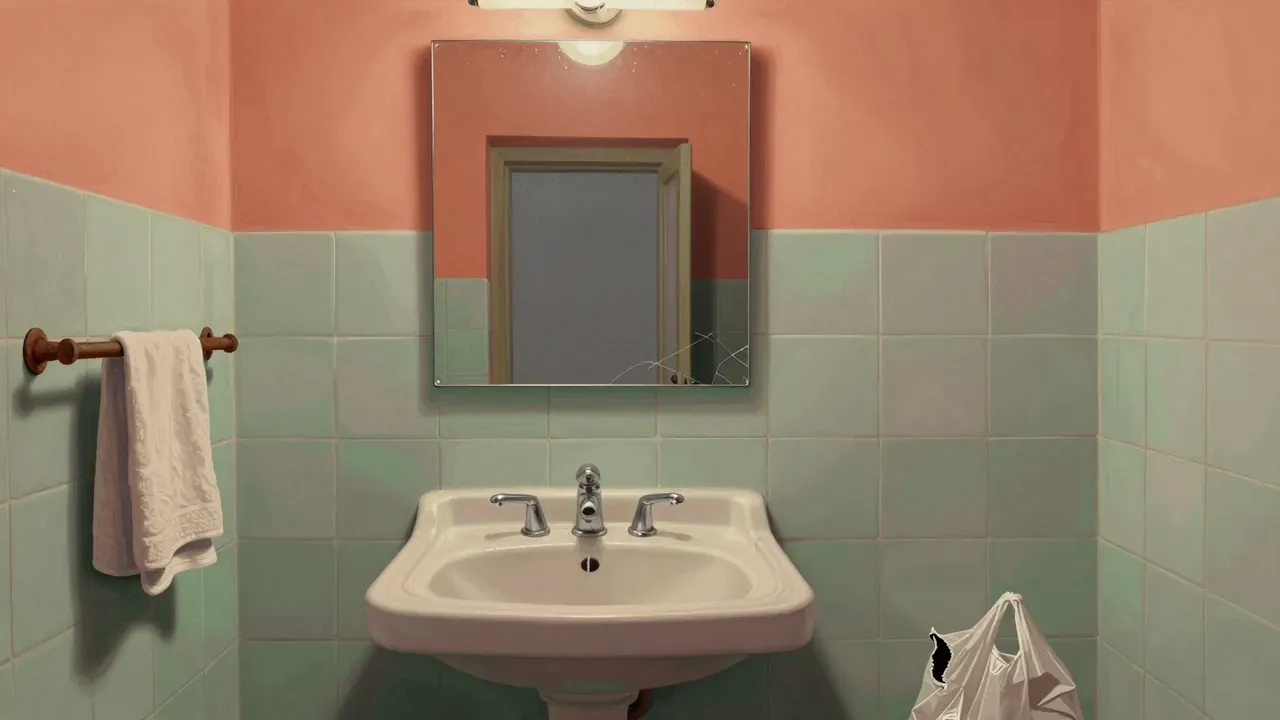
What lands is the film’s sustained tonal control: its ability to hold irony and nihilism in equilibrium without tipping into parody or despair. The visual grammar — the way a convenience store becomes a crime scene, a bathtub a stage, an American flag a prop for violation — lands with unnerving precision. McGowan’s performance anchors the film’s abrasive charisma; her timing, posture and vocal register make Amy both repellent and magnetic. The soundtrack’s jagged energy complements the editing’s staccato rhythm, particularly in sequences where action and music sync not to emotion but to absurd escalation. The film’s most effective moments are those that treat violence and intimacy as interchangeable currencies: the bathroom voyeurism, the motel threesome, the neo-Nazi assault — all rendered with the same clinical detachment that makes them feel less like shocks than logical extensions of the film’s worldview. Its humour lands not through punchlines but through relentless incongruity: a Dorito offered after castration, a news bulletin justifying moral collapse, a character named ‘X’ who functions less as person than variable.
Where it slips
What does not land is the film’s attempt to sustain thematic weight across its runtime. The political references — FBI pursuit, neo-Nazi antagonists, media saturation — remain surface motifs rather than integrated critique. The characters’ motivations erode under scrutiny: Amy’s shifting allegiances, Jordan’s passivity, X’s sudden sexual magnetism lack grounding beyond their function in the film’s aesthetic loop. Some violent set-pieces feel arbitrary rather than inevitable, their brutality unmoored from either character logic or satirical purpose. The film’s refusal of emotional consequence begins to read less like rigour and more like evasion — particularly in the final act, where the severing of Jordan’s penis and its forced ingestion by X lands as grotesque spectacle rather than thematic culmination. Roger Ebert’s objection to ‘attitude’ over content finds purchase here: the film’s ironic distance eventually starves its own stakes. Without a tether to recognisable psychology or social texture, the apocalyptic tone curdles into repetition rather than revelation.
What it means
The themes that matter are not apocalypse as event but as condition: the sense that meaning has already collapsed, and all that remains is gesture, consumption, and reflexive transgression. Adolescence is framed not as transition but as terminal state — bodies adrift in sprawl, identities assembled from media fragments (‘Sunshine’, ‘Kitten’, ‘Bambi’), relationships structured by temporary alignment rather than attachment. The film treats sexuality as both weapon and solvent: it dissolves boundaries, provokes violence, enables betrayal, yet never yields intimacy. Consumer space — convenience stores, fast-food windows, motels — stands in for civic infrastructure; the only institutions left are branded and transactional. Nihilism is not philosophical but environmental: the sky is always overcast, the light always artificial, the horizon always blocked by freeways. The film’s central tension lies between its punk-inflected energy and its underlying exhaustion — a generation that knows how to perform rebellion but no longer believes in its object. Its vision of America is not dystopian but post-dystopian: the collapse has happened, and now everyone is just driving.
Who it’s for
This film is for viewers who value stylistic coherence over narrative resolution, who respond to deadpan delivery and saturated colour as emotional registers, and who find intellectual satisfaction in films that treat tone as argument. It suits those familiar with Araki’s earlier work or with 1990s American indie cinema’s rejection of mainstream syntax. It is not for viewers who require psychological plausibility, moral anchoring, or narrative payoff — nor for those unsettled by graphic, non-simulated depictions of sexual violence and bodily mutilation. Those who expect satire to clarify rather than compound confusion will find it frustrating. Anyone seeking catharsis, growth, or even consistent character logic should look elsewhere. Its value lies in its consistency of vision, not its accessibility; its power is cumulative and atmospheric, not dramatic or empathetic. A viewer who values craft over comfort, irony over insight, and texture over truth will find it compelling. Others will find it exhausting, empty, or ethically opaque — and that disagreement is built into the film’s design.
Is it worth your time
Yes, it is worth your evening — if you approach it as a crafted artefact rather than a story to be followed. Its 85 minutes move with purposeful velocity, its images linger without explanation, its performances commit fully to their own artifice. It rewards attention to composition, sound design, and rhythmic editing far more than to plot or character arc. Those who dislike it tend to do so on grounds of moral indifference or aesthetic exhaustion — critics like Ebert found its detachment corrosive, while others dismissed its violence as gratuitous. What would change the verdict is not better acting or tighter plotting, but a willingness to accept its terms: that meaning resides in surface, that emotion lives in timing and hue, and that adolescence, in this rendering, is less a phase than a permanent weather system. It is not for everyone, but for its intended audience, it remains singularly potent.