The shape of memory
The Prince of Tides is a 1991 American drama film directed by Barbra Streisand, adapted from Pat Conroy’s 1986 novel. It attempts to translate the psychological weight of intergenerational trauma — rooted in a violent, secretive Southern childhood — into a structured cinematic narrative centred on therapy, memory, and romantic entanglement. The film frames Tom Wingo’s reluctant journey from coastal South Carolina to New York not as escape but as excavation: each session with psychiatrist Susan Lowenstein becomes a corridor back to buried events — rape, murder, enforced silence — that fractured his family and continue to govern his adult life. Unlike the novel, which dwells in extended flashbacks and sibling dynamics, the film tightens focus on the therapeutic relationship as both diagnostic tool and emotional catalyst. Its ambition is serious: to treat mental illness not as plot device but as lived consequence, and to locate dignity in characters who deflect pain with irony or stoicism. It seeks coherence without simplification, aiming for emotional truth over cathartic resolution. Word count: 142
The pace of healing
Stephen Goldblatt’s cinematography avoids stylisation: interiors are lit with quiet naturalism, favouring medium shots and steady framing that hold space for performance rather than impose rhythm. Don Zimmerman’s editing sustains deliberate pacing — long takes during therapy scenes, measured cuts between New York and Lowcountry flashbacks — allowing Nick Nolte’s physicality to carry unspoken tension: a pause, a shift in posture, the way he holds his shoulders when speaking of his father. Streisand’s direction shows consistent attention to behavioural detail — how Lowenstein adjusts her glasses before delivering difficult questions, how Bernard fidgets with a football when asked about music. James Newton Howard’s score underscores but does not dictate mood; strings swell only where silence would feel like evasion. The script by Becky Johnston and Pat Conroy streamlines the novel’s episodic structure, tightening cause and effect but at the cost of some psychological texture. Performances are grounded: Nolte’s Tom is weary but never passive, Streisand’s Lowenstein precise without coldness, Blythe Danner’s Sallie brittle with suppressed exhaustion. Word count: 153
The weight of a pause
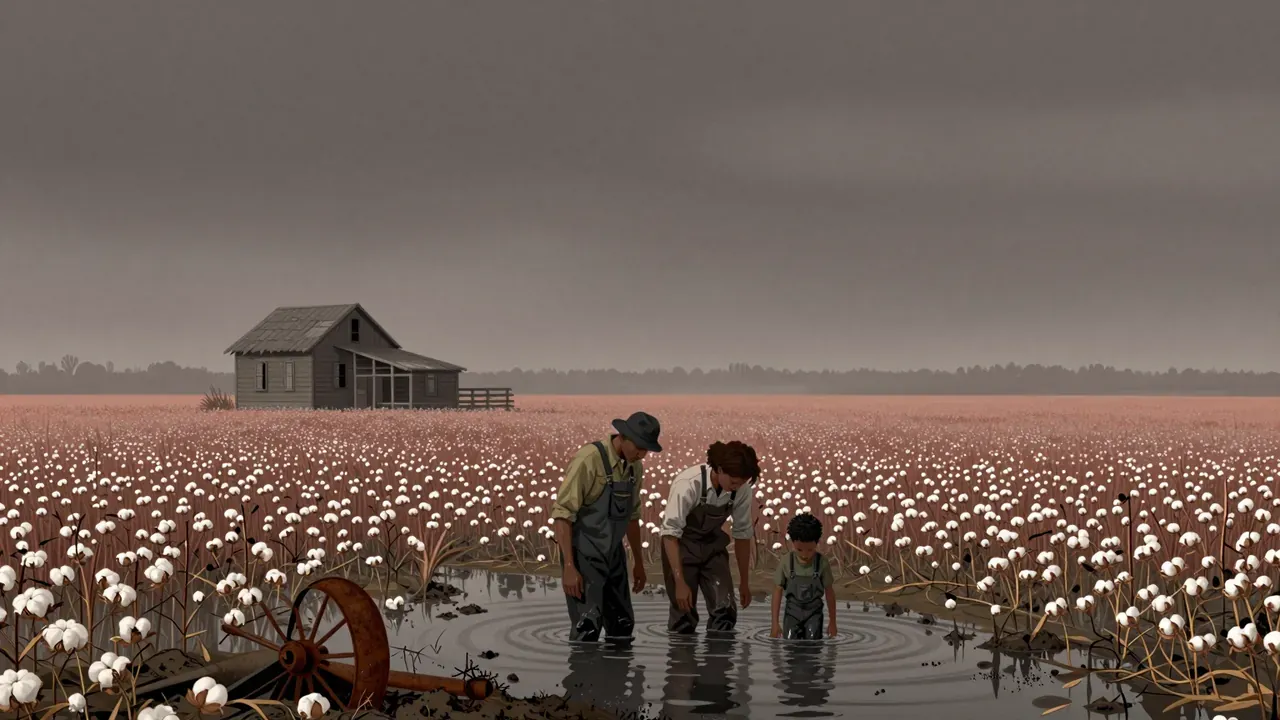
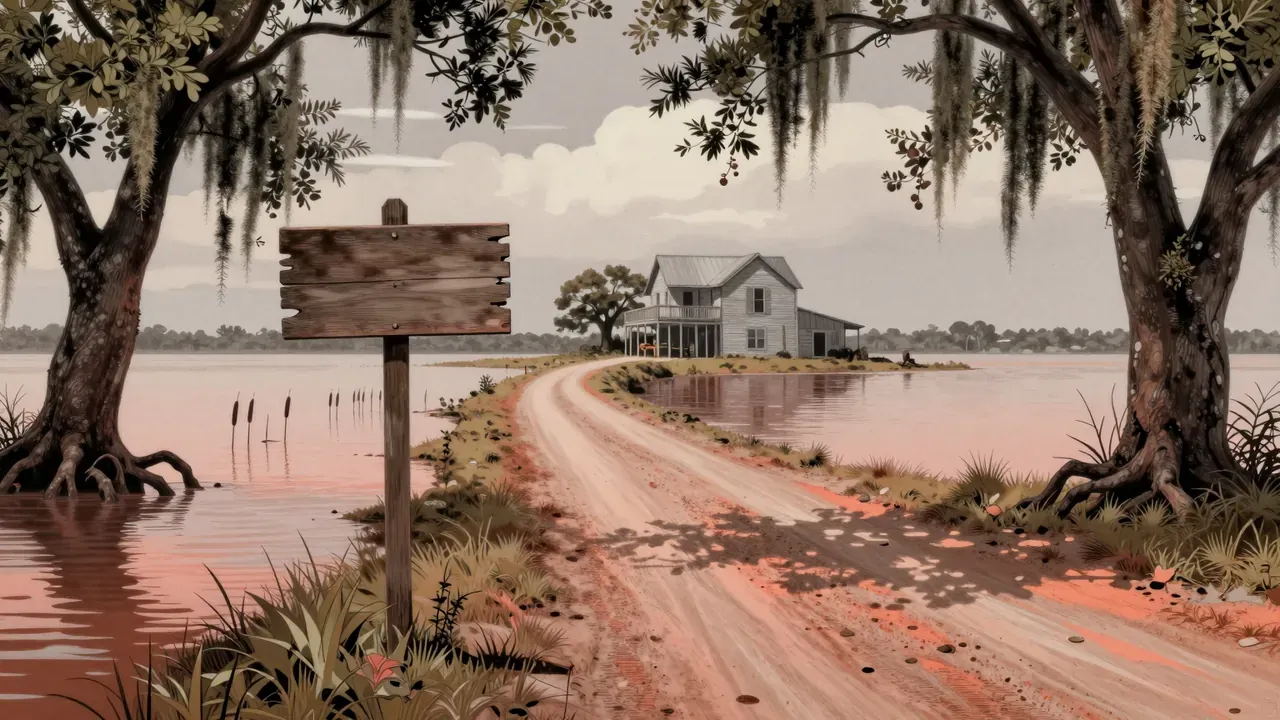
What lands is the cumulative weight of withheld history. The scene where Tom recounts the home invasion — not as spectacle but as flat, exhausted testimony — carries force because it follows weeks of careful character work: we have seen how he flinches at sudden noise, how he deflects with dry humour, how he watches his sister’s hospital room door as if expecting it to open on something worse than reality. The film earns its emotional peaks through restraint: Savannah’s dissociation feels real because Melinda Dillon plays it as absence rather than affectation; Herbert Woodruff’s condescension stings because Jeroen Krabbé underplays it, letting his disdain settle in pauses and glances. The Lowcountry locations — Beaufort’s moss-draped oaks, the waterlogged stillness of St. Helena Island — function not as backdrop but as silent witnesses, their quiet persistence contrasting with the characters’ volatility. Even minor roles land: George Carlin’s Eddie Detreville offers brief, unforced warmth without sentimentality, anchoring Tom in a version of community that isn’t defined by blood. The film’s moral clarity — that silence compounds trauma, that naming harm is necessary before healing — never feels didactic because it emerges from action, not speech. Word count: 157
The fault line of feeling
What does not land is the central romance. Its development feels structurally imposed rather than emotionally inevitable: Tom and Lowenstein move from clinical distance to intimacy with insufficient friction or hesitation, their connection accelerated by proximity and shared purpose rather than mutual revelation. The film gives Lowenstein little interior life beyond her professional competence and maternal concern for Bernard; her marriage to Herbert exists mostly to be transgressed, not interrogated. When Tom declares he loves his wife ‘longer, not more’, the line rings hollow because the film has done little to dramatise what that longer love contains — its routines, its compromises, its quiet endurance. The removal of Luke’s full presence from the novel flattens the family’s moral architecture: his death, in the book, is a hinge; here, he remains spectral, his absence unexamined. The final reconciliation with Sallie feels less like earned renewal and more like narrative housekeeping — a return to order that sidesteps the ambiguity of sustained change. Some viewers may find the therapy sessions overly expository, turning complex psychological processes into dialogue-driven exposition. Word count: 154
The geography of silence
The themes that matter are silence as inheritance, the geography of memory, and the labour of repair. The film treats the South Carolina Lowcountry not as setting but as palimpsest: every flooded field, every shuttered porch, every stretch of tidal marsh holds traces of what was buried — bodies, truths, identities. Trauma is shown as sedimentary: layered, compressed, liable to surface under pressure. The ‘Southern way’ Tom describes — laughing instead of crying — is not regional caricature but a survival grammar, passed down like a dialect. The film also examines care as asymmetrical labour: Lowenstein listens, interprets, holds space; Tom speaks, remembers, risks exposure; Bernard absorbs both, learning to name desire only after Tom models it. There is no easy redemption arc. Healing is partial, non-linear, and socially contingent — Tom’s return home is not a cure but a renegotiation, his happiness qualified by awareness of what remains unresolved. The film resists the idea that understanding trauma guarantees recovery; it suggests instead that recognition is the first condition of agency, however modest. Word count: 150
The terms of engagement
This film is for viewers who value psychological realism over plot propulsion, who tolerate slow accumulation in exchange for emotional precision, and who accept that some wounds leave scars rather than lessons. It suits those familiar with the grammar of therapy narratives or drawn to performances where meaning lives in the space between lines. It is not for viewers who require narrative economy, clear moral binaries, or resolution that feels earned rather than negotiated. Those put off by lengthy interior monologues or who find therapeutic dialogue inherently static may disengage early. Fans of the novel may object to the foregrounding of romance at the expense of sibling bonds and regional specificity. A viewer who values thematic cohesion over emotional authenticity — or who expects the director’s hand to be more formally assertive — may find Streisand’s approach too deferential to the material. Word count: 147
The measure of return
Yes, it is worth your evening — provided you watch it without expectation of momentum or closure. Its 126 minutes unfold with the gravity of a conversation that cannot be rushed: the pacing serves the subject, not the schedule. You will not leave energised, but you may leave quieter, more attentive to how people hold pain. It rewards patience not with payoff but with resonance — the kind that lingers in the way you listen to someone else speak, or notice how light falls across a room after trauma has been named. Those who prefer tightly wound plots or ironic detachment will likely find it overlong and earnest. But for viewers willing to sit with discomfort, uncertainty, and the quiet courage of speaking aloud what was meant to stay buried, the film delivers substance without sermonising. Its value lies not in answers but in the fidelity with which it honours the difficulty of asking the right questions. Word count: 149