filmbriefs
Highest rated

All briefs

2035 briefs · 26452 min · 289–384 on page 4 of 22
13:00

KPop Demon Hunters

Chris Appelhans, Maggie Kang · 2025

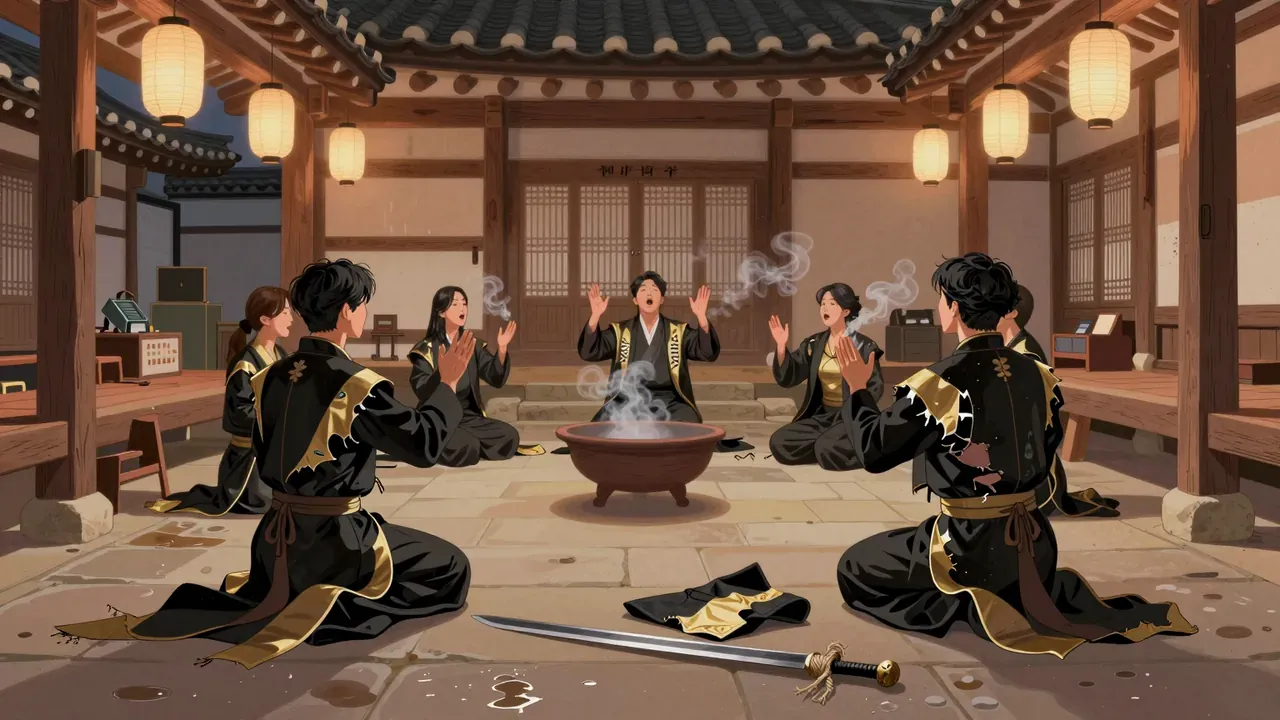
KPop Demon Hunters is a 2025 Sony Pictures Animation film co-directed by Maggie Kang and Chris Appelhans. It follows Huntrix, a K-pop girl group who double as demon hunters rooted in Korean folklore, as they confront the Saja Boys — boy-band idols secretly tied to the jeoseung saja. Animated in a bold 3D style inspired by music videos and Korean drama, with songs and score by Marcelo Zarvos, it blends myth, music, and modernity. Released on Netflix, it won Best Animated Feature and Best Original Song at both the Golden Globes and Oscars.
13:00

Kuroneko

Kaneto Shindō · 1968

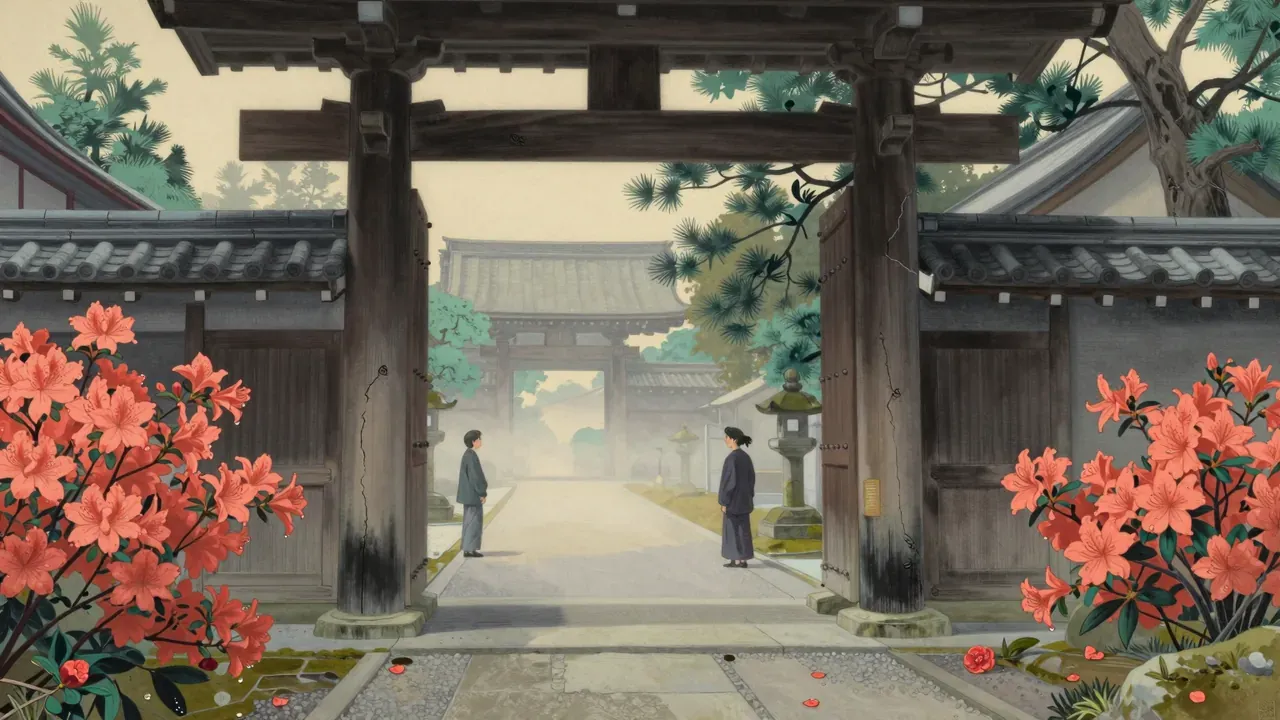
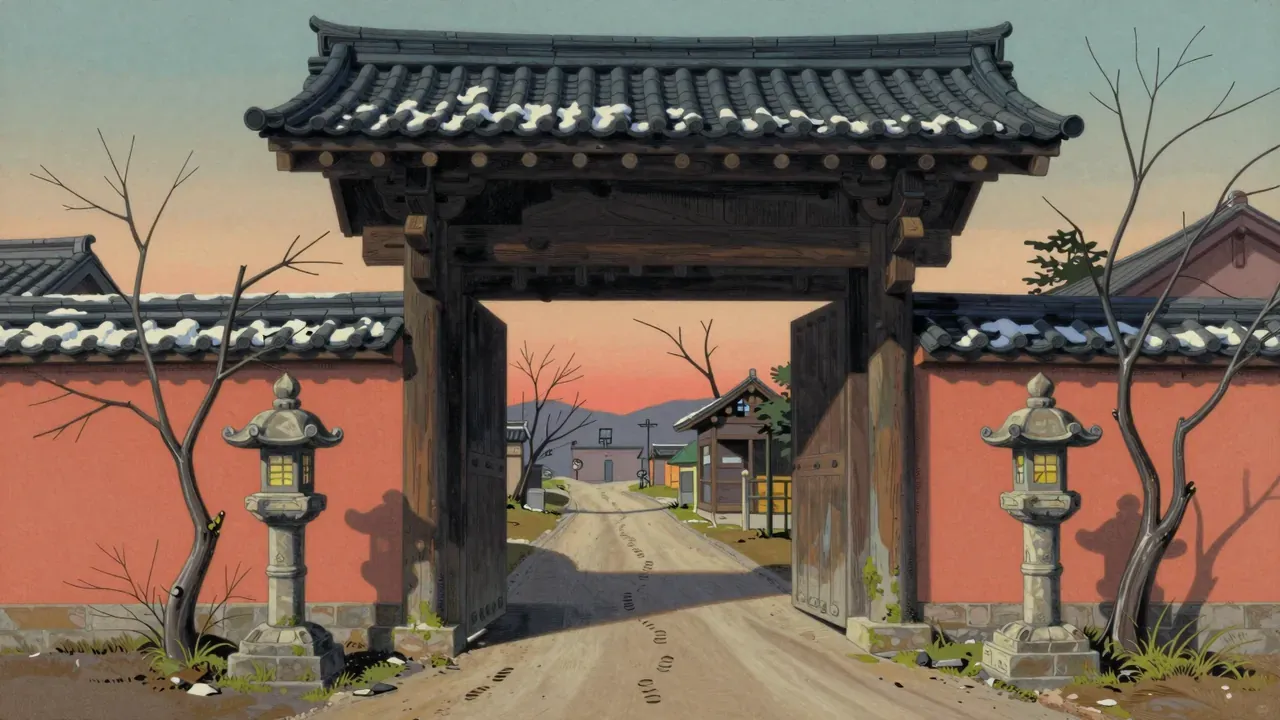
Kaneto Shindō’s 1968 Kuroneko is a black-and-white jidaigeki horror film about two women who return as vengeful spirits after being raped and murdered by samurai. Set in feudal Japan during civil war, it follows their spectral seductions and killings, and the tragic confrontation with the son-husband who must destroy them — even as he loves them. Stylised with Noh and kabuki techniques, shot by Kiyomi Kuroda, and scored by Hikaru Hayashi, it is a study in restraint, doubling, and irreversible consequence.

13:00

Kwaidan

Masaki Kobayashi · 1964

Masaki Kobayashi’s 1964 Kwaidan is a four-part Japanese horror anthology adapted from Lafcadio Hearn’s folktales. Shot on vast, artificially lit soundstages, it replaces narrative drive with painterly control of colour, silence, and surface. Yoshio Miyajima’s cinematography flattens space; Tōru Takemitsu’s score uses prepared piano and charged silence; Yōko Mizuki’s script preserves Hearn’s archaic cadence. The film treats spirits not as agents of vengeance but as forces of immutable consequence — indifferent, inevitable, aesthetic. Though commercially unsuccessful and financially ruinous for its production company, it won the Special Jury Prize at Cannes and is now regarded as a landmark of stylised cinema.

13:00

La Bête Humaine

Jean Renoir · 1938

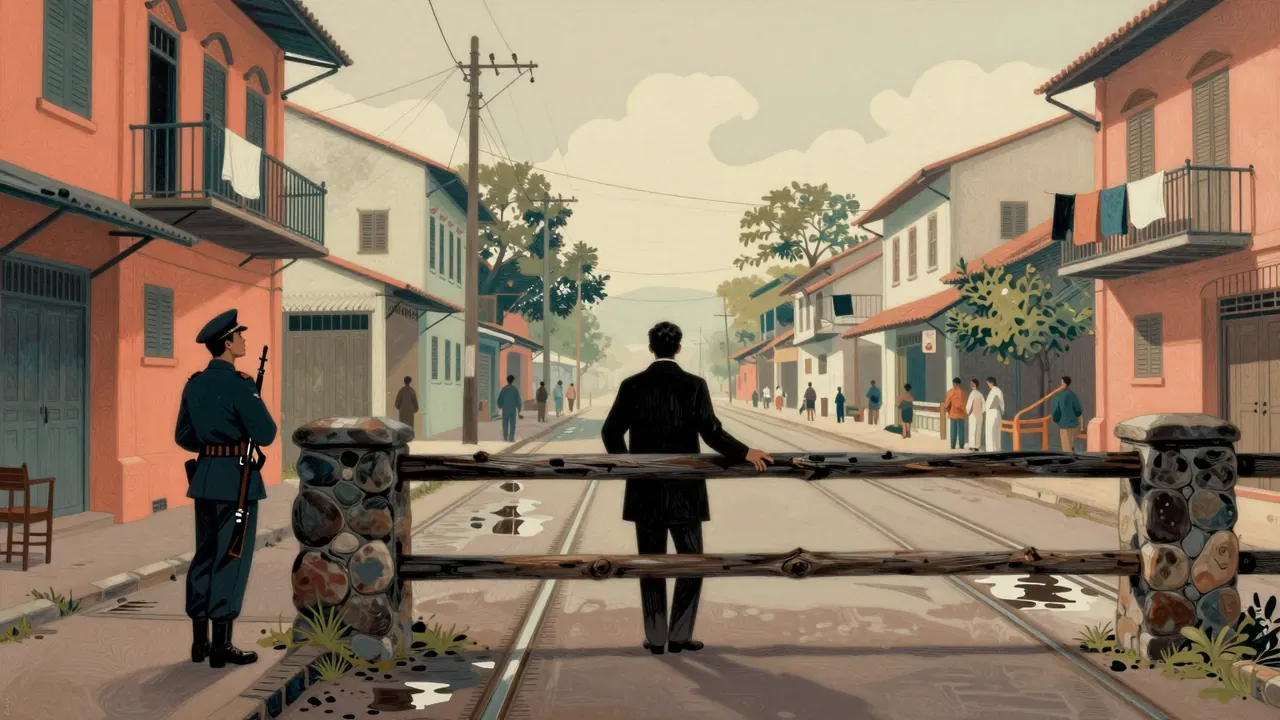
Jean Renoir’s 1938 adaptation of Zola’s La Bête humaine follows railway driver Lantier, whose inherited violent impulses collide with a web of guilt, desire, and industrial routine. Shot by Curt Courant and scored by Joseph Kosma, it uses the railway as both setting and structural principle — a world governed by timetables, steam, and inescapable consequence.

13:00

La Cérémonie

Claude Chabrol · 1995

Claude Chabrol’s 1995 adaptation of Ruth Rendell’s A Judgment in Stone follows Sophie, an illiterate maid hired by a wealthy Brittany family, and Jeanne, a disgraced postmistress. Their bond curdles into shared contempt for the Lelièvres’ unexamined privilege, culminating in a methodical, unemphatic massacre. Shot with clinical precision by Bernard Zitzermann and performed with chilling understatement by Isabelle Huppert and Sandrine Bonnaire, the film sustains a tone of moral neutrality that renders its violence not shocking but structurally inevitable.

13:00

La Chienne

Jean Renoir · 1931

Jean Renoir’s 1931 La Chienne adapts Georges de La Fouchardière’s story into a stark, unsentimental portrait of moral erosion. Michel Simon plays Maurice Legrand, a timid cashier whose infatuation with a prostitute (Janie Marèse) sets off a chain of theft, deception and murder — all rendered with clinical precision by Renoir and cinematographer Theodor Sparkuhl. The film’s power lies in its restraint: no music swells, no camera lingers, no character explains themselves. It is a study in how dignity dissolves not in catastrophe, but in the quiet transfer of a signature, a painting, a name.

13:00

La Ciénaga

Lucrecia Martel · 2001

Lucrecia Martel’s 2001 debut is a rigorously observed Argentine drama set in the Salta highlands, following a dissolute bourgeois family over a listless summer. Eschewing plot and psychology, it builds its world through ambient sound, fragmented dialogue, and low-angle, sun-drenched cinematography. The film’s power lies in its sustained atmosphere of inertia — moral, social, climatic — and its refusal to offer resolution, explanation, or redemption.

13:00

La Collectionneuse

Éric Rohmer · 1967

Éric Rohmer’s 1967 La Collectionneuse, his first in colour and fourth of the Six Moral Tales, follows Adrien as he spends a summer at a villa near Saint-Tropez with friends and a younger woman named Haydée. Through restrained performances, natural-light cinematography by Néstor Almendros, and dialogue-driven scenes, the film traces subtle shifts in power, self-perception, and attraction — refusing resolution, explanation, or moral verdict. It won the Silver Bear Grand Jury Prize at Berlin and remains a benchmark of French arthouse precision.

13:00

La Grande Illusion

Jean Renoir · 1937

La Grande Illusion (1937), directed by Jean Renoir, follows French officers imprisoned in German camps during the First World War. Through restrained performances, unadorned cinematography, and a structure built on observation rather than action, it explores how class, nationality, and personal dignity persist — and sometimes collapse — under pressure. Its enduring power lies not in grand statements but in quiet, specific moments: a shared meal, a sung anthem, a winter refuge, a final, reluctant shot.

13:00

La Jetée

Chris Marker · 1962

A 28-minute French photomontage from 1962, La Jetée tells a post-nuclear time-travel story almost entirely through still black-and-white photographs, linked by voice-over narration and a sparse orchestral score. Its protagonist is sent from a ruined Paris to the past and future, bound by a childhood memory of a woman on an airport jetty — a memory that proves to be his own death. Built as a photo novel, not a film, it treats time as recursive, memory as architectural, and perception as the only continuous medium across stillness.

13:00

La Notte

Michelangelo Antonioni · 1961

Michelangelo Antonioni’s 1961 drama follows a novelist and his wife across one day and night in Milan, observing their emotional detachment without exposition or resolution. Shot by Gianni Di Venanzo and scored by Giorgio Gaslini, it relies on composition, silence, and sustained takes to render modern isolation as a physical condition. Winner of the Golden Bear at Berlin, it forms the central film of Antonioni’s 'Trilogy of Incommunicability'.

13:00

La Pointe Courte

Agnès Varda · 1955

Agnès Varda’s 1955 debut interweaves a Parisian couple’s marital crisis with the daily resistance of Sète’s fishing quarter against a shellfish ban. Shot on location with locals and two professional actors, it blends fiction and documentary without hierarchy, trusting observation over exposition. Its quiet power lies in duration, texture, and the unforced coexistence of private and collective life.

13:00

La Promesse

Luc Dardenne, Jean-Pierre Dardenne · 1996

A teenage mechanic in Seraing, Belgium, becomes entangled in his father’s exploitation of undocumented migrants. After witnessing a fatal accident and helping conceal it, he begins a slow, quiet rebellion — not through protest or speech, but through small, irreversible acts of care and refusal. Shot chronologically in natural light, with no score or exposition, the film traces ethical awakening as physical labour, not intellectual choice.

13:00

La Ronde

Max Ophüls · 1950

Max Ophüls’ 1950 French adaptation of Schnitzler’s Reigen traces ten linked amorous encounters across Viennese society, using recurring characters, circular structure and fluid camerawork to treat desire as a social system rather than a private emotion. Christian Matras’ cinematography and Oscar Straus’ waltz score reinforce its formal logic, while performances by Simone Signoret, Danielle Darrieux and Gérard Philipe anchor its irony in physical precision.

13:00

La Strada

Federico Fellini · 1954

Federico Fellini’s 1954 drama follows Gelsomina, a young woman bought by strongman Zampanò and taken on the road, where she encounters brutality, absurdity and fleeting grace. Shot in rural Italy by Otello Martelli, scored by Nino Rota and anchored by Giulietta Masina’s restrained performance, it rejects narrative resolution in favour of sustained, tactile presence. It won the first Academy Award for Best International Feature Film.

13:00

Lacombe, Lucien

Louis Malle · 1974

Set in occupied France in June 1944, Lacombe, Lucien follows a disaffected 17-year-old farm boy who, after being rejected by the Resistance, is recruited by the Carlingue — French auxiliaries of the Gestapo. With no psychological exposition or moral framing, the film observes his gradual immersion in violence, his uneasy relationship with a Jewish family in hiding, and his eventual flight. Directed by Louis Malle and co-written with Patrick Modiano, it uses restrained performances, naturalistic cinematography, and deliberate pacing to explore how moral emptiness becomes operational in times of crisis.

13:00

Lady Snowblood

Toshiya Fujita · 1973

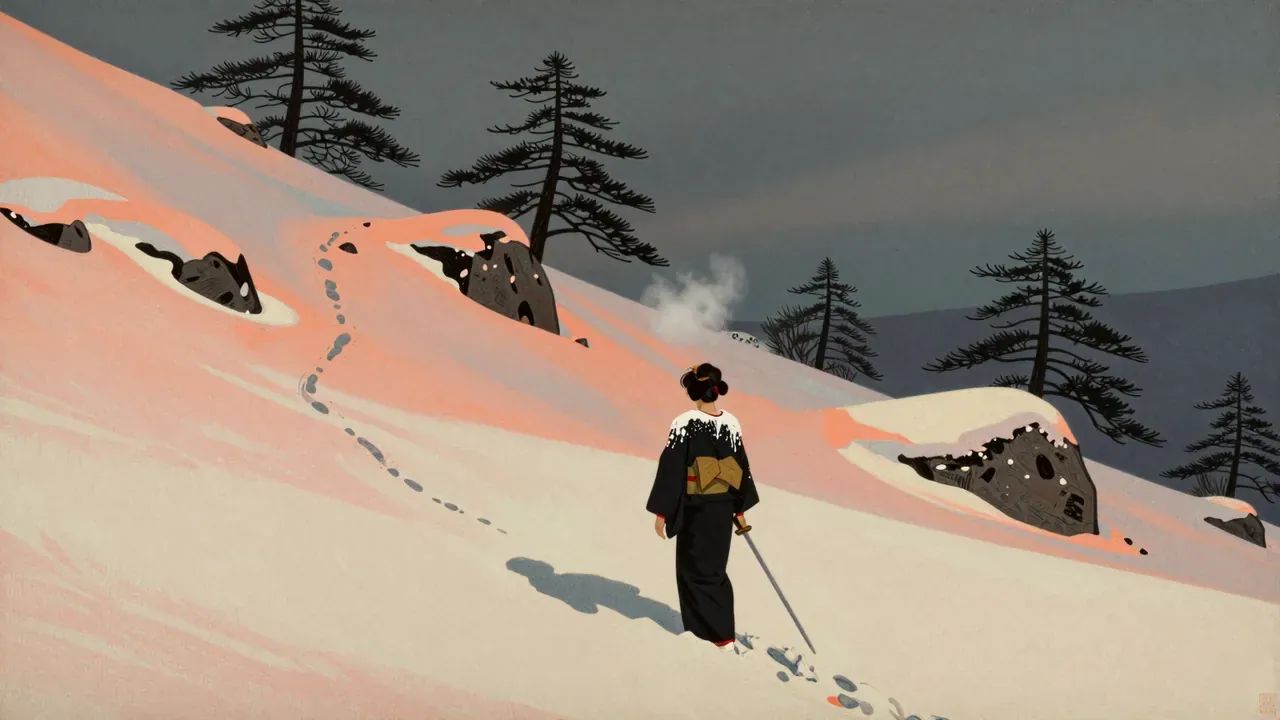
Lady Snowblood (1973), directed by Toshiya Fujita and starring Meiko Kaji, is a tightly constructed jidaigeki thriller adapted from Kazuo Kamimura’s manga. It follows Yuki, raised in prison and trained as an assassin to avenge her mother’s rape and her brother’s murder. Structured in fractured chronology, the film uses stark cinematography, minimal dialogue, and deliberate pacing to render vengeance as inherited obligation rather than personal release. Its influence on later works — notably Kill Bill — is undeniable, but its own power lies in austerity, not homage.

13:00

L'Argent

Robert Bresson · 1983

Robert Bresson’s 1983 drama L'Argent follows a forged 500-franc note as it passes through increasingly desperate hands, culminating in murder and confession. Shot with austere precision by Pasqualino De Santis and Emmanuel Machuel, edited by Jean-François Naudon, and scored with two diegetic Bach recordings, it is a rigorously unsentimental study of moral erosion — not as personal failure, but as systemic inevitability.

13:00

L'Atalante

Jean Vigo · 1934

Jean Vigo’s 1934 French drama follows a newlywed couple living aboard the barge L’Atalante as it navigates France’s canals. With Dita Parlo, Jean Dasté, and Michel Simon, and shot by Boris Kaufman, it builds emotion through texture, silence, and precise observation rather than exposition. Though incomplete at Vigo’s death from tuberculosis, its poetic realism and commitment to sensory truth have secured its place as a landmark of arthouse cinema.

13:00

Late Autumn

Yasujirō Ozu · 1960

Yasujirō Ozu’s 1960 drama follows a widow and her daughter in Tokyo as three friends attempt to arrange marriages for both. With quiet precision, the film traces the unspoken tensions of filial duty, ageing, and companionship — not through crisis but through accumulation: of glances, silences, and small, repeated gestures. Setsuko Hara and Yōko Tsukasa anchor a cast that treats emotion as behaviour, not exposition. Shot by Yūharu Atsuta and edited by Yoshiyasu Hamamura, it is a masterclass in compositional restraint.

13:00

Late Spring

Yasujirō Ozu · 1949

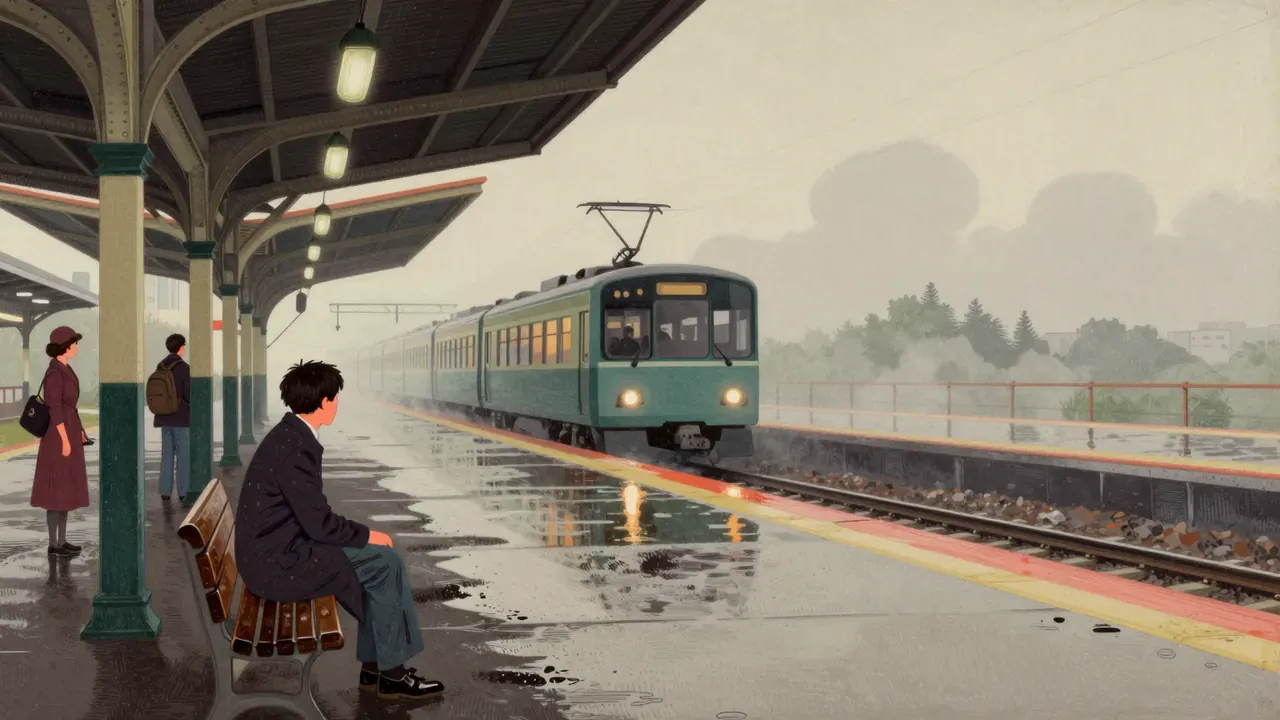
Yasujirō Ozu’s 1949 drama follows Noriko and her father in the weeks before her arranged marriage. Set in occupied Japan, it unfolds through quiet rituals — tea ceremonies, temple visits, train rides — with minimal dialogue and fixed, low-angle compositions. Chishū Ryū and Setsuko Hara perform with restrained precision; Yūharu Atsuta’s cinematography treats space as emotional architecture. The film’s power lies in accumulation, not climax: in repetition, omission, and the weight of what remains unsaid.

13:00

Le 15/8

Chantal Akerman · 1973

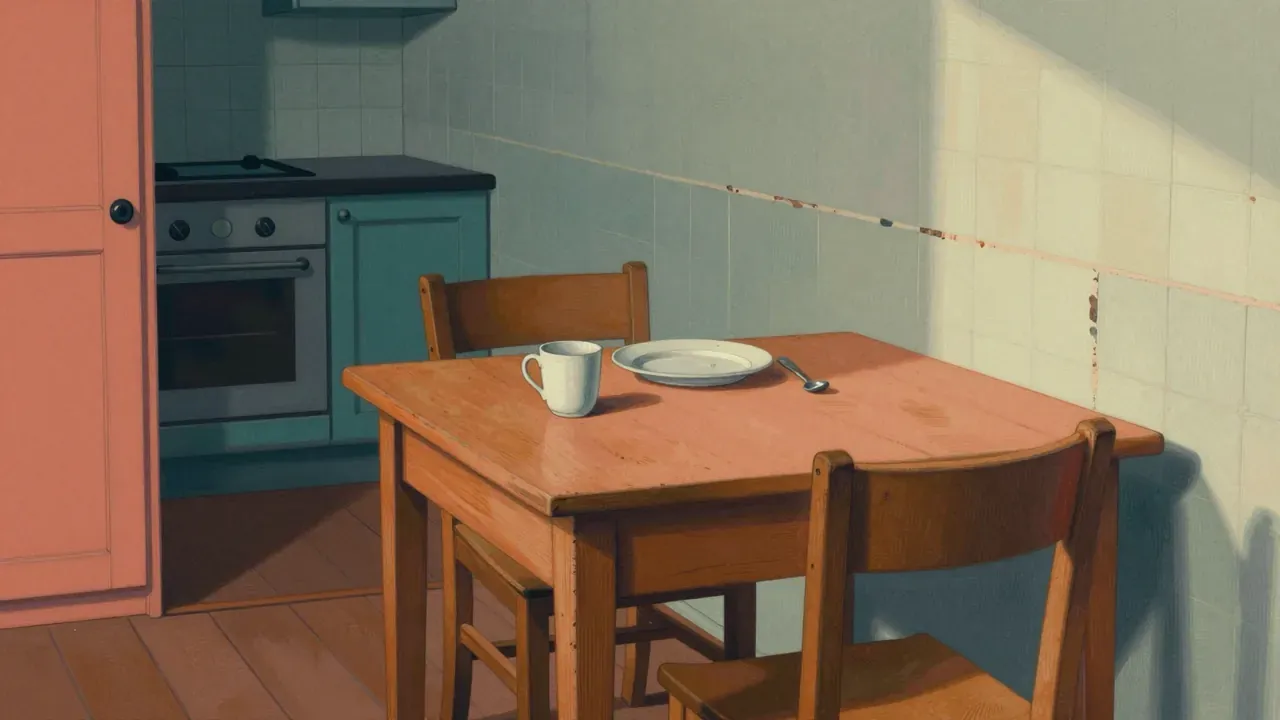
Le 15/8 is a 1973 Belgian essay-film by Chantal Akerman, shot in black-and-white on 16mm in a Brussels apartment. Over thirty-two minutes and seven static takes, it observes a young woman’s uneventful afternoon — eating, reading, gazing — with no dialogue, music, or narrative. Its power lies in duration, silence, and rigorous attention to light, space, and repetition. A foundational work of structural and feminist avant-garde cinema, it asks the viewer to inhabit time rather than consume it.

13:00

Le Beau Serge

Claude Chabrol, Philippe de Broca, Claude de Givray · 1958

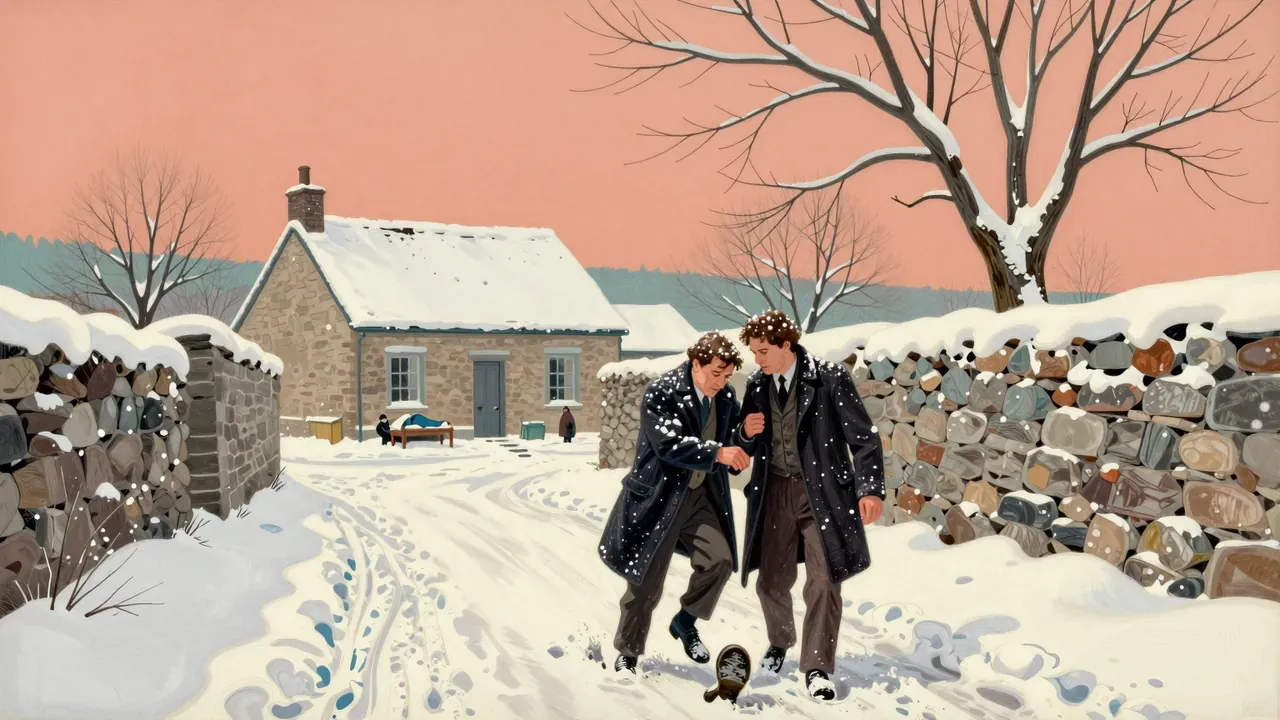
Claude Chabrol’s 1958 debut follows François, a Parisian recovering from illness, as he returns to his rural hometown and tries—and fails—to rescue his alcoholic childhood friend Serge. Shot in winter in Sardent with documentary restraint, the film observes provincial life without sentiment or judgment, building its moral weight through silence, duration, and understated performances. It is less a story of redemption than of endurance, where care and harm blur, and salvation looks like dragging someone home through snow.

13:00

Le Cercle rouge

Jean-Pierre Melville · 1970

Jean-Pierre Melville’s 1970 heist film follows three men — a released convict, an escaped prisoner, and a disgraced marksman — whose paths converge to rob a Paris jeweller. Shot by Henri Decaë and scored sparsely by Éric Demarsan, it sustains tension through restraint: long takes, minimal dialogue, and a thirty-minute heist sequence that prioritises procedure over panic. Its themes — professionalism as ritual, silence as language, fate as convergence — are embedded in structure, not exposition.

13:00

Le deuxième souffle

Jean-Pierre Melville · 1966

Jean-Pierre Melville’s 1966 crime film follows Gustave Minda, a respected gangster who escapes prison only to find his code of silence and loyalty increasingly incompatible with a world that no longer observes the same rules. Adapted from José Giovanni’s novel, it charts Gu’s final days with austere precision — from a botched extortion to a platinum heist, a police trap, and a fatal confrontation in a Paris stairwell. Lino Ventura anchors the film with restrained physicality; Marcel Combes’ flat, naturalistic cinematography and Bernard Gérard’s sparse score reinforce its unblinking tone.

13:00

Le Doulos

Jean-Pierre Melville · 1962

Jean-Pierre Melville’s 1962 crime film Le Doulos follows Maurice Faugel and Silien through a web of murder, deception, and mistaken identity. Adapted from Pierre Lesou’s novel, it uses stark cinematography, elliptical editing, and functional dialogue to construct a closed system of cause and effect — where truth is assigned, not revealed, and loyalty is procedural, not emotional.

13:00

Le Jour Se Lève

Marcel Carné · 1939

Marcel Carné’s 1939 French drama Le Jour Se Lève follows François, a foundry worker who kills a rival and barricades himself in his apartment, besieged by police. Through a sustained flashback, the film traces his doomed love for Françoise, manipulation by Valentin, and fraught relationship with Clara — all leading inevitably to his suicide. Built on Jacques Prévert’s script and Alexandre Trauner’s claustrophobic set, it is a landmark of poetic realism: restrained, atmospheric, and structurally audacious.

13:00

Le Million

René Clair · 1931

René Clair’s 1931 French musical comedy Le Million follows an artist racing to recover a lottery ticket sewn into a jacket that has passed through criminals, opera singers and dancers. With Georges Périnal’s crisp cinematography, Armand Bernard’s recurring score and René Le Hénaff’s precise editing, it treats sound, movement and narrative as interlocking rhythms — not as storytelling tools, but as the film’s governing logic.
13:00

Leave Her to Heaven

John M. Stahl · 1945

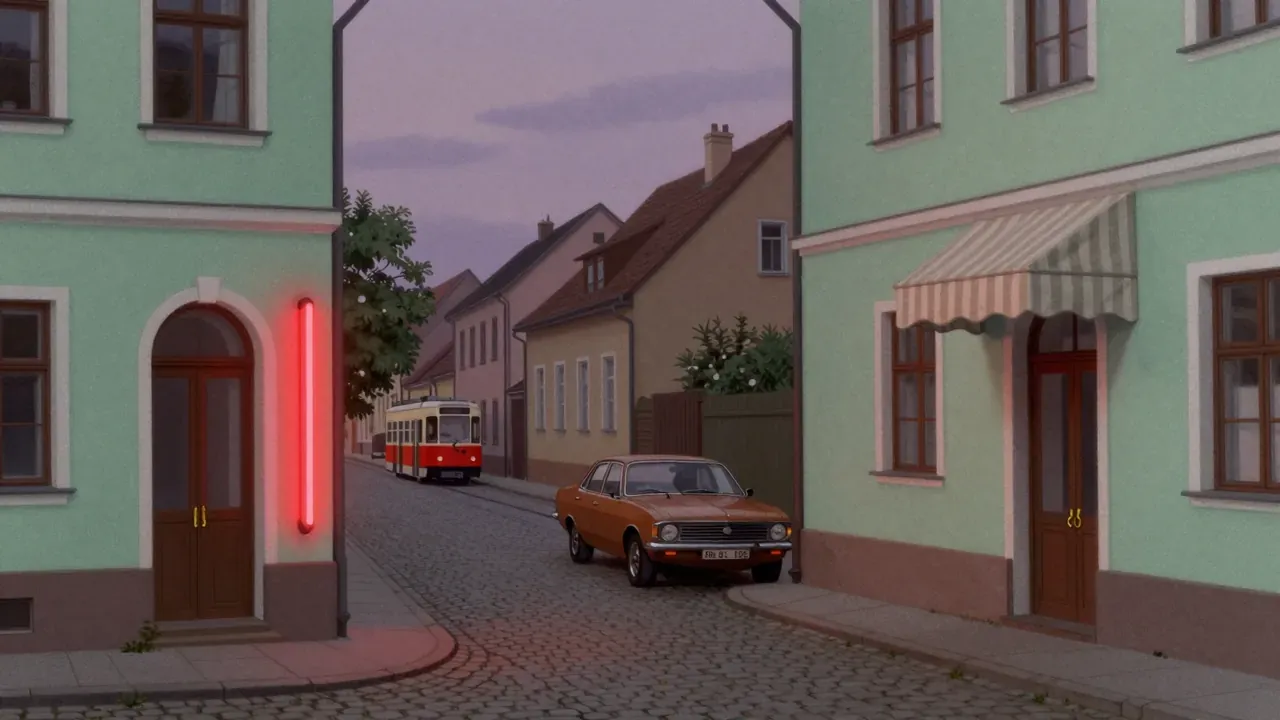
Leave Her to Heaven (1945), directed by John M. Stahl, is a Technicolor psychological drama starring Gene Tierney as Ellen Berent, a woman whose obsessive love curdles into calculated violence. Adapted by Jo Swerling from Ben Ames Williams’s novel, it uses Leon Shamroy’s precise cinematography and Tierney’s controlled performance to map the internal architecture of possession. Though some narrative threads remain underdeveloped and its protagonist’s passivity tests credulity, the film endures as a formally rigorous study of zero-sum love — selected for preservation by the Library of Congress in 2018.

13:00

Léon Morin, Priest

Jean-Pierre Melville · 1961

Set in German-occupied France, Léon Morin, Priest follows Barny, a widowed atheist and communist, as she enters a theological dialogue with a young priest. Their conversations—calm, rigorous, unresolved—unfold against a backdrop of scarcity and danger. Directed by Jean-Pierre Melville and adapted from Béatrix Beck’s novel, the film resists melodrama, preferring quiet precision in performance, cinematography, and structure. It is less about conversion than continuity: how people maintain moral shape when the world collapses around them.

13:00

Les Misérables

Raymond Bernard · 1933

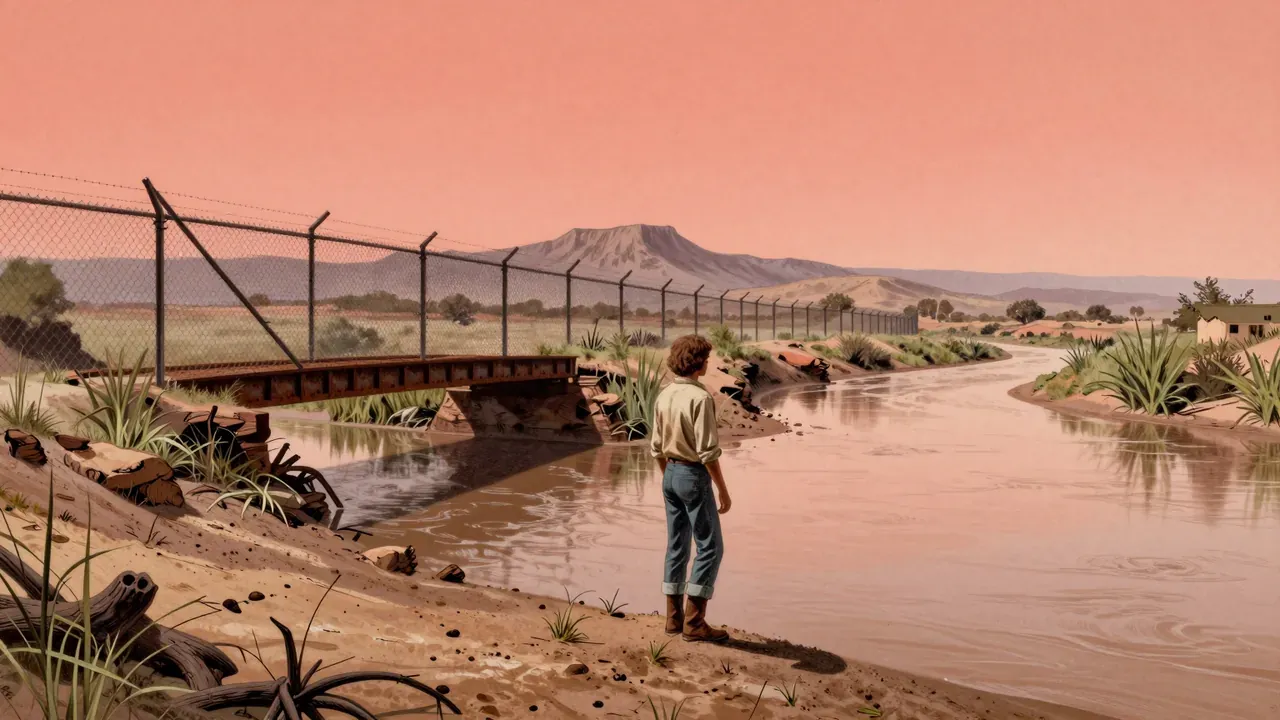
Raymond Bernard’s 1933 French adaptation of Les Misérables runs 281 minutes across three parts. Starring Harry Baur as Jean Valjean and Charles Vanel as Javert, it treats Victor Hugo’s novel as a civic document rather than literary property — emphasising systemic injustice, material poverty and the slow, unglamorous work of moral repair. Shot on location in Biot and at Victorine Studios, with sets by Lucien Carré and Jean Perrier and music by Arthur Honegger, it sacrifices romantic shorthand for ethical density. Though faithful in spirit, it omits key episodes involving Cosette and the sewers, flattening some arcs. Restored by Pathé in 2013 and Criterion in 2007, it remains the most structurally ambitious screen version of the novel.
13:00

Les Vacances de Monsieur Hulot

Jacques Tati · 1953

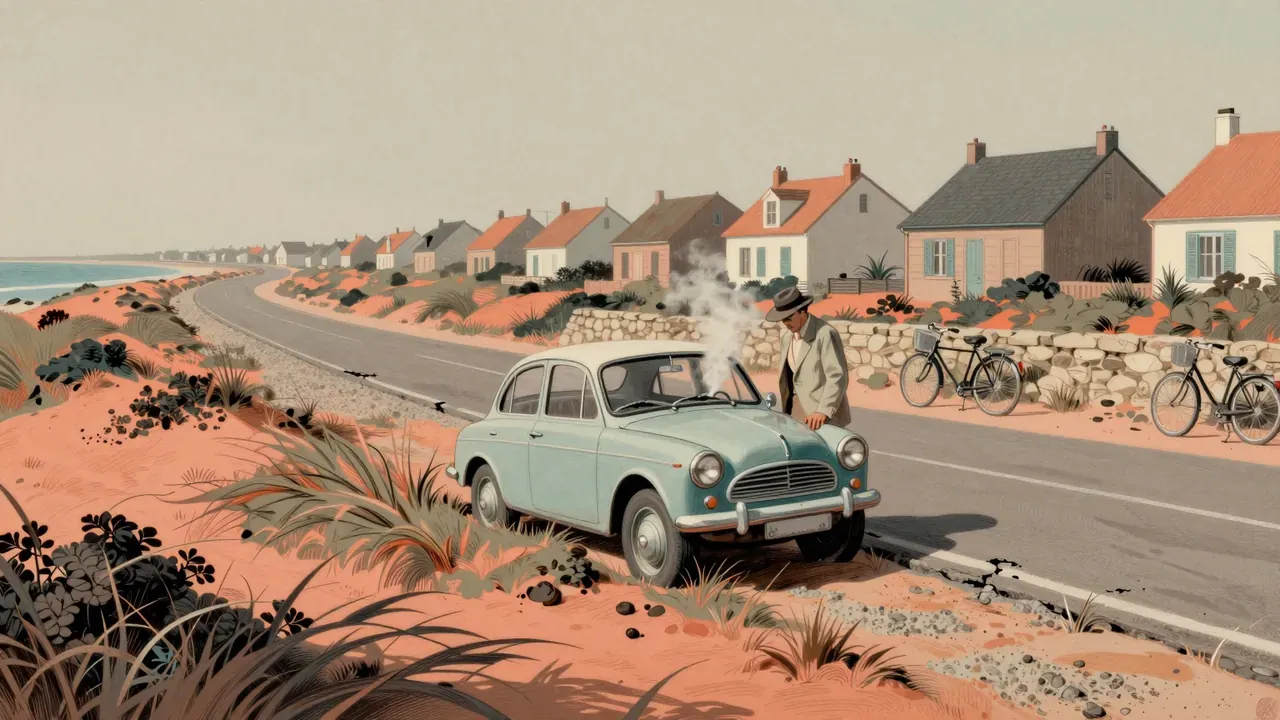
Jacques Tati’s 1953 comedy observes a French seaside resort through the quiet chaos introduced by Monsieur Hulot — a tall, pipe-smoking man whose well-meaning clumsiness exposes the fragility of middle-class ritual. Shot in black and white in Saint-Marc-sur-Mer, it builds humour from choreographed movement, layered sound, and precise framing rather than dialogue or plot. With minimal spoken words and a jazz score by Alain Romans, the film treats human behaviour as pattern, not psychology — finding comedy in repetition, timing, and the gap between intention and outcome.

13:00

Lewat Djam Malam

Usmar Ismail · 1954

Lewat Djam Malam (1954), directed by Usmar Ismail and written by Asrul Sani, follows ex-soldier Iskandar’s rapid unraveling in post-independence Bandung. Haunted by wartime violence and alienated by peacetime hypocrisy, he moves through a landscape of compromised comrades — a contractor, a pimp, a former commander — before killing the man he once followed. Shot by Max Tera in restrained, atmospheric black-and-white, the film avoids spectacle in favour of psychological accumulation. Restored in 2012 after decades of deterioration, it remains a landmark of Indonesian arthouse realism.

13:00

Life, and Nothing More...

Abbas Kiarostami · 1992

Abbas Kiarostami’s 1992 drama follows a director and his son driving through post-earthquake northern Iran, seeking the child star of his earlier film. Shot in a spare, observational style, it blends documentary immediacy with fictional framing to explore how life persists amid loss — not through grand statements, but through detours, conversations, and quiet acts of endurance.

13:00

Life Is Sweet

Mike Leigh · 1990

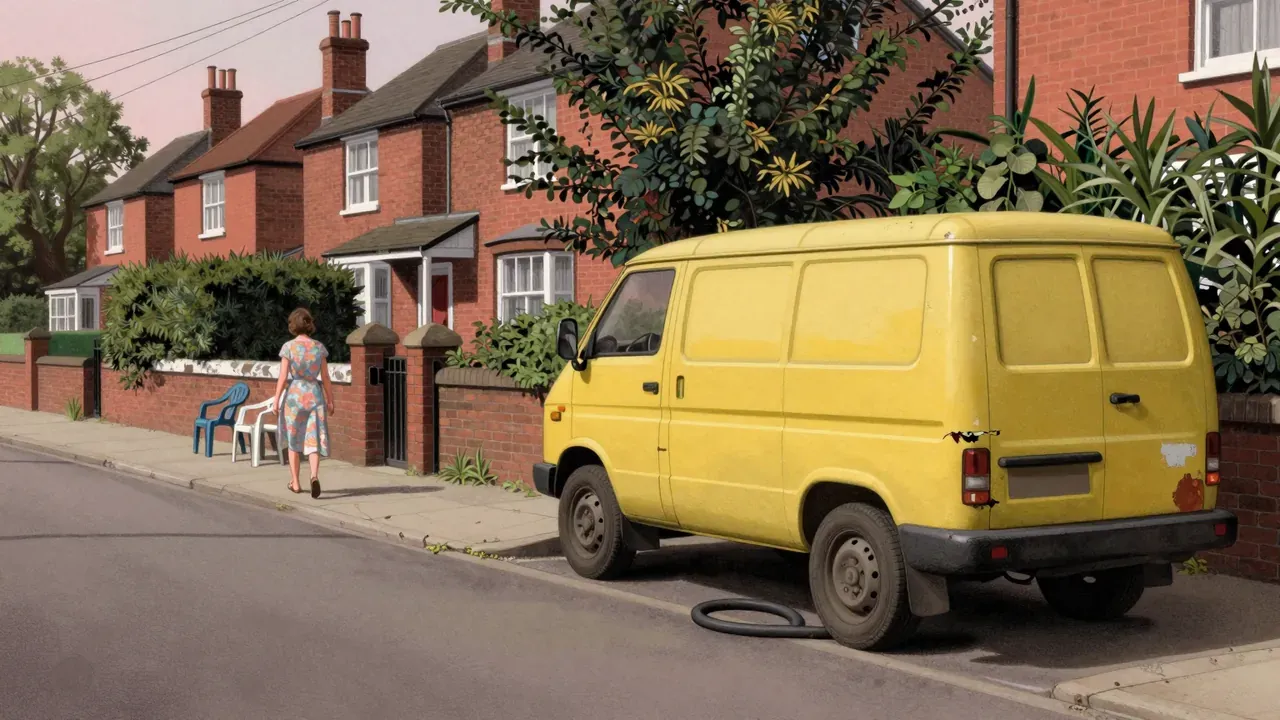
Mike Leigh’s 1990 domestic tragi-comedy follows a North London family over a summer: chef Andy buys a broken fast-food van; his wife Wendy holds things together; their daughters Natalie and Nicola navigate adulthood in opposite directions; and their friend Aubrey opens a doomed Parisian restaurant. Shot on location in Enfield with a cast developed through improvisation, it treats working-class life with unsentimental warmth, finding emotional weight in small gestures, quiet failures, and unspoken care.

13:00

Limite

Mário Peixoto · 1931

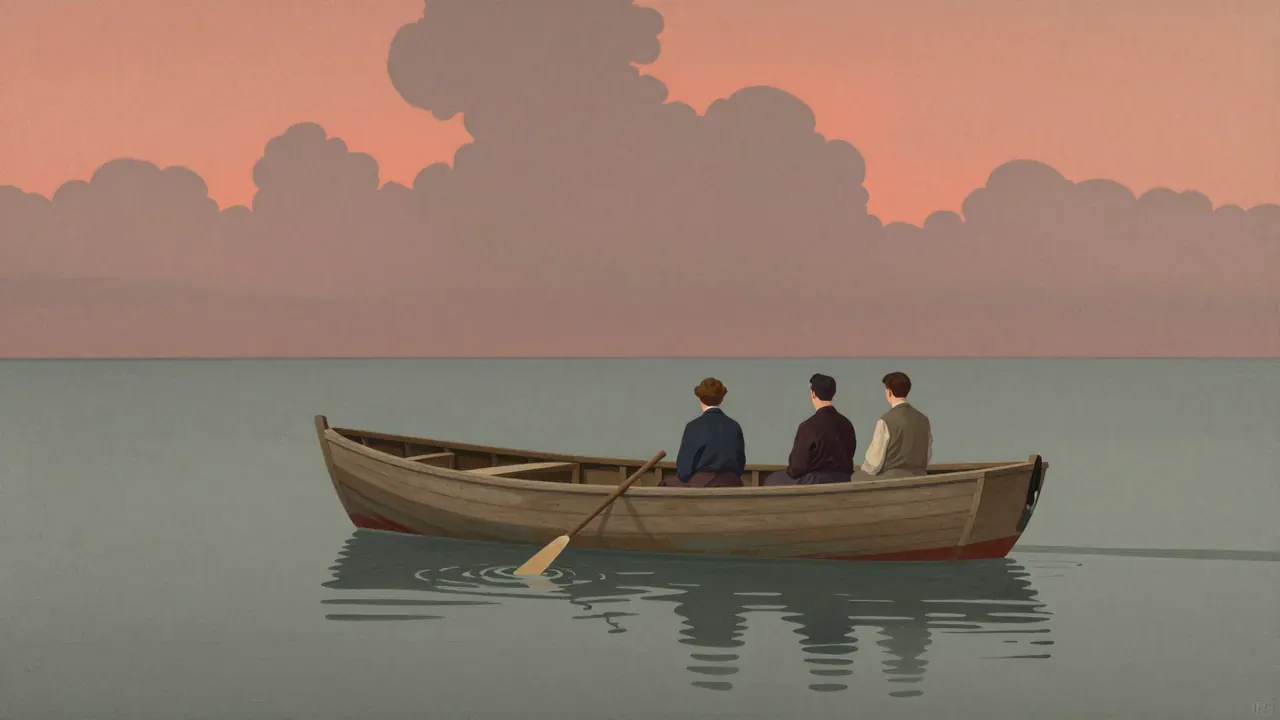
A 1931 Brazilian silent experimental drama directed, written, and produced by Mário Peixoto, Limite follows three unnamed figures adrift in a rowboat while fragmented flashbacks reveal their fractured pasts. Shot on the coast near Rio de Janeiro by cinematographer Edgar Brasil and edited by Peixoto himself, the film uses rhythm, high-contrast imagery, and associative montage to evoke psychological stasis rather than narrative progression. Long considered lost, it was restored from a single deteriorating nitrate print between 1966 and 1978. Though it had minimal contemporary reception, it is now widely regarded as the greatest Brazilian film — a landmark of avant-garde cinema and a singular meditation on limit, memory, and endurance.

13:00

Local Hero

Bill Forsyth · 1983

Local Hero (1983), written and directed by Bill Forsyth, follows an American oil executive sent to buy a remote Scottish village for a refinery. As he spends time in Ferness, his assumptions about progress, ownership and value quietly erode. With performances from Peter Riegert and Burt Lancaster, Chris Menges’ naturalistic cinematography and Mark Knopfler’s evocative score, the film traces a subtle transformation — not through drama or debate, but through stillness, repetition and quiet observation.

13:00

Lola

Rainer Werner Fassbinder · 1981

Rainer Werner Fassbinder’s 1981 drama Lola, the second film in his BRD Trilogy, relocates Heinrich Mann’s Professor Unrat to 1957 Coburg. It follows building commissioner von Bohm’s doomed attempt to impose integrity on a town whose elite — mayor, banker, police chief — all profit from property developer Schuckert’s brothel, run by singer Lola. As von Bohm falls for her, uncovers systemic corruption, and ultimately marries her with Schuckert’s blessing, the film anatomises how moral authority is staged, delegated, and sold. Stylised, unsentimental, and rigorously structured, it treats reconstruction not as renewal but as rebranding.

13:00

Lone Star

John Sayles · 1996

Set in a South Texas border town, Lone Star follows Sheriff Sam Deeds as he investigates the decades-old murder of his corrupt predecessor — and uncovers uncomfortable truths about his revered father, his estranged lover, and the town’s foundational myths. Written, directed and edited by John Sayles, the film layers past and present through seamless camera movements, treating crime not as genre but as entry point into questions of race, memory, and inherited guilt.

13:00

Lone Wolf and Cub: Baby Cart to Hades

Kenji Misumi · 1972

Lone Wolf and Cub: Baby Cart to Hades (1972), directed by Kenji Misumi, is the third in a six-film Japanese martial arts series following the wandering assassin Ogami Ittō and his infant son Daigoro. Set in Edo-period Japan, it weaves episodic encounters — ambushes, torture, duels, and siege — into a sustained meditation on duty, endurance, and the embodied logic of bushidō. Tomisaburō Wakayama’s restrained performance anchors a film defined by stillness, procedural violence, and moral austerity. Though formally rigorous and thematically rich, its treatment of women remains functional, and its pacing assumes fluency with chanbara conventions. It rewards patience, not passive viewing.

13:00

Lone Wolf and Cub: Sword of Vengeance

Kenji Misumi · 1972

Lone Wolf and Cub: Sword of Vengeance (1972), directed by Kenji Misumi, opens the six-film series with Tomisaburō Wakayama as Ogami Ittō, a disgraced executioner turned wandering assassin who pushes his infant son Daigoro in a baby cart while fulfilling contracts across Edo-period Japan. Built from Kazuo Koike and Goseki Kojima’s manga, it prioritises ritual, restraint and structural repetition over exposition or psychology — flashbacks clarify motive but not morality, action follows vow not impulse, and silence carries more weight than speech. Its 83-minute runtime sustains a tone of implacable resolve, using austere framing, percussive sound design and Wakayama’s physically precise performance to render vengeance as a system, not a feeling.

13:00

Lost in America

Albert Brooks · 1985

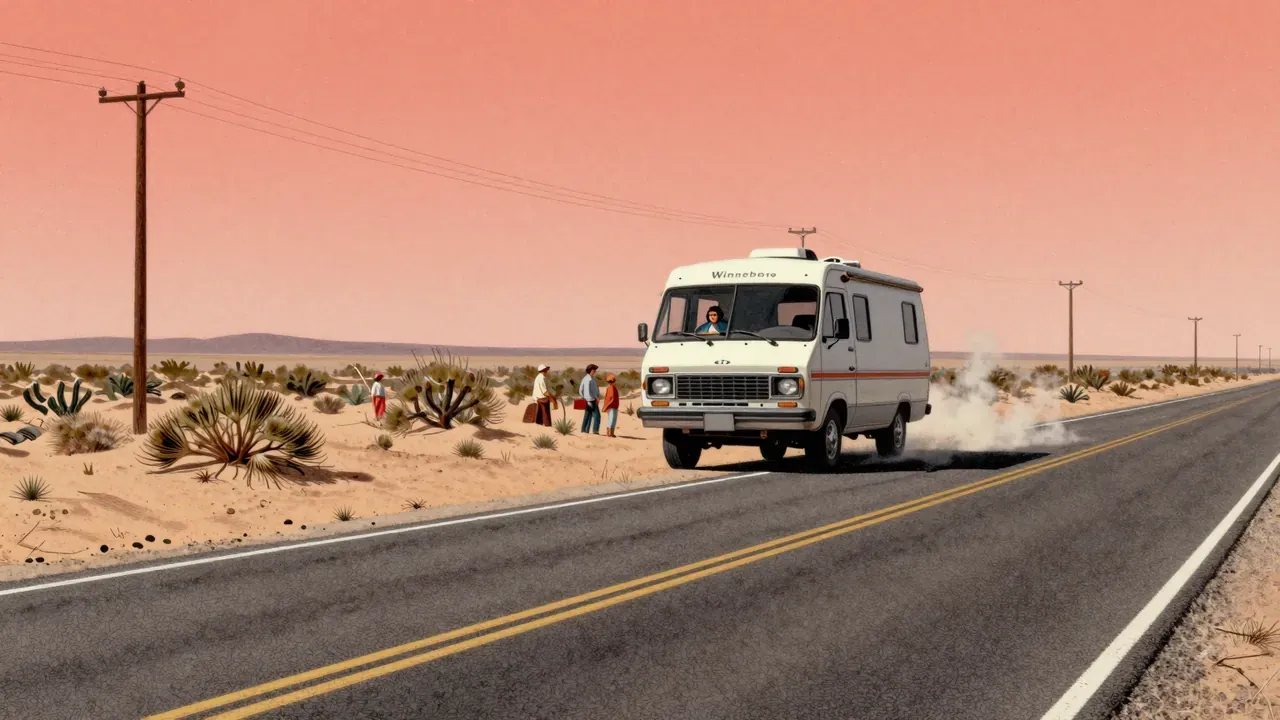
Albert Brooks’s 1985 road comedy follows a Los Angeles couple who quit their jobs, sell their house, and set off in a Winnebago to 'drop out' — only to lose their savings in Las Vegas and end up working dead-end jobs in rural Arizona. With dry precision, the film charts the collapse of their countercultural fantasy under the weight of real-world logistics, language, and class structure. It is a satire of self-deception disguised as liberation, built on understated performances, unshowy craft, and a script that treats ideology as infrastructure.

13:00

Louie Bluie

Terry Zwigoff · 1985

Terry Zwigoff’s 1985 documentary Louie Bluie observes Howard Armstrong — fiddler, painter, linguist, raconteur — in his Detroit home. Shot with minimal equipment and no narration, it captures his music, wit, and visual artistry without contextualising his place in American musical history. The film’s power lies in its restraint: it treats Armstrong as a living, breathing person, not a historical exhibit.

13:00

Love in the Afternoon

Éric Rohmer · 1972

Éric Rohmer’s 1972 film closes his Six Moral Tales series with a study of marital fidelity tested not by betrayal but by imagination. Frédéric, a contented Parisian husband and father, begins spending afternoons with Chloé, a woman from his past — a relationship built on talk, not sex, until a single moment of near-surrender forces him home. Shot by Néstor Almendros and written and directed by Rohmer, it is a film of restraint, quiet tension, and precise observation.

13:00

Love Streams

John Cassavetes · 1984

John Cassavetes’s 1984 drama follows brother and sister Robert and Sarah as they navigate divorce, addiction, and estrangement in a series of intimate, unvarnished encounters. Shot mostly in Cassavetes’s home with static camerawork and minimal score, the film prioritises duration and emotional exposure over plot. Gena Rowlands and Cassavetes deliver raw, physically committed performances that treat love as labour, not feeling. It won the Golden Bear at Berlin and remains a defining work of American independent cinema — demanding, unresolved, and deeply humane.

13:00

Lucía

Humberto Solás · 1968

Humberto Solás’s 1968 Cuban triptych follows three women named Lucía across 1895, 1932, and 1961—each navigating love, violence, and constraint under radically different political orders. Shot in black-and-white by Jorge Herrero, with a sparse score by Leo Brouwer, it builds meaning through repetition, restraint, and precise spatial storytelling—not exposition or uplift. Its power lies in what it refuses: resolution, explanation, and the comfort of progress narratives.

13:00

M

Fritz Lang · 1931

Fritz Lang’s 1931 German thriller M follows the parallel manhunts for a child murderer by Berlin’s police and criminal underworld. Using sound innovatively — especially Edvard Grieg’s 'In the Hall of the Mountain King' as a leitmotif — and avoiding on-screen violence, it treats crime as a systemic rupture. Peter Lorre stars as Hans Beckert; Fritz Arno Wagner shot it for Nero-Film. Widely regarded as a landmark of procedural and sound cinema, it remains austere, precise, and morally unresolved.

13:00

Mahanagar

Satyajit Ray · 1963

Satyajit Ray’s 1963 Bengali drama Mahanagar follows Arati, a Calcutta housewife who becomes a door-to-door saleswoman to support her extended family. As her earnings reshape domestic authority and challenge patriarchal norms, the film traces the subtle, irreversible recalibration of dignity, dependence and decision-making — not through polemic, but through gesture, silence and economic fact.

13:00

Make Way for Tomorrow

Leo McCarey · 1937

Make Way for Tomorrow (1937), directed by Leo McCarey, follows Barkley and Lucy Cooper, an elderly couple forced to separate after losing their home. With no room for both in any of their children’s houses, they spend their final days together wandering the city before boarding trains to different states. Shot in restrained, unadorned style, it avoids sentimentality while building unbearable emotional pressure through quiet observation and unwavering performances.

13:00

Malcolm X

Spike Lee · 1992

Spike Lee’s 1992 Malcolm X follows Denzel Washington’s portrayal of the civil rights leader across three decades — from street hustler to Nation of Islam minister to international human rights advocate. Built from Alex Haley’s Autobiography and shaped by Lee’s structural rigour, the film refuses simplification, holding contradiction without resolution. Ernest Dickerson’s cinematography, Terence Blanchard’s score, and Barry Alexander Brown’s editing sustain its 201-minute arc with discipline. It is less a tribute than a reckoning: dense, demanding, and deliberately unhurried.

13:00

Mamma Roma

Pier Paolo Pasolini · 1962

Pier Paolo Pasolini’s 1962 drama follows Anna Magnani as a former sex worker striving to secure a respectable future for her teenage son in Rome. When her past resurfaces, their fragile new life unravels. Shot on location near the Appian Way with non-professional actors and a stark, frontal visual style, the film merges neorealist texture with baroque moral gravity. Its power lies in its refusal of catharsis or explanation — grief, shame, and social immobility settle like dust, unshaken.

13:00

Mandabi

Ousmane Sembène · 1968

Ousmane Sembène’s 1968 Wolof-language debut follows Ibrahima Dieng, an illiterate Dakar resident, as he attempts to collect a money order from his nephew in Paris. Blocked at every turn by identity requirements, administrative fees, and familial obligations, he sinks deeper into debt — culminating in theft by a relative. Shot with documentary restraint and rooted in Senegalese social reality, Mandabi is a foundational work of African cinema that treats bureaucracy as violence and language as power.

13:00

Manon des Sources

Claude Berri · 1986

A 1986 French drama, directed by Claude Berri and adapted from Marcel Pagnol’s novel, concluding the story begun in Jean de Florette. Set in rural Provence ten years later, it follows Manon Cadoret as she uncovers the truth behind her father’s death and orchestrates a slow, water-based reckoning against those who ruined him. Starring Yves Montand, Daniel Auteuil, and Emmanuelle Béart, it is a formally restrained, morally exacting film about inheritance, silence, and the physical reality of justice.

13:00

Marketa Lazarová

František Vláčil · 1967

Marketa Lazarová (1967), directed by František Vláčil, is a Czechoslovak arthouse drama adapted from Vladislav Vančura’s novel. Set in early 13th-century Bohemia, it follows the collision of two warring clans amid the violent rise of Christian authority. Shot in stark black-and-white by Beda Batka over 548 days in freezing conditions, its 162-minute runtime sustains an immersive, tactile world built on repetition, silence, and fractured chronology — not exposition. Zdeněk Liška’s dissonant score and Theodor Pištěk’s austere costumes reinforce its refusal of narrative ease. Though critically revered — voted the greatest Czech film in 1998 — it demands patience and rewards it with unparalleled sensory gravity.

13:00

Marriage Story

Noah Baumbach · 2019

Marriage Story follows a New York theatre director and his actress wife as their amicable separation hardens into a bi-coastal custody battle. Written and directed by Noah Baumbach, it stars Adam Driver and Scarlett Johansson, with Laura Dern winning an Oscar for her turn as a formidable divorce lawyer. Shot by Robbie Ryan and edited by Jennifer Lame, it avoids melodrama in favour of procedural realism and emotional granularity — tracking how love endures as habit, memory, and quiet gesture long after the legal terms are settled.

13:00

Masculin Féminin

Jean-Luc Godard · 1966

Jean-Luc Godard’s 1966 Masculin Féminin follows Paul—a young idealist navigating love, work, and politics in Paris—as a loose sequence of interviews, encounters, and interruptions. Shot in black-and-white with natural light and minimal crew, it treats youth culture as a field of study, not a story. Its structure mimics opinion polling: questions posed, answers recorded, conclusions withheld. Starring Jean-Pierre Léaud, Chantal Goya, Marlène Jobert, and Catherine-Isabelle Duport, it remains one of Godard’s most formally rigorous and thematically restless works.

13:00

Matewan

John Sayles · 1987

John Sayles’s 1987 drama reconstructs the 1920 Matewan coal strike in West Virginia with forensic attention to economic detail, regional speech, and collective agency. Shot on location with Haskell Wexler’s naturalistic cinematography and Mason Daring’s period-accurate score, it follows union organiser Joe Kenehan as he navigates racial division, corporate espionage, and escalating violence — culminating in the historic Battle of Matewan. The film avoids hero worship, instead distributing moral weight across miners, widows, preachers, and lawmen. Though critically lauded and preserved in the National Film Registry, its deliberate pace and structural complexity make it demanding but rewarding viewing.

13:00

McCabe & Mrs. Miller

Robert Altman · 1971

Robert Altman’s 1971 film follows a gambler and a madam building a brothel in a rain-lashed Pacific Northwest boomtown—only to face absorption by corporate interests. Shot in British Columbia with Vilmos Zsigmond’s muted cinematography and scored with Leonard Cohen’s songs, it rejects Western conventions in favour of ambient realism, overlapping sound, and structural patience. Its power lies in accumulation, not climax.

13:00

Mean Streets

Martin Scorsese · 1973

Martin Scorsese’s 1973 breakthrough follows Charlie, a young Italian-American in New York’s Little Italy, torn between Catholic guilt, Mafia duty, and loyalty to his self-destructive friend Johnny Boy. Shot on a $500,000 budget with documentary grit and improvised intensity, it features defining early performances by Harvey Keitel and Robert De Niro. Its moral density, urban texture, and formal daring marked the arrival of a major American filmmaker — and reshaped decades of screen storytelling.

13:00

Medium Cool

Haskell Wexler · 1969

Haskell Wexler’s 1969 film merges scripted drama with documentary footage shot during the 1968 Democratic National Convention riots in Chicago. It follows a television cameraman who begins to question his role in recording — rather than intervening in — social crisis. Shot in cinéma vérité style, with minimal artifice and deliberate genre blurring, it interrogates media complicity, surveillance, and the ethics of observation. Though its romance and character arcs remain deliberately thin, its formal rigour and historical immediacy give it enduring force.

13:00

Meghe Dhaka Tara

Ritwik Ghatak · 1960

Ritwik Ghatak’s 1960 Bengali drama Meghe Dhaka Tara follows Nita, a young refugee woman in Calcutta whose relentless self-sacrifice sustains her displaced family until her body gives way. Shot in muted tones by Dinen Gupta, scored by Jyotirindra Moitra, and anchored by Supriya Devi’s restrained performance, it frames Partition not as history but as lived syntax — one that assigns value, defers futures, and naturalises extraction. Its power lies in accumulation, not climax.

13:00

Memories of Underdevelopment

Tomás Gutiérrez Alea · 1968

Tomás Gutiérrez Alea’s 1968 drama follows Sergio, a Havana intellectual who stays behind after the Revolution while his family flees. Narrated by Sergio himself, the film interweaves his relationships, memories, and political observations with documentary footage from the era. Shot economically and with formal rigour, it presents alienation not as existential angst but as the quiet persistence of privilege amid upheaval.

13:00

Midnight Cowboy

John Schlesinger · 1969

Midnight Cowboy follows Joe Buck, a Texan who arrives in New York dressed as a cowboy to become a male prostitute, and Ratso Rizzo, a sickly con man who becomes his reluctant partner in survival. Set against the grimy, unglamorous backdrop of late-1960s Manhattan, the film charts their slow descent into mutual dependence, not friendship. With restrained performances, unsentimental cinematography, and a script that trusts silence over exposition, it renders marginality as lived reality rather than social commentary. It won Best Picture despite its X rating — the only film to do so — and remains a benchmark of American dramatic realism.

13:00

Mikey and Nicky

Elaine May · 1976

Elaine May’s 1976 film follows two Philadelphia men—a desperate mob associate and his loyal friend—over one fractured night. Built around John Cassavetes and Peter Falk’s physically exacting performances, it uses repetition, silence, and unvarnished realism to trace the erosion of intimacy under pressure. Shot over 110 nights and edited for nearly two years, it resists genre expectations to focus on gesture, memory, and the labour of sustaining a relationship neither man fully understands.

13:00

Mildred Pierce

Michael Curtiz · 1945

Mildred Pierce (1945) is a Warner Bros. drama directed by Michael Curtiz, starring Joan Crawford as a divorced mother who builds a restaurant empire only to be undone by her daughter’s ambition and cruelty. Adapted from James M. Cain’s novel but reshaped as a murder-tinged thriller to satisfy censorship rules, it foregrounds Crawford’s restrained, physically precise performance and Ernest Haller’s atmospheric cinematography. Though structurally conventional and morally rigid, its focus on labour, class, and maternal exhaustion gives it enduring resonance.

13:00

Minding the Gap

Bing Liu · 2018

Minding the Gap is a 2018 documentary by Bing Liu, filmed over twelve years in Rockford, Illinois. It follows Liu and two friends—Keire Johnson and Zack Mulligan—as they navigate adulthood amid economic hardship, domestic violence, and racial inequality. Shot and edited by Liu, the film uses skateboarding as both connective tissue and quiet counterpoint to deeper struggles with fatherhood, accountability, and survival. It premiered at Sundance, won the Special Jury Prize for Breakthrough Filmmaking, and was nominated for an Academy Award for Best Documentary Feature.

13:00

Miracle in Milan

Vittorio De Sica · 1951

Vittorio De Sica’s 1951 Miracle in Milan blends post-war Italian neo-realism with gentle fantasy. Set on a Milanese wasteland, it follows Totò — raised by a woman who finds him in a cabbage patch — as he helps build a self-governing shantytown, only to confront eviction by industrialists. When magic intervenes, it does so not to erase hardship but to affirm the dignity already present in mutual aid, shared labour and unguarded joy.

13:00

Misericordia

Alain Guiraudie · 2024

Alain Guiraudie’s Misericordia is a 2024 French arthouse crime drama set in rural Aveyron, where a man’s impulsive killing unravels into a web of quiet complicity, false alibis and unspoken bargains. Shot by Claire Mathon and starring Jacques Develay, Catherine Frot and Félix Kysyl, it treats violence, desire and concealment with unblinking restraint — no score, no close-ups, no moral punctuation. Premiered at Cannes, it won the Louis Delluc Prize and drew acclaim for its tonal control and understated dread.

13:00

Miss Julie

Alf Sjöberg · 1951

Alf Sjöberg’s 1951 Swedish adaptation of Strindberg’s Miss Julie stars Anita Björk and Ulf Palme in a tightly wound, single-night drama set on a noble estate during Midsummer’s Eve. Retaining the play’s psychological rigour and class critique, the film uses restrained cinematography, precise performances, and minimal music to trace Julie’s collapse under intersecting pressures of birth, gender, and desire. It won the Grand Prix at Cannes and remains a benchmark of naturalist cinema.

13:00

Missing

Costa-Gavras · 1982

Costa-Gavras’s 1982 film follows an American businessman and his daughter-in-law as they search for a journalist missing after the 1973 Chilean coup. Shot in Mexico and performed largely in Spanish, it traces their confrontation with U.S. diplomatic obstruction and their slow realisation of systemic complicity. Jack Lemmon and Sissy Spacek anchor a restrained, procedural portrait of grief and accountability.

13:00

Mon Oncle

Jacques Tati · 1958

Jacques Tati’s Mon Oncle (1958) is a colour comedy set in postwar France, contrasting the sterile geometry of a modernist villa with the worn textures of an old Paris neighbourhood. Starring Tati as the amiable, unmoored Monsieur Hulot, the film uses choreographed movement, precise sound design and architectural detail — not dialogue — to explore how design, automation and consumerism reshape human behaviour and relationships.

13:00

Mon oncle Antoine

Claude Jutra · 1971

Set on Christmas Eve 1949 in rural Quebec, Mon oncle Antoine follows fifteen-year-old Benoît as he works at his aunt and uncle’s general store and funeral parlour. Through a single day of errands, encounters and quiet betrayals, the film traces the quiet collapse of a conservative, clerical society on the cusp of the Quiet Revolution. Directed by Claude Jutra with Michel Brault’s naturalistic cinematography, it avoids exposition and symbolism alike, trusting observation and restraint to convey moral and historical weight.

13:00

Mona Lisa

Neil Jordan · 1986

Neil Jordan’s 1986 Mona Lisa follows ex-convict George (Bob Hoskins) as he becomes driver and reluctant protector to high-end call girl Simone (Cathy Tyson) in a rain-laced London underworld. Built on glances, silences, and unspoken class codes rather than plot turns, it’s a neo-noir that privileges psychological texture over thriller mechanics — elevated by Hoskins’ career-defining performance, undermined by its structural dependence on a male perspective that limits Simone’s interiority.

13:00

Monsoon Wedding

Mira Nair · 2001

Set over four days in Delhi, Monsoon Wedding follows the Verma family as they prepare for their daughter Aditi’s arranged marriage. Amidst the chaos of planning, buried tensions surface — financial strain, generational rifts, unspoken abuse, and quiet acts of love. Directed by Mira Nair and written by Sabrina Dhawan, the film balances Bollywood energy with arthouse restraint, using ensemble storytelling, naturalistic performances, and layered sound design to explore how family, tradition, and healing operate in real time.

13:00

Monterey Pop

D. A. Pennebaker · 1968

D. A. Pennebaker’s 1968 documentary captures select performances from the 1967 Monterey Pop Festival with minimal intervention: no narration, no crowd shots, no chronological fidelity. Shot on 16mm and mixed from live eight-track recordings, it presents Otis Redding, Ravi Shankar, Jimi Hendrix, The Who, and others as autonomous musical events — valued for physical presence, duration, and sonic fidelity rather than cultural symbolism. Its power lies in restraint, not revelation.

13:00

Monty Python’s Life of Brian

Terry Jones · 1979

Monty Python’s Life of Brian (1979) is a British comedy directed by Terry Jones, written by the full Python troupe, and produced by HandMade Films after EMI withdrew funding. Set in Roman Judea, it follows Brian Cohen, mistaken for the Messiah despite having no interest in prophecy or power. The film targets institutional rigidity, sectarian infighting, and the absurdity of uncritical belief — not faith itself. Shot in Tunisia, edited tightly by Julian Doyle, and scored with solemn restraint by Geoffrey Burgon, it remains a benchmark of structural satire: dry, disciplined, and deeply unsentimental.

13:00

Moonstruck

Norman Jewison · 1987

A Brooklyn widow engaged to a man who leaves for Sicily accepts his estranged brother’s invitation to the opera — and finds herself drawn into a love that upends family loyalties, generational habits, and her own understanding of mourning. Directed by Norman Jewison from John Patrick Shanley’s Oscar-winning script, it treats romance as a force as elemental as gravity, staged with operatic precision and performed with unwavering sincerity.

13:00

Mouchette

Robert Bresson · 1967

Robert Bresson’s 1967 adaptation of Georges Bernanos’s novel follows a teenage girl’s silent, unrelenting attrition in a rural French village. Using non-professional actors, sparse dialogue, and Ghislain Cloquet’s restrained cinematography, the film renders suffering as routine, not event — culminating in a final act of physical surrender that feels less like despair than exhaustion made visible.

13:00

Mudbound

Dee Rees · 2017

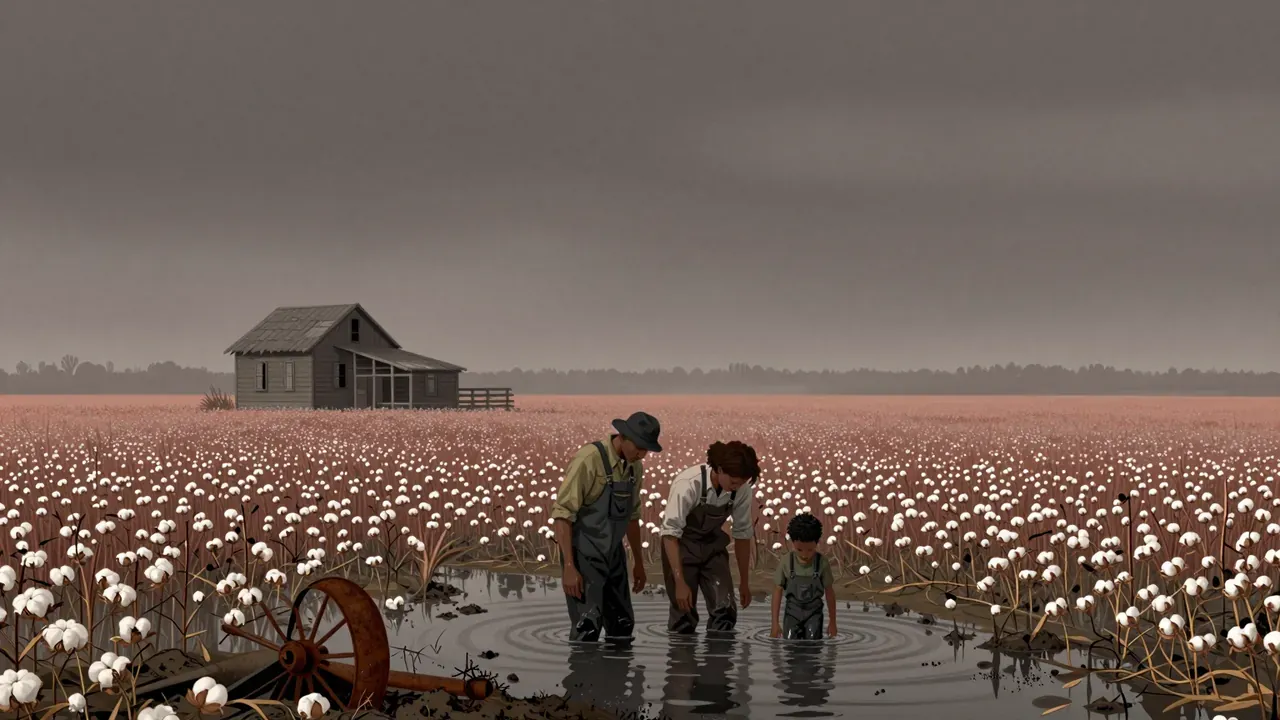
Mudbound is a 2017 historical drama directed by Dee Rees, adapted from Hillary Jordan’s novel. Set in post-war rural Mississippi, it follows two families — white landowners and Black tenant farmers — whose lives intersect amid poverty, racism and shared war trauma. With Rachel Morrison’s grounded cinematography and restrained performances, it renders systemic injustice as environmental fact rather than moral allegory.

13:00

Mural Murals

Agnès Varda · 1982

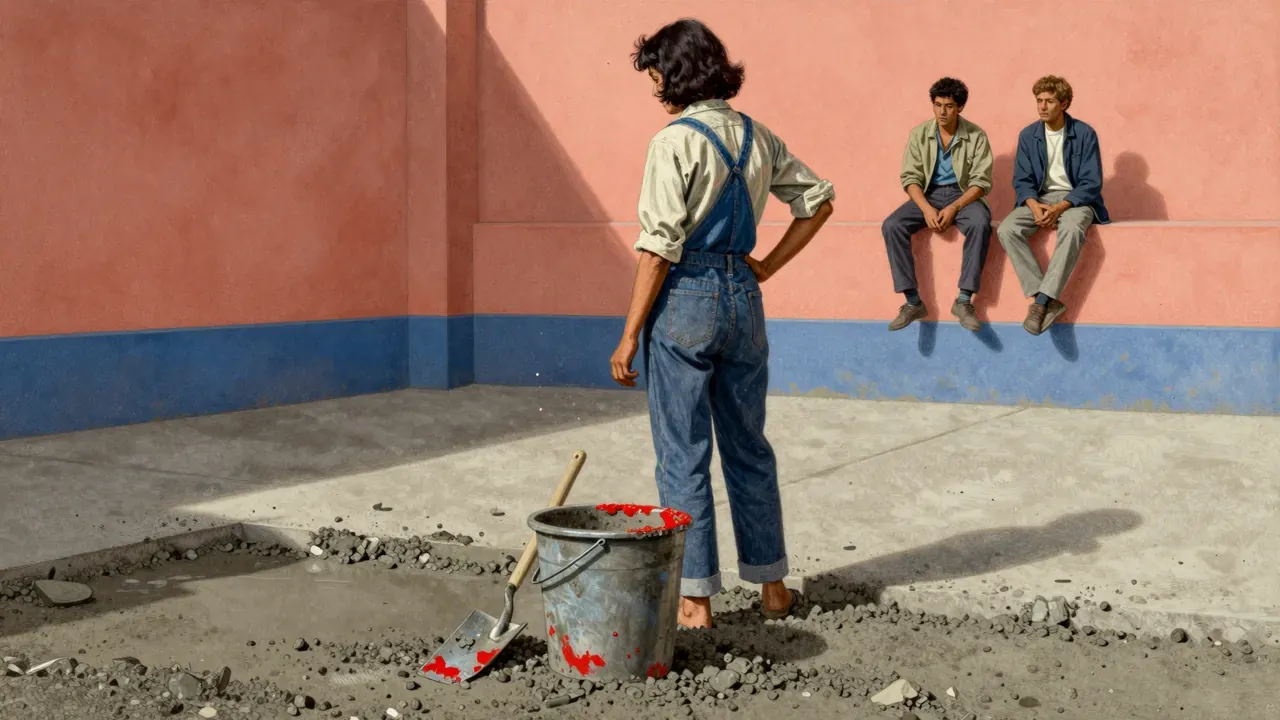
Agnès Varda’s 1981 documentary Mur Murs observes the painted walls of Los Angeles, focusing on Chicano-led muralism in working-class neighbourhoods. Shot on location with minimal intervention, it pairs static images of murals with layered narration and interviews, treating walls as sites of communal memory and political expression. The film avoids exposition, instead trusting texture, duration, and specificity to convey meaning.

13:00

My Beautiful Laundrette

Stephen Frears · 1985

Stephen Frears’ 1985 film, written by Hanif Kureishi, follows Omar — a British-Pakistani man in South London — as he renews a laundrette with Johnny, his childhood friend and lover. Set against Thatcher-era austerity and community tensions, it balances romance, entrepreneurship, and intergenerational conflict with understated craft and unforced specificity. Shot on 16 mm, it was expanded from a Channel 4 commission into an international success.

13:00

My Brilliant Career

Gillian Armstrong · 1979

Gillian Armstrong’s 1979 debut adapts Miles Franklin’s 1901 novel into a restrained, luminous portrait of Sybylla Melvyn, a headstrong Australian teenager who chooses writing over marriage in 1897. Judy Davis stars in her first leading role, supported by Sam Neill and Wendy Hughes. Shot in the Monaro region by Donald McAlpine, with a Schumann-inflected score by Nathan Waks, it won five AACTA Awards and helped define the Australian New Wave. Its enduring power lies in its unwavering commitment to Sybylla’s autonomy — intellectual, emotional, and vocational.

13:00

My Darling Clementine

John Ford · 1946

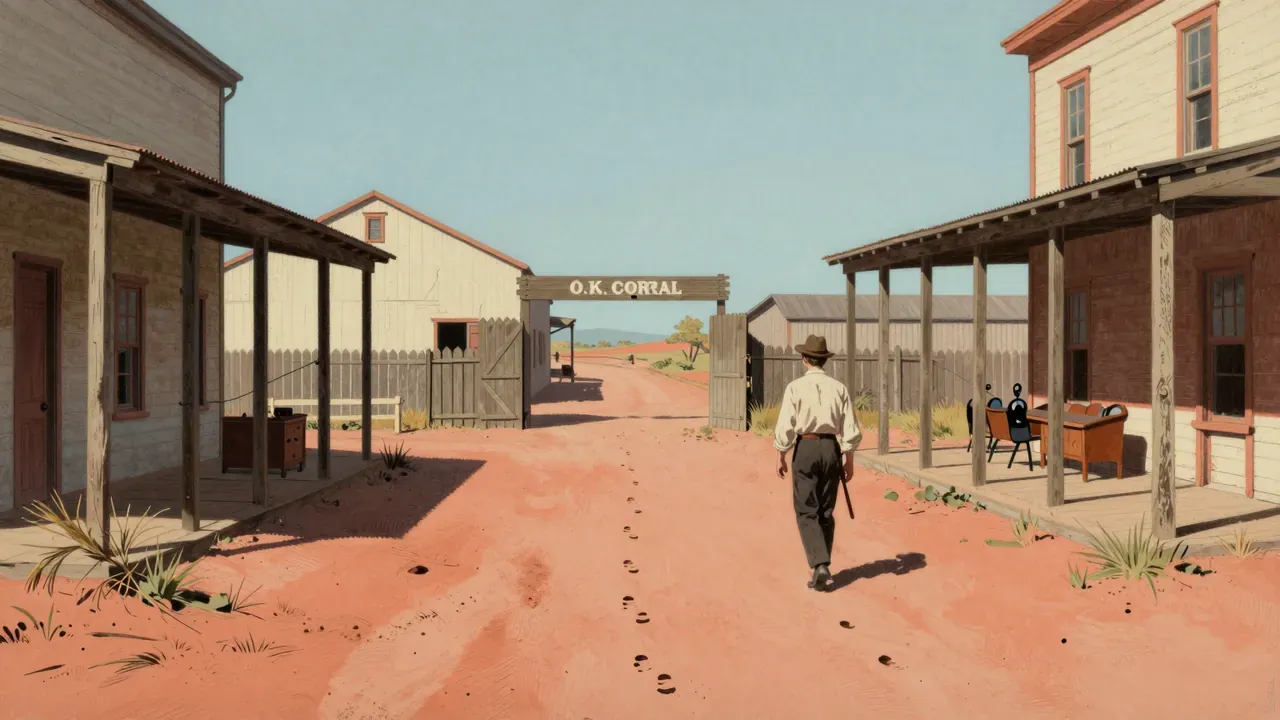
John Ford’s 1946 Western My Darling Clementine reshapes the O.K. Corral legend into a solemn, visually restrained parable about civic order. Henry Fonda’s Wyatt Earp is less a man than a principle — calm, enduring, taciturn — and the film’s power lies in its long takes, muted palette, and refusal to explain. Though heavily edited by the studio and loosely based on fact, it endures as a masterclass in cinematic gravitas: not a story about violence, but about what remains after it.

13:00

My Dinner with Andre

Louis Malle · 1981

My Dinner with Andre (1981) is a 111-minute filmed dialogue between Wallace Shawn and Andre Gregory, playing fictionalised versions of themselves over dinner in a Manhattan restaurant. Directed by Louis Malle, it unfolds as a single, sustained exchange about theatre, mysticism, fear, and everyday life — with no subplot, no visual digression, and no resolution beyond mutual understanding. Shot in Richmond, Virginia, and edited for rhythmic continuity rather than emphasis, it relies entirely on performance, writing, and acoustic intimacy. Its reputation rests on its formal rigour and philosophical candour.

13:00

My Life as a Dog

Lasse Hallström · 1985

Set in rural Sweden in 1958–59, My Life as a Dog follows twelve-year-old Ingemar, dispatched to live with relatives while his mother battles illness. Observing small-town life with unsentimental clarity, he navigates eccentric neighbours, nascent friendship, and accumulating loss. The film avoids exposition and catharsis, trusting repetition, silence, and precise detail to convey emotional truth. Its power lies in restraint: in what is withheld, what lingers off-screen, and how deeply ordinary moments can hold extraordinary weight.

13:00

My Life to Live

Jean-Luc Godard · 1962

Jean-Luc Godard’s 1962 My Life to Live follows Nana, a 22-year-old Parisian who abandons her son and husband to pursue acting, then drifts into prostitution. Structured in twelve titled episodes, it uses intertitles, jump cuts, and stark cinematography by Raoul Coutard to examine visibility, labour, and language. Anna Karina’s performance anchors its formal rigour. Shot in four weeks for $40,000, it won the Grand Jury Prize at Venice and remains a cornerstone of French New Wave arthouse cinema.

13:00

My Man Godfrey

Gregory La Cava · 1936

My Man Godfrey (1936), directed by Gregory La Cava, follows a homeless man hired as butler by a Manhattan socialite during the Great Depression. William Powell and Carole Lombard anchor a sharp, fast-paced romantic comedy that skewers wealth while relying on inherited status to resolve its tensions. Ted Tetzlaff’s cinematography and tight editing sustain its screwball energy, though the finale retreats from its earlier bite. Critically lauded then and now, it remains a masterclass in studio-era comic construction — elegant, economical, and knowingly incomplete.

13:00

My Night at Maud's

Éric Rohmer · 1969

Set over Christmas in Clermont-Ferrand, Éric Rohmer’s 1969 film follows a Catholic engineer as he navigates conversations about faith, desire, and choice with three other single people. Built around Pascal’s wager and shot in natural light by Néstor Almendros, it privileges dialogue, hesitation, and quiet observation over plot or resolution. Its moral architecture rests on what is said, unsaid, deferred — and how it is said.

13:00

My Winnipeg

Guy Maddin · 2007

Guy Maddin’s My Winnipeg (2007) is a self-narrated ‘docu-fantasia’ that uses staged re-enactments, archival fragments and invented history to explore his lifelong entanglement with his hometown. Framed as an attempt to ‘film his way out’, the film treats Winnipeg as a psychic landscape — where sleepwalking is epidemic, rivers run double beneath the streets, and demolition sites hold sacred residue. It is less about the city’s facts than its emotional architecture.

13:00

Naked

Mike Leigh · 1993

Mike Leigh’s 1993 drama follows Johnny, a fugitive intellectual played by David Thewlis, over two days in London. Moving between borrowed flats, night-shift jobs, and street corners, he dominates conversations with erudite cruelty while his own life unravels. Shot by Dick Pope and edited by Jon Gregory, the film uses Leigh’s signature improvisational method to build raw, unsentimental performances. It is a study in alienation, masculinity, and moral exhaustion — stark, unrelenting, and formally precise.

13:00

Nashville

Robert Altman · 1975

Robert Altman’s 1975 ensemble film follows twenty-four characters in the Nashville music industry over five days, culminating in a political rally and an unexplained assassination. Built from Joan Tewkesbury’s ethnographically grounded script and shot on location with overlapping dialogue and diegetic music, it treats fame, race, and populism as systems rather than subjects — observing more than judging, accumulating more than resolving.

13:00

Nayak

Satyajit Ray · 1966

Satyajit Ray’s 1966 drama follows Bengali film star Arindam Mukherjee on an overnight train to receive a national award. Over 113 minutes, he unravels in conversation with a young journalist, revealing insecurities, regrets, and contradictions beneath his celebrity facade. Shot in studio-built train compartments with precise, unhurried craft, the film treats fame as erosion rather than triumph — and intimacy as fleeting, not redemptive.

13:00

News from Home

Chantal Akerman · 1976

News from Home (1976) is a French-language documentary by Chantal Akerman, composed of extended static shots of New York City locations — subway platforms, ferry decks, city streets — accompanied by Akerman’s voice reading letters from her mother written between 1971 and 1973. Shot by Babette Mangolte and edited by Francine Sandberg, it is a study in duration, alienation, and the quiet labour of correspondence across distance.

13:00

Night and Fog

Alain Resnais · 1956

Alain Resnais’s 1956 documentary Night and Fog uses stark juxtaposition — new colour footage of abandoned camps alongside archival black-and-white material — to dissect the concentration camp as a functional extension of fascism. Written by survivor Jean Cayrol and Chris Marker, and scored by Hanns Eisler, it avoids sentimentality in favour of structural analysis: architecture, logistics, bureaucracy, and the diffusion of responsibility. Commissioned for the tenth anniversary of camp liberation, it remains a foundational essay film, rigorous, unsettling, and deliberately unresolved.

13:00

Night and the City

Jules Dassin · 1950

Jules Dassin’s 1950 London-set noir follows American tout Harry Fabian as he schemes to corner the city’s wrestling trade, only to be undone by his own miscalculations, betrayals, and the implacable logic of the underworld he misunderstands. Shot on location and at Shepperton Studios, it features Richard Widmark in a tightly coiled performance, Mutz Greenbaum’s precise cinematography, and Franz Waxman’s urgent score. Unsentimental and structurally rigorous, it ends not with reflection but with finality.

13:00

Night of the Living Dead

George A. Romero · 1968

Night of the Living Dead (1968) is a black-and-white American horror film directed by George A. Romero, shot on 35mm with a $114,000 budget. Nine people take refuge in a rural Pennsylvania farmhouse as flesh-eating ghouls close in. Duane Jones stars as Ben, the de facto leader whose authority is tested by both the dead outside and the living within. The film avoids exposition, embraces technical limitation, and treats social breakdown as an observable process. It entered the public domain due to a missing copyright notice, enabling wide distribution and lasting influence. Preserved in the National Film Registry in 1999.