filmbriefs
Highest rated

All briefs

2035 briefs · 26452 min · 1441–1536 on page 16 of 22
13:00

The Trial

Orson Welles · 1962

Orson Welles’s 1962 *The Trial*, filmed in France with Anthony Perkins and Jeanne Moreau, reworks Kafka’s novel into a stark, spatially disorienting vision of systemic power. Shot in abandoned stations and exposition halls, it uses scale, sound and silence to evoke procedural dread — not as metaphor but as lived atmosphere. Its enduring force lies in its refusal of explanation, catharsis or comfort.
13:00

The Truth

Henri-Georges Clouzot · 1960

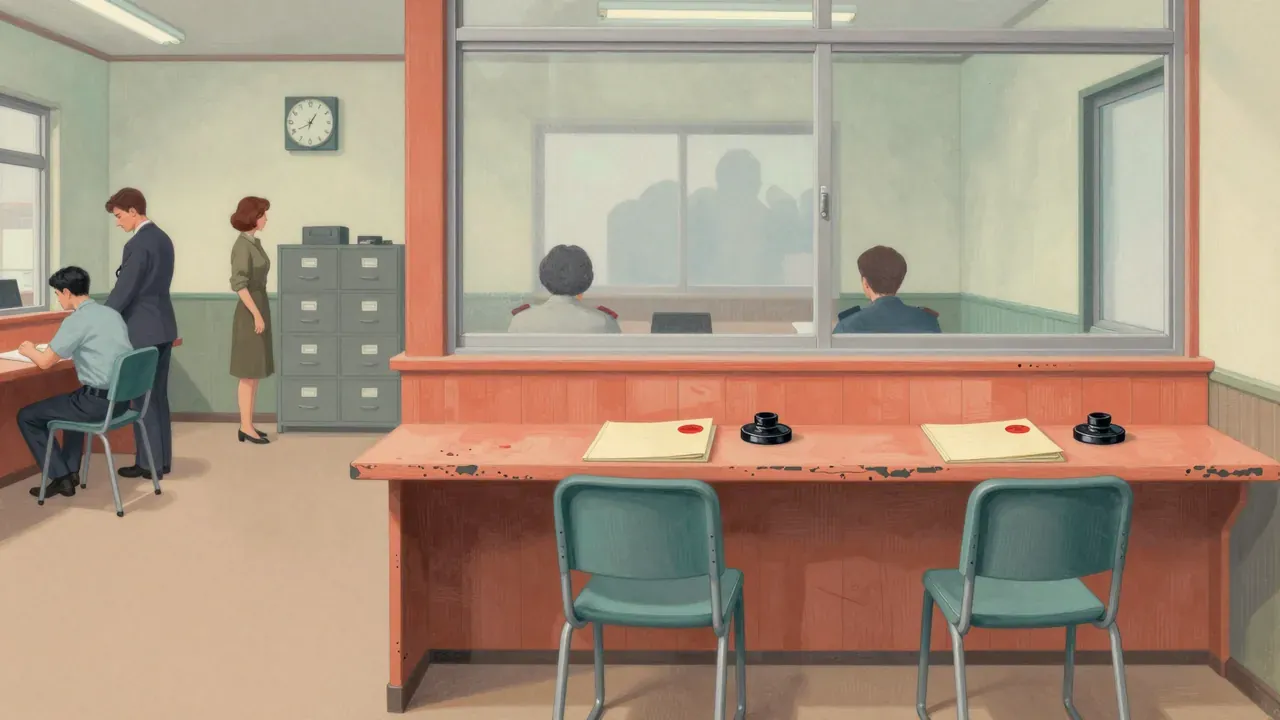
A young woman stands trial for murder in 1960s France. Through flashbacks, the film traces her descent from provincial restlessness to Parisian disillusionment, her turbulent relationship with a conductor, and her eventual breakdown — all while lawyers debate not her actions, but what they say about her character. Brigitte Bardot gives a physically exacting performance; Clouzot and his collaborators build a world where emotion is evidence, memory is contested, and justice is procedural, not redemptive.

13:00

The Two of Us

Claude Berri · 1967

Set in occupied France, The Two of Us follows an eight-year-old Jewish boy sent to live with an elderly, anti-Semitic farmer. Directed by Claude Berri and starring Michel Simon and Charles Denner, it traces the slow, unspoken evolution of their uneasy coexistence through restrained performances, muted cinematography by Jean Penzer, and a sparse score by Georges Delerue. Avoiding historical exposition or moral simplification, it locates its power in domestic detail and withheld emotion.

13:00

The Unbearable Lightness of Being

Philip Kaufman · 1988

Philip Kaufman’s 1988 adaptation of Milan Kundera’s novel follows brain surgeon Tomas, his wife Tereza, and his lover Sabina across Prague, Geneva, and rural Czechoslovakia during and after the 1968 Soviet invasion. Shot in France with Sven Nykvist’s understated cinematography and scored largely with Janáček’s piano works, it explores eroticism, political constraint, and the paradoxes of freedom—not through exposition, but through gesture, silence, and weathered surfaces.

13:00

The Uninvited

Lewis Allen · 1944

The Uninvited (1944), directed by Lewis Allen and written by Dodie Smith, follows siblings who purchase a Cornish seaside house only to encounter inexplicable phenomena rooted in grief and suppressed attachment. Shot by Charles Lang with deliberate restraint, it avoids horror tropes in favour of sustained atmosphere, ambiguous motivation, and psychological weight. Though uneven in performance and occasionally expositional, its influence on supernatural cinema is foundational — less about ghosts than about what haunts us long after we stop speaking their names.

13:00

The Vanishing

George Sluizer · 1988

George Sluizer’s 1988 French-language thriller, co-written with Tim Krabbé, follows a Dutch man’s obsessive search for his vanished girlfriend — a quest that culminates not in rescue or revenge, but in a chilling confrontation with the kidnapper’s warped moral logic. Shot in Nîmes with austere precision, it trades procedural suspense for psychological immersion, anchored by Bernard-Pierre Donnadieu’s unnervingly calm performance as a man who sees evil as a test of virtue.

13:00

The Wandering Princess

Kinuyo Tanaka · 1960

Kinuyo Tanaka’s 1960 film, adapted from Hiro Saga’s memoir, follows a Japanese aristocrat’s marriage into the deposed Qing imperial family in Manchukuo. Shot in CinemaScope and colour — Tanaka’s first in both formats — it prioritises stillness over spectacle, using muted palettes, precise framing, and understated performances to trace quiet endurance across political rupture. Machiko Kyō anchors the film with restrained intensity; Eiji Funakoshi’s Pujie remains enigmatic by design. The script avoids exposition and moral framing, treating history as atmosphere rather than argument.

13:00

The Warped Ones

Koreyoshi Kurahara · 1960

Koreyoshi Kurahara’s 1960 film follows a group of Tokyo youths — Akira, Masaru and Yuki — whose criminality, sexual recklessness and jazz obsession unfold across tenements, beaches and jazz clubs. With a frenetic editing style, Toshiro Mayuzumi’s urgent jazz score, and performances stripped of psychology, the film presents its characters as environmental effects rather than agents. It avoids moral framing, resists narrative padding, and sustains a tone of controlled volatility across its 75-minute runtime. Though often compared to Breathless and Rebel Without a Cause, it diverges by refusing empathy, explanation or resolution — offering instead a tightly wound, formally audacious document of post-war dislocation.

13:00

The Woman Who Dared

Jean Grémillon · 1944

Jean Grémillon’s 1944 drama follows Thérèse Gauthier, a mechanic’s wife displaced by airport expansion, who gradually reclaims agency — first as a dealership manager, then as a pilot. Madeleine Renaud and Charles Vanel anchor a film that privileges procedural realism over psychological exposition, showing aspiration as re-attunement to one’s own capacities rather than rupture from circumstance.

13:00

The Worst Person in the World

Joachim Trier · 2021

Joachim Trier’s 2021 Oslo-set drama follows Julie, a woman in her late twenties drifting between careers and relationships, as she navigates love, loss, pregnancy, and grief. Anchored by Renate Reinsve’s layered performance and Kasper Andersen’s naturalistic cinematography, the film uses a chaptered structure and subtle tonal shifts to explore self-perception, time, and the weight of expectation — without moralising, resolving, or explaining.

13:00

The Young Master

Jackie Chan · 1980

Jackie Chan’s 1980 directorial effort The Young Master marks his debut for Golden Harvest and refines his signature blend of martial arts, comedy, and stunt-driven storytelling. As Dragon, Chan navigates fraternal betrayal, mistaken identity, and a punishing final duel with criminal Kam — all staged with growing control over choreography, editing, and physical expression. Though some plot elements remain underdeveloped and tonal shifts occur, the film’s commitment to grounding action in consequence and character makes it a vital milestone in Hong Kong action cinema.

13:00

Things to Come

William Cameron Menzies · 1936

Things to Come (1936) is a British science fiction film directed by William Cameron Menzies, produced by Alexander Korda, and scripted by H. G. Wells and Lajos Bíró. Set across three eras — 1940, 1970, and 2036 — it charts humanity’s collapse into post-war barbarism and subsequent rebirth under a global technocracy. Starring Raymond Massey and Ralph Richardson, it foregrounds Vincent Korda’s production design and Arthur Bliss’s score, treating cinema as a medium for philosophical demonstration rather than dramatic immersion. Its enduring significance lies in its uncompromising visual logic and its articulation of interwar rationalist utopianism.

13:00

Thirst for Love

Koreyoshi Kurahara · 1967

Koreyoshi Kurahara’s 1967 Thirst for Love, adapted from Yukio Mishima’s novel, follows a young widow’s entanglement with her wealthy father-in-law in a meticulously restrained Japanese domestic setting. Starring Ruriko Asaoka and Nobuo Nakamura, it uses abrupt editing, strategic colour, and near-silence to render psychological disintegration without exposition. The film prioritises atmosphere over explanation, formal control over catharsis, and inherited power over individual agency.

13:00

This Happy Breed

David Lean · 1944

David Lean’s 1944 debut follows the Gibbons family across twenty years of peace and gathering storm in suburban London. Anchored by Robert Newton and Celia Johnson, it charts domestic life against national events — the General Strike, the rise of fascism, the abdication — not through speeches or spectacle, but through wallpaper, radio sets, and the weight of unspoken grief. Shot in muted Technicolor and edited with Lean’s signature temporal bleed, it is a film of accumulation: small details, repeated gestures, returning spaces. Its power lies in endurance, not revelation.

13:00

Three Resurrected Drunkards

Nagisa Ōshima · 1968

Three Resurrected Drunkards (1968), directed by Nagisa Ōshima, follows three young Japanese men who, after having their clothes stolen at the beach, are mistaken for Korean illegal immigrants and pursued by authorities. Built around a hit folk song and performed with deadpan restraint, the film uses repetition, costume and bureaucratic absurdity to critique Japan’s treatment of Zainichi Koreans — not through exposition or emotion, but through relentless, low-key ridicule of the systems that assign and police identity.

13:00

Throw Down

Johnnie To · 2004

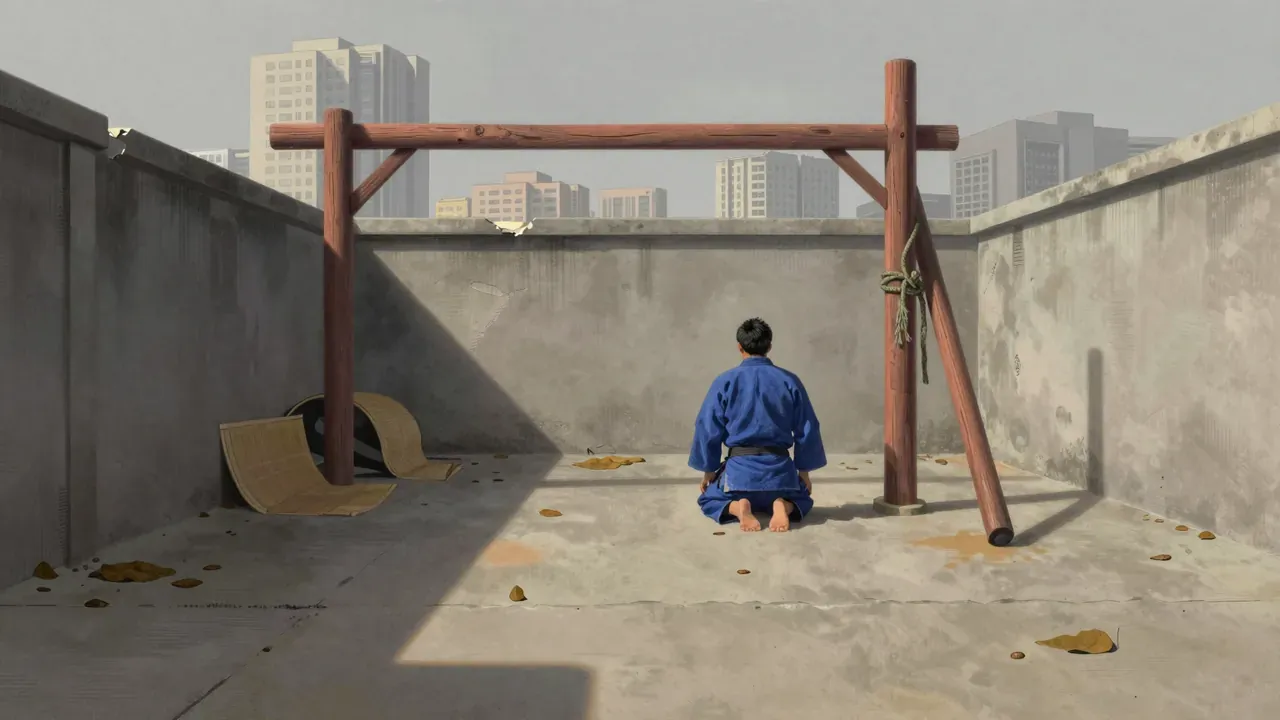
Johnnie To’s 2004 film Throw Down follows a former judo champion, Sze-to Bo, whose failing vision forces him to confront his past, his mentor, and two rivals — not for glory, but for fidelity to craft. Shot with deliberate restraint by Cheng Siu-keung and scored with quiet precision by Peter Kam, it locates tension in stillness, meaning in repetition, and dignity in limitation. Though its subplot involving a singer feels grafted, the film’s central inquiry — what it means to act when perception unravels — lands with cumulative force.

13:00

Tie Me Up! Tie Me Down!

Pedro Almodóvar · 1989

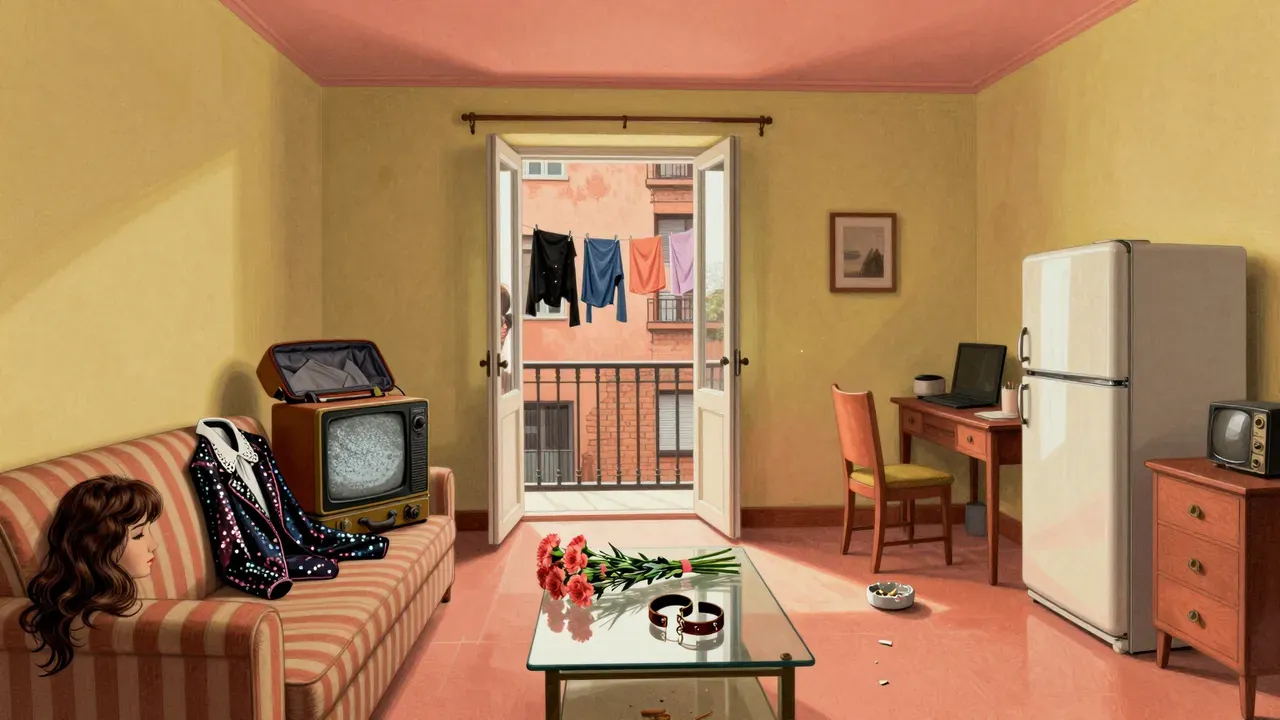
Pedro Almodóvar’s 1989 film follows a recently released psychiatric patient who kidnaps an actress to force a marriage, treating the premise as a stylised romantic fairy tale rather than psychological realism. Shot in saturated colour by José Luis Alcaine Escaño, scored by Ennio Morricone, and anchored by Victoria Abril and Antonio Banderas, it sustains a precise, unsettling tone — neither endorsing nor condemning its central act, but exploring love as effort, repetition, and recalibration.

13:00

TINY: The Life of Erin Blackwell

Martin Bell · 2016

TINY: The Life of Erin Blackwell is a 2016 documentary directed by Martin Bell, following Erin from age eleven into her thirties across twenty-five years of intermittent filming in Seattle. Shot and edited by Bell with producer Mary Ellen Mark, it uses no voiceover, no score, and no external commentary — relying solely on accumulated footage to trace a life shaped by poverty, resilience, and time itself.

13:00

Titash Ekti Nadir Naam

Ritwik Ghatak · 1973

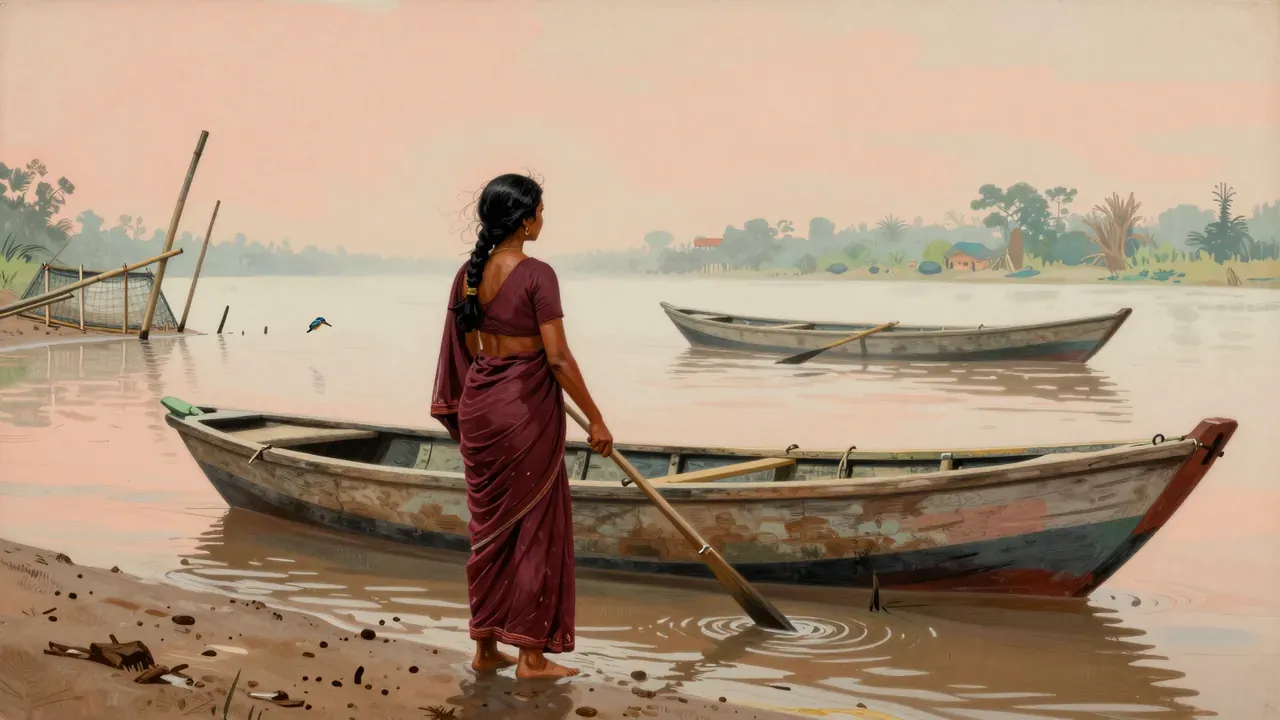
Ritwik Ghatak’s 1973 film adapts Adwaita Mallabarman’s novel to trace the generational unraveling of a Bengali fishing community along the Titas River. Structured as interwoven tragedies — abduction, madness, widowhood, starvation — it treats Partition not as event but as ambient pressure, dissolving kinship, ritual, and language. Baby Islam’s austere black-and-white photography and Ghatak’s fragmented, Brechtian staging resist catharsis in favour of accumulation: meaning settles like silt, not strikes like lightning.

13:00

To Sleep with Anger

Charles Burnett · 1990

Charles Burnett’s 1990 film follows a South Central Los Angeles family unsettled by the arrival of Harry, a charismatic old friend from the South. As Harry’s enigmatic presence triggers marital strain, paternal illness, and fraternal conflict, the film unfolds with deliberate slowness, anchoring its folkloric tensions in domestic detail rather than exposition. Shot by Walt Lloyd and scored by Stephen James Taylor, it sustains a mood of quiet unease, where meaning accrues through gesture, setting, and withheld information — not plot mechanics.

13:00

Tom Jones

Tony Richardson · 1963

Tony Richardson’s 1963 adaptation of Henry Fielding’s novel stars Albert Finney as the roguish, good-hearted Tom, whose journey from foundling to accepted heir unfolds through slapstick, satire and fourth-wall breaks. Written by John Osborne and shot by Walter Lassally, it balances period detail with formal audacity — intertitles, a wry narrator, and abrupt edits — to embody Fielding’s moral ambiguity. Though some emotional arcs falter and its satire occasionally overshadows character, its energy, performances and stylistic confidence remain distinctive. It won four Academy Awards, including Best Picture and Best Director.

13:00

Toni

Jean Renoir · 1935

Jean Renoir’s 1935 Toni follows an Italian migrant in Provence as he navigates work, love and displacement among a mixed group of labourers. Shot entirely on location with non-professional actors, it uses restraint — in performance, editing and sound — to observe class, language and longing without commentary. Its influence on later movements is well documented, but its power lies in its quiet, unwavering attention to the material conditions of ordinary lives.

13:00

Tori and Lokita

Jean-Pierre Dardenne, Luc Dardenne · 2022

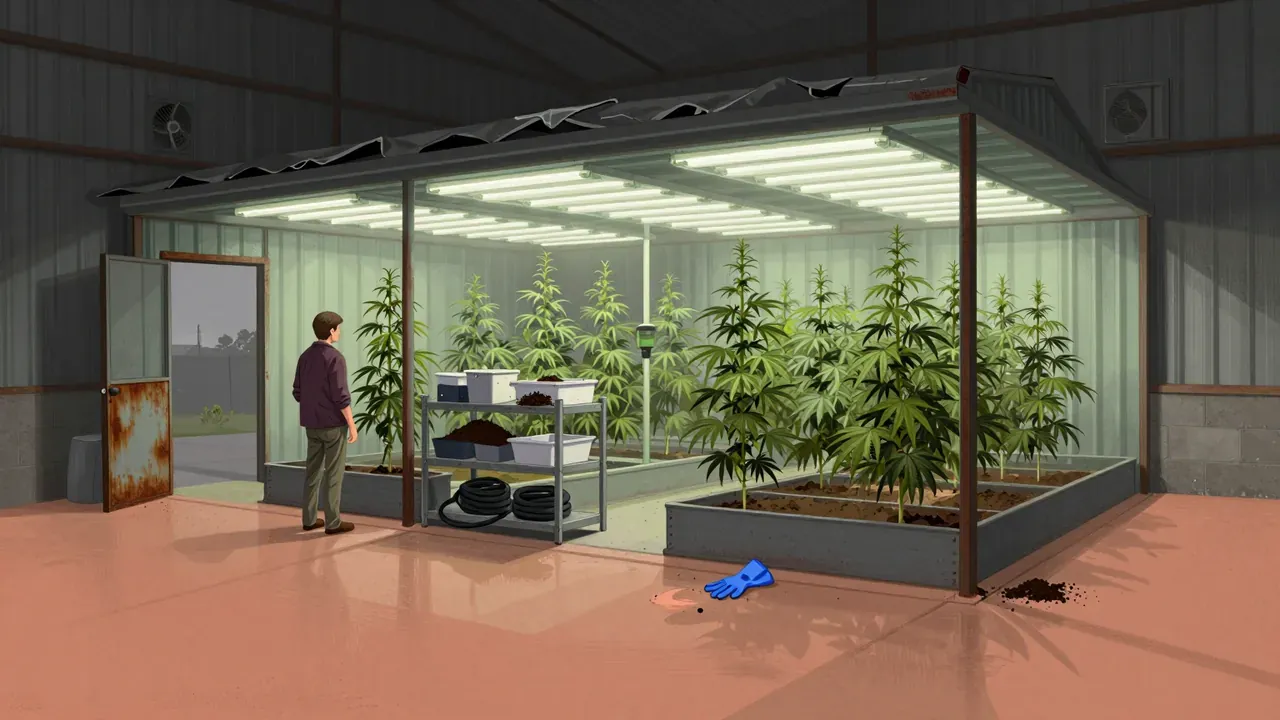
Tori and Lokita is a 2022 Belgian-French drama by Jean-Pierre and Luc Dardenne, following an eleven-year-old boy and sixteen-year-old girl posing as siblings while surviving in a Belgian city. They work for a drug dealer under the guise of musical performers, and Lokita’s repeated visa rejections lead to her being sent to tend cannabis plantations — separating her from Tori, who tracks her down. The film ends with Lokita’s death and Tori singing at her funeral. Shot in natural light with minimal score and precise editing by Marie-Hélène Dozo, it sustains unwavering focus on care as labour and dignity as practice.

13:00

Torment

Alf Sjöberg · 1944

Torment (1944), written by Ingmar Bergman and directed by Alf Sjöberg, follows a Stockholm student tormented by a sadistic Latin teacher. Shot with stark realism and minimal score, it uses the school as a closed system of power, exposing how abuse thrives in bureaucratic silence. Its restrained performances and unsentimental structure make it a foundational work of Scandinavian arthouse cinema — less concerned with individual guilt than with the architecture of complicity.

13:00

Total Balalaika Show

Aki Kaurismäki · 1994

Total Balalaika Show (1994) documents a 1993 Helsinki concert pairing the Leningrad Cowboys and the Alexandrov Ensemble. Directed, written and produced by Aki Kaurismäki, it presents thirteen live songs in static, natural-light takes, avoiding commentary or context. At 57 minutes, it treats the event as self-evident: a factual, unembellished record of cultural coexistence.

13:00

Tótem

Lila Avilés · 2023

Set over a single day at her grandfather’s house, seven-year-old Sol attends what is presented as her father’s birthday party — though it functions as a tender, unspoken farewell before his death. Directed and written by Lila Avilés, the film observes Sol’s sensory and emotional navigation of shifting family dynamics as daylight fades and ritual gives way to raw feeling. With Naíma Sentíes in a remarkably restrained central performance and Diego Tenorio’s naturalistic cinematography, Tótem builds emotional weight through accumulation, not climax.

13:00

Tout Va Bien

Jean-Luc Godard, Jean-Pierre Gorin · 1972

Tout Va Bien (1972) is a French-Italian essay-film directed by Jean-Luc Godard and Jean-Pierre Gorin. Starring Jane Fonda and Yves Montand, it depicts a sausage factory strike through a self-reflexive, Brechtian framework: a cross-sectioned set, flat performances, direct address, and anti-continuity editing. It interrogates class, media, and capitalism in the wake of May 1968, refusing psychological realism in favour of structural clarity.

13:00

Town Bloody Hall

D. A. Pennebaker · 1979

Town Bloody Hall documents a volatile 1971 New York panel featuring Norman Mailer and feminist thinkers Germaine Greer, Jill Johnston, Diana Trilling and Jacqueline Ceballos. Filmed by D. A. Pennebaker and edited with minimal intervention, it preserves the debate’s rhythms, interruptions and ideological fractures without commentary or context. Released in 1979, it stands as a stark, unvarnished artefact of second-wave feminism’s internal and external confrontations.

13:00

Trances

Ahmed El Maanouni · 1981

Trances (1981) is Ahmed El Maanouni’s docufiction portrait of Moroccan band Nass El Ghiwane, filmed in Morocco during live performances, interviews, and everyday moments. Blending contemporary footage with silent colonial-era archival clips, it foregrounds voice, rhythm, and communal presence over narrative or exposition. Restored in 2007 and distributed by Criterion, it remains a singular work of musical and cultural testimony.

13:00

Triangle of Sadness

Ruben Östlund · 2022

Ruben Östlund’s Triangle of Sadness is a three-act satirical drama following a male model, his influencer girlfriend, and a group of ultra-wealthy cruise passengers who survive a shipwreck only to confront a brutal inversion of social order on a remote island. Shot by Fredrik Wenzel and edited by Mikel Cee Karlsson and Östlund, it uses duration, repetition, and clinical observation to dissect capitalism’s reliance on invisible labour and arbitrary status. Winner of the 2022 Palme d’Or and eight European Film Awards, it asks what remains when beauty, money, and language all fail as currencies.

13:00

Twenty-Four Eyes

Keisuke Kinoshita · 1954

Keisuke Kinoshita’s Twenty-Four Eyes (1954) follows teacher Hisako Ōishi across twenty years on Shōdoshima island, from her arrival in 1928 to the postwar return to teaching in 1946. Using her twelve pupils as anchors, the film charts the erosion and renewal of communal life under militarism, poverty and loss. Hideko Takamine’s restrained performance, the unvarnished Shochiku photography and the episodic, season-bound structure build a portrait of endurance rooted in daily acts of care — not grand statements, but shared meals, remembered songs and a bicycle given back.

13:00

Two-Lane Blacktop

Monte Hellman · 1971

Monte Hellman’s 1971 road film follows unnamed racers — Driver, Mechanic, Girl and GTO — across the American Southwest in a stripped-down, near-silent contest with no clear stakes and no resolution. Shot on location over eight weeks, edited by Hellman and photographed by John Bailey, it treats motion, machinery and landscape as primary subjects, not backdrops. Its rigour is formal and philosophical: no backstory, no score, no names, no climax. Over time, it has been reassessed not as a commercial misfire but as a defining work of New Hollywood minimalism.

13:00

Two Monks

Juan Bustillo Oro · 1934

Two Monks (1934) is a Mexican expressionist drama set in a Gothic monastery, where two monks — one dying, one newly arrived — confront a shared past through contradictory flashbacks. Directed by Juan Bustillo Oro and shot by Agustín Jiménez, it uses stark black-and-white cinematography and claustrophobic production design to explore memory, guilt, and the impossibility of objective truth. Its structural innovation — presenting two mutually exclusive accounts of a fatal love triangle — predates Rashomon by sixteen years. Though austere and demanding, it remains a landmark of early Latin American modernist cinema.

13:00

Two Prosecutors

Sergei Loznitsa · 2025

Sergei Loznitsa’s Two Prosecutors follows a young Soviet prosecutor in 1937 as he attempts to investigate the wrongful imprisonment of an Old Bolshevik during the Great Purge. Shot in a 1905 Riga prison and anchored by Aleksandr Kuznetsov’s restrained performance, the film unfolds with procedural exactness, refusing catharsis or moral simplification. Its power lies in accumulation: of silence, delay, and the quiet absorption of dissent into state machinery.

13:00

Uncle Janco

Agnès Varda · 1967

Agnès Varda’s 1967 documentary Uncle Janco observes Romanian-born sculptor Marcel Janco in his Paris studio over 22 minutes. With no narration, no interviews, and no contextual framing, the film rests on sustained observation: Janco’s speech, his handling of materials, and the quiet rhythm of his daily practice. It is a study in presence, not biography — a work that values tactile knowledge and embodied memory over exposition or historical positioning.

13:00

Under the Roofs of Paris

René Clair · 1930

René Clair’s 1930 French sound debut is a formally inventive romance set in a stylised Paris tenement. Built around street singer Albert Préjean and Romanian immigrant Pola Illéry, it uses song, silence and stylised sound design not to replicate reality but to explore proximity, precariousness and the quiet dignity of ordinary life. Shot by Georges Périnal and designed by Lazare Meerson, it balances warmth and melancholy without sentimentality — a foundational work of poetic realism and a sustained argument for cinema’s autonomy from theatre.

13:00

Under the Volcano

John Huston, Danny Huston · 1984

John Huston’s 1984 adaptation of Malcolm Lowry’s novel follows one Day of the Dead in 1938, as British consul Geoffrey Firmin — played by Albert Finney — unravels across the streets and cantinas of Quauhnahuac. Shot in sequence with Gabriel Figueroa’s restrained cinematography and Alex North’s brooding score, it commits fully to the novel’s psychological density and temporal claustrophobia. The film’s strength lies in its unflinching portrayal of addiction as embodied decay, not moral failure.

13:00

Unfaithfully Yours

Preston Sturges · 1948

Preston Sturges’ 1948 comedy follows Sir Alfred de Carter, a world-renowned conductor who, suspecting his wife of infidelity, imagines three elaborate responses — murder, magnanimous forgiveness, and Russian roulette — each triggered by a piece of classical music he conducts in concert. Back home, his attempts to enact any of them unravel in farcical detail. With Rex Harrison, Linda Darnell and Alfred Newman, it is a formally inventive, musically anchored satire of ego, creativity and self-deception.
13:00

Unholy Desire

Shohei Imamura · 1964

Shohei Imamura’s 1964 drama follows Sadako, a woman excluded from her common-law husband’s family register, who endures rape, coercion, and bureaucratic erasure before filing a civil suit to claim legal recognition. Shot by Shinsaku Himeda and scored by Toshiro Mayuzumi, the film observes survival as daily practice — quiet, persistent, and rooted in material reality rather than moral arc.

13:00

Vanya on 42nd Street

Louis Malle · 1994

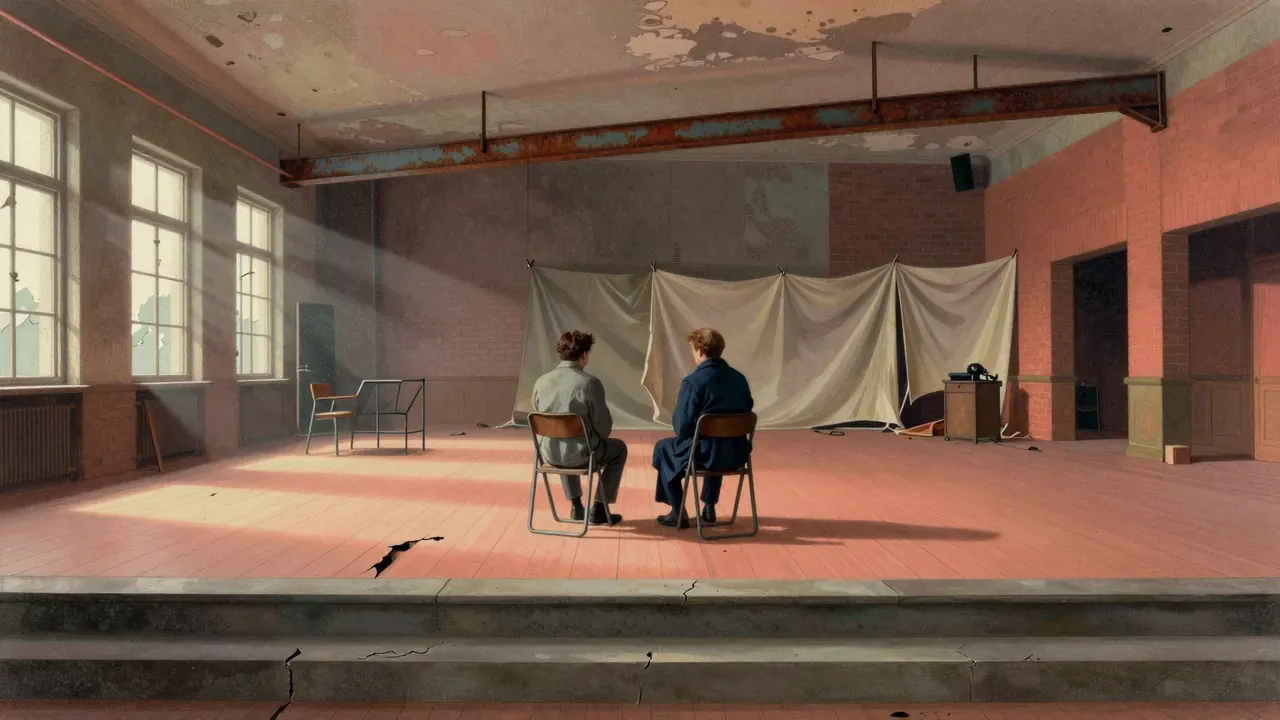
Louis Malle’s final film documents Andre Gregory’s long-term workshop on Chekhov’s Uncle Vanya, shot in the derelict New Amsterdam Theatre with Wallace Shawn, Julianne Moore, and others. It preserves the rhythms of rehearsal — interruption, repetition, uncertainty — rather than staging a polished performance. Declan Quinn’s restrained cinematography and Joshua Redman’s sparse saxophone score support a film that values duration, silence, and the physical reality of a decaying space over narrative propulsion or dramatic resolution.

13:00

Victim

Basil Dearden · 1961

Victim (1961), directed by Basil Dearden and written by Janet Green, is a British drama centred on a married barrister drawn into confronting a blackmail ring targeting gay men. Made before decriminalisation in England and Wales, it was the first UK film to name homosexuality explicitly and argue, through restrained craft and deliberate pacing, that the law itself enabled abuse. Starring Dirk Bogarde and Sylvia Syms, it trades spectacle for structural clarity — using cinematography, performance, and script to expose how statutes manufacture vulnerability.

13:00

Vive le Tour

Louis Malle · 1962

Louis Malle’s 1962 documentary Vive le Tour observes the 1962 Tour de France with clinical intimacy: mechanics adjusting bikes roadside, riders eating cold sandwiches, journalists shouting questions, medical staff administering injections. Shot on location by Malle alongside Ghislain Cloquet and Jacques Ertaud, and narrated by cyclist Jean Bobet, it avoids heroics and exposition in favour of accumulated detail — food, fatigue, doping, injury — treated as routine elements of a vast, mobile operation. Georges Delerue’s restrained score underscores transitions, not emotions. At 18 minutes, it is brief but densely observed, offering no answers, only a clear-eyed look at endurance as collective, unglamorous work.

13:00

Walk Cheerfully

Yasujirō Ozu · 1930

Yasujirō Ozu’s 1930 silent film Walk Cheerfully follows a young man’s fall into petty crime and tentative return to social life in interwar Tokyo. With restrained performances, frontal compositions, and a deliberate, unhurried pace, it builds meaning through repetition, posture, and spatial arrangement rather than exposition or drama. Shot by Hideo Shigehara and written by Hiroshi Shimizu and Tadao Ikeda, it reflects Shochiku’s ‘new tendency’ realism — attentive to class, work, and urban routine, but resistant to moral simplification or emotional display.

13:00

Walkabout

Nicolas Roeg · 1971

Walkabout (1971), directed by Nicolas Roeg, follows a teenage girl and her younger brother after their father’s suicide in the Australian desert. They meet an Aboriginal boy who helps them survive, but communication remains partial and understanding elusive. Shot by Roeg himself, edited by Antony Gibbs, and scored by John Barry, the film uses stark imagery, elliptical structure, and near-silence to explore mutability, colonial distance, and the limits of language. Its power lies in what it withholds — names, motives, explanations — making it a landmark of arthouse cinema and a persistent subject of ethical debate.
13:00

Walker

Alex Cox · 1987

Alex Cox’s 1987 film Walker tells the story of American mercenary William Walker’s 1855–57 invasion of Nicaragua—but reframes it through deliberate, jarring anachronisms (helicopters, Diet Coke, modern rifles) to draw direct parallels with US policy during the Contra War. Starring Ed Harris and scored by Joe Strummer, it was shot in Granada with Sandinista cooperation and edited in situ. Uncompromising in its politics and formal rigour, it rejects historical realism in favour of structural critique.

13:00

Wanda

Barbara Loden · 1970

Barbara Loden’s 1970 debut is a stark, 16mm portrait of Wanda Goronski, a woman adrift in Pennsylvania’s coal country, who drifts into a criminal’s orbit without resistance or revelation. Made for $115,000 with a crew of four, it avoids psychology, music, and narrative payoff—choosing instead sustained observation, improvised dialogue, and unvarnished locations. Its power lies in what it refuses: explanation, judgement, uplift. Restored and preserved by the Library of Congress, it remains a landmark of American arthouse realism.

13:00

Watermelon Man

Melvin Van Peebles · 1970

A 1970 Columbia Pictures satire directed by Melvin Van Peebles, in which a bigoted white insurance salesman wakes up black and confronts the immediate, unvarnished consequences of racialised systems — housing, work, medicine, marriage. Written by Herman Raucher and starring Godfrey Cambridge, it uses allegory, not realism, to dissect liberal complicity and structural exclusion. Its power lies in its restraint, its refusal to explain, and its unwavering focus on consequence over cause.

13:00

White Dog

Samuel Fuller · 1982

Samuel Fuller’s 1982 drama follows a white actress who adopts a stray dog trained to attack Black people on sight. When a Black trainer attempts to recondition it, the film becomes a stark, unsentimental inquiry into whether racism is a treatable reflex or an irreversible imprint. Shot in 45 days with clinical precision, it avoids moralising, opting instead for procedural realism—its power lies in what it refuses to show, explain, or resolve.

13:00

White Nights

Luchino Visconti · 1957

Luchino Visconti’s 1957 adaptation of Dostoevsky’s ‘White Nights’ transposes the short story’s introspective melancholy into a meticulously controlled studio production. Set over three winter nights in a recreated Livorno, it follows Mario’s growing attachment to Natalia, who waits nightly for a lover who may never return. With Maria Schell, Marcello Mastroianni and Jean Marais, and cinematography by Giuseppe Rotunno, the film sustains a tone of quiet inevitability—rejecting catharsis in favour of emotional precision.

13:00

Who Are You, Polly Maggoo?

William Klein · 1966

William Klein’s 1966 French film is a satirical mockumentary following Polly Maggoo, an American model pursued by a television crew in Paris. Using fragmented editing, stylised photography, and deadpan performance, it dissects how media constructs identity through repetition, framing, and erasure — never resolving who Polly is, because the system it critiques has no use for her answer.

13:00

Wildlife

Paul Dano · 2018

Paul Dano’s 2018 directorial debut Wildlife adapts Richard Ford’s novel into a precisely observed drama set in 1960s Montana. When Jerry loses his job, his wife Jeannette begins an affair with a local businessman, and their teenage son Joe bears quiet witness. With understated performances from Carey Mulligan, Jake Gyllenhaal and Ed Oxenbould, and Diego García’s muted cinematography, the film charts the slow, unspectacular unravelling of a marriage — and the ways children absorb adult failure as grammar, not event.

13:00

Winchester '73

Anthony Mann · 1950

Winchester ’73 (1950), directed by Anthony Mann and starring James Stewart, follows the turbulent passage of a prized Winchester 1873 rifle through seven owners across the American frontier. Structured as a chain of cause and effect rather than a linear quest, it foregrounds economy of form, psychological restraint, and moral ambiguity over myth or spectacle. Though groundbreaking in its use of the 'object-as-plot-engine' and influential on later genre filmmaking, its depiction of Indigenous characters remains reductive and its secondary roles underdeveloped. It rewards attentive, unsentimental viewing.

13:00

Woman of the Year

George Stevens · 1942

Woman of the Year (1942), directed by George Stevens, pairs Spencer Tracy and Katharine Hepburn for the first time in a romantic comedy about a globe-trotting political columnist and a down-to-earth sportswriter whose marriage strains under mismatched expectations. Written by Ring Lardner Jr. and Michael Kanin, with uncredited revisions by John Lee Mahin, the film balances sparkling dialogue and precise performances against a structurally compromised ending. It won the Academy Award for Best Original Screenplay and was added to the National Film Registry in 1999.

13:00

Women in Love

Ken Russell · 1969

Ken Russell’s 1969 Women in Love adapts D. H. Lawrence’s novel with fidelity to its psychological and philosophical core. Starring Glenda Jackson, Alan Bates, Oliver Reed, and Jennie Linden, it charts two sisters’ contrasting paths through love, intellect, and selfhood in post-war England and Switzerland. Billy Williams’s naturalistic cinematography and Georges Delerue’s restrained score support performances that prioritise presence over exposition. Though structurally uneven and occasionally opaque in its secondary arcs, the film remains a rare example of cinema treating ideas as visceral, not illustrative.

13:00

Women of the Night

Kenji Mizoguchi · 1948

Kenji Mizoguchi’s Women of the Night (1948) follows three women in post-war Osaka as each enters prostitution under distinct but converging pressures: infant mortality, syphilis, police raids, and familial rejection. Shot on location with Kinuyo Tanaka in a restrained, physically grounded performance, it avoids melodrama in favour of structural clarity — showing how poverty, gendered law, and institutional neglect produce outcomes with clinical precision. Though some characters remain schematic and its pacing resists modern expectations, its rigour and historical immediacy make it a vital, unsentimental reckoning with survival.

13:00

Working Girls

Lizzie Borden · 1986

Lizzie Borden’s 1986 drama Working Girls observes a single day in a Manhattan brothel, centring Molly — a Yale graduate working to support herself and her girlfriend — alongside colleagues Dawn, Gina and madam Lucy. Shot with documentary restraint by Judy Irola, it avoids moralising, instead attending to the rhythms of paid labour: bookings, client negotiations, shared space, racial bias in clientele, and the quiet cost of emotional management. It won Sundance’s Special Jury Recognition and was later restored by The Criterion Collection.

13:00

Wrong Move

Wim Wenders · 1975

Wrong Move (1975), directed by Wim Wenders and written with Peter Handke, follows Wilhelm Meister’s journey across West Germany as he attempts to become a writer. Shot by Robby Müller with stark, painterly compositions, the film reframes Goethe’s Bildungsroman as a critique of Romantic self-making. Its sparse dialogue, detached performances, and refusal of catharsis make it the most philosophically dense and emotionally austere entry in Wenders’ Road Movie trilogy.

13:00

Young Törless

Volker Schlöndorff · 1966

Volker Schlöndorff’s 1966 debut adapts Robert Musil’s novel into a stark, unsentimental study of moral passivity at an Austro-Hungarian military academy. Mathieu Carrière plays Thomas Törless, a boy who observes the sadistic abuse of a classmate without intervening — not out of malice, but intellectual detachment. Franz Rath’s flat, unadorned cinematography and Hans Werner Henze’s austere string score reinforce the film’s clinical tone. It is a work of precision, not persuasion: less concerned with condemning cruelty than with mapping how systems allow it to persist through silence, delegation and routine.

13:00

Yoyo

Pierre Étaix · 1965

Pierre Étaix’s 1965 comedy Yoyo follows a French millionaire’s fall from wealth into circus life, and his son’s parallel rise from clown to film star. Structured as a series of precisely timed visual gags and period tableaux, it uses physical comedy to explore inheritance, class, and performance across the 1920s to the 1960s. Shot by Jean Boffety with restrained elegance, it favours rhythm over exposition and texture over psychology.

13:00

Zatoichi and the Chess Expert

Kenji Misumi · 1965

The twelfth Zatoichi film follows the blind masseur as he travels with a shogi master, a grieving aunt, and her injured niece. Suspicion mounts as murders occur, each clue pointing toward the master—yet Zatoichi delays judgment, reading intent through games and gesture rather than proof. Directed by Kenji Misumi with austere control, it is a study in withheld certainty, where every pause and every move matters more than the final strike.

13:00

Zatoichi and the Chest of Gold

Kazuo Ikehiro · 1964

In Japan, 1964, Zatoichi travels to a drought-stricken village to pay respects at a grave — only to become entangled in the theft of 1,000 ryo raised for taxes. As corrupt officials, rogue samurai, and desperate bandits converge, he navigates a web of complicity without recourse to vengeance. Directed by Kazuo Ikehiro and shot by Kazuo Miyagawa, this sixth Zatoichi film marks a formal and ethical shift: quieter, more politically attentive, and anchored in the material reality of feudal obligation.

13:00

Zatoichi and the Fugitives

Kimiyoshi Yasuda · 1968

The eighteenth Zatoichi film finds Shintarō Katsu’s blind swordsman confronting a silk-weaving magnate who enforces debt bondage and shelters vicious fugitives. Directed by Kimiyoshi Yasuda with stark cinematography by Kazuo Miyagawa, it strips away mythic flourishes to focus on procedural cruelty and physical consequence — Zatoichi is wounded, outmatched, and morally unrelieved. The film’s rigour lies in its refusal to flinch, to explain, or to console.

13:00

Zatoichi Goes to the Fire Festival

Kenji Misumi · 1970

Zatoichi Goes to the Fire Festival (1970), directed by Kenji Misumi and starring Shintarō Katsu, is the twenty-first and Misumi’s final entry in the original Zatoichi series. Set in the late Edo period, it follows the blind swordsman as he confronts Yamikubo, a rival blind warlord who rules through fear and tribute. With cinematography by Kazuo Miyagawa and music by Akira Ifukube, the film uses the Fire Festival as both backdrop and moral crucible. It is a study in restraint — in performance, editing, and philosophy — closing a chapter not with spectacle but with accumulated weight.

13:00

Zatoichi Meets Yojimbo

Kihachi Okamoto · 1970

Kihachi Okamoto’s 1970 jidaigeki brings together Shintarō Katsu’s blind swordsman Zatoichi and Toshirō Mifune’s sardonic rōnin Daisaku Sasa in a tightly wound, rain-drenched confrontation. Neither man yields his nature; their duel ends in mutual injury, not revelation. The film privileges physical storytelling over exposition, with Akira Ifukube’s restrained score and Yoshinobu Nishioka’s weathered production design reinforcing its unsentimental tone. While some subplots falter, the central performances — grounded, economical, deeply embodied — make it a singular exercise in genre contrast.

13:00

Zatoichi on the Road

Kimiyoshi Yasuda · 1963

The fifth Zatoichi film follows the blind swordsman as he escorts a young woman fleeing a lord’s wrath, navigating rival yakuza factions and his own reluctant reputation. Directed by Kimiyoshi Yasuda and starring Shintarō Katsu, it sustains the series’ lean, episodic structure — prioritising quiet character beats and economical action over exposition or thematic expansion. Its strength is in restraint: in Katsu’s understated performance, Ifukube’s sparse score, and Yasuda’s unadorned framing. It presumes familiarity with the character and his world, offering continuity rather than reinvention.

13:00

Zatoichi the Fugitive

Tokuzō Tanaka · 1963

Zatoichi the Fugitive (1963), the fourth film in Daiei’s long-running chambara series, follows the blind swordsman as he enters a yakuza-controlled town, wins a sumo match, kills a bounty hunter, confronts a grieving matriarch, and becomes entangled in a succession crisis. Directed by Tokuzō Tanaka and starring Shintarō Katsu, it relies on precise staging, sparse music by Akira Ifukube, and performances rooted in implication rather than declaration. Its strength lies in economy: every scene advances moral or social logic, not just plot. It assumes familiarity with the character’s ethos and rewards attention to gesture, silence, and recurring motifs — making it essential viewing within the series, but less accessible in isolation.

13:00

Zatoichi's Flashing Sword

Kazuo Ikehiro · 1964

The seventh Zatoichi film finds Shintarō Katsu’s blind swordsman recovering from an ambush, taking refuge in a riverside town, and becoming entangled in a feud between rival bosses over control of a river crossing. Directed with unshowy precision by Kazuo Ikehiro and written by Minoru Inuzuka, it leans on the series’ established grammar — terse dialogue, tactile action, moral economy — rather than expanding its scope. The fireworks promised early on become both deadline and motif, framing a climax that is less about vengeance than restoration of balance. It is a work of continuity, not rupture.

13:00

Zatoichi's Pilgrimage

Kazuo Ikehiro · 1966

The fourteenth Zatoichi film sees Shintarō Katsu’s blind swordsman undertake the Shikoku pilgrimage, seeking quiet reckoning rather than redemption. Directed by Kazuo Ikehiro with script by Kaneto Shindō, it trades action set-pieces for sustained atmosphere, subtle performance, and restrained craft. Violence is brief and consequential; stillness is prolonged and meaningful. The film’s strength lies in its commitment to rhythm over revelation, repetition over resolution.

13:00

Zazie in the Metro

Louis Malle · 1960

Louis Malle’s 1960 adaptation of Raymond Queneau’s novel is a tightly controlled explosion of comedic logic: ten-year-old Zazie wanders a Métro-strike Paris, exposing the absurdity of adult institutions through deadpan inquiry and visual non-sequitur. Shot with only two lenses, edited for rhythmic disjunction, and scored with deliberate silence, it privileges construction over character, pattern over plot. Its themes — language as performance, authority as costume, childhood as unmediated perception — emerge not through exposition but through relentless formal consistency.

13:00

Barton Fink

Joel Coen, Ethan Coen · 1991

Barton Fink (1991) is a neo-noir arthouse thriller set in 1941, following a New York playwright’s unsettling stay at the decaying Hotel Earle while writing for a Hollywood studio. Directed by Joel and Ethan Coen, it stars John Turturro and John Goodman, with cinematography by Roger Deakins and music by Carter Burwell. Its power lies in sustained atmosphere, recursive imagery, and psychological compression — less a narrative than a meticulously constructed state of mind.

13:00

Face/Off

John Woo · 1997

John Woo’s 1997 action thriller Face/Off stars John Travolta and Nicolas Cage as an FBI agent and terrorist who swap faces via experimental surgery. Built on operatic violence, precise choreography, and dual performances of startling commitment, it uses identity exchange as narrative engine rather than philosophical probe. Shot by Oliver Wood and scored by John Powell, it balances absurd premise with rigorous craft — delivering coherent, emotionally charged set pieces across 133 minutes. Though thin on thematic depth and scientific rigour, its confidence, control, and clarity make it a durable artefact of late-20th-century studio action cinema.

13:00

Four Nights of a Dreamer

Robert Bresson · 1971

Robert Bresson’s 1971 Four Nights of a Dreamer adapts Dostoyevsky’s 'White Nights' into a restrained, colour-saturated study of two Parisians who meet for four consecutive evenings. Jacques, a withdrawn artist, tries to keep Marthe from suicide; she listens, shares memories, and gradually draws him into her orbit — only to choose her former lover when he reappears. Shot by Pierre Lhomme and scored by F. R. David, the film favours quiet observation over exposition, using tape recordings, city textures and hesitant performances to trace the asymmetry of attachment.

13:00

Holy Motors

Leos Carax · 2012

A man named Oscar spends a day in Paris performing nine radically different roles — beggar, assassin, dying patriarch, sewer-dweller — in a white limousine driven by Céline. There are no cameras, no audiences, no explanations. Directed by Leos Carax and starring Denis Lavant, the film treats acting as endurance, identity as costume, and technology as both tool and tomb. Shot digitally in Paris, it premiered at Cannes in 2012 and won Best Feature at Sitges.

13:00

Hunt for the Wilderpeople

Taika Waititi · 2016

Taika Waititi’s 2016 film follows Ricky Baker, a defiant foster child, and Hector, the taciturn man reluctantly tasked with caring for him. After Bella — Hector’s wife and Ricky’s first real anchor — dies, Ricky flees into the bush, and Hector follows. What begins as a simple search becomes a nationwide manhunt, reframing their bond as both tender and subversive. Shot across New Zealand’s Central Plateau and Waitākere Ranges, the film balances deadpan comedy, adolescent anxiety, and quiet grief without recourse to sentiment or spectacle.

13:00

L'Arrivée d'un train en gare de La Ciotat

Auguste Lumière, Louis Lumière · 1896

L'Arrivée d'un train en gare de La Ciotat (1896) is a fifty-second silent actuality film by Auguste and Louis Lumière, recording a steam locomotive arriving at La Ciotat station. Shot in a single unedited take with the Cinématographe, it exemplifies early cinema’s documentary impulse and technical ambition. Though often mythologised for causing audience panic, no contemporary evidence supports this. Its significance lies in its formal restraint, its demonstration of cinematic continuity, and its role in establishing the medium’s foundational grammar.

13:00

Nikita

Luc Besson · 1990

A convicted junkie is erased from official record and retrained as a government assassin. Under the supervision of a shadowy agency, she masters weapons, languages and deception — then begins a fragile relationship with a man who knows nothing of her past. When duty and desire collide, she must choose between two irreconcilable lives. Luc Besson’s 1990 French thriller is a study in control, performance and the cost of competence.

13:00

O Brother, Where Art Thou?

Joel Coen, Ethan Coen · 2000

O Brother, Where Art Thou? (2000) transplants the Odyssey’s structure to Depression-era Mississippi, following three escaped convicts on a rambling quest. Directed by Joel and Ethan Coen, it features George Clooney, John Turturro, and Tim Blake Nelson, with cinematography by Roger Deakins and music curated by T Bone Burnett. Its sepia-toned digital look was pioneering; its soundtrack, rooted in period folk and gospel, won a Grammy. Though loosely plotted and deliberately arch, the film sustains a unified tone — dry, musical, mythic — that rewards attentive viewing.

13:00

Rang De Basanti

Rakeysh Omprakash Mehra · 2006

Rang De Basanti (2006) follows five Delhi students drawn into a British filmmaker’s documentary about 1920s Indian revolutionaries. As they rehearse acts of defiance, real-world corruption forces them to confront their own passivity. Directed by Rakeysh Omprakash Mehra, with cinematography by Binod Pradhan and music by A. R. Rahman, it blends contemporary realism with historical re-enactment to ask what civic courage costs today. Though its climax strains credibility, its emotional logic and ensemble performances sustain its 157-minute runtime.

13:00

Shadow

Zhang Yimou · 2018

Zhang Yimou’s Shadow is a 2018 Chinese wuxia film shot in near-monochrome to emulate classical ink painting. Deng Chao plays both a wounded general and his decoy, Jingzhou, who must impersonate him to reclaim a lost territory. Set against rain-dampened courts and mist-shrouded duels, the film prioritises visual cohesion and philosophical combat over exposition or emotional catharsis. Zhao Xiaoding’s cinematography and the deliberate, yin-inflected fight choreography anchor its formal ambition.

13:00

Sometimes Happiness Sometimes Sadness

Karan Johar · 2001

Sometimes Happiness Sometimes Sadness (2001) is a Hindi-language family drama directed by Karan Johar, following the Raichand family across Delhi, London, and Cairo. When adopted son Rahul marries outside his class, his father Yash disowns him, triggering a decade-long estrangement. His younger brother Rohan engineers a reunion, culminating in public apology and dual weddings. Anchored by performances from Amitabh and Jaya Bachchan, Shah Rukh Khan, and Kajol, the film uses music, costume, and ritual to explore inheritance, visibility, and the slow labour of belonging.

13:00

The Fireman's Ball

Miloš Forman · 1967

Miloš Forman’s 1967 Czechoslovak comedy follows a provincial fire brigade’s annual ball as it slowly derails under the weight of its own good intentions, indifference and procedural inertia. Shot at Barrandov Studios by Miroslav Ondříček and scored by Karel Mareš, it observes without judging, repeats without explaining, and ends without resolving — making its case for the quiet absurdity of communal life through restraint, not rhetoric.

13:00

The Naked City

Jules Dassin · 1948

The Naked City (1948) follows NYPD detectives investigating the murder of a model across real New York locations. Directed by Jules Dassin and written by Albert Maltz, it prioritises procedural fidelity over character depth or moral commentary. William H. Daniels’ cinematography and Paul Weatherwax’s editing anchor the film in tangible urban space, while Miklós Rózsa’s score underscores its climactic bridge chase and elegiac epilogue. Winner of two Academy Awards, it remains influential for its documentary rigour and structural clarity — a film less about crime than about how cities and institutions absorb and resolve it.

13:00

The Son's Room

Nanni Moretti · 2001

Nanni Moretti’s 2001 drama follows a psychoanalyst and his family in Ancona after their teenage son drowns. Shot with unadorned naturalism by Giuseppe Lanci and edited with deliberate restraint by Esmeralda Calabria, the film charts the quiet disintegration of routine, language, and professional distance. Its power lies in accumulation—not revelation—in how photographs, letters, and unspoken silences reconfigure daily life. It won the Palme d’Or and David di Donatello for Best Film.

13:00

True Romance

Tony Scott · 1993

Tony Scott’s 1993 True Romance, written by Quentin Tarantino, follows newlyweds Clarence and Alabama as they flee Detroit with stolen cocaine, pursued by the Mafia and compromised by police informants. Anchored by Christian Slater and Patricia Arquette’s intimate, physically committed performances, the film balances stylised violence, pop-cultural wit, and genuine romantic urgency. Jeffrey L. Kimball’s saturated cinematography and Hans Zimmer’s looping Orff-based score reinforce its fable-like intensity. Though structurally uneven — strongest in its Detroit origins, thinner in its LA climax — it sustains tone and emotional logic across 120 minutes. A cult favourite, it rewards viewers attuned to its specific blend of pulp sincerity and visual bravado.

13:00

Working Girl

Mike Nichols · 1988

Working Girl (1988), directed by Mike Nichols, follows Tess McGill, a Staten Island secretary with a night-school business degree, as she navigates corporate Manhattan. After being fired from one brokerage, she lands a job with Katharine Parker at Petty Marsh — only to discover her boss intends to steal her idea for a radio-network acquisition. When Katharine breaks her leg, Tess steps in, borrows her wardrobe, and executes the deal herself. Melanie Griffith, Harrison Ford, and Sigourney Weaver anchor a tightly written, visually controlled film that treats ambition as procedural, not mythical — and success as earned, narrow, and reversible.

13:00

2046

Wong Kar-wai · 2004

Wong Kar-wai’s 2004 romantic drama follows writer Chow Mo-wan as he drifts through 1960s Hong Kong, entangled with several women while haunted by an unconsummated past. Structured non-chronologically and interwoven with sci-fi fragments, it uses repetition, texture and sound to explore memory, longing and emotional stasis — not as narrative problems to solve, but as perceptual conditions to inhabit.

13:00

3 Idiots

Rajkumar Hirani · 2009

3 Idiots (2009) is a 164-minute Hindi-language comedy-drama directed by Rajkumar Hirani and produced by Vidhu Vinod Chopra. Starring Aamir Khan, R. Madhavan and Sharman Joshi as engineering students navigating pressure, friendship and self-definition, it uses parallel timelines to contrast institutional conformity with individual integrity. Adapted loosely from Chetan Bhagat’s Five Point Someone, it balances satire with sentiment, favouring emotional clarity over formal experiment. It won the Filmfare Award for Best Film and became a landmark commercial and cultural success across Asia.

13:00

A Ghost Story

David Lowery · 2017

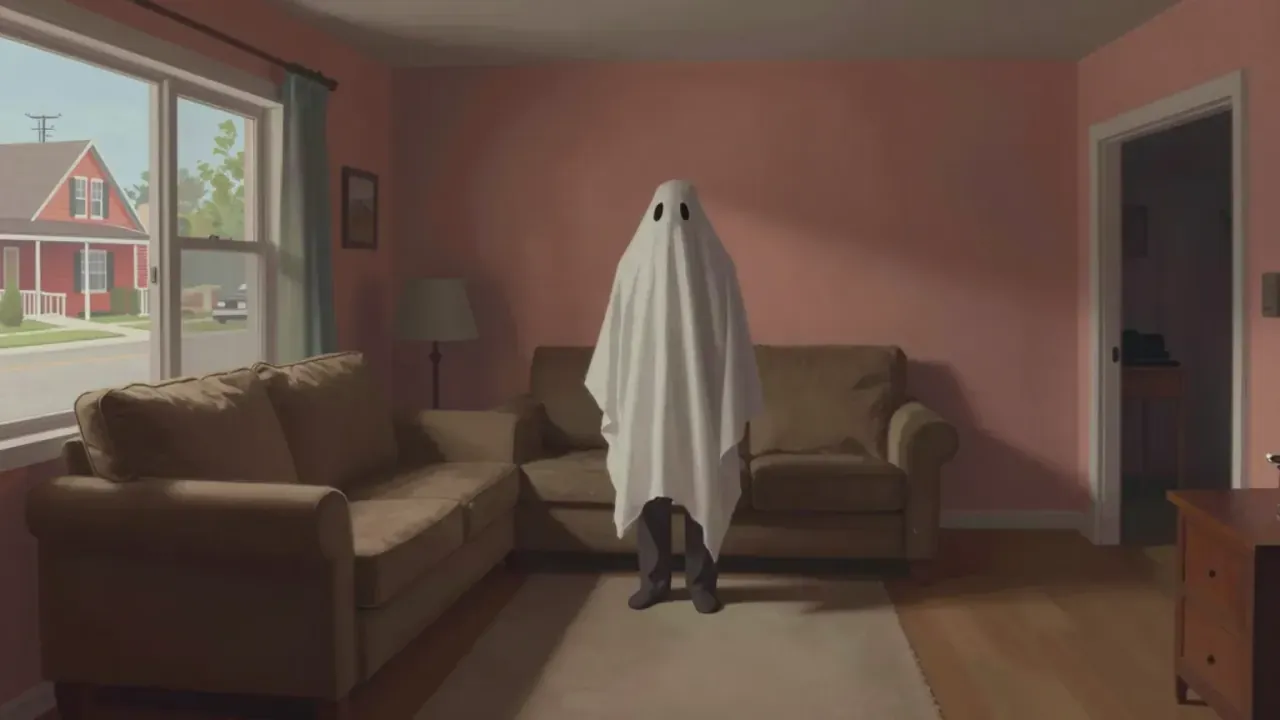
David Lowery’s A Ghost Story (2017) follows a sheet-draped ghost — played by Casey Affleck — who remains in the house he shared with his wife (Rooney Mara) after his death. Shot in 1.33:1, with minimal dialogue and long, static takes, the film observes decades of human life, loss and renewal within a single domestic space. It is a formally precise, emotionally resonant meditation on memory, materiality and deep time — not a supernatural story, but a structural poem about what endures when people do not.

13:00

A Married Woman

Jean-Luc Godard · 1964

Jean-Luc Godard’s 1964 film follows Charlotte, a married woman navigating infidelity, pregnancy, and consumer culture in early-1960s Paris. Shot by Raoul Coutard in stark black-and-white, it uses fragmentation, repetition, and deliberate juxtaposition — of Holocaust testimony and fashion ads, Beethoven and pop songs — to examine how identity is shaped by advertising, memory, and political history. Censored on release for its title and sexual content, it remains a rigorous, unsentimental inquiry into the infrastructure of everyday life.

13:00

A Very Long Engagement

Jean-Pierre Jeunet · 2004

Jean-Pierre Jeunet’s 2004 film follows Mathilde, a young Breton woman who refuses to accept her fiancé’s death in the First World War. Using letters, archives, and dogged interviews, she reconstructs the fate of five soldiers condemned to no man’s land. Shot by Bruno Delbonnel and scored by Angelo Badalamenti, it balances tactile realism with poetic restraint, anchoring its wartime narrative in the quiet persistence of civilian life in 1920s France.

13:00

After Yang

Kogonada · 2021

A quietly devastating science fiction drama in which a family attempts to repair their malfunctioning android son, uncovering layers of memory, loss, and care. Set in a calm, unspecified future, it avoids genre spectacle in favour of domestic intimacy, using restraint as both aesthetic and ethical principle.

13:00

Anomalisa

Charlie Kaufman, Duke Johnson · 2015

A middle-aged man perceives everyone as identical—same face, same voice—except one woman he meets in a Cincinnati hotel. Adapted from Charlie Kaufman’s 2005 audio play, this stop-motion feature renders alienation as tactile, acoustic and temporal experience, using painstaking puppetry and vocal repetition to explore perception, loneliness and the fragile mechanics of connection.

13:00

Arsenal

Oleksandr Dovzhenko · 1929

Oleksandr Dovzhenko’s 1929 silent film Arsenal reimagines the 1918 Kiev Arsenal Uprising as a mythic struggle, using expressionist imagery, non-linear editing, and stark physical performance. Shot by Danylo Demutskyi and edited by Dovzhenko himself, it privileges gesture over exposition and symbol over summary. Though demanding and historically dense, it remains a landmark of Ukrainian avant-garde cinema — less a history lesson than a visceral, rhythmic invocation of collective will.

13:00

Ashes of Time

Wong Kar-wai · 1994

Wong Kar-wai’s 1994 Ashes of Time reimagines Jin Yong’s wuxia universe as a landscape of regret and deferred feeling. Starring Leslie Cheung as the brooding Ouyang Feng, it follows fragmented encounters across a bleached desert, where martial skill matters less than the weight of unspoken words. Shot by Christopher Doyle and Kwan Pun Leung in muted, atmospheric tones, and scored with sparse, resonant instrumentation, the film privileges mood over momentum. Though its elliptical structure divides opinion, its central performances and visual discipline make it a defining arthouse wuxia — less about heroes and villains, more about the quiet violence of remembering.

13:00

Bande à part

Jean-Luc Godard · 1964

Jean-Luc Godard’s 1964 Bande à part follows three young people who plan a robbery but spend more time dancing in cafés and racing through the Louvre. Adapted from Dolores Hitchens’s novel, it foregrounds gesture over plot, mood over motive, and physical presence over psychological depth. Raoul Coutard’s cinematography and Michel Legrand’s score reinforce its light-footed melancholy. Though often called Godard’s most accessible film, its pleasures are formal and fleeting — a dance, a pause, a run — rather than dramatic or conclusive.

13:00

Batman Returns

Tim Burton · 1992

Tim Burton’s 1992 sequel discards superhero convention to explore abandonment and performance through Gotham’s grotesque, snowbound winter. With Michael Keaton, Danny DeVito, and Michelle Pfeiffer delivering career-defining turns, it leans on Stefan Czapsky’s shadow-heavy cinematography, Bo Welch’s layered production design, and Danny Elfman’s jagged score to sustain a tone both festive and funereal. Structurally loose but thematically tight, it remains a landmark of auteur-driven genre filmmaking.