The look of it
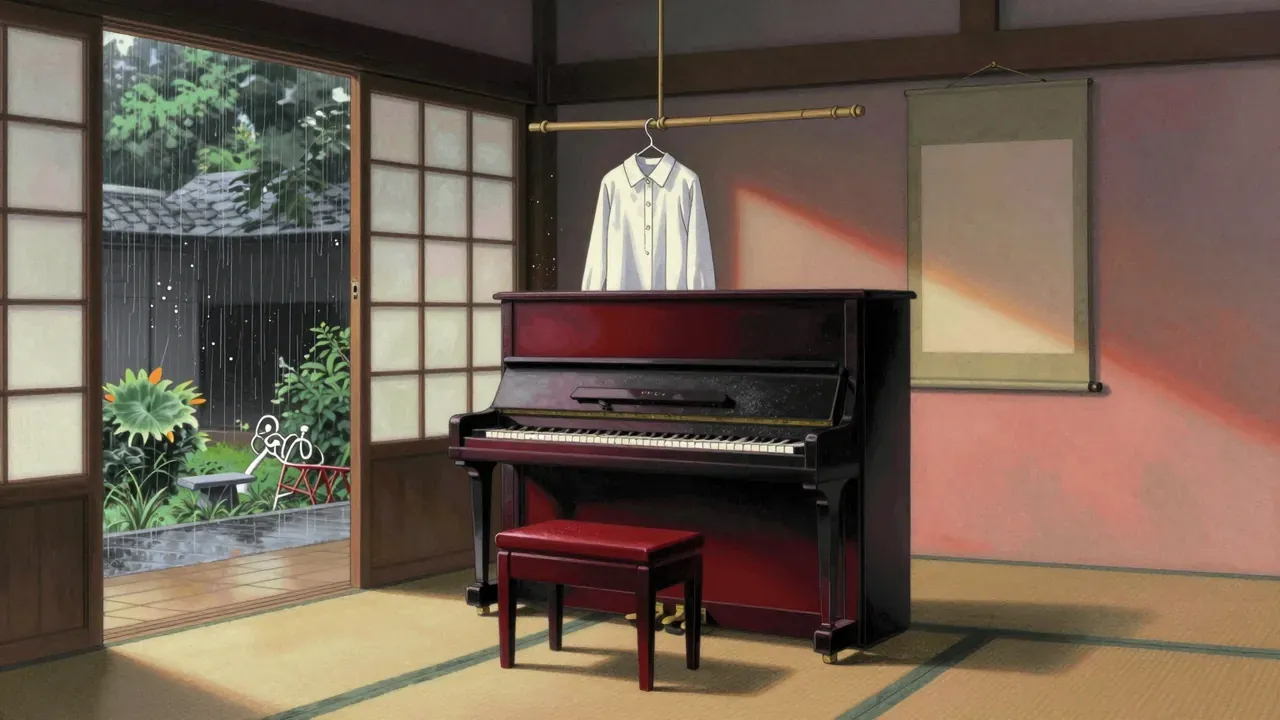
Carnival of Souls is a low-budget American horror film from 1962 that sets out to evoke psychological unease through atmosphere rather than action or exposition. It follows Mary Henry, a church organist who survives a car accident only to find her sense of reality fraying as she moves to a new city and becomes fixated on an abandoned carnival pavilion. Herk Harvey, a Kansas industrial-film director making his only feature, aimed for what he called ‘the look of Bergman and the feel of Cocteau’ — that is, a stark, interiorised dread rooted in composition, silence, and dislocation. The film does not attempt conventional scares or narrative resolution. Instead, it builds its effect through sustained visual restraint, deliberate pacing, and a refusal to explain Mary’s condition. Its ambition lies in sustaining ambiguity: is she haunted, dissociating, or already dead? The film holds that question open without leaning on genre shorthand, treating horror as a condition of perception rather than a plot device. It is less about what happens than how it feels to watch time and space warp around a single, isolated consciousness. (158 words)
How it holds still
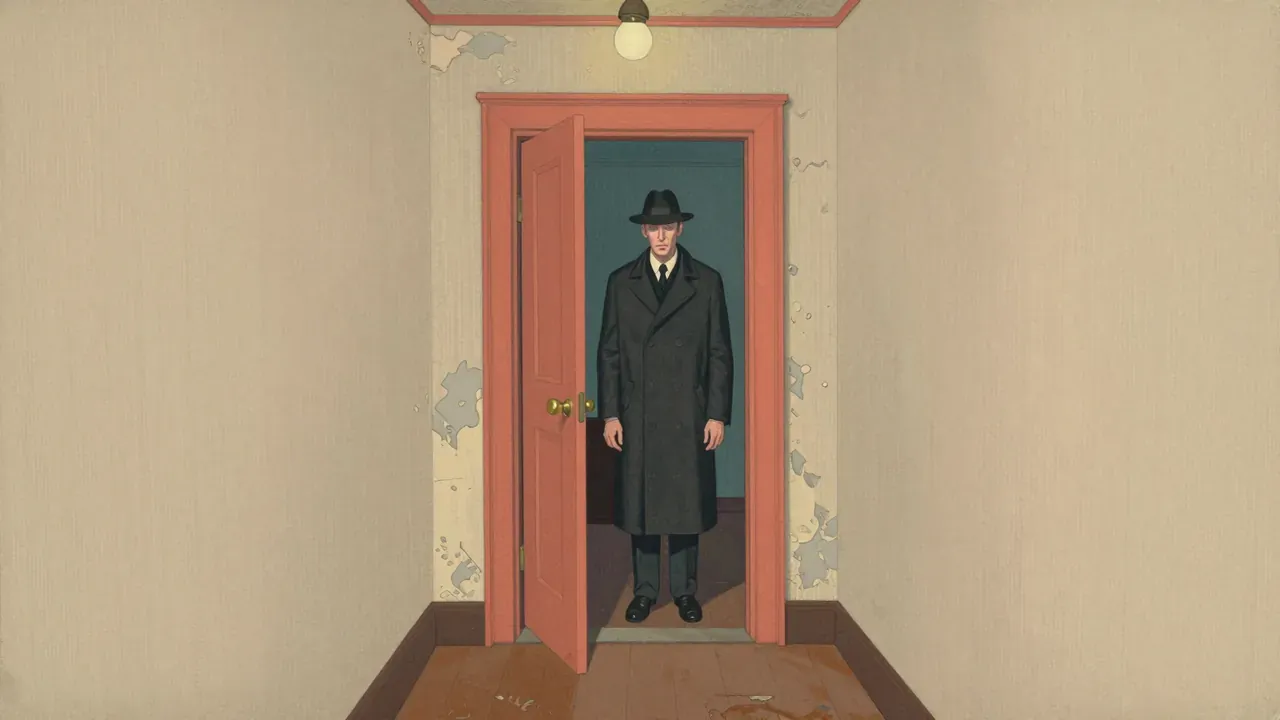
The story unfolds with minimal dialogue and sparse cause-and-effect logic, relying instead on repetition, spatial disorientation, and abrupt cuts to convey Mary’s destabilisation. Candace Hilligoss performs with a quiet, uninflected stillness that reads neither as amateurish nor stylised, but as consistent with the film’s refusal to dramatise inner life. Art Ellison plays her landlady’s son with polite detachment; Herk Harvey appears as the gaunt, silent Man who recurs like a motif. Maurice Prather’s cinematography uses deep focus, high-contrast black-and-white, and long takes to anchor the surreal in tangible surfaces — peeling paint, rain-slicked pavement, empty corridors. Gene Moore’s organ score is not accompaniment but presence: sustained notes swell and decay without melody, functioning as both sound design and psychological pressure. Harvey shot guerrilla-style — in moving cars with a hand-held Arriflex, inside real department stores without permits, at the Saltair Pavilion for $50 — and those constraints sharpen the film’s texture. There are no special effects, no makeup beyond Harvey’s own pallor; the uncanny emerges from what is withheld, not what is added. (157 words)
What stays with you
What lands most decisively is the film’s sustained mood of ontological suspension. The opening sequence — a car plunging into water, then Mary rising silently onto a riverbank — establishes a tone of quiet aftermath that never lifts. The Saltair Pavilion scenes work because they are filmed in actual decaying grandeur, not studio sets; its cavernous ballroom, lit by shafts of weak daylight, feels genuinely uninhabitable yet magnetically charged. The recurring image of Mary’s reflection failing to appear in mirrors or windows lands not as a gimmick but as a physical manifestation of eroded selfhood. The organ score’s dissonant drones and sudden silences make silence itself feel threatening. Even the grain of the 16mm print — visible in restored versions — contributes to the sense of something half-remembered or half-real. These elements cohere because they share the same economy: nothing is there to impress, only to unsettle. The film’s power resides in its refusal to name what is wrong, trusting the viewer to feel the weight of absence — of connection, explanation, even gravity. That restraint remains effective fifty years on, not as nostalgia, but as precision. (159 words)
Where the edges blur
What does not land is any attempt at social realism or character psychology beyond Mary’s isolation. The supporting characters exist only as functional echoes: the landlady’s son offers bland concern; the organ factory boss delivers exposition without subtext; the doctor speaks in platitudes. Their flatness is not stylised — it lacks the intentionality of German Expressionism or the irony of later arthouse minimalism. Some gestures, particularly Mary’s stiff posture and wide-eyed stares, read less as psychological symptoms and more as unmodulated performance choices, likely shaped by limited rehearsal time and Harvey’s background in industrial training films. The film’s resistance to motivation also works against it in places: Mary’s decision to take the organ job, her failure to seek help, her passive acceptance of the Man’s pursuit — none are anchored in behaviour we recognise as human, only in symbolic necessity. A viewer expecting coherence or empathy may find the film emotionally withholding rather than enigmatic. Its austerity risks feeling like omission, especially when contrasted with the richness of its visuals and sound. That gap between formal control and dramatic underdevelopment remains unresolved. (158 words)
What it’s really about
The themes that matter are those of liminality, embodiment, and the unreliability of perception. Mary occupies thresholds — between life and death, sanity and dissociation, public role and private collapse — and the film refuses to settle her on either side. Her profession as an organist links her to sacred architecture and mechanical breath, reinforcing the tension between spirit and mechanism. The abandoned carnival is not a site of past joy but of suspended function: rides frozen, lights dead, music absent except in Mary’s head. This is a film about what persists when purpose vanishes — memory without context, sound without source, movement without direction. It treats the body as both vessel and obstacle: Mary walks, plays, speaks, yet seems disconnected from her own motion, as if inhabiting a recording of herself. The recurring motif of reflections — or their absence — points to identity as contingent on external confirmation. There is no theology here, no afterlife doctrine — only the visceral sensation of being untethered from time, place, and self. That experience, rendered without metaphor or explanation, remains its most enduring and unsettling proposition. (159 words)
Who it’s for
This film is for viewers who value mood over momentum, who find unease in stillness and resonance in repetition. It suits those familiar with mid-century European art cinema or American avant-garde shorts, and those willing to sit with ambiguity for its own sake. It is not for viewers who require narrative clarity, emotional payoff, or character development — those who expect horror to deliver catharsis, jump scares, or moral structure will find it inert. Some film scholars and preservationists argue the 84-minute cut restores vital texture lost in the 78-minute theatrical version, but even that full length does not resolve its central opacity. A viewer who values psychological realism over symbolic density, or who prefers horror grounded in social or bodily threat, would likely disengage. What would change the verdict is not restoration or remastering, but a shift in expectation: this is not a puzzle to solve, but a state to inhabit. Its worth depends entirely on whether that state feels necessary, not entertaining. (159 words)
Is it worth your time
Yes, it is worth your evening — provided you approach it as a sensory artefact rather than a story to follow. Its 84 minutes pass without hurry, but never drag, because every frame serves the same restrained logic: light, shadow, silence, recurrence. You do not need prior knowledge of Bergman or Bierce to feel its pull; the film’s grammar is self-contained. It rewards attention to texture — the way dust motes hang in a sunbeam, the hollow echo of footsteps on concrete, the slight tremor in Mary’s hands as she plays. It is not ‘enjoyable’ in any conventional sense, but it is coherent, intentional, and unlike almost anything else made in 1962 America. Those who dismiss it as ‘slow’ or ‘amateurish’ mistake economy for deficiency. Its limitations — budget, cast, technical means — are inseparable from its power. To watch Carnival of Souls is to witness how much can be achieved when every choice is subtractive, not additive. That makes it not just historically significant, but quietly radical. (158 words)