The look of it
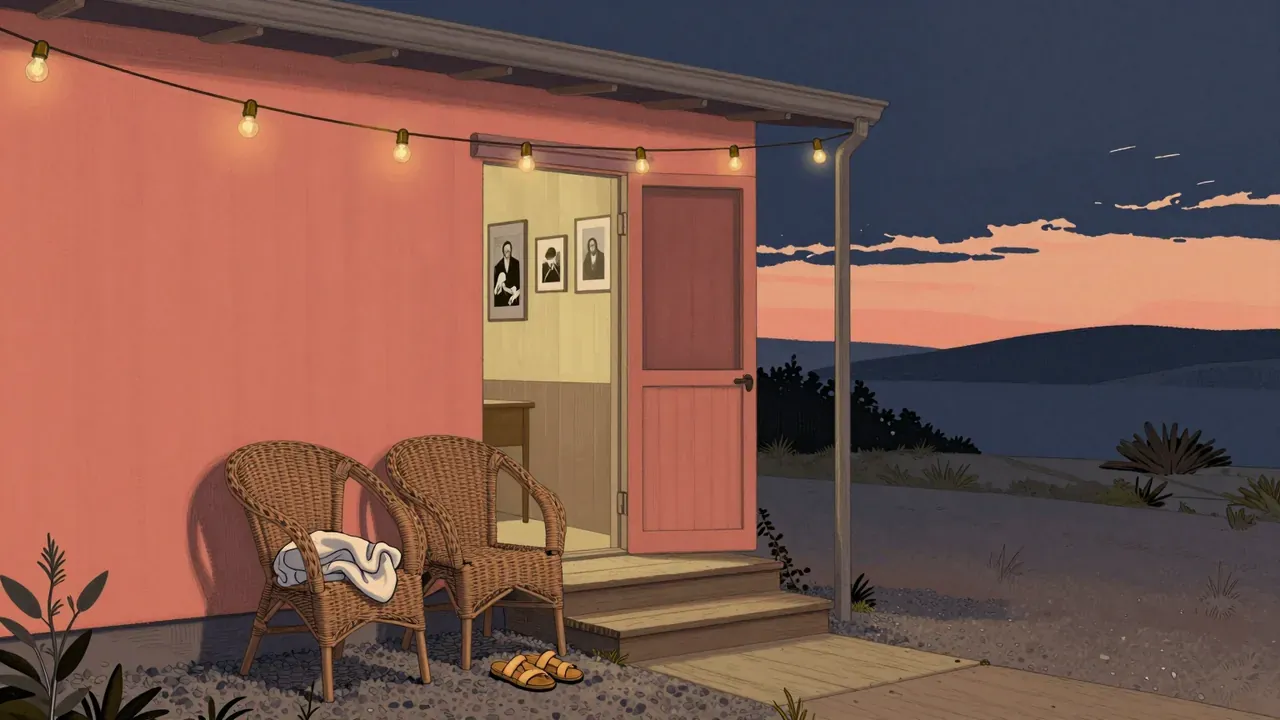
Cold Water is a French drama from 1994, written and directed by Olivier Assayas, set in the early 1970s and centred on two teenagers—Christine and Gilles—navigating fractured family life, institutional control, and self-invention through collective rebellion. It attempts to reconstruct not a period costume piece but a sensory and emotional archaeology of adolescence: how music, movement, shared risk, and physical space cohere into identity when adult structures have failed. The film treats its historical moment not as backdrop but as active agent—the grain of vinyl, the weight of smoke, the unsteady light of a single bulb in an abandoned house—all calibrated to evoke what it felt like to be young and unmoored in that particular cultural hinge between post-1968 disillusion and pre-punk restlessness. Assayas frames this as autobiographical terrain, yet avoids nostalgia or confession; instead, he builds a world where consequence is deferred, memory is tactile, and agency emerges not through speech but through rhythm, refusal, and flight. The commission originated in television, but the final form resists broadcast pacing or exposition, trusting duration and atmosphere over explanation. (158 words)
The sound of it
The story unfolds in three sparse movements: rupture, gathering, departure. Christine’s arrest and institutionalisation, Gilles’s evasion and drift, then their convergence at a derelict country house where thirty-odd non-professional actors improvise a nocturnal party set to period American rock—Janis Joplin, Creedence Clearwater Revival, The Rolling Stones—played loud and unfiltered. Denis Lenoir’s cinematography uses available light and handheld restraint, avoiding both grittiness and polish: interiors are dim but legible, faces half-lit by firelight or transistor radio glow, long takes holding breath rather than momentum. Virginie Ledoyen, already experienced, grounds Christine with watchful stillness; Cyprien Fouquet, cast without prior acting work, conveys Gilles’s quiet disorientation through posture and hesitation, not line readings. Luc Barnier’s editing sustains duration without indulgence—scenes breathe, but never stall. There is no score beyond diegetic music; no voiceover, no flashbacks, no symbolic punctuation. The craft serves immersion, not emphasis: every cigarette drag, every stumble, every pause in conversation feels earned, not staged. (159 words)
The party
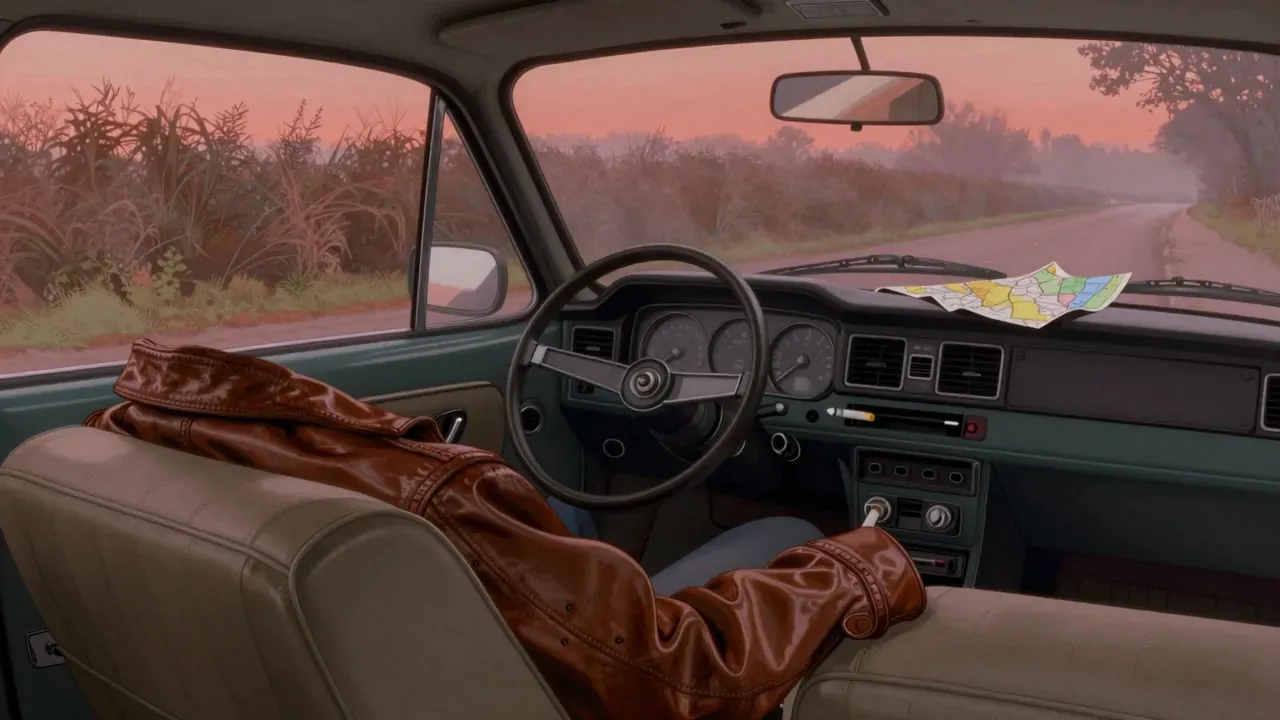
What lands is the physical truth of the party sequence: its heat, its exhaustion, its unscripted camaraderie. The camera stays at shoulder height, moving only when someone moves, catching glances across rooms, hands passing joints, bare feet on cold floorboards, the way light catches sweat on a neck mid-dance. The music does not underscore—it occupies space, competes with voices, fades at the edges of hearing. When Christine and Gilles slip away at dawn, the shift from collective energy to solitary vulnerability registers not through dialogue but through changes in gait, in how they hold their jackets, in the way silence thickens as trees close in. The film’s refusal to moralise or diagnose makes the teenagers’ choices feel inevitable rather than reckless. Their search for a commune—unrealised, unexplained—is less a plot point than a gravitational pull: the idea of living outside infrastructure, outside surveillance, outside inherited failure. That idea lands because the film has spent ninety minutes making infrastructure feel suffocating and surveillance banal. (158 words)
The adults
What does not land is the ending’s abrupt pivot into allegory. After ninety minutes of grounded, embodied realism, the final minutes gesture toward symbolic closure—Gilles walking alone down a road, the implication that ‘real life has now begun’—without the preceding scenes having built sufficient psychological scaffolding for that claim. The commune remains a rumour, never seen or named; the journey there is truncated, its stakes underdeveloped. Christine’s arc, which carries much of the film’s emotional weight, recedes too quickly in the last ten minutes, leaving her agency unresolved rather than affirmed. Some viewers may also find the pacing uneven: the first act’s procedural restraint—police interviews, hospital corridors, schoolrooms—feels deliberate but risks detachment before the party releases its accumulated tension. The film assumes familiarity with the texture of 1970s French provincial life—its architecture, its bureaucracy, its radio playlists—and offers no gloss. Without that context, certain silences read as opacity rather than economy. (159 words)
The road out
The themes that matter are adolescent sovereignty under erasure, the politics of shared sound, and the body as archive. Cold Water treats music not as mood-setting but as infrastructure: a means of synchronising bodies, dissolving hierarchy, marking time outside official clocks. The party is neither hedonism nor protest but rehearsal—a temporary polis built on volume, reciprocity, and mutual invisibility to authority. Family breakdown is shown not through shouting matches but through spatial avoidance: doors left ajar, meals eaten apart, parental figures framed through doorways or windows, always at a remove. Class is present in the textures—the peeling plaster of the abandoned house, the worn leather of Gilles’s jacket, the institutional grey of Christine’s coat—but never named. What persists is the idea that freedom is not abstract but kinetic: it lives in the decision to walk out, to turn up the speaker, to share a joint, to keep moving when no destination is guaranteed. The film refuses redemption arcs or sociological framing; its ethics reside in fidelity to sensation, not explanation. (158 words)
The place that isn’t there
This film is for viewers who value atmosphere over exposition, duration over incident, and ensemble presence over star turns. It suits those attuned to the grammar of European arthouse cinema of the 1990s—Assayas’s contemporaries like Claire Denis or Philippe Garrel—or anyone drawn to films where music functions as environment, not ornament. It is not for viewers who require narrative propulsion, clear cause-and-effect, or psychological exposition; those expecting a coming-of-age parable with resolution will find its ellipses frustrating. Some may object to its lack of political framing—no mention of May ’68, no reference to contemporary labour unrest—though that omission is deliberate, not evasive. A viewer who values thematic clarity over sensory accumulation would likely judge it undercooked. What would change the verdict? A tighter final act, or even a single sustained scene at the commune, would anchor the conclusion. As it stands, its power lies in the middle, not the end. (159 words)
The morning after
Yes, it is worth your evening—if you are prepared to meet it on its own terms: as a slow-burn immersion, not a plotted journey. Its ninety-two minutes unfold with the weight and rhythm of lived time, not edited time. You will not leave with answers, but with residue: the echo of a guitar riff, the image of a hand brushing hair from a forehead in candlelight, the feeling of cold air hitting warm skin at dawn. Those who prioritise narrative efficiency or emotional catharsis may find it withholding; those who trust observation as revelation will find it generous. It rewards attention to detail—the way smoke hangs in a beam of light, how a character’s posture shifts when music starts—but does not demand scholarly engagement. It is not a film to consume, but one to inhabit briefly. Its value is cumulative, not climactic. To dismiss it as ‘minor Assayas’ mistakes its modesty for thinness; its restraint is structural, not incidental. (158 words)