The look of it
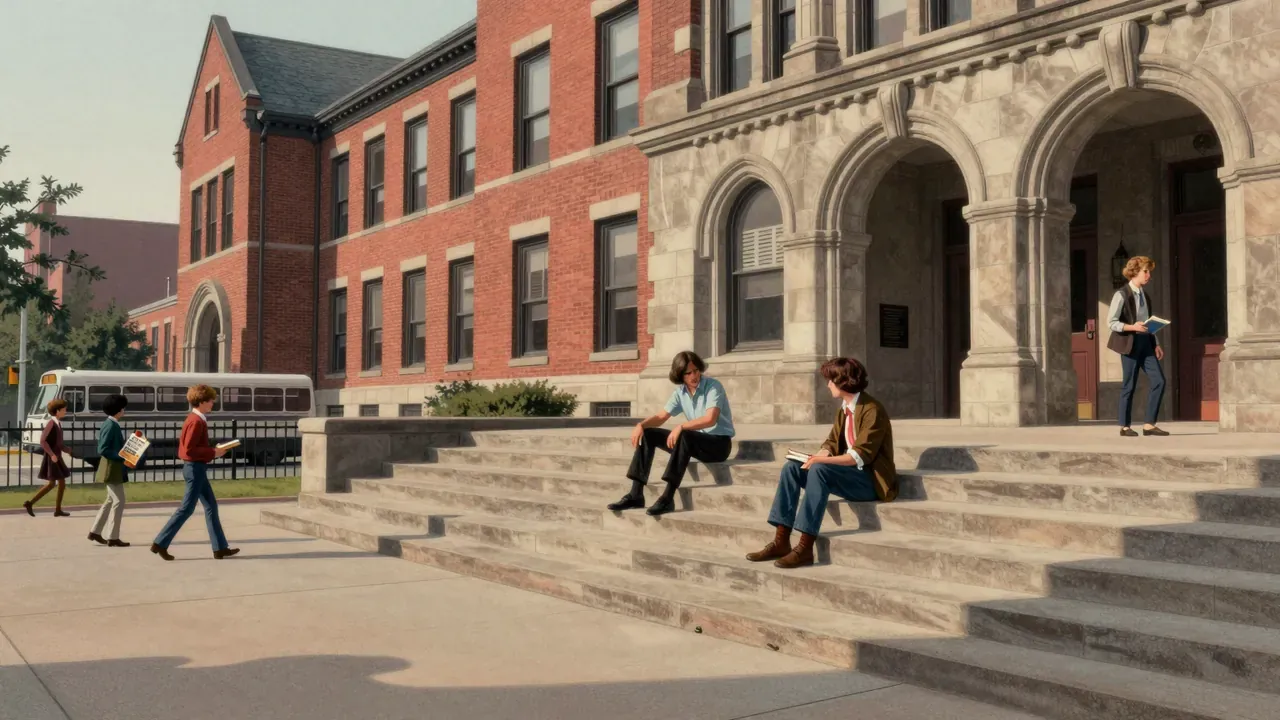
Cooley High is a Chicago-set coming-of-age film about two Black high school seniors in 1964, trying to hold on to joy and friendship in the final weeks before graduation. It aims to portray inner-city adolescence without caricature or condescension — not as social problem or cautionary tale, but as lived experience: full of banter, bad decisions, poetry, craps games, slow dances, and unspoken grief. Written by Eric Monte from his own time at Cooley Vocational High, it rejects the myth that life in public housing was uniformly grim, insisting instead on the texture of ordinary fun — the weight of a dollar bet, the thrill of skipping class, the quiet pride in a scholarship letter. Its ambition is modest but precise: to show Black teenage life as continuous with universal youth, not set apart by trauma alone. It does not argue for uplift or redemption; it observes, remembers, and names what was lost. The film’s independence — made for $750,000, shot over six weeks on real locations — is structural, not stylistic: it shapes what can be said, how much time is given to a glance, how long a scene lingers after the punchline has landed. (158 words)
The sound of it
The story follows Preach and Cochise through a compressed, sunlit week that curdles slowly into tragedy. Michael Schultz directs with restraint: no score swells at emotional turns, no close-ups linger to cue tears. Freddie Perren’s soundtrack uses Motown not as punctuation but as ambient grammar — songs drift from radios, jukeboxes, car stereos, grounding each scene in place and period without underlining meaning. Glynn Turman and Lawrence Hilton-Jacobs carry the film with unforced ease; their rapport feels less performed than recalled. Supporting actors — Garrett Morris as the weary cafeteria man, Christine Jones as Brenda — avoid archetype, speaking plainly, interrupting each other, holding silences that aren’t filled. Gordon Willis did not shoot this film, nor did any cinematographer named in the fact sheet; the credit belongs to James Crabe, who keeps light natural, interiors unvarnished, exteriors washed in Midwestern summer haze. Editing by Donn Cambern avoids rhythm-as-rhetoric: scenes end when they end, not when emotion peaks. There are no montages, no voiceover narration, no flash-forwards — just a linear, grounded accumulation of small choices that compound. (159 words)
The feel of it
What lands is the specificity of its world: the way Martha’s soul food joint smells like grease and gossip, the cadence of boys negotiating a bet while leaning against a brick wall, the physicality of a fistfight that breaks a lamp but not the mood — until it does. The film trusts its characters’ intelligence, never explaining why Preach writes poems or why Cochise hides his scholarship letter until he’s sure it’s real. Brenda’s anger at the dollar bet reads not as moral outrage but as the quiet collapse of trust between people who assumed they understood each other’s terms. The funeral sequence works because it refuses catharsis: Preach doesn’t break down; he drinks, recites, promises, then runs — not from grief, but toward something unnamed. Even the epilogue, listing fates in flat declarative sentences, lands with weight because it mirrors how young people actually talk about futures: as rumours, fragments, half-remembered news. The film’s lightness isn’t avoidance — it’s the surface tension holding back deeper water, and that tension holds. (157 words)
The weight of it
What does not land is the pivot from comedy to tragedy, which arrives without sufficient groundwork in consequence. The joyride scene — fast cars, police chase, rear-ending a parked vehicle — plays as exuberant farce until it isn’t, but the tonal shift depends on assumptions the film hasn’t earned: that Stone and Robert are volatile enough to believe betrayal without evidence, or that Damon would join them without prior animosity beyond one fight. Their turn feels narratively expedient, not psychologically anchored. The classroom arrest scene lacks procedural texture — no paperwork, no parental call, no sense of institutional weight — making the teacher’s intervention feel like plot convenience rather than character logic. Some supporting figures blur: Pooter and Willie remain types rather than individuals, their fates in the epilogue registering as data points, not losses. The film’s refusal to moralise also means it offers no counterweight to the violence — no community response, no adult reckoning, no reflection beyond Preach’s solitary toast. That austerity is deliberate, but it leaves the ending feeling less like inevitability and more like abrupt severance. (156 words)
The shape of it
The themes that matter are friendship as shared grammar — the shorthand, the bets, the unspoken rules — and how easily that language fractures under pressure. It treats education not as escape but as continuity: Cochise’s scholarship matters because it confirms what his teachers already saw, not because it rescues him from somewhere ‘worse’. Class operates quietly — in the difference between Martha’s and the Gold Coast, in the way Preach’s poem is met with curiosity, not condescension, by Brenda — but never as barrier or explanation. Grief is shown as deferred action: Preach runs after the funeral, not during it; his poem is written, not improvised. The film also insists on Black interiority as unremarkable — poetry, basketball, gambling, love, embarrassment — refusing to make any of it illustrative of race alone. Its historical significance lies less in what it says about 1964 and more in how it models attention: treating its characters’ desires, mistakes, and affections as self-evident, not symbolic. That refusal to translate, to justify, to frame — that is the film’s quietest and most durable argument. (159 words)
The pace of it
This film is for viewers who value character over plot, texture over exposition, and emotional honesty over resolution. It suits those familiar with Chicago’s geography or mid-century Black American life, but does not require that knowledge — its rhythms are legible through behaviour, not reference. It is not for viewers who need clear cause-and-effect, narrative symmetry, or psychological exposition; the motivations of Stone and Robert remain opaque by design, not oversight. Those expecting a ‘message’ about systemic injustice or uplift will find neither: the film locates stakes in individual loyalty, not policy. Nor is it for viewers who mistake realism for neutrality — its compassion is active, its omissions deliberate. A viewer who finds the ending unsatisfying may be right, but their dissatisfaction speaks to the film’s success in refusing closure. Anyone who values films where silence carries weight, where a glance lasts three seconds too long, where tragedy arrives not with music but with the sound of footsteps fading under an L track — this is for them. (159 words)
The staying of it
Yes, it is worth your evening — not as escapism, but as recalibration. Its 107 minutes ask you to sit with unforced humanity, to watch teenagers behave like teenagers, not metaphors. You will not leave with answers, but with a sharper eye for how friendship breathes, how grief waits, how dignity persists in small acts: writing a poem, keeping a promise, running toward something unnamed. It is not flawless — the third act’s compression strains credibility — but its virtues outweigh its gaps. Someone who values tightly plotted moral arcs or explicit social commentary may find it thin; someone who values authenticity of tone over tidiness will find it generous. What would change the verdict? A longer cut restoring the subtler build-up to the final confrontation — but that version does not exist, and this one stands on its own terms. Its preservation in the National Film Registry is not ceremonial: it endures because it treats its subjects as real, and reality, on screen, remains rare. (159 words)