What the film is and what it is trying to do
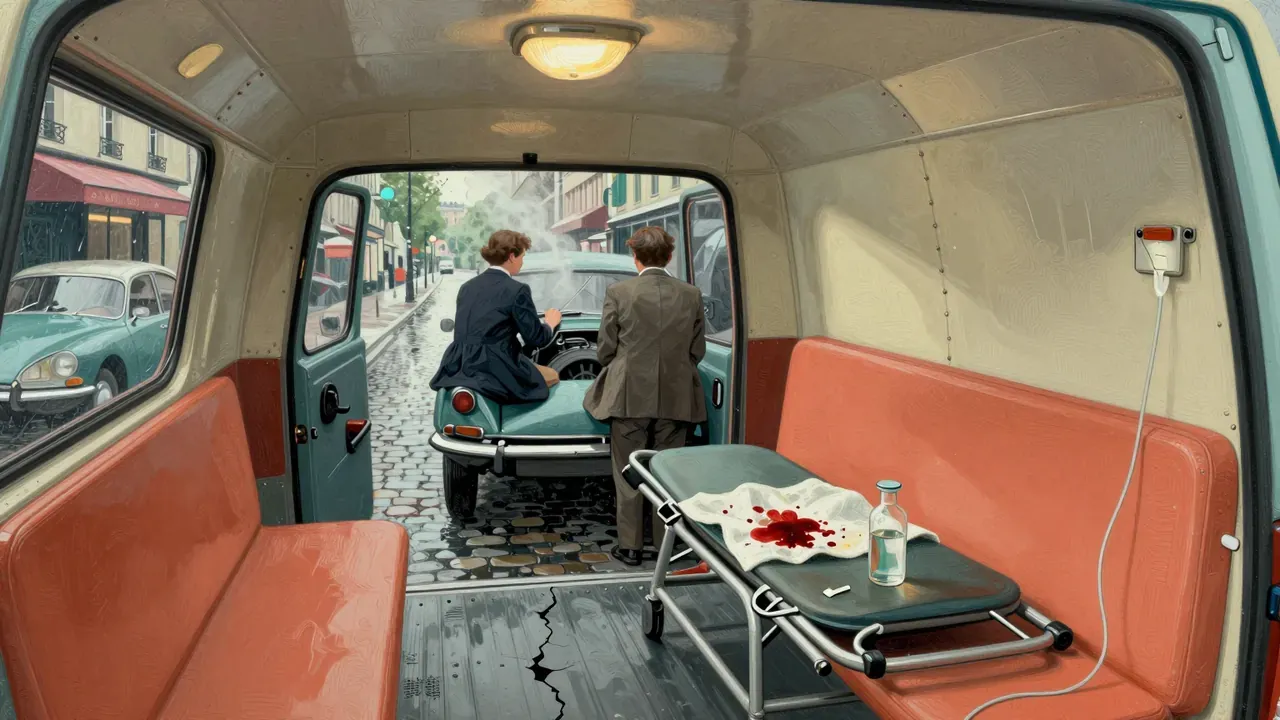
Claire’s Knee is the fifth of Éric Rohmer’s Six Moral Tales — a series of French-language chamber dramas built around articulate men negotiating desire, principle and self-deception. It is not a film about action or revelation but about the slow, reversible accumulation of small choices: a glance held too long, a hand placed without permission, a confession withheld until it no longer matters. Rohmer sets out to test whether moral clarity can be achieved through verbal precision alone — whether language, deployed with care and irony, might function as both scalpel and salve. The film refuses psychological exposition; instead, it treats conversation as behaviour, hesitation as evidence, and silence as a kind of verdict. Its structure — daily intertitles marking time between 29 June and 29 July — frames the story not as a crisis but as a season: a bounded stretch of weather, light and opportunity in which nothing irreversible happens, yet everything is measured. It assumes the viewer will attend to syntax, posture and pause as closely as to plot. (158 words)
How it works: story, performance, craft
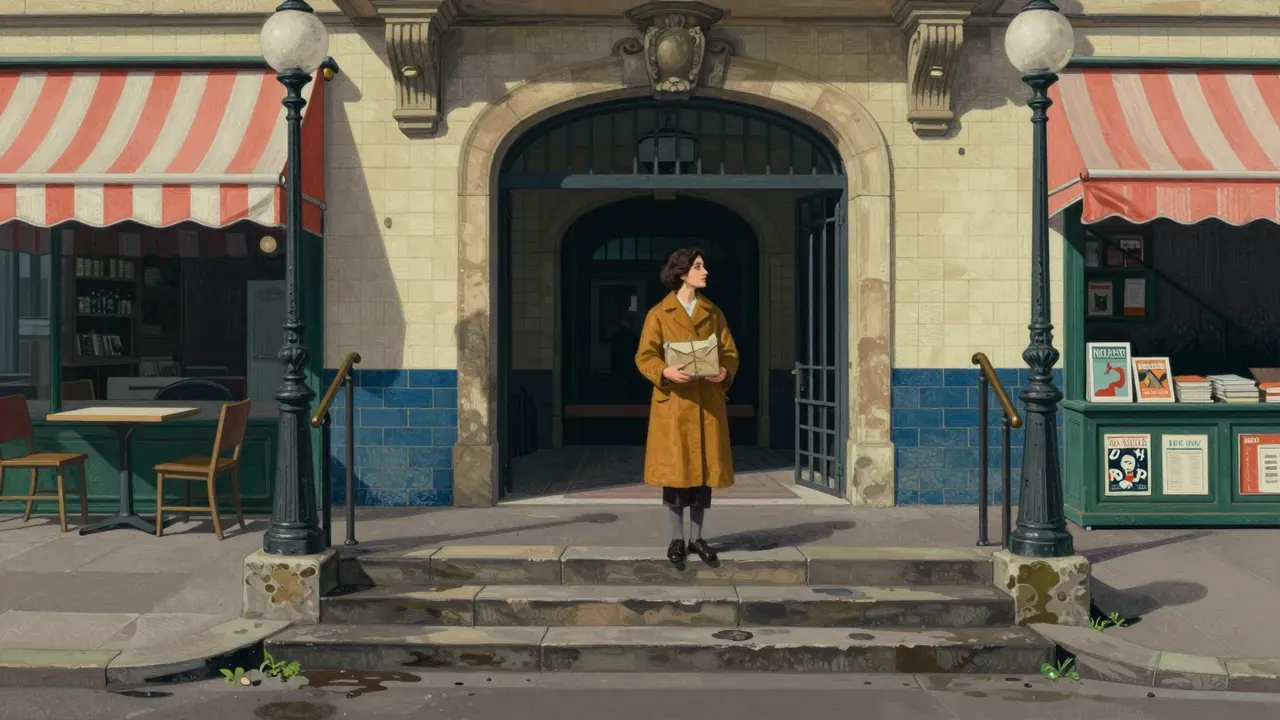
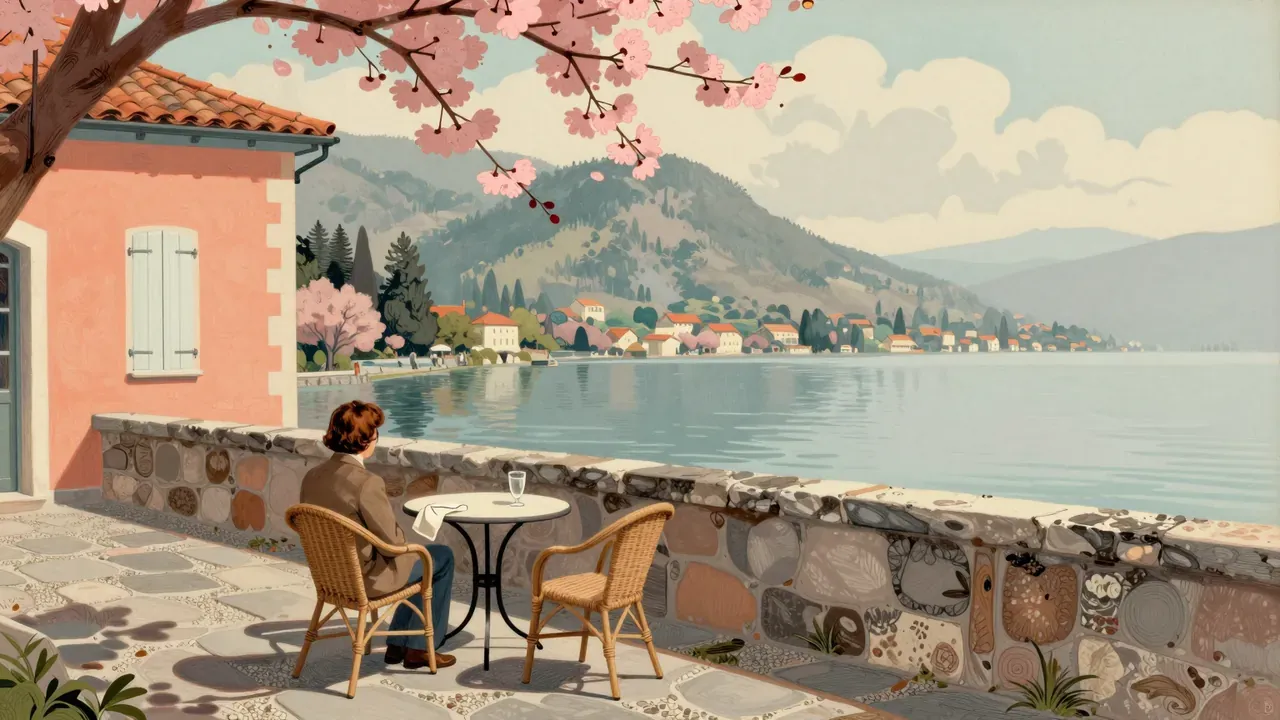
The story unfolds at Lake Annecy, where diplomat Jérôme visits before his wedding and becomes entangled with two teenage girls: Laura, who openly admires him, and Claire, whose knee he fixates on. Néstor Almendros shoots in soft, sun-drenched colour — green dominant, as Rohmer insisted — with static frames and shallow depth of field that keep faces and gestures legible without flinching from awkwardness. Cécile Decugis edits with deliberate rhythm: pauses linger just past comfort, dialogue overlaps only when it serves evasion. Jean-Claude Brialy plays Jérôme with controlled physicality — a man whose hands move before his conscience catches up. Béatrice Romand as Laura speaks with adolescent certainty that curdles into quiet disappointment; Laurence de Monaghan as Claire conveys guarded openness through minimal inflection and slight shifts in weight. Aurora Cornu, as the novelist Aurora, watches and prompts without moralising. There are no score cues, no dramatic lighting shifts — only the lake, the trees, and the unblinking attention paid to how people sit, stand and look away. (159 words)
What lands
What lands is the film’s fidelity to its own logic: that desire is neither shameful nor heroic, but a persistent, low-grade weather system one learns to navigate with varying degrees of honesty. The cherry-ladder scene — Claire perched, knee exposed, Jérôme frozen mid-thought — works because it isolates a single sensory detail and lets it carry disproportionate weight. The rain-shelter sequence functions similarly: confined space, shifting power, a hand placed not as conquest but as clumsy consolation. Rohmer trusts the audience to register the difference between intention and effect, between what Jérôme tells himself and what his body does. The film’s wit lies in its refusal to judge — it allows Jérôme’s self-satisfaction to coexist with Aurora’s dry scepticism, and lets Claire’s tears land without explanation. Even the final confrontation between Claire and Gilles feels earned not by plot mechanics but by accumulated tonal consistency: everyone speaks plainly, yet nothing is resolved. The film sustains its premise — that moral life is conducted in increments — without strain or concession. (157 words)
What does not
What does not land is the assumption that all viewers will share Rohmer’s patience with verbal recursion. Some exchanges — particularly Jérôme’s monologues to Aurora about his own motives — risk sounding like rehearsals for a thesis rather than lived speech. The film’s resistance to visual metaphor means it offers no counterpoint to its talk: when Jérôme describes his attraction to Claire’s knee, there is no cut to a close-up, no symbolic echo — just the next line of dialogue. This austerity may read as rigour to some, but to others it feels like withholding. The teenage characters, though well-observed, remain slightly flattened by design: Laura’s father-loss theory is stated once and left unprobed; Claire’s emotional response to betrayal is rendered in tears and silence, not interiority. The film’s moral framework presumes a shared cultural grammar — familiarity with French intellectual manners, with the unspoken rules of bourgeois summer retreats — which may leave non-Francophone or younger viewers adrift in its politeness. It never explains why this particular knee matters, only that it does — and that refusal, while consistent, is also its narrowest seam. (156 words)
The themes that matter
The themes that matter are not love or lust, but the architecture of justification: how language builds temporary shelters for impulse, how memory edits motive after the fact, and how social roles — diplomat, novelist, daughter, fiancé — function as both constraint and camouflage. The knee is not a symbol of sexuality so much as a metonym for proximity: the point at which distance collapses into contact, consent becomes ambiguous, and observation tips into participation. Age difference is treated not as power imbalance but as temporal misalignment — Jérôme and Claire inhabit different stages of self-construction, and their brief convergence exposes the fragility of both. The lake, recurring in reflections and silences, stands for continuity: the same water that held Jérôme’s youth now holds his hesitation. Rohmer is less interested in whether Jérôme does wrong than in how thoroughly he narrates his way out of responsibility — a process mirrored in Aurora’s own late reveal of engagement, which reframes every prior conversation as performance. The film’s moral inquiry is grammatical: it asks what tense we use when describing our own desires. (159 words)
Who should watch it, and who should not
This film is for viewers who treat dialogue as physical action and find tension in withheld glances, not chase sequences. It suits those comfortable with French New Wave pacing, with films where a character adjusting their glasses carries more weight than a car crash. It rewards rewatching, not for plot clues but for shifts in vocal stress or framing. It is not for viewers who require narrative propulsion, emotional catharsis or clear moral signposting — those who expect Claire’s tears to trigger a change in Jérôme, or Laura’s departure to yield insight, will find the film withholding. It is also unlikely to engage audiences accustomed to visual storytelling that prioritises image over syntax, or those for whom ‘moral tale’ implies parable rather than case study. A viewer who values psychological realism over linguistic precision, or who finds extended conversation about intention tedious rather than revealing, will likely disengage before the rain begins. The film assumes interest in the machinery of self-deception — if that machinery does not fascinate, nothing else compensates. (158 words)
Is it worth your evening
Yes, it is worth your evening — provided you approach it as a piece of sustained attention rather than entertainment. Its 105 minutes pass without hurry but also without waste: every shot, every pause, every line of dialogue serves the central question of how we name our impulses before they become acts. It repays focus with quiet precision — the kind that lingers not as emotion but as recalibration: a slight shift in how you notice someone’s hand resting on a table, or how long you hold eye contact after a sentence ends. Those who dislike it tend to cite its stillness, its talkiness, its refusal to resolve — valid objections, but objections to its method, not its execution. Change the film’s commitment to verbal exactitude and its entire structure collapses; soften its moral neutrality and it becomes didactic. Its value lies precisely in its unwavering terms. If you accept those terms — that thought is action, that hesitation is data, that a knee can be a fulcrum — then the evening is not only justified but quietly consequential. (159 words)