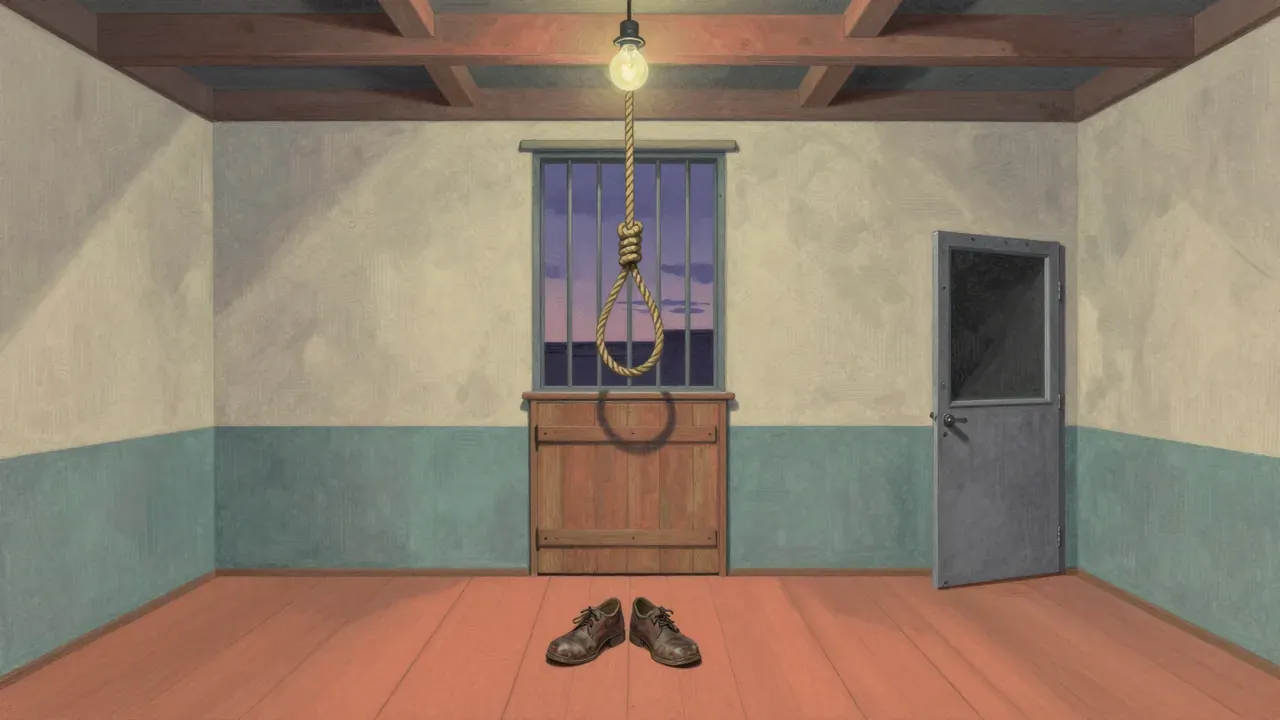
The shape of the twins
Dead Ringers is a psychological drama about twin gynecologists whose shared identity unravels under the weight of professional complicity, sexual substitution, and escalating drug dependency. It does not aim to explain or diagnose; it constructs a closed system where doubling functions as both method and metaphor — clinical precision and moral collapse are inseparable. The film treats medicine not as healing but as a theatre of control, and intimacy as a transactional relay between bodies. Its ambition is structural: to make the viewer feel the vertigo of indistinguishability, then the horror of separation. It avoids exposition about motive or backstory, anchoring itself instead in behavioural repetition — the way Elliot and Beverly move through clinic corridors, speak in unison, mirror each other’s gestures — until those repetitions curdle into dissonance. This is not a portrait of mental illness so much as a demonstration of how systems of mutual reliance can become self-consuming machinery. The film’s logic is surgical: precise, cold, and indifferent to comfort. It asks no rhetorical questions, offers no moral pivot, and refuses redemption. Its purpose is to hold a steady gaze on the mechanics of dissolution — not as tragedy, but as inevitable consequence. (158 words)
The look of it
The story follows a strict downward arc, charting the Mantles’ descent from clinical authority to institutional expulsion and finally to mutual annihilation. Jeremy Irons performs both brothers without prosthetics or digital aid, distinguishing them through posture, vocal timbre, and micro-rhythms of hesitation or assertion — a feat sustained across 115 minutes without slippage. Peter Suschitzky’s cinematography keeps Toronto interiors clinically neutral: flat light, symmetrical framing, muted greys and beiges that drain warmth without stylising decay. Howard Shore’s score avoids melody, using low-frequency pulses and metallic resonances that mimic surgical tools and hospital machinery. Ronald Sanders’ editing sustains unease through duration — long takes in consultation rooms, lingering on hands adjusting instruments or pills being poured — never cutting away from discomfort. David Cronenberg’s direction is deliberately uninflected: no subjective camera, no distorted lenses, no overt symbolism beyond the Wolleck instruments themselves. Even the twins’ apartment remains anonymous, functional, stripped of personal detail. The craft serves restraint: every choice defers interpretation, forcing attention onto behaviour rather than intention. There is no music cue to signal dread; the dread arrives with the silence after a nurse’s gasp. (159 words)
The weight of the performance
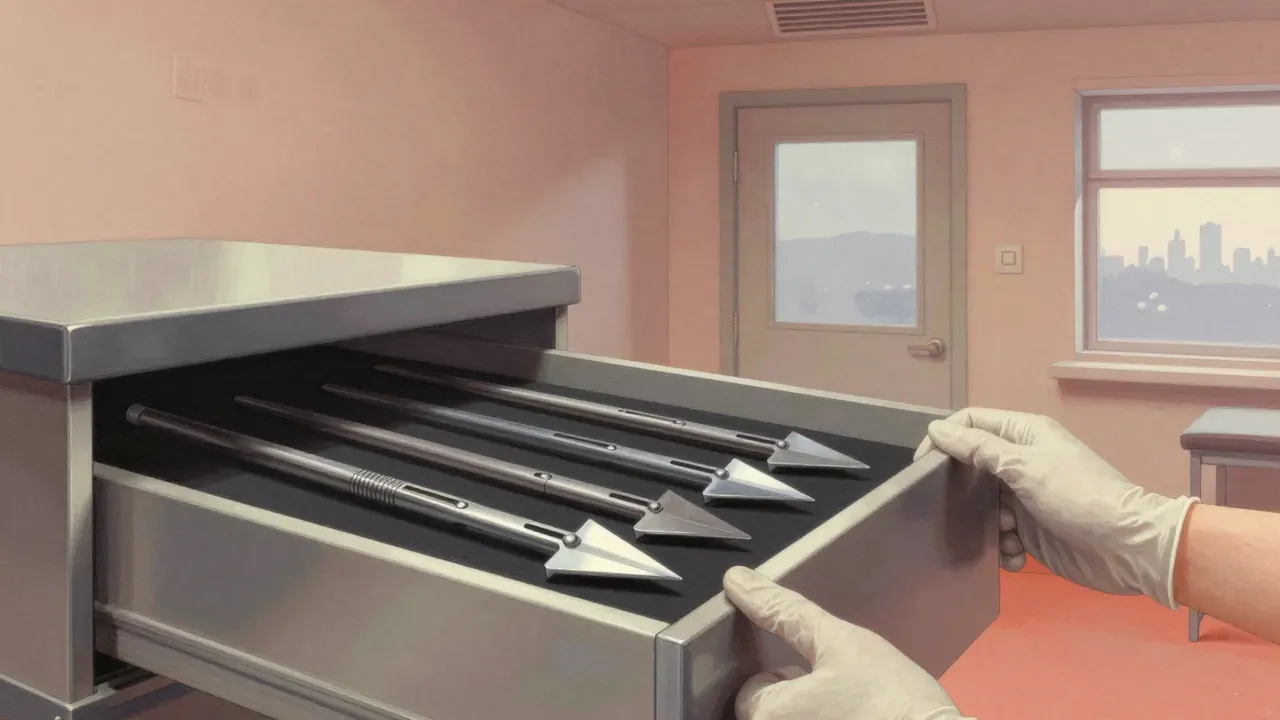
What lands is the suffocating plausibility of the twins’ symbiosis — not as fantasy, but as a logical extension of professional isolation and emotional atrophy. Irons’ performance holds the film together because it never permits caricature: Elliot’s cynicism reads as exhaustion, Beverly’s passivity as accumulated deference, not weakness. The clinical setting feels lived-in, not allegorical — the waiting room, the speculum drawer, the sterile hum of the ventilation system all register as real. The film’s most effective sequences are those grounded in procedural realism: the trifurcated cervix diagnosis, the quiet exchange between Beverly and Claire before her first seduction, the slow-motion collapse during surgery. These moments land because they are underplayed, because the actors treat them as ordinary rather than portentous. The Wolleck instruments also land — not as grotesque props but as plausible extensions of Beverly’s deteriorating cognition, their jagged forms emerging logically from his obsession with anatomical deviation. Even the final act avoids melodrama: the disembowelling happens off-centre, half-obscured, its violence registered in the sound of tearing fabric and the sudden stillness that follows. The film earns its extremity by refusing to announce it. (157 words)
The limits of the frame
What does not land is the film’s treatment of Claire Niveau as a catalyst rather than a character. Her motivations remain opaque, her agency circumscribed by the twins’ gaze — she enters as a case study, becomes a vector for disruption, then exits as a narrative device. Her return feels less like emotional necessity and more like structural obligation. Similarly, the hospital board’s suspension of the brothers arrives without bureaucratic texture: no paperwork, no hearing, no institutional voice — just a single terse phone call. The supporting cast, though well-acted, functions largely as reactive surfaces: Geneviève Bujold’s Claire is compelling but underwritten; Jill and Jacqueline Hennessy’s call-girl scene adds little beyond visual symmetry. The film’s refusal to contextualise — no mention of medical ethics boards, no sense of peer review, no engagement with 1980s Canadian healthcare policy — creates a vacuum that some viewers may read as intellectual evasion rather than formal discipline. The ending, while stark, risks abstraction: Beverly’s final silence on the payphone works as image but not as resolution, leaving the emotional logic of his return to Elliot’s body unresolved. A viewer expecting psychological causality may find the film withholding; one seeking thematic rigour will not. (156 words)
The language of the clinic
The themes that matter are not identity or duality in the abstract, but the corrosion of professional boundaries when expertise becomes a tool of self-deception. Medicine here is not a vocation but a language of control — over patients, over women’s bodies, over time itself. The twins’ practice depends on erasing individuality: not just their own, but that of everyone they touch. Their drug use is not escapism but calibration — an attempt to synchronise perception with a reality they can no longer distinguish. The film treats addiction not as pathology but as operational logic: prescriptions are dispensed not to heal but to maintain equilibrium, then to postpone collapse. Gender operates structurally: the male gaze is literalised in the speculum, the female body rendered as terrain to be mapped, measured, and ultimately pathologised. ‘Mutant women’ are not hallucinations but projections — the logical endpoint of a clinical worldview that treats deviation as defect. The film’s deepest concern is with systems that reward conformity until conformity becomes indistinguishable from erasure. It is less about madness than about the slow, rational surrender of judgment — the moment when maintaining the façade becomes more urgent than preserving the self behind it. (159 words)
Who it is for
This film is for viewers who tolerate prolonged discomfort without narrative reassurance, who value precision of performance over emotional catharsis, and who accept that some films refuse to explain themselves. It rewards attention to gesture, rhythm, and spatial arrangement — not plot turns or character arcs. It is not for those who require moral clarity, empathetic anchors, or narrative closure; viewers expecting psychological realism in the conventional sense will find its clinical detachment alienating. Those sensitive to medical imagery or depictions of substance misuse may find it physically taxing. A critic who values thematic legibility over formal coherence — say, someone who found Cronenberg’s later work overly schematic — might argue the film’s rigour borders on austerity. That verdict would change only if the film admitted ambiguity into its structure: a single moment of doubt, a crack in the twins’ synchronicity that wasn’t chemically induced. As it stands, its power lies in its refusal to yield. (158 words)
The time it takes
Yes, it is worth your evening — provided you approach it as a controlled experiment in sustained unease, not as entertainment. Its 115 minutes unfold with the inevitability of a diagnostic procedure: deliberate, incremental, irreversible. You will not leave uplifted, but you may leave recalibrated — attuned to the weight of a pause, the significance of a repeated phrase, the tension in a clinched jaw. It repays rewatching not for hidden clues but for shifts in emphasis: how a line delivered at 37 minutes lands differently at 92. Some will find its pacing glacial, its tone monolithic; others will recognise its discipline as rare in mainstream psychological drama. Its value is not in what it says about twins or doctors, but in how it uses those figures to expose the fragility of consensus — between people, between selves, between perception and fact. To dismiss it as ‘cold’ mistakes its method for its message. It is not indifferent to suffering; it insists that suffering, when systematised, loses its name. That is uncomfortable. It is also exact. (159 words)