The premise
Choose Me is a 1984 American romantic comedy-drama written and directed by Alan Rudolph, conceived as a low-budget, three-week production shot on a reported $639,000. It sets out to map the emotional choreography of loneliness in Los Angeles—not through realism but through stylised repetition, role-swapping, and tonal drift. Rudolph described it as ‘romantic roulette’, and the film treats intimacy as a game of misdirection: characters lie to themselves, conceal identities, answer ads they’ve posted, and offer advice they cannot follow. Its ambition is not narrative coherence but rhythmic accumulation—of glances, coincidences, half-remembered truths, and unspoken debts. The bar, Eve’s Lounge, functions less as a setting than as a stage for re-enactment: every character cycles through desire, evasion, confession, and retreat. Rudolph avoids exposition; backstory arrives in fragments—Mickey’s military service, Nancy’s radio persona, Eve’s past as a call girl—all delivered without emphasis, as if the facts matter less than their weight in the present moment. This is not a film about solving problems, but about sustaining a mood: sultry, off-kilter, gently absurd.
The shape of it
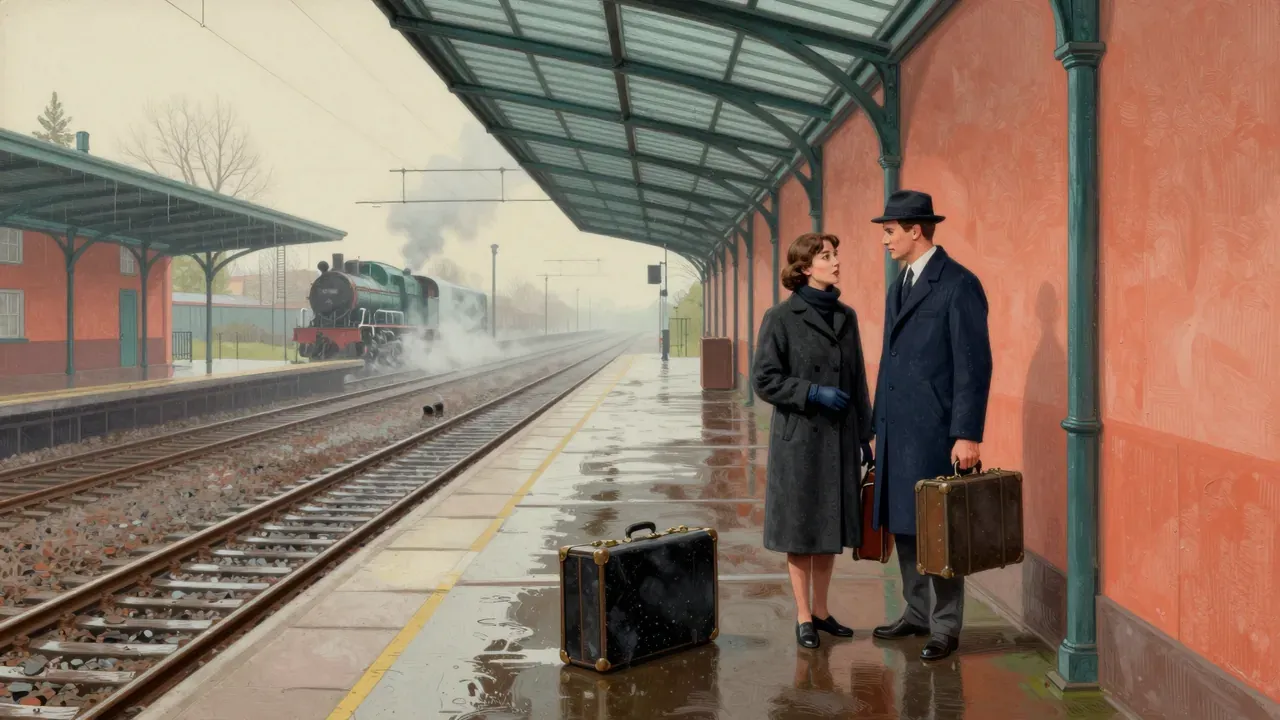
The story unfolds across overlapping arcs: Mickey, newly released from psychiatric care, seeks Eve but finds her bar first; Eve, wary of commitment, deflects him with sex and silence; Nancy, the French radio host, moves in as roommate and becomes both confidante and rival. Jan Kiesser’s cinematography keeps interiors dim and saturated, favouring shallow focus and tight framing that compresses space and heightens proximity. Phil Woods’ saxophone-led score leans into smoky, late-night cadences, never underlining emotion but nudging its tempo. Performances are deliberately unpolished—Geneviève Bujold’s Eve holds back until she can’t, Keith Carradine’s Mickey speaks in quiet, uninflected bursts, Lesley Ann Warren’s Nancy toggles between clinical detachment and sudden vulnerability. There are no grand monologues or climactic confrontations—only gestures: a hand brushing a suitcase, a gun held but unloaded, a bus ticket never used. Rudolph’s direction privileges duration over punctuation: scenes linger just past comfort, letting awkwardness settle like smoke. Even the editing, reportedly shaped in post-production around what footage existed, feels like a series of deliberate pauses rather than cuts.
The feeling of it
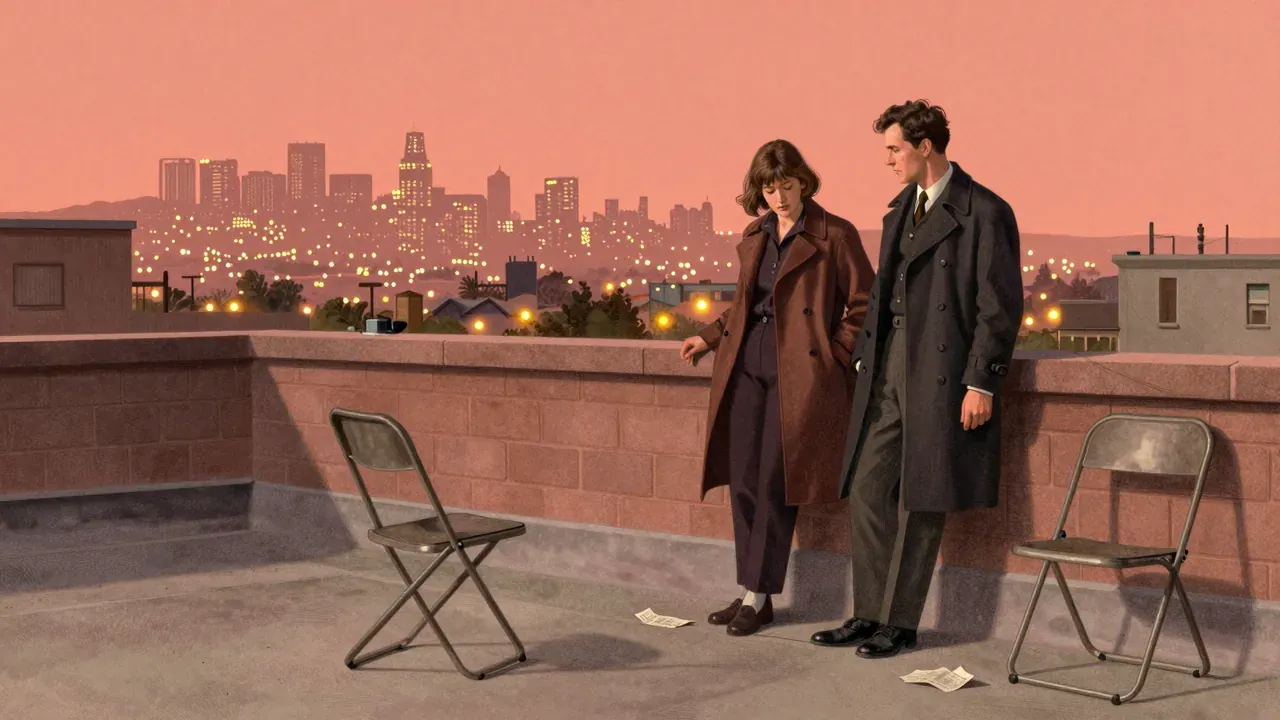
What lands is the film’s sustained tonal confidence—the way it treats emotional exposure as both dangerous and inevitable. The bar’s neon glow, the hush before a radio broadcast begins, the way characters speak past each other in the same room: these accumulate into something more persuasive than plot. Mickey’s claim that he only tells the truth because he’s been labelled a liar gains quiet force not through explanation but through repetition and contrast—his stillness reads as sincerity against Eve’s performative deflection and Nancy’s intellectualised distance. The film’s central conceit—that love is a series of choices made in ignorance, repeated until they stick—works because the performances refuse to tip their hands. When Eve and Mickey finally embrace on the rooftop, it feels earned not because they’ve resolved anything, but because they’ve exhausted all alternatives. The budget constraints show, yet never undermine: the $10,000 production design forces attention onto faces and voices, and the lack of second costumes makes every outfit feel lived-in, not costumed. Even the abrupt ending—Mickey and Eve boarding a bus—lands because it mirrors the film’s opening: motion without destination, choice without guarantee.
The gaps in it
What does not land is the structural looseness when it tips into incoherence rather than ambiguity. The film’s refusal to clarify motivations—why Zack stays with Pearl, why Nancy abandons her radio persona so abruptly, why Mickey’s poetry teaching matters—can read as evasiveness rather than economy. Some secondary characters dissolve without trace: Ed Ruscha’s bar regular, John Larroquette’s cameo, even Henry G. Sanders’ brief appearance—all register as texture, not presence. The radio show device, while thematically apt, lacks grounding: we never hear Nancy’s audience or see her studio, so her authority remains abstract, not earned. The film’s insistence on surface—smoke, neon, vinyl records, whispered dialogue—sometimes muffles emotional stakes. When Mickey is assaulted twice by Zack, the violence feels ritualistic rather than consequential; the threat doesn’t escalate, it repeats. And while Rudolph’s decision to shoot without a finished script yields spontaneity, it also leaves certain transitions unmoored—Pearl’s shift from observer to participant, for instance, happens off-screen, leaving her agency unclear. These aren’t flaws in isolation, but they accumulate where the film asks for trust without offering anchor points.
The ideas in it
The themes that matter are self-deception as self-preservation, the performance of identity in a city built on reinvention, and the paradox that intimacy requires both revelation and concealment. Rudolph said the film is ‘about lies, truth, persona, and isolation’—and those four terms structure every scene. Eve runs a bar named after herself but refuses to own her history; Nancy dispenses relationship advice while hiding her own failures; Mickey’s ‘pathological lying’ turns out to be a catalogue of verifiable experience, misread because it doesn’t fit expected narratives. Los Angeles appears not as geography but as condition: a place where names are aliases, professions are temporary, and relationships are auditioned. The film treats romance not as union but as calibration—each character adjusting their posture, voice, and timing to match another’s frequency. Even the music—Teddy Pendergrass’s song, which inspired the title—functions as a refrain rather than a resolution: ‘Choose me’ is less a plea than a dare, issued into a void where no answer is guaranteed. There is no moral here, only pattern: people circle each other, test boundaries, retreat, return—not because they expect success, but because stopping would mean admitting solitude is final.
The audience for it
This film is for viewers who value rhythm over resolution, who find pleasure in the grain of a voice or the slant of light on a bar top, and who do not require characters to explain themselves. It suits those familiar with Rudolph’s earlier work—such as Welcome to L.A. or Remember My Name—or with the looser textures of early Altman or Cassavetes. It is not for viewers who need clear cause-and-effect, defined stakes, or emotional pay-offs scaled to screen time. Those who rely on exposition or psychological realism will find its ellipses frustrating, not suggestive. Its pacing assumes patience; its humour is dry and situational, not punchline-driven. A viewer expecting a conventional romantic comedy—meet-cute, obstacle, climax, kiss—will leave unmoored. But someone open to a film that treats conversation as choreography and silence as substance will find it richly sustained. Its limitations—budget, schedule, script development—are not apologies but parameters, and the film’s success depends entirely on whether the viewer accepts those terms as generative rather than deficient.
The time in it
Yes, it is worth your evening—if you approach it as a mood piece rather than a narrative engine. Its 114 minutes pass without hurry, anchored by Kiesser’s restrained camerawork and Woods’ languid score, and it rewards attention to detail: the way Nancy’s radio headset rests crookedly, the cigarette ash building on Eve’s sleeve, the slight tremor in Mickey’s hand when he opens his suitcase. It is not a film to consume but to inhabit for its duration. Those who dislike ambiguity or resist films that withhold motivation may find it insubstantial; those who demand thematic clarity may call it evasive. But its achievement lies in sustaining a single, coherent atmosphere—warm, melancholy, slightly unreal—without slipping into parody or sentiment. It does not argue, persuade, or conclude. It simply persists, like smoke in a bar at 2 a.m., and that persistence is its quiet authority.