The shape of longing
Days of Being Wild is Wong Kar-wai’s second feature and the first of an informal trilogy that includes In the Mood for Love and 2046. It sets out to trace emotional drift rather than plot resolution: a group of young people in 1960 Hong Kong orbit each other without ever settling, bound by unspoken attachments, withheld truths, and deferred departures. The film does not aim to explain its characters’ behaviour but to hold their restlessness in sustained, tactile proximity — to make longing visible through gesture, light, and rhythm. Its ambition lies in atmosphere over exposition, in duration over destination. It treats time as elastic and memory as unreliable, using repetition (a date, a phone booth, a train platform) not for clarity but for resonance. This is not a story about finding answers but about living inside questions — who you are when no one claims you, what love means when it has no future, how identity forms in the absence of origin. It is a film built on ellipsis, where what is omitted matters as much as what remains on screen.
The look of it
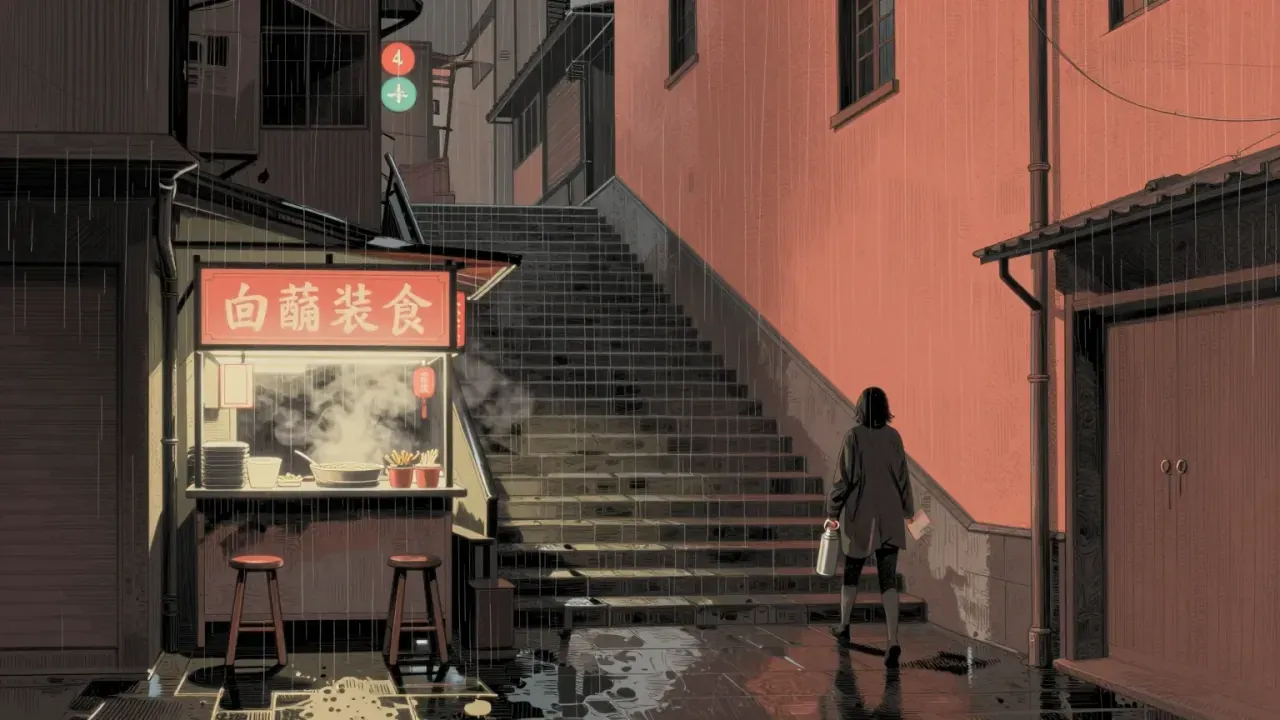
The narrative unfolds across three loosely interwoven arcs — Yuddy’s search for his birth mother, Li-zhen’s quiet withdrawal after abandonment, and Tide’s slow pivot from duty to departure — held together by Christopher Doyle’s cinematography, which favours shallow focus, saturated blues and ochres, and long takes that linger on hands, cigarettes, and rain-slicked pavement. Performances avoid emphasis: Leslie Cheung’s Yuddy moves with studied nonchalance, Maggie Cheung’s Li-zhen speaks in hushed tones and measured pauses, Andy Lau’s Tide carries grief in his posture more than his dialogue. Editing by Patrick Tam and Hai Kit-Wai sustains a dreamlike tempo, cutting on motion or sound rather than logic. Chan Ming-Diy’s score layers Latin guitar motifs with melancholic piano, while the diegetic use of Xavier Cugat and Los Indios Tabajaras deepens the period texture without nostalgia. Dialogue is sparse and often indirect; motivation is implied through what characters withhold — Rebecca’s silence, Zeb’s unspoken loyalty, Mimi’s impulsive flight. The craft serves stasis, not momentum.
What sticks
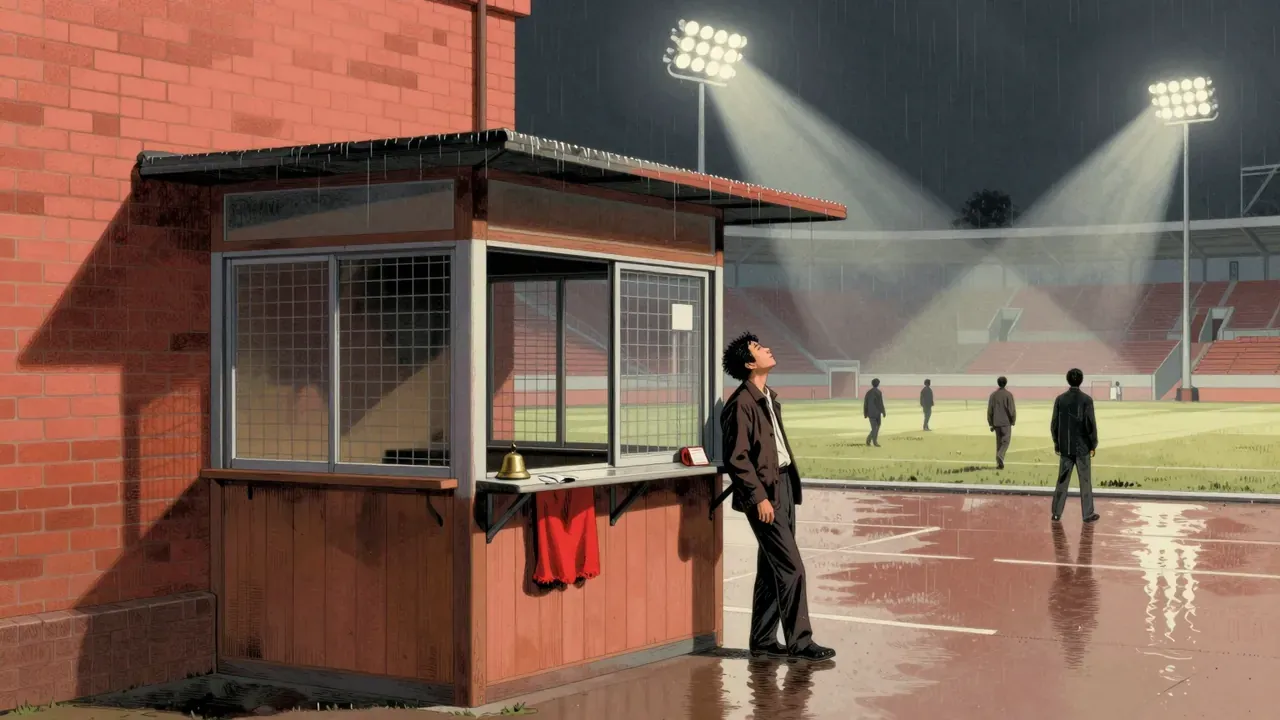
What lands is the film’s cumulative sense of suspended time — the way a single glance between Li-zhen and Tide at a football match feels heavier than any declaration, or how Yuddy’s final walk down a Manila street registers as both arrival and erasure. The recurring image of the phone booth, never answered, becomes a structural motif: connection deferred, intention unfulfilled, presence felt only in absence. Doyle’s lighting — low-key interiors, chiaroscuro faces, backlighting that turns hair into halos — gives emotional weight to stillness. The soundtrack’s vintage Latin numbers do not evoke glamour but dislocation, their romanticism undercut by context: a cabaret song heard through a thin wall, a radio crackling in a half-empty room. Even minor roles land with precision — Rebecca Pan’s weary defiance, Tony Leung’s gambler glimpsed only in profile, Jacky Cheung’s Zeb radiating quiet devotion without sentimentality. These moments cohere not as narrative pay-offs but as tonal anchors, reinforcing the film’s central condition: being perpetually on the verge of something that never arrives.
Where it slips
What does not land is the film’s reliance on ambiguity as a substitute for coherence in places where structure would serve meaning. Yuddy’s arc, though compelling in isolation, lacks sufficient grounding in cause or consequence: his adoptive mother’s resistance to revealing his origins is presented as character trait rather than psychological or historical fact, leaving his quest emotionally legible but intellectually thin. The Philippines sequence feels abrupt — less a culmination than a rupture — and the final confrontation aboard the train relies on visual symbolism (the ringing phone, the darkened room) that risks abstraction without deeper anchoring. Some viewers may find the pacing too deliberate, the repetitions too insistent, the emotional register too muted to sustain engagement across 100 minutes. The film assumes familiarity with its stylistic grammar — long pauses, elliptical dialogue, ambient soundscapes — and offers little hand-holding for those unused to its rhythms. Its refusal to clarify certain relationships (e.g., the nature of Danilo Antunes’ character’s hold over Rebecca) can read as evasion rather than restraint.
What it’s really about
The themes that matter are rooted in impermanence and inheritance: how identity forms in the absence of origin, how desire persists without reciprocation, how place shapes possibility. Hong Kong in 1960 is not backdrop but active participant — a British colony whose future is already shadowed by uncertainty, mirrored in characters who cannot settle, cannot return, cannot move forward. The film treats memory not as archive but as affect: Li-zhen’s fixation on 16 April 1960 at 3 p.m. is less about the event than the feeling it once carried. Parentage is spectral — biological mothers absent, adoptive mothers withholding, fathers unnamed — making lineage a question rather than a fact. Time itself is unstable: clocks are obscured, dates repeated, seasons blurred. The recurring motif of departure — Tide leaving for sea, Yuddy for Manila, Mimi following — underscores a world where movement is inevitable but direction uncertain. These are not abstract ideas but lived conditions, rendered through cigarette smoke hanging in lamplight, a car left idling, a train pulling away with no one waving goodbye.
Who it’s for
It is for viewers who value mood over mechanics, who find emotional truth in hesitation and resonance in repetition, who respond to films that trust them to sit with uncertainty. It rewards patience, attention to texture, and tolerance for unresolved endings. It is not for those who require narrative propulsion, clear motivation, or cathartic closure — viewers who expect cause-and-effect plotting or psychological exposition will likely feel adrift. Those unfamiliar with Wong Kar-wai’s syntax may find its pacing alienating; fans of classical Hollywood or even mainstream Hong Kong cinema of the same era may miss conventional beats of setup, conflict, and release. A viewer who values tightly wound thrillers or socially direct dramas would find little purchase here. What would change the verdict? A tighter edit in the Manila section, or a stronger dramatisation of Rebecca’s past, might sharpen the stakes — but the film’s power lies precisely in its refusal to over-explain, so such changes would alter its essence rather than improve it.
Is it worth your evening?
Yes, it is worth your evening — provided you approach it as a sensory experience rather than a puzzle to solve. Its 100 minutes unfold like a slow-developing photograph: initial blur gives way to detail only with time and attention. The performances, Doyle’s camerawork, and the layered soundscape coalesce into something rare — a film that feels lived-in, not constructed. It repays rewatching not because it reveals hidden clues but because its textures deepen: the way light falls on Maggie Cheung’s cheek in the ticket booth, the cadence of Andy Lau’s voice when he says ‘I’ll be back’, the weight of silence between shots. It is not entertainment in the transactional sense, but immersion — a chance to inhabit a world governed by longing rather than logic. Those expecting plot-driven satisfaction will leave unsatisfied; those open to atmosphere as argument will find it quietly unforgettable. Its value lies not in what it delivers, but in what it holds — and what it leaves behind.