The place it lives in
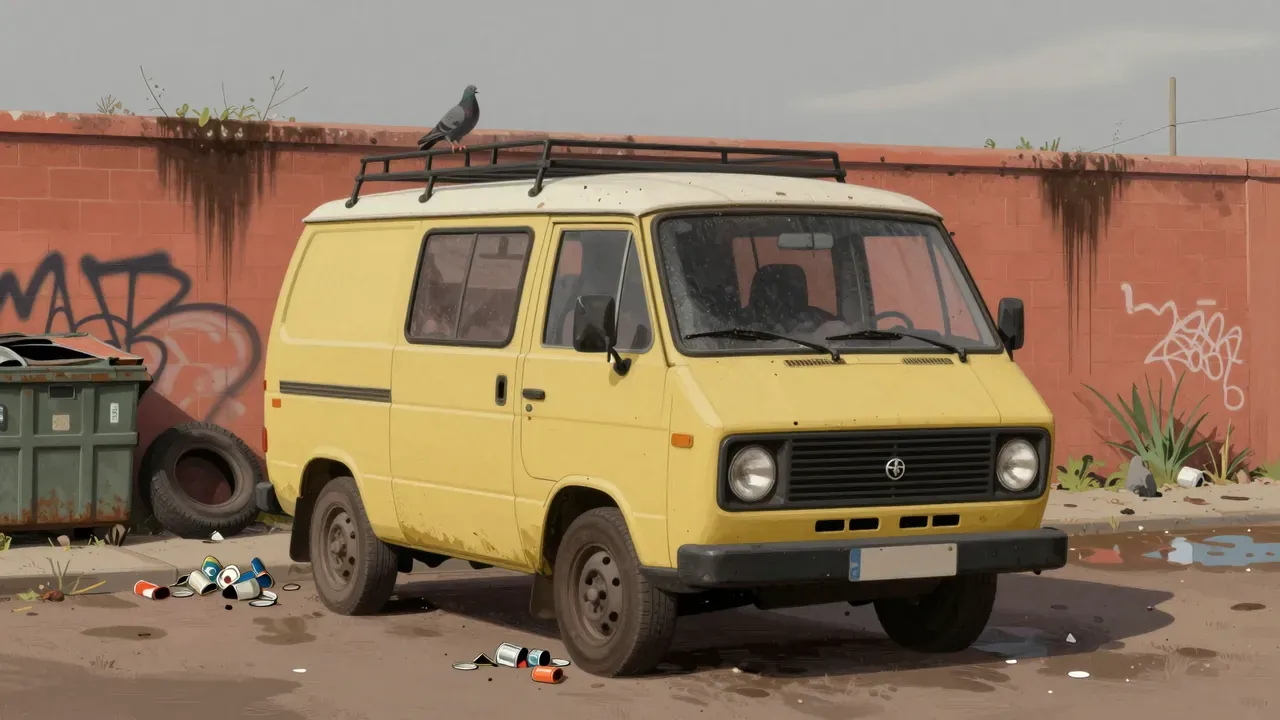
Chop Shop is a neorealist drama set entirely in Willets Point, Queens — a zone of auto yards, scrapyards and unregulated commerce on the fringes of New York City. It follows Alejandro ‘Ale’ Polanco, a twelve-year-old Latino orphan who lives and works in a repair shop owned by Rob Sowulski. The film does not seek to explain Ale’s past or diagnose his circumstances; it observes him as he navigates survival with quiet calculation: selling candy to commuters, stripping hubcaps from parked cars, negotiating the purchase of a food van with his sister Izzy. Ramin Bahrani wrote, directed and edited the film, and chose non-professional actors drawn from the neighbourhood where it was shot. The Sony F900 digital camera captures the area’s low-slung light and industrial texture without embellishment. There is no score, no voiceover, no narrative hand-holding. What the film tries to do is hold space for a child’s agency amid structural neglect — not as metaphor, but as daily fact. It treats poverty not as condition to be overcome, but as terrain to be mapped, step by step, with limited tools and no safety net. (158 words)
The way people move
The story unfolds through small, accumulative actions: Ale’s decision to jump into a truck despite being refused work; his careful counting of coins after a day’s sales; the way he watches Izzy’s phone calls before acting on what he suspects. Performances are unvarnished and grounded — Alejandro Polanco’s face registers fatigue before emotion, Isamar Gonzales moves with the guarded stillness of someone who has already learned to disappear. Michael Simmonds’ cinematography keeps the frame tight and level, favouring medium shots that place characters within their environment rather than above it. Editing avoids emphasis: scenes end when the action ends, not when the feeling peaks. Sound design is sparse and diegetic — distant horns, engine rumbles, the clatter of metal on concrete. There are no close-ups to cue empathy, no slow motion to heighten stakes. Even the fight between Ale and Carlos feels underplayed, its violence muffled by exhaustion. The craft serves restraint: every choice reinforces that this world operates on its own logic, indifferent to whether we find it hopeful or grim. (159 words)
The weight of small things
What lands is the integrity of Ale’s perspective — not as innocence lost, but as competence forged in absence. His plan to buy the van is neither naive nor heroic; it is the only scalable idea he can conceive, built from observation and incremental savings. The film earns its emotional weight not in climaxes but in silences: Ale feeding pigeons at the end, Izzy’s smile flickering then vanishing, the way she scares them off without looking at him. These moments land because they are earned through duration — we have watched Ale count money, inspect the van’s rusted floor, listen to Ahmad’s blunt assessment. The setting also lands: Willets Point is rendered with granular specificity — the smell of hot oil, the geometry of stacked tyres, the rhythm of workers moving between shops. Even minor figures feel real: Rob’s weary tolerance, Ahmad’s pragmatic detachment, Carlos’ hesitant loyalty. Nothing is symbolic; everything is functional. The film refuses to moralise Ale’s thefts or Izzy’s prostitution, treating them as economic acts within a system that offers no alternatives. That refusal lands as clarity, not cynicism. (157 words)
Where the edges blur
What does not land is the film’s occasional drift into schematic symmetry — particularly in the second half, where Ale’s parallel activities (selling DVDs, stealing hubcaps, working for Ahmad) begin to blur into a checklist of survival tactics rather than distinct choices. The discovery of Izzy’s prostitution happens off-screen and is handled with such reticence that its emotional impact depends entirely on the viewer’s willingness to supply subtext; some may find it underwritten rather than understated. The van’s mechanical failure — revealed only after purchase — risks feeling contrived, a plot device masquerading as realism, especially since the film gives no prior indication that Ale lacks mechanical knowledge or that Carlos’ uncle is untrustworthy beyond general suspicion. Likewise, Ale’s outburst at Izzy — demanding she ‘should be working’ — arrives without sufficient psychological groundwork; his internal shift from protectiveness to complicity needs more texture than the script provides. These moments do not break the film, but they thin its otherwise dense observational surface. (156 words)
The work of staying put
The themes that matter are those embedded in routine: the labour of children in informal economies, the gendered division of survival work, the quiet erosion of dignity that comes not from single catastrophes but from daily compromise. The film treats entrepreneurship not as aspiration but as adaptation — Ale’s van scheme mirrors the same logic as Ahmad’s dismantling of stolen cars or Rob’s repurposing of a garage as shelter. Class is shown not through contrast but through proximity: Ale sleeps beneath the same roof as engines being rebuilt, eats meals cooked in the same pot as men who fix brakes for cash. Migration is present but unspoken — names, accents, the texture of Spanish in background chatter — never explained or framed as backstory. The film’s central tension is not between good and bad, but between autonomy and dependence: Ale wants control over his time, his income, his sister’s future — yet every attempt to seize it pulls him deeper into systems he cannot name or regulate. Hope here is procedural, not emotional: it lives in the act of saving, repairing, returning, feeding. (158 words)
Who it asks to watch
This film is for viewers who value precision over persuasion, who trust images to carry meaning without explanation, and who accept that a child’s moral universe may contain contradictions that resist resolution. It suits those accustomed to neorealist pacing and willing to sit with ambiguity — people who find resonance in quiet observation rather than dramatic escalation. It is not for those who require narrative closure, psychological exposition or tonal consistency; viewers expecting uplift, redemption arcs or even clear cause-and-effect will find it withholding. Some critics — including those who ranked it among the decade’s best — may disagree on its emotional accessibility, arguing that its austerity borders on detachment. A different verdict would follow if the film had offered more interiority — a diary entry, a dream sequence, a moment of direct address — but it does not, and that is its chosen discipline, not a flaw to be corrected. (159 words)
How long it stays
Yes, it is worth your evening — not as entertainment but as calibration: a reminder of how much narrative weight can be carried by a boy’s hands sorting coins, or a sister’s silence in a toilet stall. Its eighty-four minutes pass without hurry, yet leave a residue of attention sharpened by specificity. It rewards patience not with payoff but with fidelity — to place, to rhythm, to the unglamorous arithmetic of staying alive. Those who dislike it tend to cite its lack of conventional momentum or emotional signposting, and that objection is valid if your priority is catharsis or clarity. But if you value films that treat marginality as ordinary rather than exceptional, that refuse to translate lived reality into digestible allegory, then Chop Shop delivers something rare: a world observed so closely it begins to feel like memory. Its worth lies in that honesty, sustained without flinching or flourish. (159 words)