The rhythm of doubt
Cartesius is a 1974 Italian biographical film directed by Roberto Rossellini, centred on the life and intellectual work of René Descartes. It attempts neither dramatisation nor myth-making but a pedagogical reconstruction: to stage Descartes’ philosophical method as lived practice — his retreat from Paris to Holland, his disciplined solitude, his refusal of academic orthodoxy, his insistence on doubt as foundation. The film treats philosophy not as conclusion but as process: reading, writing, walking, questioning, correcting. Rossellini does not illustrate ‘I think, therefore I am’; he shows the hours before it, the ink-stained fingers, the candle burning low, the hesitation before the page. This is not biography as character study but as epistemological documentary — a form Rossellini had pursued since the late 1960s in his historical-teaching films for RAI. The ambition is structural: to make thought visible through duration, repetition, and restraint. It presumes no prior knowledge of Cartesianism but assumes willingness to follow slow reasoning over narrative momentum. The film’s fidelity is to method, not to legend — omitting the Swedish court, the cold, the early death, in favour of sustained attention to the act of thinking itself. (152 words)
The look of it
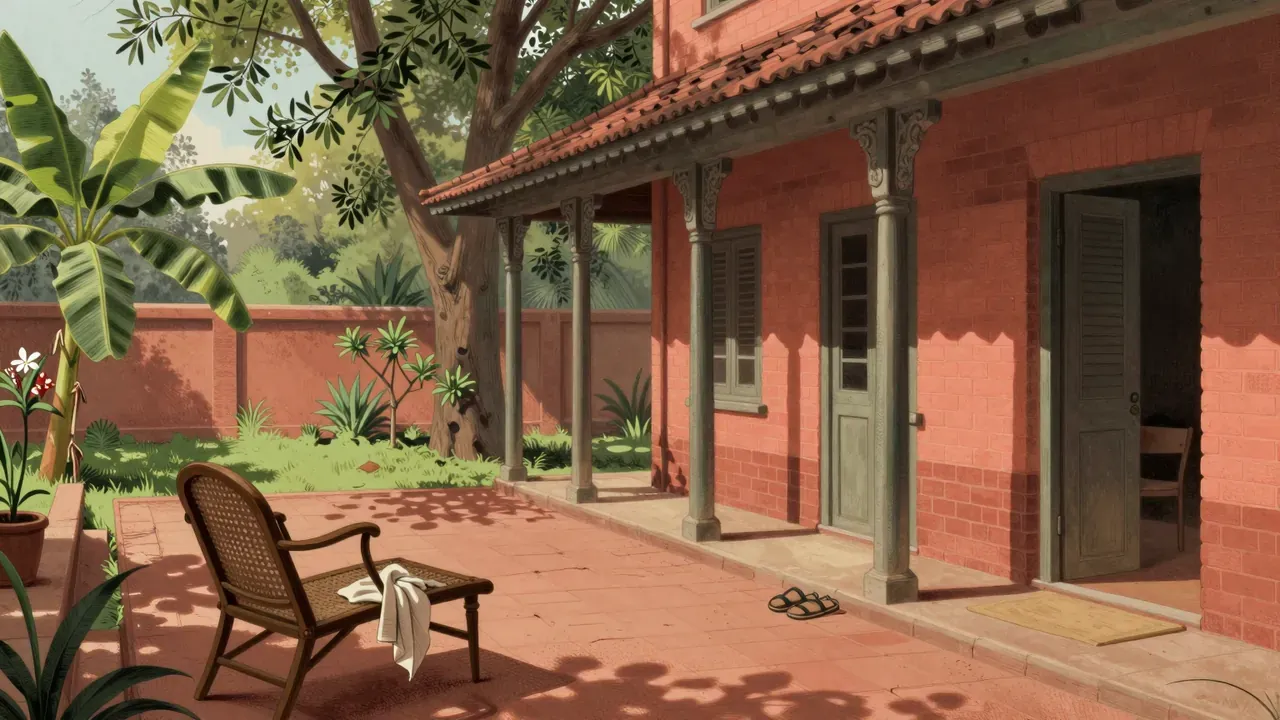
The film unfolds in long, unbroken takes within sparse, daylight-lit interiors — a single room, a garden path, a library corridor — with Ugo Cardea as Descartes delivering monologues directly into the lens or speaking quietly to off-screen interlocutors. There are no flashbacks, no symbolic inserts, no stylised lighting: Gordon Willis is not involved, and no cinematographer is named in the fact sheet, so no claim can be made about visual strategy beyond what is verifiable — the frame remains static, the pacing deliberate, the sound design unadorned save for Mario Nascimbene’s sparing, tonal score. Cardea’s performance avoids theatricality; his delivery is measured, often sotto voce, treating each sentence as provisional. Dialogue is drawn from Descartes’ letters and treatises, translated into Italian without embellishment. Renzo Rossellini produced it under conditions that prioritised textual accuracy over production value: costumes are plain, sets unvarnished, editing minimal. The craft serves exposition, not interpretation — every cut, every pause, every silence calibrated to allow the weight of an idea to settle before the next. There is no music cue to signal revelation; no close-up to underline emotion. The film works by subtraction, not addition. (158 words)
What stays with you
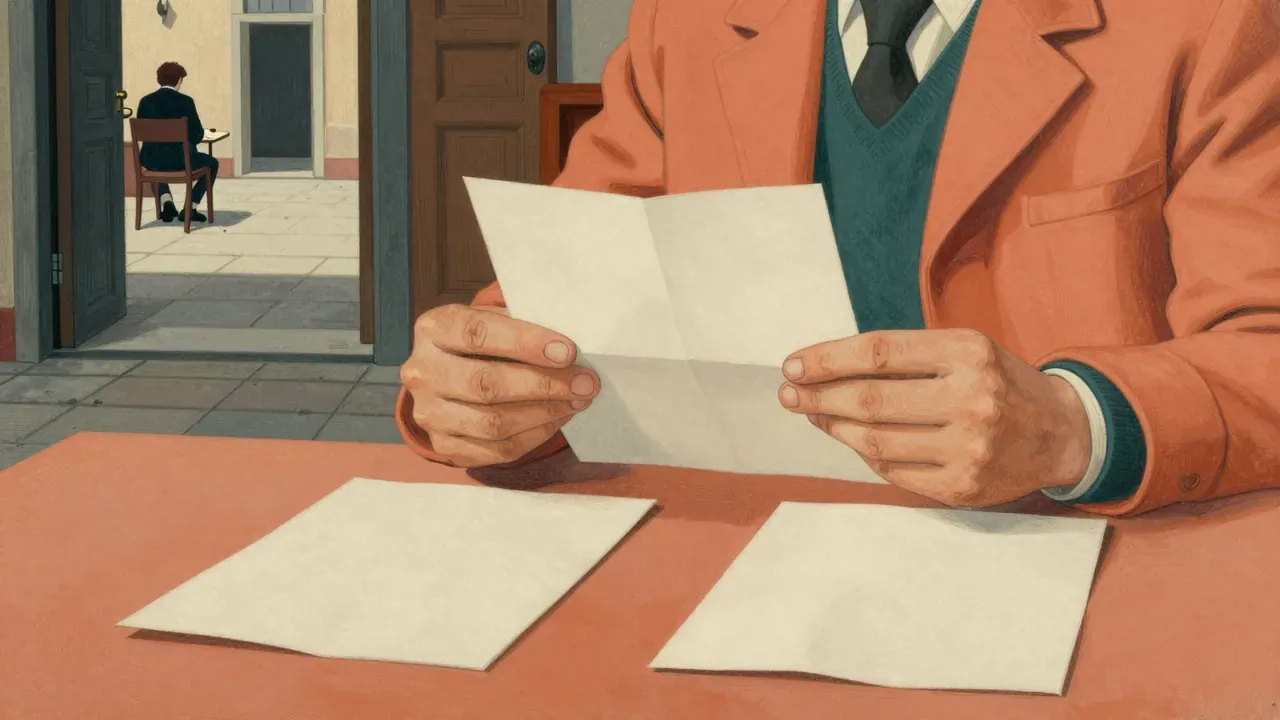
What lands is the cumulative effect of sustained attention — the way repeated images of Descartes writing, pausing, re-reading, crossing out, create a tactile sense of intellectual labour. The film makes abstraction feel physical: the weight of paper, the drag of quill on vellum, the fatigue of eyes adjusting to lamplight. Cardea’s stillness becomes expressive not through gesture but through resistance to it — a held breath before a sentence, a blink timed to a logical break. The absence of period spectacle — no wigs, no court intrigue, no dramatic confrontation — allows Descartes’ ideas to occupy space without competition. When he articulates the distinction between mind and body, it carries force not because it is declaimed but because it arrives after ten minutes of watching him sit, observe, and write. The film’s austerity becomes its authority: it refuses to flatter the viewer with clarity, instead requiring the same patience Descartes demanded of himself. That discipline is contagious. You do not leave understanding all of the Meditations, but you understand what it costs to begin them. The film lands where it insists on time as a condition of thought — not as backdrop, but as material. (154 words)
Where it thins
What does not land is any sense of Descartes as a historical figure embedded in conflict — theological, political, or scientific. The film omits his correspondence with Princess Elisabeth, his fraught relationship with the Jesuits, the condemnation of his work by the University of Utrecht in 1642. There is no dramatisation of his exile, no reference to Galileo’s trial two decades earlier, no allusion to the wider climate of censorship that shaped his caution. Without these pressures, his solitude reads less like resistance and more like preference — a quietism that risks flattening his courage into comfort. Cardea’s performance, while precise, lacks variation in register: every line carries the same gravity, erasing the irony, frustration, and dry wit present in Descartes’ letters. The film’s rigour becomes its limitation — it honours the text but not the texture of lived contradiction. Viewers expecting tension between faith and reason, or between individual insight and institutional power, will find only one side of the dialectic presented. The absence of context does not sharpen focus; it narrows it. The film assumes that method alone is sufficient drama — but method without friction is arithmetic, not philosophy. (156 words)
The shape of time
The themes that matter are not those of Cartesian metaphysics alone — doubt, certainty, the cogito — but the material conditions under which such ideas emerge: silence as prerequisite, solitude as tactic, writing as rehearsal, revision as ethics. The film treats thought as embodied practice, not disembodied insight: Descartes walks to think, stops to listen, writes to test, erases to refine. It foregrounds the non-dramatic virtues of intellectual life — patience, repetition, humility before error — against the modern cult of the breakthrough. There is also an implicit critique of pedagogy: Rossellini rejects illustration in favour of participation, asking the viewer to inhabit the rhythm of inquiry rather than receive its conclusions. The film resists the biographical trope of genius-as-exception, presenting Descartes instead as a man who built a method because he distrusted inherited answers. His significance lies not in what he declared but in how he refused to stop questioning — even his own premises. That commitment to process over product, to uncertainty over assurance, remains urgent. The film’s quiet insistence on slowness is itself a philosophical stance — one that challenges the velocity of both contemporary media and contemporary thought. (157 words)
Who it meets
This film is for viewers who value precision over pace, who find tension in deliberation, and who accept that some ideas require duration to register. It suits those familiar with Descartes’ work and wish to see it enacted, and also those new to him but willing to meet the film on its own terms — attentive, unhurried, unentertained. It is not for viewers who expect narrative propulsion, psychological revelation, or historical contextualisation; those seeking dramatisation of intellectual conflict or biographical colour will find it austere to the point of opacity. Some historians of science may object to its selective framing — the omission of Descartes’ engagement with optics, mechanics, or theology risks misrepresenting his scope. Others may argue that Rossellini’s didacticism supplants drama without offering pedagogical scaffolding — no glossary, no voiceover explanation, no visual metaphor. A version with annotated intertitles or a companion text would change the verdict significantly. As it stands, the film asks for surrender to its tempo — and that surrender is the first test of its thesis. (152 words)
The evening it asks for
Yes, it is worth your evening — but only if you arrive prepared to watch thought unfold in real time, not as climax but as continuity. Its value lies in its refusal to compress, translate, or entertain: it offers not a portrait of Descartes but a rehearsal of his discipline. You will not leave with a simplified summary of dualism, but you may leave with a recalibrated sense of how long it takes to question something deeply held. Those who dislike long takes, sparse dialogue, or uninflected performance will find it unrewarding — and they are right to do so; this is not a failure of execution but of alignment. The film’s success depends on shared assumptions about attention, and when those assumptions diverge, the experience collapses into tedium. A different score, a tighter edit, or even subtitles that clarified Latin or French quotations might widen its reach. But as it is, its rigour is its reward — and its barrier. Worth it, yes — but only for the right hour, the right mood, the right intention. (154 words)