What the film is and what it is trying to do
Chronicle of the Years of Fire is a historical drama tracing Algeria’s path from colonial subjugation to armed revolt between 1939 and 1954. It does not dramatise battle sequences or political negotiations but instead locates revolution in the slow, cumulative erosion of patience among peasants, artisans, and village elders. The film treats history as sedimentary: each chapter adds a layer of dispossession — drought, conscription, broken promises, massacre — until the ground gives way. Mohammed Lakhdar-Hamina, who directed, co-wrote and appears in the film, frames this not as biography but as collective emergence: Ahmed is less a character than a vessel through which communal memory passes. The ambition is structural and pedagogical: to show how consciousness forms under pressure, how silence becomes speech, how ash becomes ember becomes fire. It assumes no prior knowledge of Algerian history but refuses to simplify cause and effect into heroism or villainy. Its scale is national; its texture, granular — soil, sweat, cracked lips, the weight of a hoe at dawn. (158 words)
The look of it
The film unfolds across six titled chapters, each anchored by a year and a shifting tonal register — austerity giving way to agitation, then resolve. Yorgo Voyagis plays Ahmed with minimal inflection, his face registering change through stillness rather than gesture. Supporting actors — Leila Shenna as his wife, Larbi Zekkal as the village sage — speak in measured Arabic, their lines weighted by silence more than rhetoric. Marcello Gatti’s cinematography avoids spectacle: wide shots hold villagers in relation to arid land, not as figures against landscape but as part of its geology. Philippe Arthuys’s score uses sparse percussion and low strings, never swelling to underscore emotion. Editing is deliberate, often holding on faces or hands at work — threshing grain, mending nets, folding letters — long after narrative utility ends. There are no flashbacks, no voiceover, no exposition beyond what dialogue and setting provide. The craft serves duration, not pace: it asks the viewer to inhabit time as the characters do — as something accumulated, not spent. (159 words)
What lands
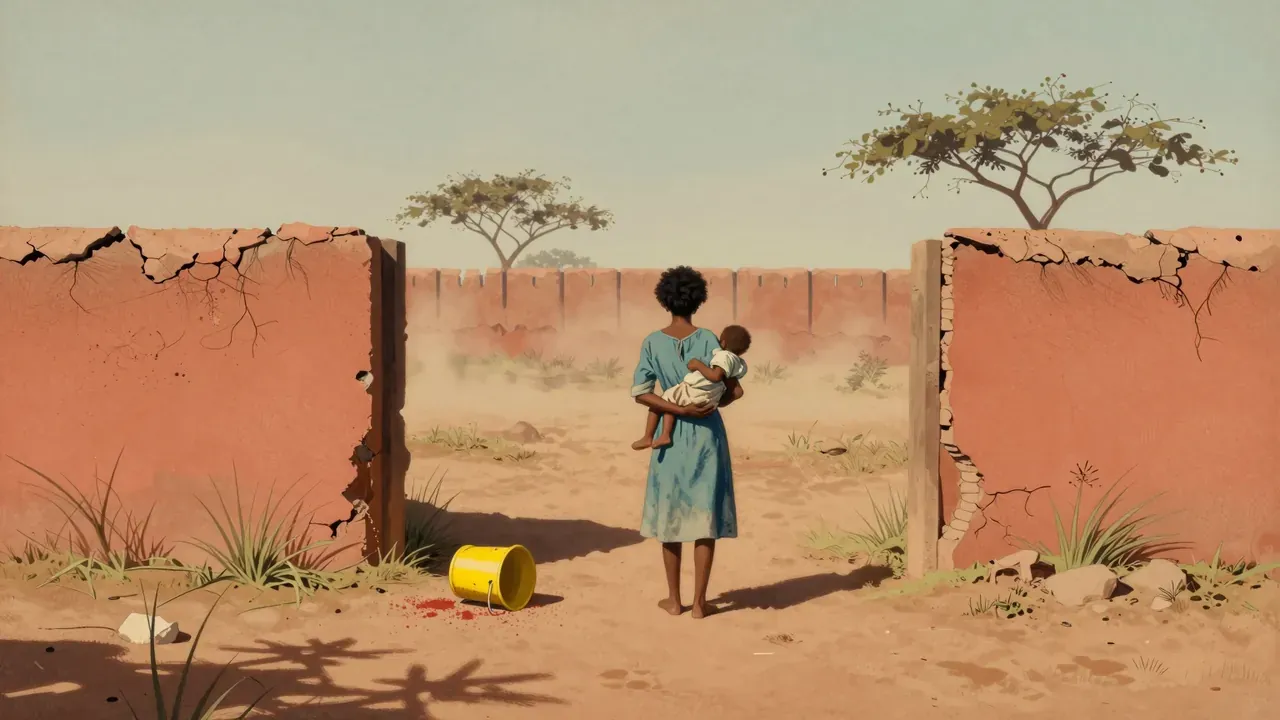
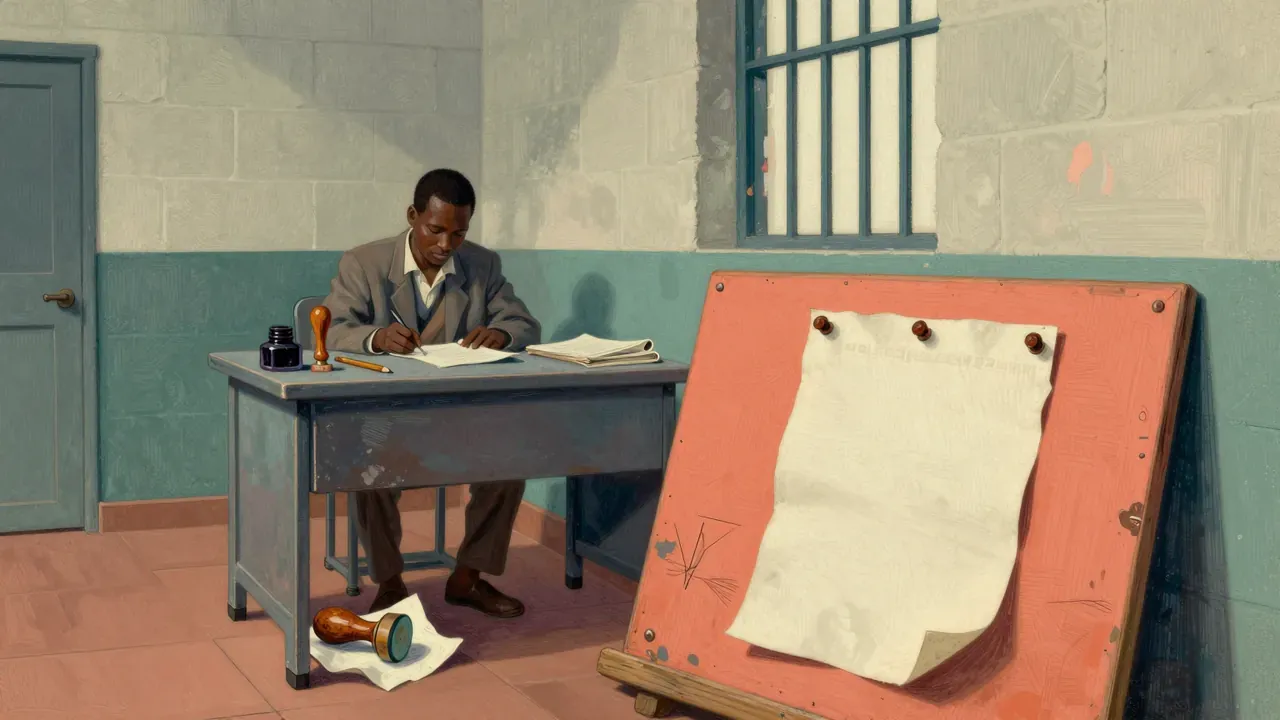
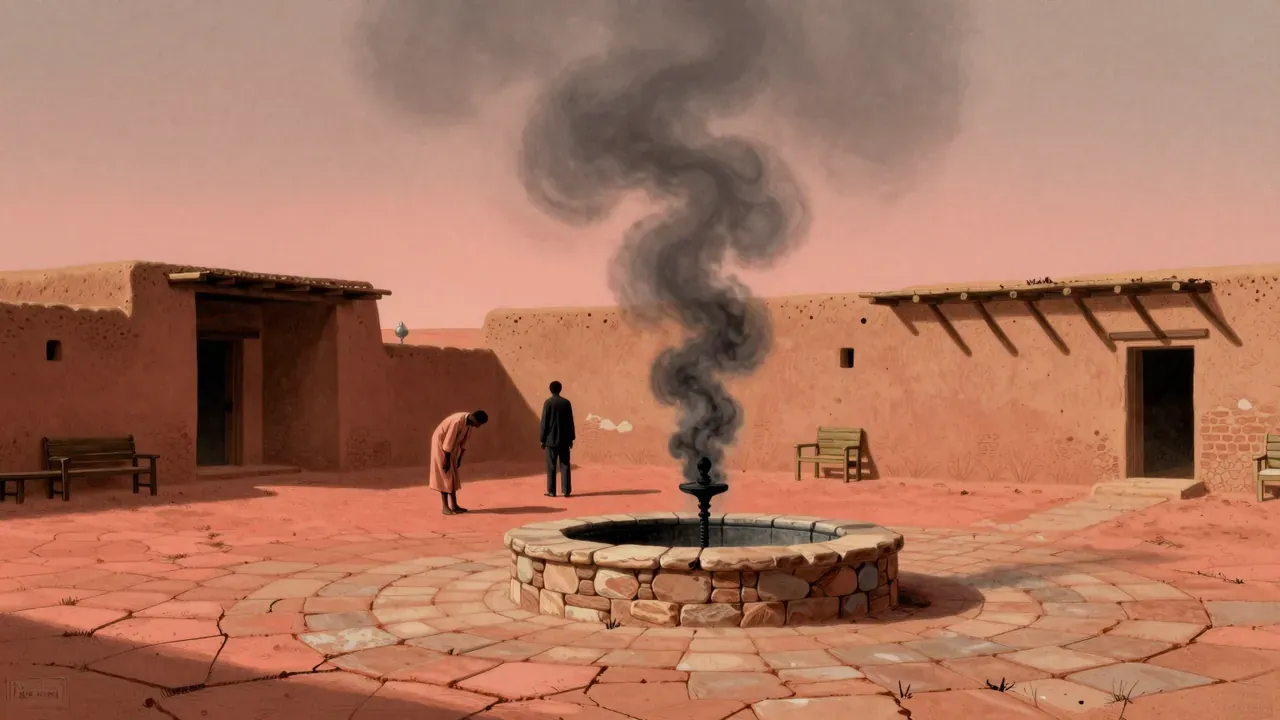
What lands is the film’s refusal to separate politics from physiology. Drought is not metaphor but condition: cracked earth, hollow cheeks, the sound of dry wind over stone. Colonial violence registers not in speeches but in the rhythm of forced labour, the geometry of a French overseer’s posture, the way Ahmed’s hands tremble when he signs a document he cannot read. The massacre sequence in Chapter Four avoids close-ups of gore; instead, the camera stays at a distance, watching smoke rise from a village square while off-screen shouts thin into silence. This restraint makes the horror legible without sensationalising it. The film also lands its sense of continuity — how resistance is inherited, not invented. When Ahmed’s children appear in the final chapter, they do so not as symbols but as participants, their presence confirming that the struggle has outlived individual sacrifice. The Palme d’Or win was not for spectacle but for coherence: every shot, every pause, every untranslated line reinforces the same proposition — that liberation begins where endurance ends. (157 words)
What does not
What does not land is the film’s structural rigidity. The six-chapter framework, while conceptually clear, imposes a schematic quality that occasionally flattens character development. Ahmed remains largely reactive across seventeen years; his internal shifts are implied rather than dramatised, and the script offers little psychological scaffolding beyond circumstance. Some supporting roles — particularly the French administrators — verge on functional: François Maistre’s quarry foreman exists only to embody exploitation, not to complicate it. The film’s commitment to collective over individual perspective means certain emotional textures — grief, doubt, erotic longing — remain unexplored. There is no scene of private mourning, no moment where Ahmed questions the cost of revolt. The absence of irony or ambiguity, while ideologically consistent, narrows the field of moral inquiry. A viewer seeking moral paradox or interior contradiction will find none. The film does not mistake complexity for truth, but neither does it allow room for contradiction within its central thesis. That is a choice, not a flaw — yet it limits the work’s reach beyond its historical and political remit. (156 words)
The themes that matter
The themes that matter are not abstract but embodied: land as contested resource, language as withheld right, time as colonised measure. Colonialism here is not an event but infrastructure — tax rolls, conscription lists, school curricula, the very rhythm of harvest and drought. The film treats poverty not as backdrop but as active agent: hunger sharpens political awareness before ideology does. National consciousness emerges not from pamphlets but from shared exhaustion, from the realisation that the same drought kills Algerians while French vineyards thrive. Decolonisation is shown as reclamation of temporal sovereignty — the shift from waiting for reform to naming the date of uprising. The film’s most persistent theme is continuity: how oral tradition sustains memory across generations, how blacksmiths forge weapons from ploughshares, how children inherit both trauma and tactics. It refuses to treat independence as rupture, insisting instead on lineage — of resistance, of grievance, of hope. These are not themes argued but demonstrated, through repeated gestures, recurring locations, and the slow accumulation of names, dates, and places. (155 words)
Who should watch it, and who should not
This film is for viewers who accept that history is not made in boardrooms but in fields, kitchens, and village squares — and who are willing to sit with silence as evidence. It suits those accustomed to arthouse pacing, to films where meaning accrues through repetition and restraint rather than revelation or plot twist. It is not for viewers who require psychological exposition, narrative propulsion, or moral ambiguity as a condition of engagement. Those who expect historical drama to prioritise individual agency over structural analysis will find it austere. Those who rely on subtitles as translation rather than as interpretive filter may miss the weight carried by untranslated phrases — terms of address, religious invocations, bureaucratic jargon. A viewer who values clarity over resonance, explanation over implication, will likely disengage. But for anyone interested in how cinema can map the formation of collective will — not just depict it — this remains indispensable. Its difficulty is not obscurity but fidelity. (159 words)
Is it worth your evening
Yes, it is worth your evening — provided you set aside the expectation of entertainment and approach it as testimony. Its 177 minutes ask for attention, not distraction; its rewards are cumulative, not immediate. You will not leave humming a tune or quoting a line, but you may find yourself noticing how light falls on dry earth, or how silence functions in conversation, or how power operates in the space between a request and a refusal. It is not for casual viewing, nor for those short on time or patience. Someone who prefers documentary immediacy over symbolic duration might find it overlong. Someone who values emotional catharsis over historical gravity may feel distanced. But if you believe film can be a site of ethical reckoning — not just reflection — then its sustained gaze, its refusal to look away, makes it urgent. Its value lies not in what it shows but in how long it insists you look. (159 words)